Two names that are generating a lot of buzz in 2026 are Google Gemini and Leadfeeder. While they may both be used to support B2B pipeline generation, they operate in fundamentally different ways and serve distinct purposes.
Gemini was never designed as a prospecting tool, and isn’t one; it’s a large language model (LLM) built for content generation and conversation, but in an era where revenue teams are hungry for any edge, many have begun experimenting with it to uncover insights and enhance outreach efforts.
So, if you're wondering how best to fill your pipeline with qualified leads, whether you're a marketing leader, a sales rep, or somewhere in between, this article breaks down what each tool does best, how they compare, and when you might want to use one (or both) in your tech stack.
Understanding Google Gemini in the context of B2B prospecting
Let’s start with Google Gemini. If you're picturing a shiny new CRM or sales engagement tool, think again.
Gemini is Google’s answer to OpenAI’s ChatGPT: an advanced suite of generative AI models built to understand natural language and generate high-quality content, answer questions, summarise information, and assist in research. In the world of B2B marketing and sales, that translates to everything from auto-generating prospecting emails to summarising complex buyer personas in seconds.
Think of Gemini as your AI-powered writing partner, research assistant, and chatbot architect rolled into one. But there’s a catch: Gemini, like ChatGPT, is not a prospecting or sales intelligence tool. It won’t tell you which companies are visiting your site, and it definitely won’t alert your reps when a hot lead is showing intent. Instead, it’s at its best when used for content generation and scalable personalization.
Let’s take a look at an example: Imagine you’re targeting cybersecurity firms in the UK mid-market. Instead of manually crafting email outreach for 50 companies, you could use Gemini to generate personalized drafts based on company size, industry, and product fit. It’ll cut hours of work down to a few minutes, freeing you up to focus on the high-value tasks it can’t cover.
Talking of which, Gemini won’t manage your pipeline, track lead activity, or provide signals on buyer intent. It’s best used in combination with tools designed to identify and qualify leads… enter Leadfeeder.
What makes Leadfeeder a specialized B2B prospecting platform?
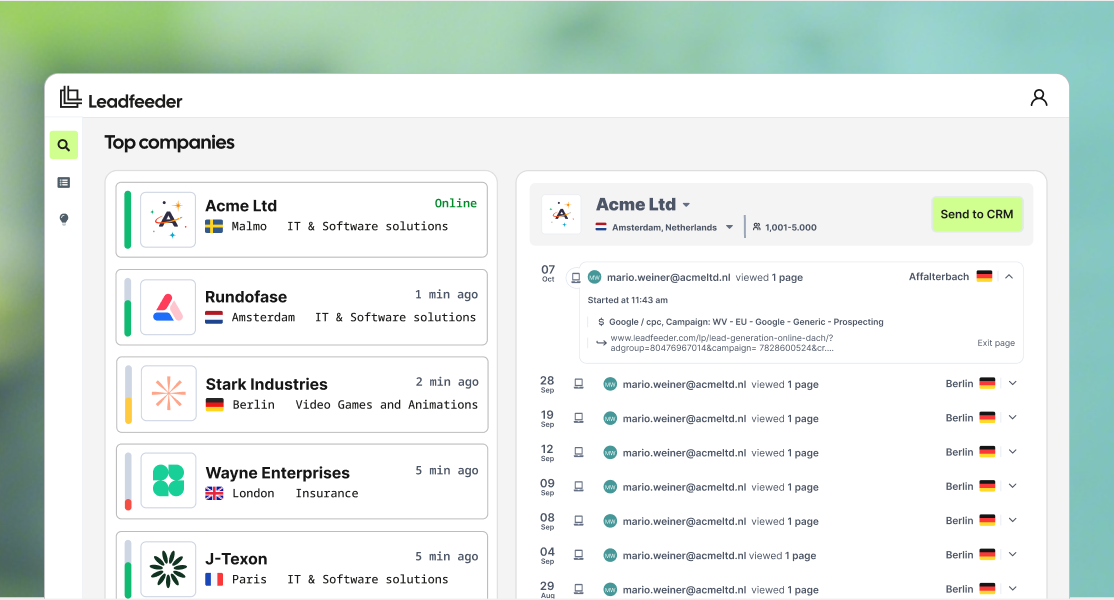
Designed specifically for B2B pipeline generation, Leadfeeder helps revenue teams identify who’s showing interest in their brand, understand buying behavior, and act on real-time signals of intent. Unlike generic CRMs or data platforms, Leadfeeder is purpose-built to connect marketing engagement with sales activity, bridging the gap between anonymous traffic and revenue opportunities.
More than 15,000 companies currently use Leadfeeder to fuel their sales and marketing pipeline with high-intent leads and actionable data.
Leadfeeder’s key features:
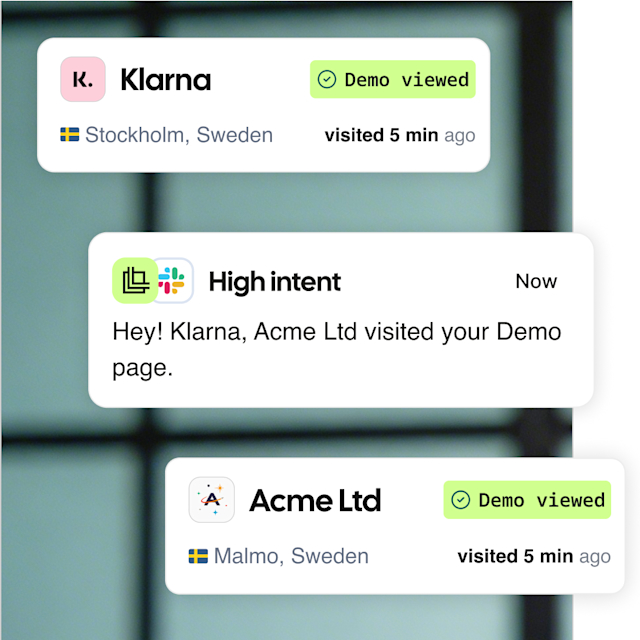
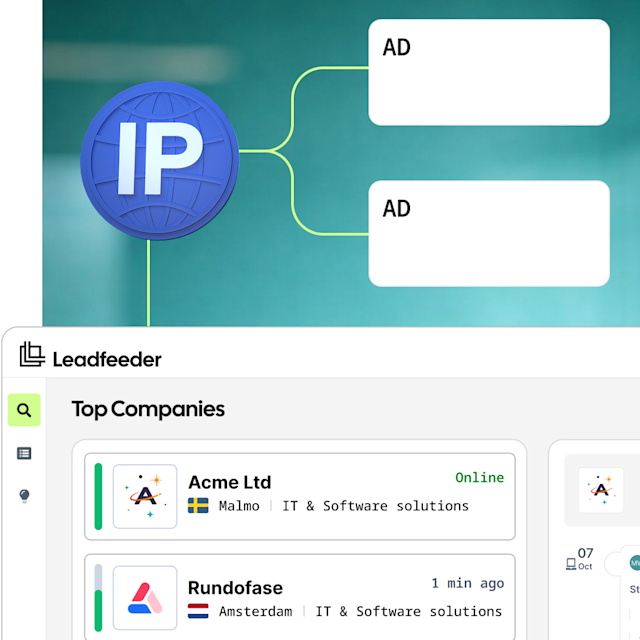
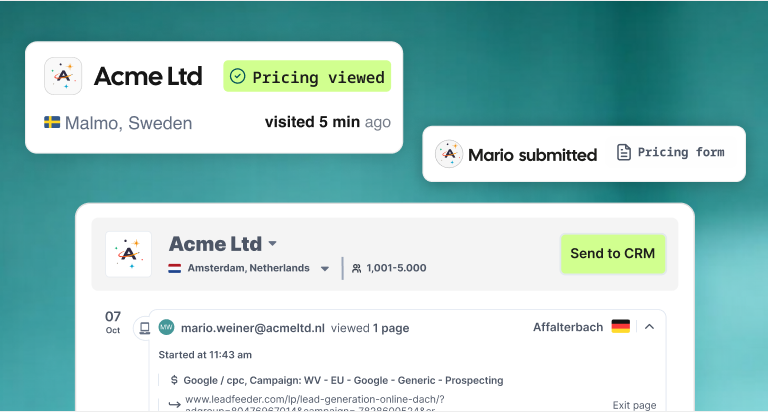
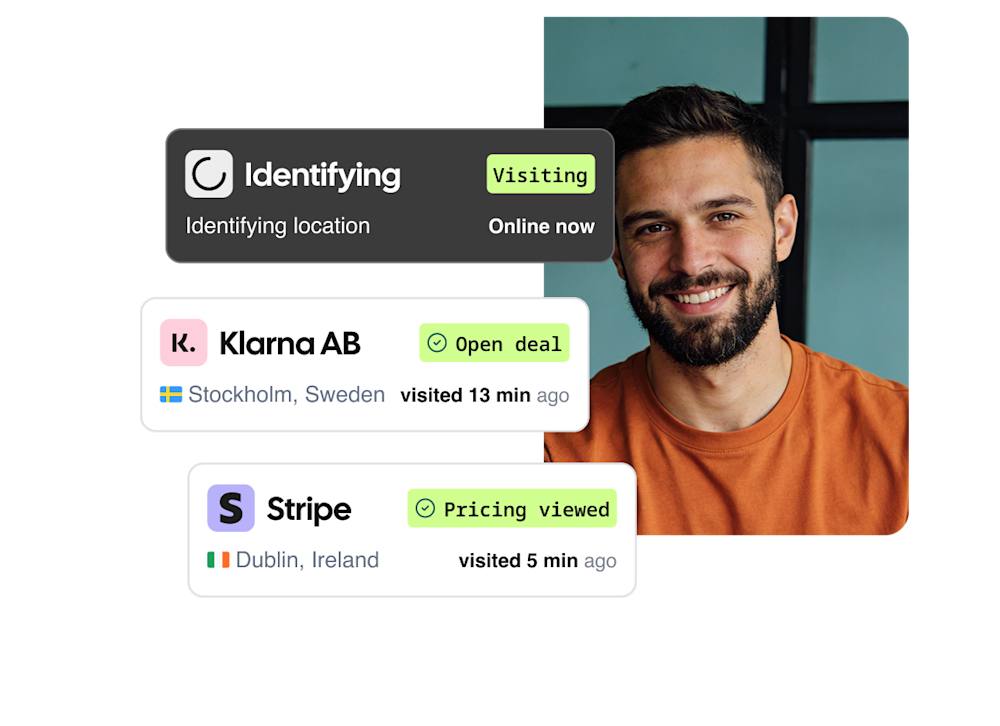
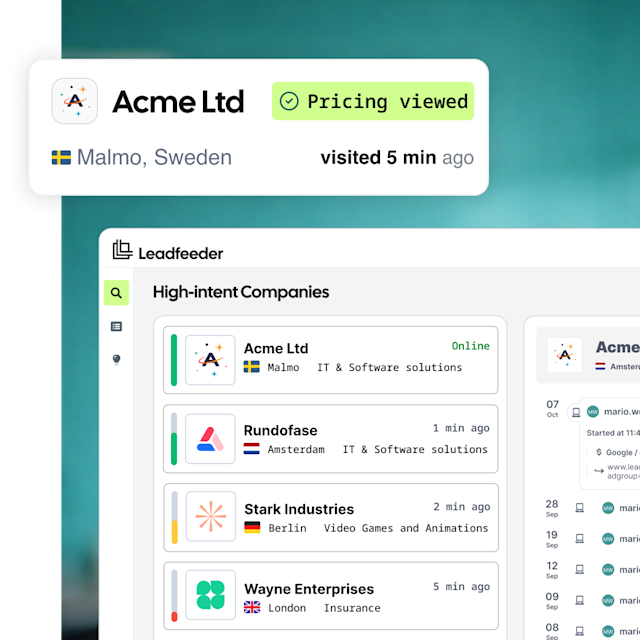
Website visitor identification: Unmasks anonymous visitors and shows you which companies are checking out your pricing page, blog, or product demos, even if they never fill out a form.
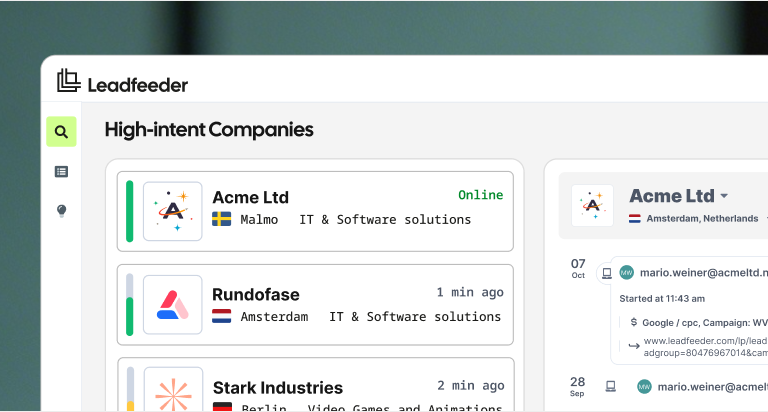
Real-time intent data: Tracks which companies are actively researching topics related to your solution across the web and your site.
Advanced audience filters: Slice and dice your audience by firmographics, tech stack, revenue size, location, and more to build precise outreach lists.
Automated buying signals: Set alerts so your reps know when a target account is heating up; no more waiting for inbound forms to trickle in.
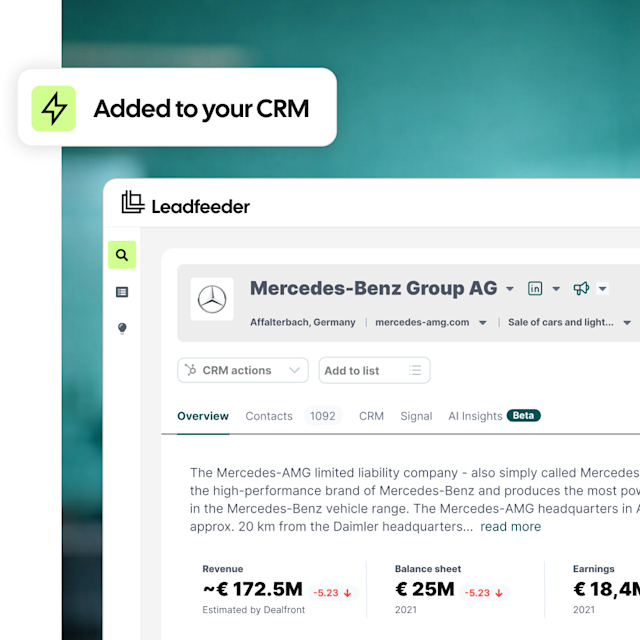
CRM integrations: Sync seamlessly with platforms like Salesforce, HubSpot, and Pipedrive, so your teams can take action without jumping between tools.
One company seeing impressive results with Leadfeeder is Actito, a Belgian marketing automation platform. Facing long sales cycles and a need for better visibility into buyer interest, Actito turned to Leadfeeder to identify which companies were visiting their website and what content they were engaging with.
By using this intent data to prioritize outreach and personalize follow-ups, they now attribute 75% of their sales to Leadfeeder insights, with a 61% conversion rate from identified ICP accounts to genuine opportunities. As their VP of Marketing put it, “The ROI and integration capabilities make it a no-brainer.”
Upgrade Your Sales & Marketing Skills with Leadfeeder’s Playbooks
Are you looking for strategies and tactical insights to elevate your GTM plays? Our Playbooks help you to sharpen your focus and drive results.
Discover Playbooks nowKey differences in lead and intent data management
When it comes to building a reliable B2B pipeline, not all data offers the same benefits. The quality, speed, and compliance of the data you’re working with can make or break your ability to reach the right people at the right time. Here’s how Google Gemini and Leadfeeder differ in the way they handle lead and intent data.
1. Real-time vs static data collection
One of the standout features of Leadfeeder is its ability to deliver real-time website visitor intelligence. As soon as a potential buyer interacts with your site (think: browsing a product page, downloading a whitepaper, or returning for a second visit), Leadfeeder captures and processes that activity immediately.
This allows sales and marketing teams to respond while interest is still high, turning anonymous traffic into timely, actionable insight.
In contrast, Google Gemini doesn’t track real-world user interactions. Its strength lies in working with vast datasets to generate content and assist with research, but it’s a reactive tool, not a tracking platform, and it certainly won't tell you which company just checked out your pricing page.
2. Data accuracy and enrichment
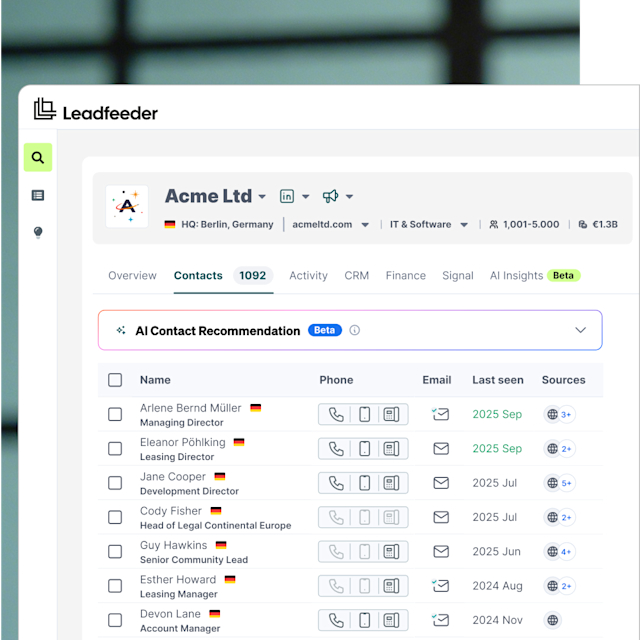
Leadfeeder goes beyond basic traffic monitoring by offering verified company information and enriched contact data. Using a combination of IP resolution and firmographic intelligence, it fills in the blanks, adding industry details, headcount, revenue bands, tech stack, and more to each identified visit. This gives revenue teams a fuller picture of who they're dealing with and whether the lead is worth pursuing.
On the other hand, Google Gemini relies on the data it was trained on. While that’s great for generating useful content and conducting desk research, it lacks real-time accuracy and can’t enrich or validate live customer data. Think of it like asking an assistant to guess who your visitor is, rather than using Leadfeeder, which tells you exactly who it was, what they looked at, and when they were there.
3. GDPR and privacy compliance
For companies operating in Europe (or with European customers), GDPR compliance isn’t optional. It’s essential. Leadfeeder has built-in tools and processes to help ensure its users stay compliant with GDPR and other privacy regulations. This includes anonymizing personal data where necessary, handling consent properly, and only surfacing company-level insights where legally appropriate.
Google Gemini, on the other hand, isn’t specifically designed for lead capture or prospect tracking. While Google addresses general privacy concerns across its broader AI infrastructure, Gemini doesn't offer dedicated GDPR tools or functionality for lead identification or personal data management.
How compliance and privacy affect B2B pipeline tools
We live in a world that is increasingly concerned with data security, and companies that adhere to regional compliance laws are gaining a competitive advantage. Especially in B2B lead generation and prospecting, where data flows between marketing, sales, and third-party tools, understanding and respecting data privacy laws is critical.
Whether you're targeting prospects in the UK, Germany, or anywhere else in the EU, regulatory frameworks like GDPR set strict boundaries around how personal and business data can be collected, stored, and used. But compliance isn’t just about legal risk; non-compliance can damage trust and reputation, and can put entire deals at risk.
Here are some of the key compliance considerations for pipeline tools:
GDPR requirements: Sets out how personal data must be handled in the EU (and for EU citizens globally).
Data security standards: Ensures information is encrypted, stored securely, and accessed only by authorized users.
Consent management: Users must opt-in to having their data collected; implied consent no longer cuts it.
Cross-border data transfers: Companies must comply with strict rules when transferring data outside the EU or the EEA.
Leadfeeder was built with European compliance at its core, making it a strong fit for companies navigating GDPR and other privacy-focused regulations. In contrast, Google Gemini, as a generative AI platform, wasn’t designed for lead tracking or consent-based data handling.
It may still be used in B2B settings, but extra care is needed to ensure it’s used in a compliant way, especially when integrated with marketing or customer data systems.
Comparing integrations and workflow features
In B2B sales and marketing, your tools are only as good as their ability to work together. Whether it's syncing lead data with your CRM, triggering email sequences, or fuelling account-based marketing campaigns, seamless integrations can dramatically improve efficiency and reduce manual work.
1. CRM integration depth
Leadfeeder connects natively to leading CRMs like HubSpot, Salesforce, and Pipedrive. These integrations allow revenue teams to automatically sync company-level visitor data and buying signals directly into their pipelines, no code required.
In contrast, Google Gemini connects via APIs but usually requires custom development or third-party tools (such as Zapier) to integrate with CRM platforms. While flexible, it’s not plug-and-play and may need IT or engineering involvement.
2. Marketing automation sync
With Leadfeeder, intent data and engagement signals can be pushed into your marketing automation platforms, triggering campaigns in real time. For example, if a target account returns to your pricing page, you can trigger a nurture email or alert the SDR.
Gemini doesn’t offer native marketing automation syncing. You can use it to write content for campaigns, but moving data between tools requires manual effort or custom-built workflows.
3. Account-based marketing workflow activation
ABM is all about precision, targeting high-value accounts and engaging them with timely, relevant content. Leadfeeder supports this by identifying target accounts, tracking engagement across digital touchpoints, and pushing alerts to sales and marketing teams.
Gemini doesn’t include tools for tracking or managing ABM workflows. It can help generate personalized content for target accounts, but it won’t help you identify or monitor those accounts in the first place.
Evaluating ROI and budgeting for pipeline tools
When you’re choosing a pipeline tool, don’t get distracted by the features. Yes, they’re important, but you should focus on which solution provides you with the most value. For most teams, the ultimate question is: how much pipeline will this tool generate, and how fast?
Let’s break it down with a few practical considerations.
1. Cost per acquisition (CPA) and cost per lead (CPL)
To calculate the true cost-effectiveness of a platform, marketers often look at Cost Per Lead, the total spend divided by the number of qualified leads generated.
Leadfeeder offers transparent, fixed pricing, which makes budgeting simpler and ROI easier to predict.
Google Gemini’s pricing is usage-based, meaning costs can fluctuate depending on how intensively you use it and the level of customization.
2. Implementation and training requirements
Leadfeeder is designed for ease of use. With guided onboarding and native integrations, most teams can be up and running and in a routine with the product in a matter of days, not weeks.
By contrast, Google Gemini often requires a steeper learning curve, especially if you're building complex prompt workflows or AI automations. Teams may also need some training in prompt engineering to unlock their full potential.
Making the right choice for your B2B pipeline strategy
Ultimately, the best platform for your team depends on your goals, resources, and where your biggest opportunities lie in the sales and marketing process.
Choose Leadfeeder if your priority is a platform purpose-built for B2B pipeline generation, lead identification, and real-time sales intelligence. It’s ideal for companies that need GDPR-compliant visitor tracking, seamless CRM integrations, and a low-lift implementation process.
If your team wants to know exactly who’s engaging with your website and take action fast, Leadfeeder delivers the data and automation to make that happen.
Consider Google Gemini if your needs center around AI-powered content creation, marketing research, or internal productivity enhancements. It’s a great fit for teams with technical resources or AI expertise, particularly those looking to scale content operations or experiment with automation across their campaigns. Just bear in mind: Gemini won’t track leads or manage pipeline activities. It needs to be paired with a tool like Leadfeeder to complete the loop.
In short, these platforms don’t compete. They complement.
Think of Leadfeeder as the radar system that spots the signals of buyer intent, while Gemini is the creative engine that helps you communicate clearly and compellingly once you've locked onto the right target. For many B2B teams, the smartest strategy might not be choosing one over the other, but using both together for maximum impact.
Ready to see how Leadfeeder transforms B2B pipeline generation? Book a demo to explore the platform's capabilities.
FAQs about Google Gemini vs Leadfeeder for B2B pipeline generation
Can Google Gemini track anonymous website visitors like Leadfeeder?
Google Gemini is a generative AI tool for content creation and research assistance, not website visitor tracking. Leadfeeder specializes in identifying companies that visit websites and tracking their engagement behavior.
Which platform delivers higher quality leads for B2B revenue teams?
Leadfeeder identifies real companies visiting websites and provides data about their engagement and buying intent. Google Gemini doesn't generate leads directly but creates content that can attract potential customers to your website.
Do these platforms require technical expertise to implement?
Leadfeeder offers plug-and-play setup with minimal technical requirements. Google Gemini typically requires API integration knowledge and prompt engineering skills for effective B2B applications.
Can Google Gemini and Leadfeeder work together in a marketing stack?
These platforms complement each other well; Google Gemini handles content creation and research while Leadfeeder manages lead identification and pipeline tracking. Many B2B teams use both tools for different aspects of their marketing strategy.
Which platform provides better ROI for small B2B companies?
Leadfeeder typically offers clearer ROI for small B2B companies seeking immediate pipeline results through lead identification and intent data. Google Gemini requires additional tools and expertise to create a measurable pipeline impact.