Today’s buyers take longer to make decisions and are far more deliberate in their research. They interact with brands across multiple channels such as email, social media, and websites before committing to a purchase. Because of this, they expect ongoing value and engagement throughout the entire buying journey.
This shift has made lead nurturing a critical part of modern B2B marketing. Without it, even high-quality leads can lose interest or move on to competitors. Businesses that fail to nurture their leads risk wasting time, effort, and potential revenue.
Only focusing on leads is a huge mistake. A recent study by MarketingSherpa found that 79 percent of leads never convert to sales.
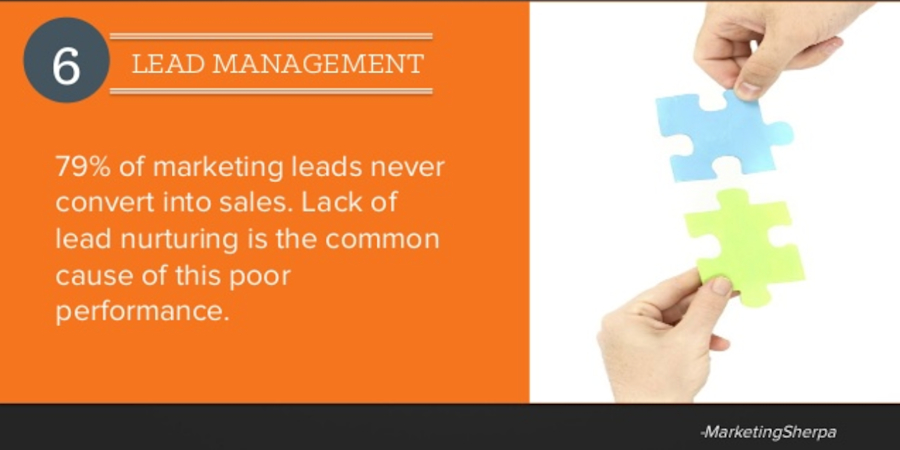
You can bring that number way down with B2B lead nurturing best practices. This is an adapt-or-die sort of situation — those who can evolve will continue to have the edge and thrive.
Unless a meteorite hits Earth. Then, it’s all downhill for pretty much everything besides water bears.
Note: Ready to nurture prospects into sales-ready leads? Try Leadfeeder free for 14 days to see which type of content drives the most website visits.
Why nurture leads? (Hopefully, this isn’t a serious question.)
One key difference between B2B and B2C companies is that the B2B companies start the buying journey on their own terms.
That can be a tough pill to swallow for marketers, but it’s best to work with the truth in hand when forming a battle plan.
According to Forrester Research, B2B buyers wait until they are 65-90% of the way through the purchasing journey before approaching a vendor.
By nurturing these leads, you can better prime them to take the final step and build a stronger bond between them and your brand.
This isn’t a kumbaya drum circle kind of bond, but it certainly is a strong foundation of trust.
A study by Marketo found that nurturing leads enabled the company to generate 50% more sales-ready leads.
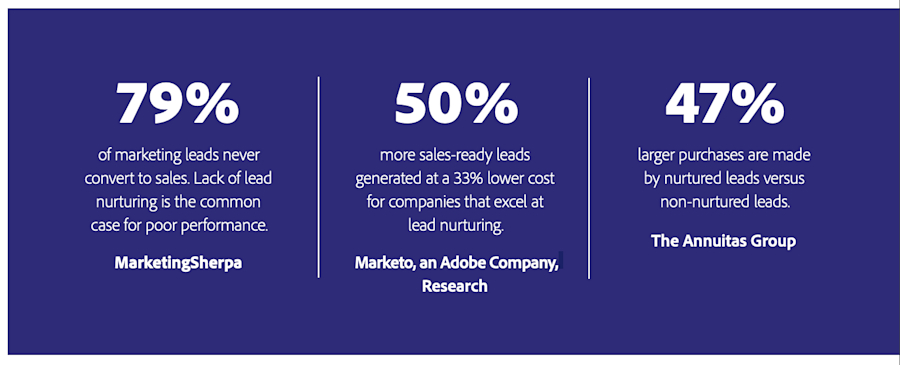
Additionally, Marketo found that lead nurturing led to prospects qualifying up to 20 percent faster, especially when leads took more than a month to qualify.
It also resulted in a 33 percent cost reduction in generating those leads. These are all very good things for you and your business. Right?
Another study, this one by Annuitas Group, found that nurtured leads resulted in purchases that were 47 percent larger than non-nurtured leads.
Yet, despite overwhelming evidence of the advantages of B2B lead-nurturing best practices, only 36 percent of marketers engage in them.
The reasons only a small number of teams use lead nurturing best practices is because the majority of B2B sales teams out there are comprised of dumb-dumbs (it had to be said).
What is lead nurturing?
Lead nurturing is the process of building effective relationships with potential customers throughout the buyer's journey.
It involves answering questions and positioning your product as the ultimate solution to their primary problem. Let them know you got that secret fix-it-all sauce or that silver bullet.
All of this is done to move them down your sales funnel. Though your lead nurturing will follow a general strategy, it should also be personalized for each client. Think back to that dating metaphor — it still holds true here.
This level of personalization will be dictated by both the client and the stage of the buyer's journey.
It's not as simple as sending a generic email blast to all people on your mailing list — that tends to just irritate folks.
To have a successful lead nurturing system, you'll want to take full advantage of all available communication channels in the most productive and efficient way.
In doing so, you'll ensure more prospects keep you in mind when they're ready to make a purchase. Out of sight, out of mind. So, stay in both.
With a good lead nurturing process, you can:
Develop long-term relationships with your customers
Build brand advocacy
Increase clickthrough rate (CTR) and propensity to purchase
Shorten the overall buyer's cycle
Setting up your lead nurturing strategy
Before you start, you'll want to establish your lead nurturing goal, as well as your audience's goals and pain points. These two factors will help guide the development of your strategy.
Though the end goal of lead nurturing is to drive sales, not all companies take this approach to generate immediate purchases.
Some marketers nurture leads to get their prospects to sign up for a free trial or try a specific product feature. Then, they try to convert the prospect into a sale.
Another thing you'll want to establish is your audience's goals and pain points. This is vital — what you want to accomplish must align with what your audience wants to achieve.
If you don't already have a firm grasp of a target segment’s buyer persona, you might send them a questionnaire or survey to gather more relevant information.
Most lead nurturing campaigns consist of a trio of elements: lead scoring, email (drip) campaigns, and content marketing.
You can use these three components in any order — or simultaneously — depending on what works best for your company.
All about lead scoring
Lead scoring is a method for ranking prospects based on the perceived value each brings to the organization. Just don’t tell them their score. You might hurt their feelings.
Generally, you can sort your leads into five types:
Those who buy without prompting
Those who take some time to decide but will still eventually purchase
Those who buy without prompting, but can be persuaded to make a more significant purchase
Those that require nurturing before they purchase
Those who will not buy — even with nurturing
To not waste your efforts, it's essential to know which leads are most likely to convert. These high-value leads are not the ones you want to focus most of your nurturing efforts on.
Though it's tempting to spend time on prospects who will buy without prompting or those who will eventually make a purchase with a little push, your energy is best spent on other prospects.
As you know, this business isn’t about stroking your ego. It’s about making money. If you want people to inflate your ego, go into politics.
You'll want to focus mostly on leads you can upsell and those that require nurturing to make a purchase — don't bother with those who aren't going to buy anything, no matter what.
Who needs those leads anyway?
To identify which category a prospect falls into, establish a model that assigns scores to specific actions and behaviors of potential buyers.
Unfortunately, there is no one-size-fits-all for this scoring model. It will have to be customized to fit your business and your potential clients.
However, your lead scoring should account for a range of factors, including an individual's demographics and a company's firmographics.
Additionally, you'll want to account for BANT — budget, authority, need, and time:
Budget: Can they afford your product?
Authority: Can they authorize a purchase?
Need: How much do they need your product?
Time: How urgently do they need it?
A bulk of the data for lead scoring involves tracking your site's visitors to gain insights about what they do on your website.
You can use Google Analytics and Leadfeeder together.
Leadfeeder independently identifies the companies visiting your website, while its integration with Google Analytics adds context, showing how they found you and what content they engage with most.
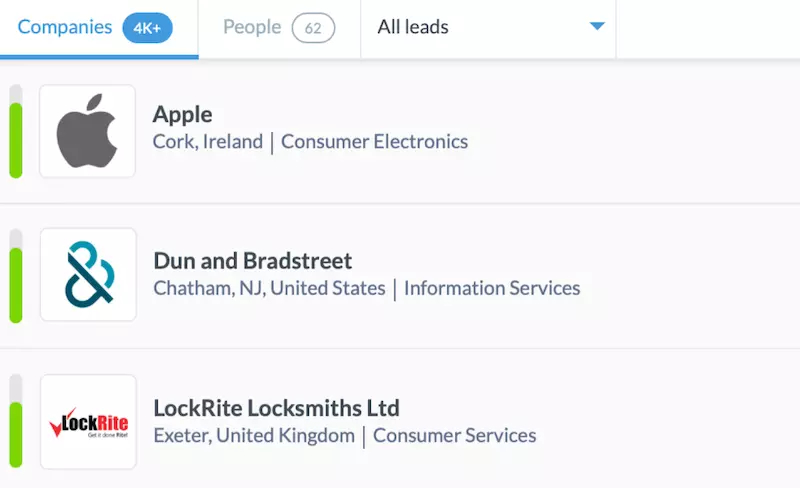
What a prospect does on your site can provide vital information about their interest.
The most significant divide is between behaviors that indicate they are simply browsing your site versus those that indicate they are visiting your website with the intent to make a purchase.
There are other interactions with your website that Leadfeeder can help you track.
These are also essential for establishing a lead score and identifying where on the buyer's journey your prospect is. Different actions indicate different points on that journey.
For instance, looking through blog content shows they're still gathering information, while reviewing product pages indicates they're closer to making a purchase.
The impact of content marketing
Most B2B marketers credit content as a critical factor in ensuring their marketing campaigns succeed.
Content marketing is a powerful tool, no matter where a prospect is in their buyer's journey.
It is especially effective in the beginning as a way to educate people and draw them into your sales funnel. Smart prospects are out their sucking up as much information as possible — so feed them what they want and need.
When the material you’re providing is relevant to a prospect's needs, you can then convert them into a lead and begin nudging them — nurturing them — toward making a purchase.
Content marketing can involve blog posts or inviting visitors to download content, such as white papers and case studies, in exchange for their email address.
By collecting email addresses, you're setting yourself up to launch a drip-style email marketing campaign, which is a huge win.
There are several best practices for content marketing that will keep your prospects engaged and help you build meaningful relationships with them.
You don’t want to ever forget that all of this work is about building relationships. Write that down and stick it to your wall, then say it out loud to yourself, and now go tell a coworker.
Seriously. The first real step is conducting a content audit, which will help you determine which content is best suited to a particular prospect at a specific point in the sales cycle.
One thing to remember is that because B2B lead nurturing takes longer than B2C, it's important to ensure that you have enough content to support your campaign from start to finish.
You don’t want to start leaving treats out for Hansel and Gretel only to run out miles from your gingerbread house. Maybe not the best analogy, but you get the point.
1. Creating personalized content
Offering personalized content is the best way to nurture leads. Everyone wants to feel special.
Not only does it deliver meaningful content to the prospect, but it also shows them that you pay attention to their needs and care about them.
One way to offer personalized experiences is through dynamic website content. Through this system, content is delivered to a user based on their visitor profile data and interactions with your website.
Two of the best examples of this are Spotify, with its year-end playlists, and Netflix, with recommendations based on what you've watched.

It’s almost creepy how well Netflix recommends new shows and movies. Be that creepy. Don’t worry, it’s a good creepy.
You can also personalize aspects of your website, such as landing pages, call-to-actions, case studies, and pop-ups.
When a prospect returns to your website after not converting initially, there is a high probability that they are interested in your product but weren't given engaging information about it.
So, you failed the first time, but they decided to give you a second chance. Lucky you. To address this, try presenting them with a slightly different landing page or CTA to better understand what they consider relevant to their needs.
Using Leadfeeder, you can identify which companies your visitors represent, which is huge when presenting relevant case studies.
It's possible to set up your website so that it provides industry-specific case studies to match the sector represented by a visitor.
Intelligent pop-ups can be programmed to appear once a visitor is inactive or is about to exit the site. You can also personalize these according to their website behavior.
2. Email marketing and complementary marketing channels
It's been said that email is the most effective lead-nurturing channel. It’s also been said that the sun rises in the east.
In these situations, lead nurturing occurs through email drip campaigns, a series of emails sent to leads after they take a specific action on your website.
These emails, which trickle out over time, are designed to move your lead further down your sales funnel — ultimately leading them to make a purchase.
Once a visitor provides you with their email, you'll want to start them on the nurturing journey immediately.
This strategy is optimal because you are already on their mind, and it also allows you to quickly separate visitors who are interested in your products from those who just want free content.
Once you've segmented your customers, you can start sending them relevant emails based on where they are in the buyer's journey, their industry, demographics, and behavior.
Though it can — at times — seem transparent, there are also ways to personalize emails that will at least increase the rate at which people open them.
This often means including their name, information about the industry they're in, or other targeted content in the email's subject line.
Lastly, your emails must provide real value. If you're not sending content that a lead might benefit from, then you're not nurturing the lead — you're drowning them in marketing nonsense.
Though most B2B marketers immediately think of email marketing campaigns when talk turns toward lead nurturing, you can supplement your lead nurturing campaigns with other channels.
3. Social media
Most social media channels are not as important to B2B marketers as they are B2C marketers. However, there are still many ways you can use these platforms to nurture leads.
First and foremost, be responsive. You don’t want to be out there ignoring or ghosting leads.
About two-thirds of customers see social media as a customer support/service channel, expecting you to respond to any inquiry within four hours at most.
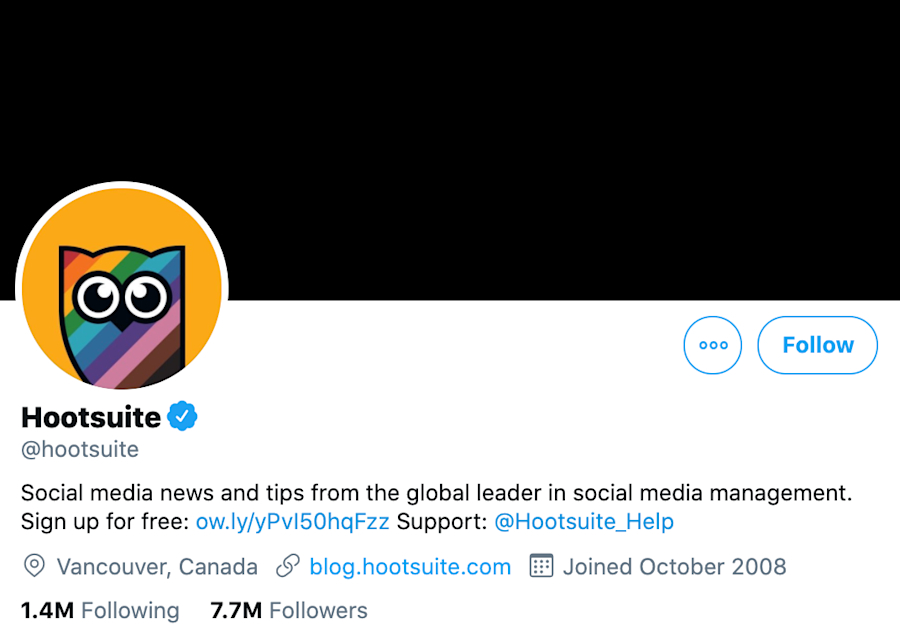
Brands like Hootsuite even set up separate social media handles for customer support.
Unfortunately for them, most brands tend to respond within 10 hours, which is way too late. What's worse is that some companies never respond.
In these situations, one-third of customers say they will switch to a competitor. On the flip side, companies that respond quickly enjoy a 40 percent increase in revenue.
Of course, if you really want to focus on nurturing leads on social media, don't just respond to inquiries — proactively engage and interact with your customers.
4. Retargeting ads
Retargeting ads are an extremely effective way to drive customer conversions. In fact, they convert up to 50 percent more traffic than organic ads in search results, which typically have a 2 percent conversion rate.
Though retargeted ads are often associated with e-commerce, there's no reason why they can't be used by B2B companies. LinkedIn is an extraordinarily effective platform for retargeting ads.
Remarketing ads achieve a 10x CTR compared to non-retargeted ads. It also boosts ad response by up to 400 percent.
To fully capitalize on the opportunity of retargeting prospects on LinkedIn, you'll want to team it up with Leadfeeder lists.
For optimal results, you'll want to focus your retargeting efforts on the warmest leads: these are the ones that performed the best on your lead scoring sheet.
Along the same lines as switching your landing page or CTA when a prospect doesn't bite the first time, switch up your retargeting ads from time to time.
Give prospects something fresh. Retargeting ads are also an excellent opportunity for you to clearly distinguish yourself from your competition. The prospect is seeking the best solution to their problem.
Essential B2B lead nurturing best practices
Lead nurturing is the process of building a deeper relationship with your leads so you can influence them to make a purchase. It helps you help them.
Despite the apparent benefits of the practice, far too many marketers are (you guessed it) dumb-dumbs. They also have tunnel vision: their focus is entirely consumed by lead generation.
By identifying your goals and your audience's goals, you can start creating meaningful email campaigns and content that build trust in your brand and fulfill both your goals.
Lead nurturing is the next step in preventing conversions from slipping through your fingers.
Tell us about your favorite B2B lead nurturing examples in the comments below!
Note: Ready to nurture prospects into sales-ready leads? Try Leadfeeder free for 14 days to see what type of content drives the most visits.