60-Second Summary
Full‑stack marketing platforms bundle many features and centralized data at a higher recurring cost, while custom stacks combine point solutions for lower upfront spend and greater flexibility but require more integration work and technical oversight. Choose based on your current operations, growth plans, contact counts, and willingness to manage integrations.
Key takeaways: Full‑stack = convenience, unified data, vendor support and higher monthly costs (often $1,000+/mo); custom stack = lower starting cost (examples ≈ $255+/mo) and flexibility but more setup, maintenance, and integration risk—contact volume and enterprise needs often tip the balance.
Standout strategies & tactics: Build modular point solutions (e.g., Leadfeeder for visitor ID, HubSpot Free CRM, Unbounce, MailChimp, Zapier, Google Analytics/Hotjar, Moz, Sendible, WordPress, GTM) and stitch with Zapier or APIs to get targeted functionality without paying for unused features.
Real‑world lessons & frameworks: Start by listing must‑have features to meet goals, model total cost of ownership (including contact growth and engineering time), and choose full‑stack for enterprise support or custom stack for nimble, cost‑sensitive teams.
Practical implementation tips: Begin with core tools, validate integrations and A/B tests, monitor contact thresholds and support needs, and be ready to consolidate into a full‑stack solution when scale or complexity outweighs integration overhead.
*This summary was created with AI assistance, using our original content.
Neither approach is automatically better. Full-stack platforms offer convenience, centralized data, and built-in functionality, but they often come with higher costs and features that many companies never use. Custom stacks offer greater flexibility and lower upfront costs, but they require more setup, integrations, and technical oversight.
The right choice depends on how your company operates today and where you want to scale tomorrow. In this article, we’ll break down the pros, cons, and pricing behind both approaches so you can decide which marketing automation setup makes the most sense for your business.
(Note: Want to see which companies visit your website—even if they don’t fill out a form? Try Leadfeeder for free.)
Marketing Automation Features
To compare the various marketing automation offerings, let’s first define the core features of marketing automation.
These features perform the basic job of moving customers and prospects through the customer journey.
They include:
Lead generation and tracking
Customer Relationship Management (CRM)
Contact forms
Landing pages
Email campaigns
Lead management
Segmentation
Website analytics
Campaign analytics
SEO analytics & auditing
Social media marketing
Social media monitoring
Content marketing
Dynamic content
Question No. 1 to ask before deciding on a platform is this:
What Features Do I Need to Achieve My Goals?
With that answer in hand, you can evaluate the specific technology options.
‘Full-Stack’ and ‘Custom-Stack’ Options, Features, and Costs
We looked at the pricing and features of four prominent full-stack marketing automation platforms:
In the chart below, we list each and note its features. We also included a list of “point-solutions” to show an example of what a custom-stack of point solutions might look like and its cost.
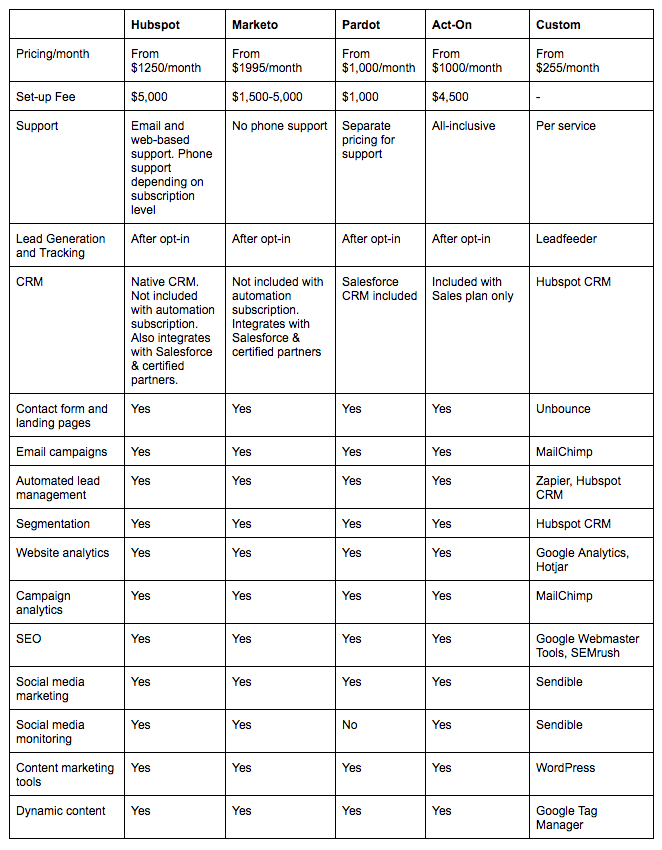
As you can see, it’s possible to build a custom marketing automation stack for less than $300, and if you decide you don’t need some of the features, the cost can be lower.
Point Solutions and Costs for a Custom Marketing Automation Stack
Here are the point solutions we found that offer features similar to those provided by full-stack automation platforms.
1. Lead Generation and Tracking
Leadfeeder
Price: Starting at €79 / month
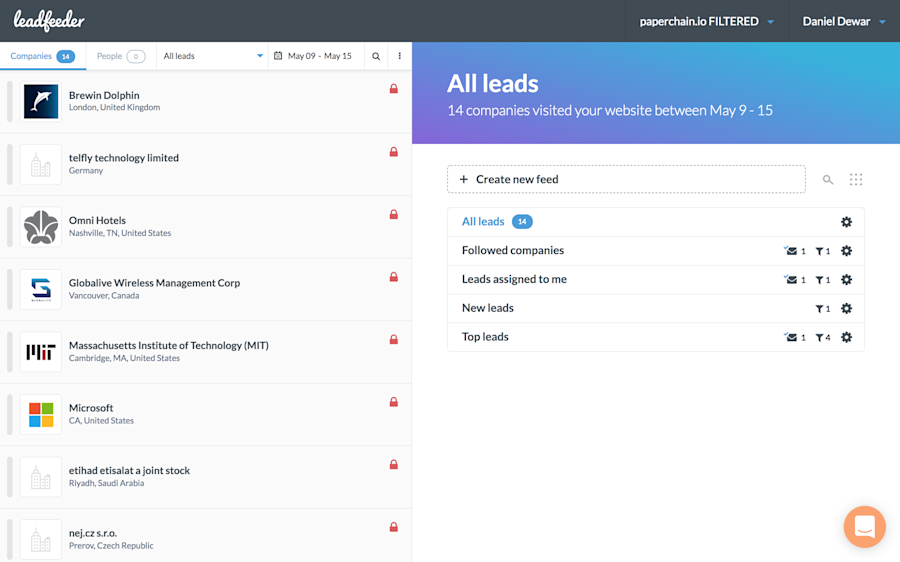
One of the primary reasons companies buy marketing automation systems is to learn more about who is visiting their website. Leadfeeder identifies what companies visit your website, even if the visitor doesn’t fill out a form or download a resource.
Third-party integrations enable marketers to proactively create leads based on key prospect visits. They can also send and update visitor information in MailChimp and CRM software.
2. CRM
Hubspot Free CRM (or Insightly, Zoho CRM)
Price: Free
Hubspot Free CRM is a very easy to use and implement CRM that contains most of the features you would find in a paid version, but all of the features needed for a core lead management platform.
Sales managers can use the pipeline and lead management features, while marketing managers can use the free HubSpot Marketing platform. HubSpot Free CRM also offers API key access, meaning integrations with third parties are an API key generation away, or its features can be extended by integrating with workflow automation tools like Zapier.
3. Contact Forms and Landing Pages
Unbounce
Price: $99 / month
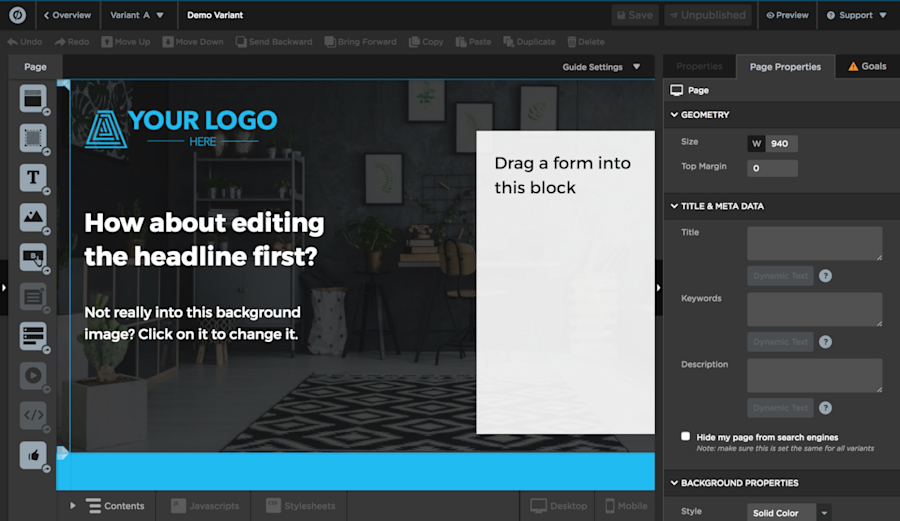
Unbounce offers a basic WYSIWYG landing page and contact form editor. However, its real value is in its simple A/B testing setup and webhook integrations. A workflow tool like Zapier can be easily integrated, and form data can be integrated into a CRM, email marketing platform, or other campaign action tool.
4. Email Campaigns
MailChimp
Price: Free
0-2000 contacts / 12,000 emails per month
MailChimp provides marketers with a comprehensive email marketing platform for little to no cost. It has many native integrations, and its integrations can be extended by connecting MailChimp to Zapier.
Features include email template creation, dynamic content insertion, list segmentation, and A/B testing—which is more than enough for any B2B marketer to get started with. Use Zapier integrations to trigger emails based on actions in specific applications, such as changes to CRM details.
5. Automated Lead Management
Zapier
Price: $20 / month
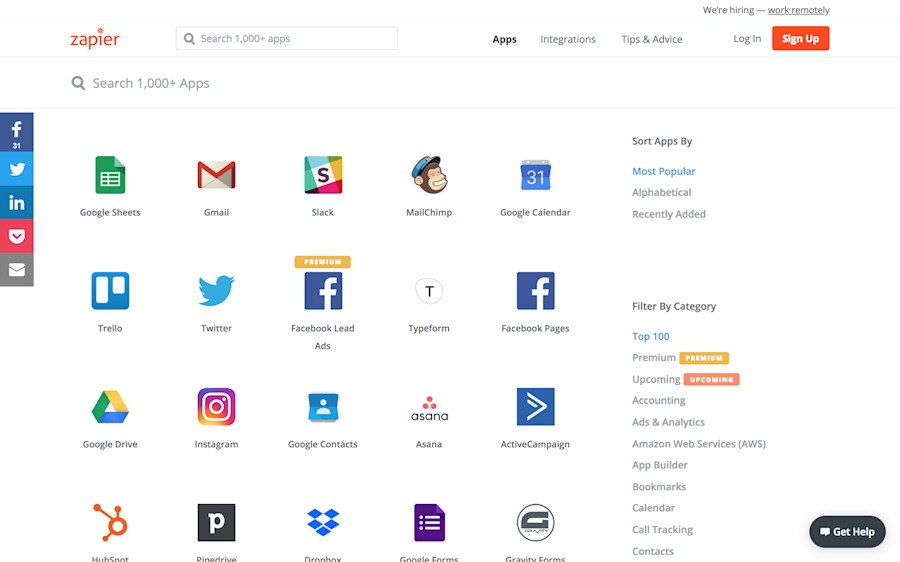
Zapier is a powerful tool that automates workflows between individual apps and platforms. With over 1,000 app integrations, Zapier can trigger actions in one application from an event in another.
When a new subscriber is added to MailChimp, use Zapier to add the contact information to your CRM. When a certain keyword is mentioned in a Slack channel, use Zapier to trigger the creation of a task in a project management tool like Asana or Trello.
It’s probably worth paying $20 per month for the Work plan, which enables you to refine and create more complex automation processes and filters.
6. Website Analytics
Google Analytics
Price: Free
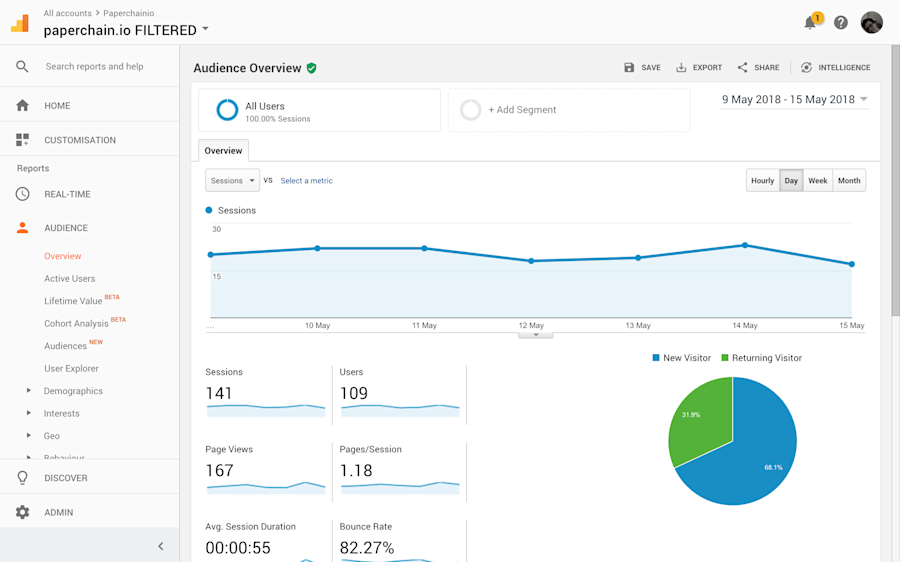
Google Analytics is the market standard for website analytics. It provides a large number of reports that give insight into your visitor demographics, behaviors, acquisition, and conversion analytics, all for free.
Spend time learning about the full extent of Google Analytics’ capabilities. Once you get into customized funnel analytics and reporting, you get a wide view of your customers and prospects.
HotJar
Price: Free
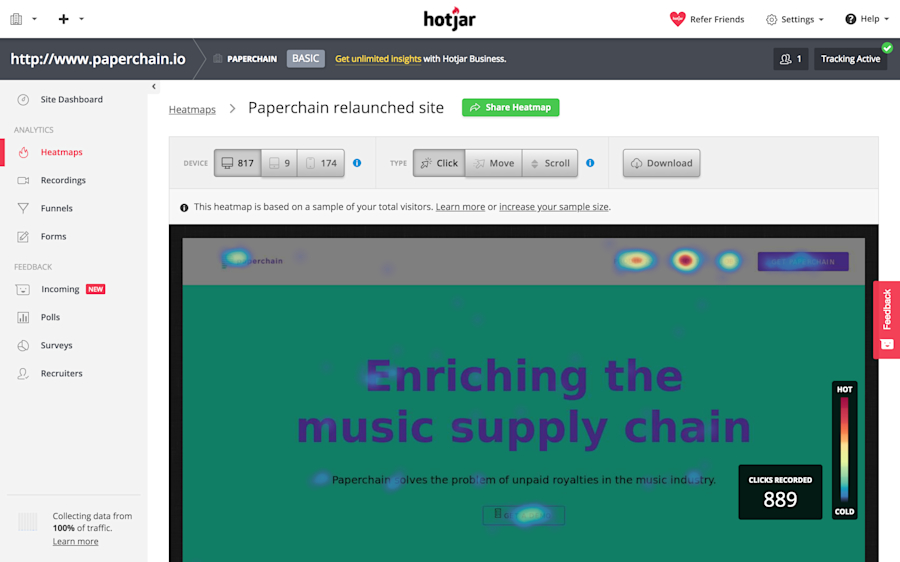
Hotjar fills the gaps that Google Analytics misses—in particular, by providing click, scroll, and movement heatmaps, as well as visitor recording functionality. It also features surveys, conversion funnels, and feedback polls, all of which are used to increase conversion rates.
7. SEO
Moz
Price: $99 / Free
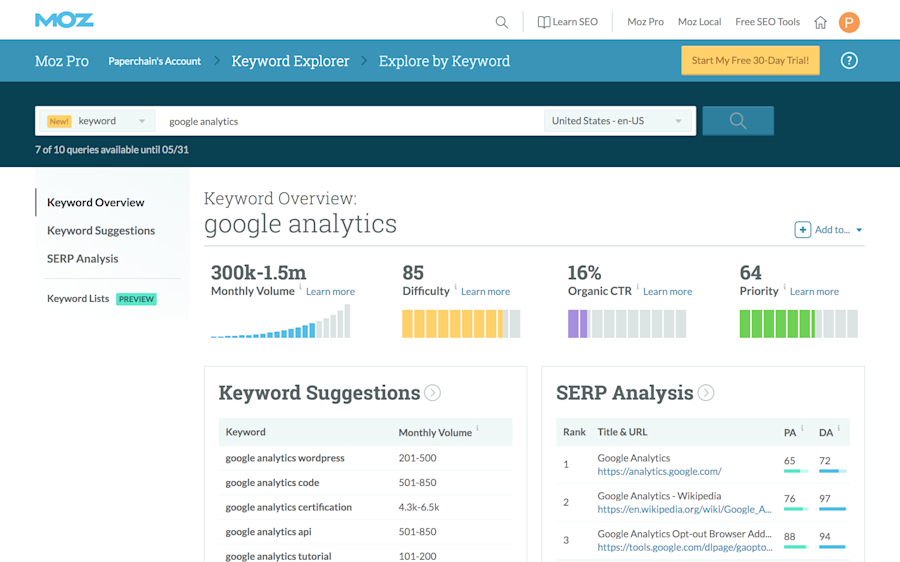
Moz offers a range of free SEO tools, and its basic plan, at $99/month, provides a more powerful suite at a relatively low cost. Track the ranking of up to 300 keywords, run keyword queries, and backlink reports for a comprehensive view of strategic keyword performance.
8. Social Media Marketing
Sendible
Price: $29 / month
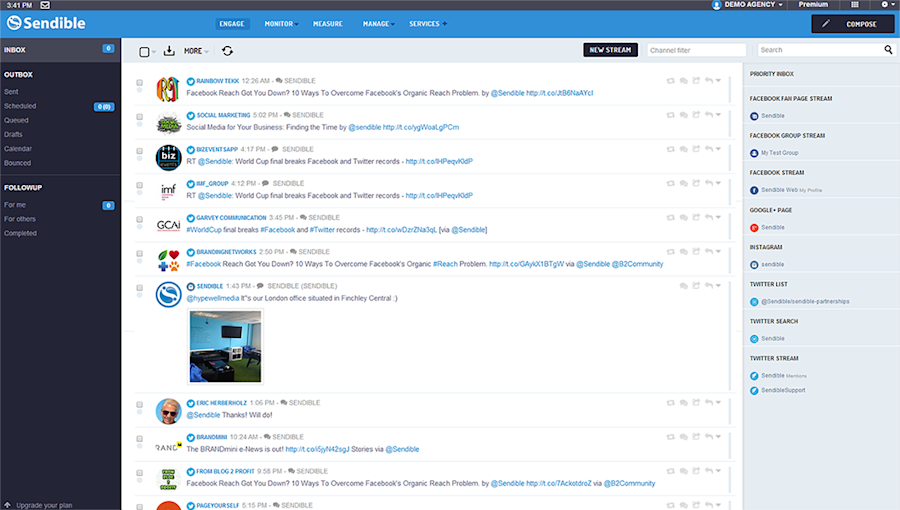
While Buffer and Hootsuite dominate social media management news, Sendible offers a social media marketing platform with enterprise features at small business prices. Standard features such as post scheduling, collaboration, analytics, and bit.ly or custom URL integration are all features.
9. Content Marketing Tools
WordPress
Price: $5 / month
WordPress is the No. 1 free website and blog management platform. The only cost is your own server to host on (which can start at $ 5/month if you’re using Amazon Web Services or Google Cloud Platform).
WordPress’s extensive plug-in marketplace means most of your other marketing stack tools will have an integration already configured, and if not, you can always plug actions like contact form submission into Zapier, which can send the data to other tools as well.
Medium
Price: Free
While it’s important to have an owned blog, it is also important to understand where your audience lives and to offer them content in that setting. Medium has fostered thriving communities, and its simple “Import Story” feature lets you republish your blog content on Medium without a duplicate content penalty.
10. Dynamic Content
Google Tag Manager
Price: Free
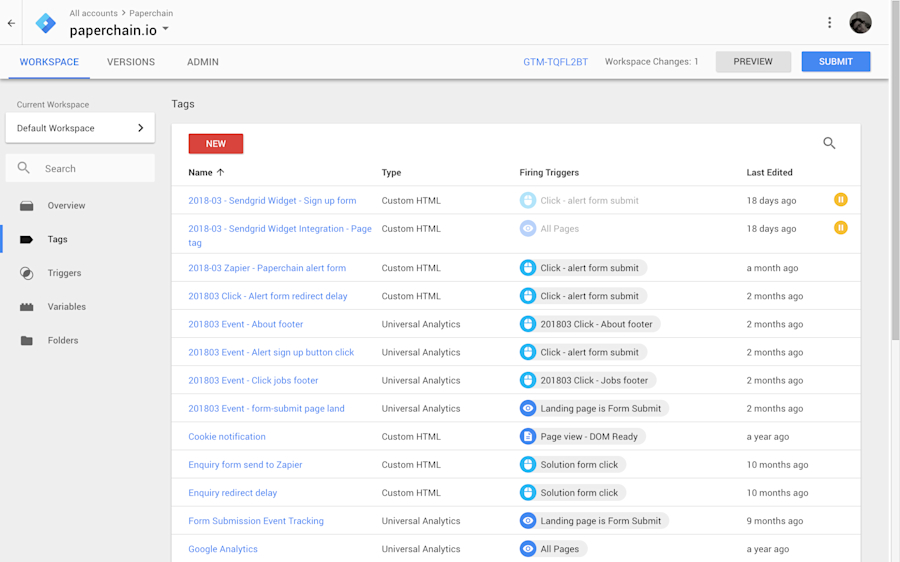
Google Tag Manager helps B2B marketers manage and deploy tracking codes and other JavaScript (JS) tags on their website. It’s an entirely free tool that optimizes site performance through faster load times, while allowing marketers to make use of JQuery and JS code that can inject dynamic content into pages depending on certain conditions.
What Solutions Are Right for You?
Is it spending $1,000+/month for a full-stack marketing automation system? Or $255+/month for a custom stack of point solutions? From the pricing difference, it’s tempting to say a custom stack is the obvious winner—but that’s not the full picture.
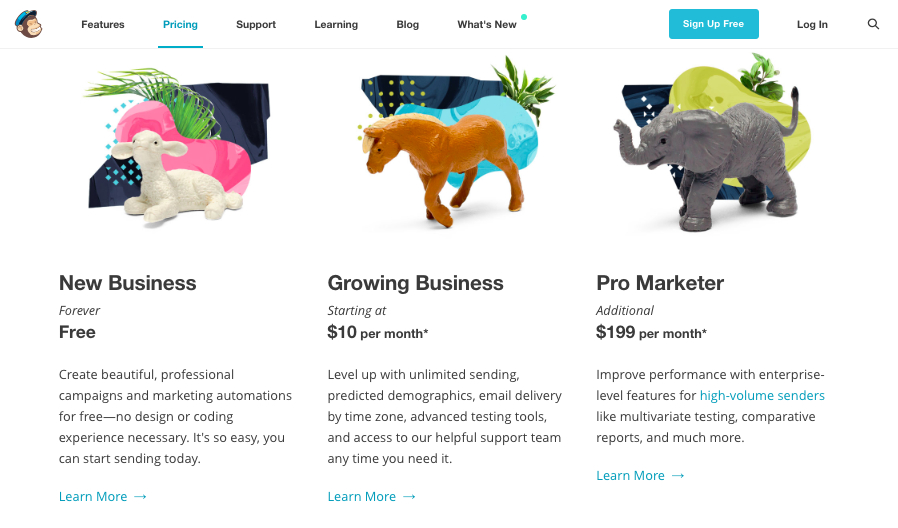
What’s right for you will depend on your situation and your needs. If you have a large email list, the cost of point solutions can increase significantly as you move into plans for larger contact counts. When you grow beyond 2,000 contacts in MailChimp, for example, you’ll move onto plans that run $10/month or above.
In those situations, a full-stack solution might be the right choice. For enterprise companies, a full-stack suite with support may also make more sense.
But for companies looking to be nimble, a customized stack can give you the ability to choose features based on your specific requirements—and take advantage of any cost-savings that come about as a result.