60-Second Summary
Demandbase remains a powerful enterprise ABM platform thanks to deep intent data, analytics, and account-level advertising, but its complexity, pricing, and integration lift can hinder adoption. Teams are increasingly choosing more agile, user-friendly tools that surface timely intent and fit into existing stacks for faster time-to-value.
Key takeaway: The ABM landscape is shifting from feature-heavy, complex suites to platforms that deliver accurate intent, easy onboarding, and clear ROI so teams actually use them.
Standout strategies: Combine real-time intent with anonymous website visitor identification and native CRM/MAP integrations to prioritize in-market accounts and run coordinated multi-channel outreach.
Real-world framework: Evaluate vendors on data quality, intent signal methodology, integrations, execution channels, analytics, and how well they fit your team’s size and workflows—not just feature lists.
Practical recommendation: Leadfeeder is the top all-round Demandbase alternative for 2026—real-time intent, visitor ID, transparent pricing, GDPR compliance, and easier onboarding for mid-market and scaling teams.
*This summary was created with AI assistance, using our original content.
Demandbase has long been a heavyweight in the ABM space, trusted by enterprise teams for its ability to combine intent data and advanced analytics into one powerful platform. It helps marketers spot which companies are actively researching solutions like theirs and orchestrate personalized, multi-channel campaigns around those signals. At its best, it acts like a control tower, bringing clarity to complex buyer journeys and helping teams focus on the accounts that matter most.
But for all its strengths, Demandbase isn’t always the easiest fit. Its enterprise pricing, complex setup, and integration requirements can slow teams down before they even get started. Many users find that onboarding takes time, workflows aren’t always intuitive, and connecting it with existing systems can be more effort than expected, especially when your ABM platform should work seamlessly with the tools you already use. Without that ease, even the most powerful features can feel out of reach.
That’s why more companies are rethinking their options. Today’s teams are looking for platforms built on reliable, up-to-date information that can surface rich intent signals without the heavy lift. The shift is clear: from complex, all-in-one systems to more agile, user-friendly tools that deliver insights quickly and fit naturally into how teams already work. Because in the end, the best ABM platform isn’t the most sophisticated, it’s the one your team actually uses to drive results.
These platforms were evaluated based on data quality, features, integrations, scalability, and general value for different business sizes. Each has specific strengths that make it suitable for various B2B sales and marketing use cases.
Find key decision-makers in companies with one click
Access compliant contact information for the right decision-makers and reach out equipped with detailed insights.
Find key decision-makers easierWith so many ABM platforms on the market, it can be tough to figure out which one truly fits your business. Whether you're a fast-growing startup or a mature B2B brand, finding a solution that delivers actionable insights, reliable data, and intuitive workflows is essential.
Here’s our take on the top Demandbase competitors for 2026:
1. Leadfeeder
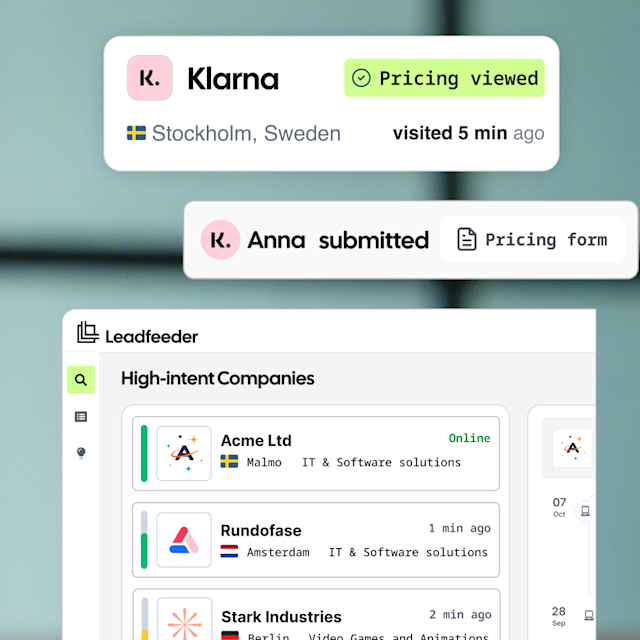
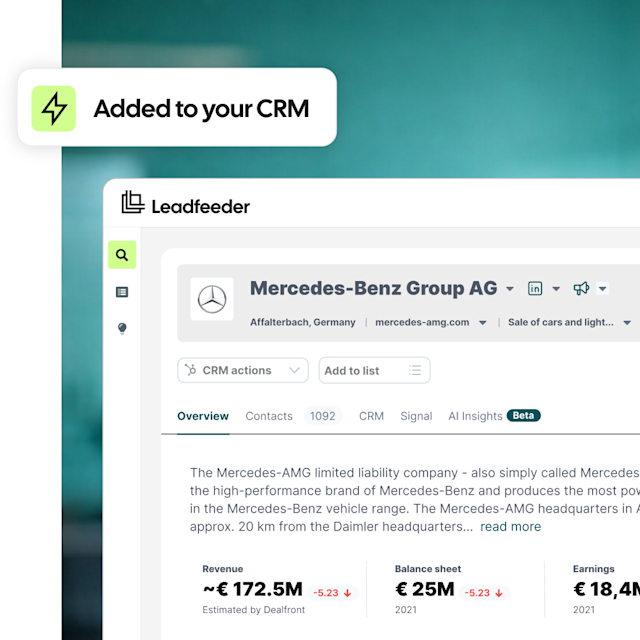
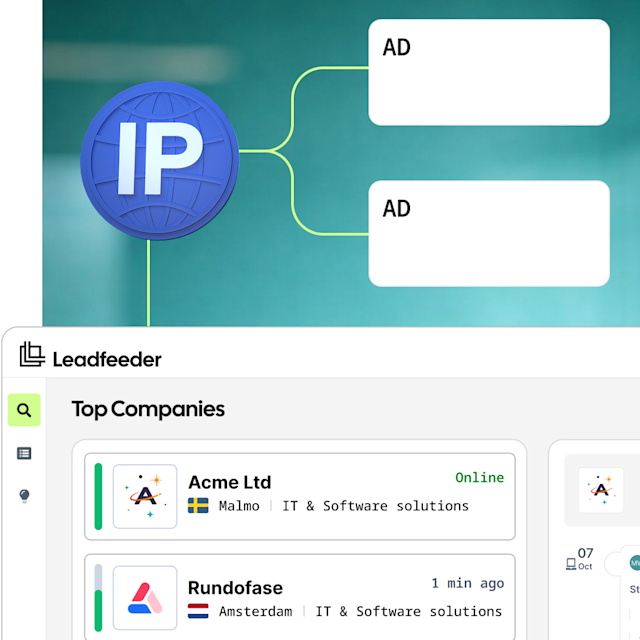
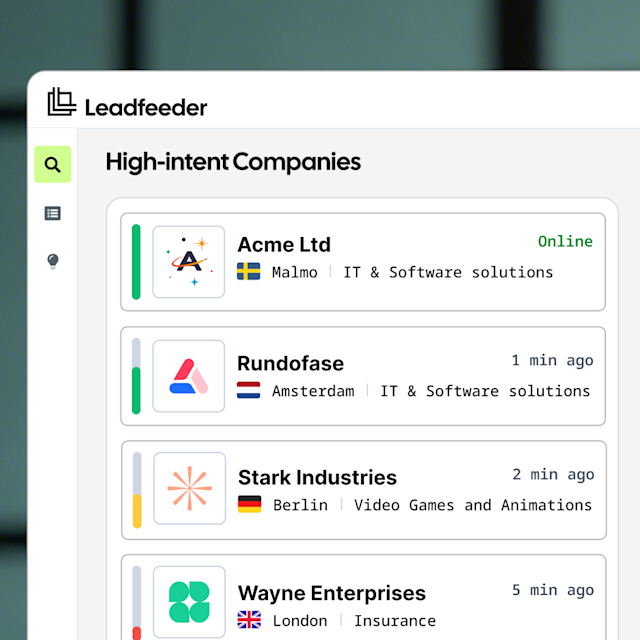
Leadfeeder is a powerful B2B platform designed to help sales and marketing teams work smarter and more efficiently. It combines real-time buyer intent signals, deep company intelligence, and anonymous website visitor identification to help teams focus on the accounts that are actually interested, not just the ones on a list.
Key strengths:
Real-time insights into account activity and buying intent
Accurate company matching for anonymous website traffic
Precise audience segmentation and targeting filters
Native integrations with Salesforce, HubSpot, Pipedrive, and more
Where Leadfeeder really shines is in its ability to uncover in-market buyers early in the journey and help teams prioritize outreach accordingly. It’s intuitive, powerful, and refreshingly transparent when it comes to pricing. Plus, the platform is fully GDPR-compliant and tailored for European data standards, which gives it a strong edge for global teams and those with a focus on compliance.
Best for: Real-time intent data, website visitor identification, and unified go-to-market execution.
2. 6sense
6sense uses artificial intelligence to help companies predict which accounts are most likely to convert. It aims to surface activity from the "dark funnel", those early research signals that aren't always visible to sales and marketing teams.
Key strengths:
Predictive analytics powered by AI
Comprehensive campaign coordination across channels In-depth buyer journey tracking
While 6sense offers impressive functionality, it’s often geared towards larger companies with technical teams and deep budgets. The onboarding process can be complex, and smaller teams may struggle to make the most of its full capabilities.
3. Metadata.io
Metadata automates demand generation by using AI to run paid campaigns across channels like LinkedIn, Facebook, and Google. It’s built to optimize performance without constant manual input, making it a favorite among lean marketing teams.
Key strengths:
AI-driven campaign execution
Automated lead enrichment and routing
Integrations with major CRMs and MAPs
That said, Metadata’s platform can feel complex at first, and its performance depends heavily on clean input data. Teams with messy CRMs or unclear ICPs may struggle to get the most out of the automation. It’s a powerful tool, but not always plug-and-play.
4. RollWorks
RollWorks is known for its user-friendly design and effective account-based advertising. It's a good entry point for companies dipping their toes into ABM, especially those already using HubSpot or Salesforce.
Key strengths:
Easy setup and navigation
Strong native integrations
Solid ad targeting capabilities for SMBs
However, RollWorks tends to fall short for companies needing deeper insights, intent data, or more advanced orchestration. It’s built for simplicity over sophistication, which is great at first but may limit scalability over time.
5. Bombora
Bombora specializes in B2B intent data, collecting insights from a broad network of content sources to help businesses understand who’s researching what — and when.
Key strengths:
Wide-ranging topic intent coverage
Reliable third-party data signals
Works well alongside other ABM tools
But Bombora is more of a supporting player than a standalone solution. It doesn’t offer campaign execution or account engagement tools, so it’s often used alongside platforms like Leadfeeder or 6sense. It’s also priced on data volume, which can quickly add up making it a more expensive option.
6. Madison Logic
Madison Logic focuses on content distribution and display advertising designed to influence key decision-makers. It’s a useful tool for enterprise marketers aiming to push high-value content into the right hands.
Key strengths:
Data-driven prioritization of target accounts
Syndication across industry-relevant channels
Advertising options for reaching B2B buyers
That said, Madison Logic is highly specialized. It’s not built for everyday ABM execution or sales outreach and may feel like overkill for smaller teams or more agile marketing setups.
7. NetFactor (VisitorTrack)
NetFactor’s VisitorTrack focuses on identifying anonymous website visitors and turning them into actionable account-level insights. It’s geared toward uncovering in-market buyers earlier in the journey, making it useful for top-of-funnel ABM.
Key strengths:
Strong IP-to-company visitor tracking
Company-level engagement scoring
Simple setup for mid-market teams
However, NetFactor is narrower in scope than broader ABM platforms. It doesn’t offer native orchestration or advertising tools, so it’s best used as part of a broader stack, often alongside platforms like ZoomInfo or Leadfeeder for full-funnel execution.
8. Apollo.io
Apollo.io is a sales engagement platform that combines a B2B contact database with email automation. It’s commonly used by sales teams looking to build outbound campaigns quickly and affordably.
Key strengths:
Large database of verified contacts
Email sequencing and engagement tracking
Free tier and budget-friendly pricing
Apollo is great for cold outreach, but it lacks deeper intent signals, ABM orchestration, and advanced analytics. It’s a useful tool for top-of-funnel activity but may not support longer sales cycles or complex buyer journeys.
9. Marketo Engage (Adobe)
Marketo Engage is a robust marketing automation platform that includes ABM features like account scoring, personalized nurture programs, and advanced segmentation.
Key strengths:
Comprehensive automation capabilities
Account-level tracking and reporting
Integration with the Adobe ecosystem
But Marketo is a heavyweight platform. Implementation can be long and resource-intensive, and teams without dedicated ops support may find it difficult to maintain. It’s also more marketing-focused than sales-aligned.
10. ZoomInfo
ZoomInfo is one of the most widely used B2B data providers, offering up-to-date contact info, company insights, and buyer intent data for sales and marketing teams.
Key strengths:
Large, frequently updated contact database
Buyer intent tracking and signals
Sales tools for prioritizing leads and outreach
ZoomInfo is powerful, but it can be expensive, and sometimes suffers from patchy data coverage in niche markets. It’s also more of a prospecting tool than a full ABM solution. As such, companies using ZoomInfo also tend to opt for complementary platforms that offer deeper engagement, campaign execution, or intent data (such as Demandbase or Leadfeeder) to round out their ABM strategy.
Demandbase vs Top ABM Alternatives (2026)
Platform | Best For | Key Differentiator |
Demandbase | Enterprise ABM orchestration | Strong advertising + account-level targeting |
Leadfeeder | All-in-one, mid-market GTM teams | Combines intent data + visitor identification in one tool |
6sense | Predictive, AI-driven ABM | Advanced AI models surface early buying signals |
Metadata | Paid campaign automation | AI-driven ad execution and optimization |
RollWorks | ABM beginners / SMBs | Simple setup with solid integrations |
Bombora | Intent data enrichment | Large third-party intent data network |
Madison Logic | Content syndication | B2B content distribution at scale |
NetFactor | Website visitor tracking | Strong anonymous visitor identification |
Apollo.io | Outbound sales teams | Contact database + sequencing in one platform |
Marketo Engage | Marketing automation + ABM | Deep workflows within Adobe ecosystem |
ZoomInfo | B2B data + prospecting | Large contact database + buyer insights |
What to Look For in Your Next ABM Platform
Not all ABM tools are designed to do it all, and with so many options on the market, it’s worth knowing which features actually move the needle for your team. Whether you’re a lean startup or a fully fledged enterprise operation, these are the key areas to compare when sizing up platforms:
Data quality and coverage - you can't target what you can’t see. Make sure the platform offers accurate, up-to-date contact and company data, especially in your region or industry. Poor data leads to poor decisions, and even worse, wasted budget.
Intent signal methodology - not all intent data is worth its weight in gold. Some platforms track content consumption across partner websites; others focus on IP-based site visits or search trends. Look into how the platform collects and scores buying signals, and how timely and actionable those signals really are.
Account identification and prioritization - a good ABM tool won’t just hand you a long list of companies. It should help you identify your best-fit accounts and surface the ones that are most engaged so you can focus your time where it’s most likely to pay off.
Engagement channels and execution tools - think about how your team works. Does the platform support email sequences, display advertising, website personalization, or direct sales outreach? The more channels you can activate from a single platform, the easier it is to run coordinated campaigns.
Analytics and reporting - ABM is an investment, and you’ll need a clear way to prove that it’s paying off. Look for tools that offer transparent reporting, easy-to-read dashboards, and the ability to track pipeline impact and ROI.
Integrations and tech stack fit - Your ABM platform should work seamlessly with the tools you already use, from CRMs like Salesforce and HubSpot to marketing automation tools like Marketo or Pardot. A solid integration ecosystem makes implementation faster and keeps your data flowing cleanly between systems.
Different businesses will weigh these factors differently. If you’re a small team, ease of use and time-to-value might be your top priorities. Larger orgs, on the other hand, may need advanced targeting, custom workflows, or enterprise-grade analytics. The key is to pick a platform that fits how your team actually works, not just one that looks good on a feature comparison table.
The Best All-Round Demandbase Alternative
If you’re looking for a smarter, more agile way to do ABM in 2026, Leadfeeder is hard to beat. Unlike many of the platforms on this list, Leadfeeder offers a complete end-to-end approach, combining powerful intent signals, rich company data, website visitor identification, and seamless integrations into one intuitive platform.
Whether you’re a lean startup trying to punch above your weight or a growing mid-market team that wants better results from your outbound efforts, Leadfeeder gives you the tools to find, engage, and convert the right accounts, without the heavy lift or inflated price tag.
It’s simple enough to get started quickly, but sophisticated enough to scale with your business. And with transparent pricing, local data compliance, and excellent customer support, it’s a platform your whole team can actually get behind.
In short, if you want a platform that combines robust data, actionable insights, and practical execution tools, all without the steep learning curve or sky-high price tag, Leadfeeder is the ABM solution worth investing in.
To see how Leadfeeder can help your team focus on the accounts most likely to convert, request a personalized demo.
FAQs about Demandbase alternatives
What is the most affordable Demandbase alternative?
Apollo.io and RollWorks offer lower-cost plans with essential ABM features, making them attractive for budget-conscious teams. However, they may lack the depth of insight or scalability needed as your strategy matures. Leadfeeder offers strong value by combining intent data, visitor identification, and CRM-ready insights, without the enterprise-level price tag.
Which Demandbase competitor has the best intent data?
Bombora is known for its broad-scale intent data, while 6sense and ZoomInfo use advanced behavioral tracking to surface buyer signals. However, these tools can be expensive or require additional tools to activate the data. Leadfeeder combines first-party intent signals (like website visits and engagement patterns) with real-time company identification, offering a more actionable, GDPR-compliant alternative for teams focused on outreach.
How do Demandbase alternatives handle data privacy compliance?
Most leading ABM platforms include GDPR and CCPA compliance features, but Leadfeeder stands out by being fully built and hosted in the EU, with privacy by design baked into the platform. This makes it a particularly strong choice for companies operating in or targeting the European market.
Can I use multiple ABM platforms together?
Yes, many businesses mix tools like Bombora for intent data and RollWorks for advertising. However, managing multiple tools increases complexity and risks siloed data. Leadfeeder reduces the need for a patchwork setup by combining visitor intelligence, intent tracking, and outreach readiness in one streamlined platform.
Which Demandbase alternative is best for small businesses?
RollWorks and Apollo.io are easy to use and budget-friendly, appealing to smaller teams. That said, they often lack advanced targeting or deeper analytics and so are restrictive. Leadfeeder gives small and mid-sized businesses a scalable option, combining user-friendliness with powerful targeting and buying signal features as they grow.
What is the best Demandbase alternative for European businesses?
For companies focused on the European market, Leadfeeder is a top alternative. It’s fully GDPR-compliant, built in the EU, and offers region-specific data and targeting that many US-based ABM platforms struggle to match. This makes it ideal for privacy-conscious teams that want accurate, compliant B2B intelligence in Europe.
Which ABM platform offers the best website visitor identification?
Leadfeeder excels in identifying anonymous website visitors and matching them to real companies using first-party data. This allows sales and marketing teams to prioritize outreach based on real-time engagement, something not all ABM platforms can do natively.
What are the pros and cons of switching from Demandbase?
Pros include more flexible pricing, simpler implementation, and access to tools that better align with your team’s size or region. Platforms like Leadfeeder, RollWorks, and Apollo.io offer faster onboarding and focused features. Cons may include losing some advanced AI or orchestration features, but for many teams, these aren’t essential and come at a steep price.
Do I need a full ABM platform or just intent data?
If your goal is to identify in-market accounts and take immediate action, a full platform like Leadfeeder offers better integration, targeting, and automation. Standalone intent providers like Bombora offer great signal data but usually require other tools to activate it, meaning more cost and complexity in the long run.
How does Leadfeeder compare to Demandbase in features and pricing?
While Demandbase targets enterprise users with AI orchestration and deep integrations, Leadfeeder delivers many of the same core ABM benefits, such as account intelligence, intent data, and CRM sync, at a more transparent and accessible price point. It’s ideal for teams that want results without the red tape.