Success now depends on combining smarter audience selection, personalized outreach, strong sales and marketing alignment, and automation that scales what works. Rather than chasing volume, high-performing teams prioritize high-intent prospects and build systems that consistently convert interest into qualified pipeline.
B2B Lead Generation Guide
Marketers — need some fresh B2B lead generation ideas to hit your MQL targets? Download this guide and fill up your pipeline now!
DownloadIn 2026, lead generation is less about generating more names, and more about generating better opportunities, faster and more efficiently.
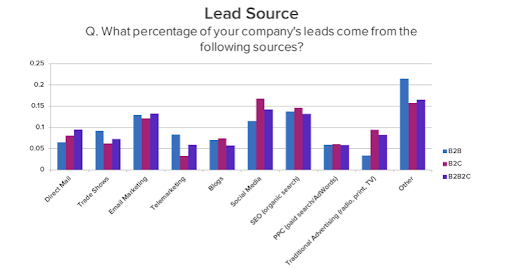
B2B lead generation is about identifying the right prospects, capturing their interest, and gathering essential information, such as name, company, role, and contact details, so sales teams can deliver targeted, personalized messaging. According to Business.com, the three best lead sources for B2B companies are customer referrals, LinkedIn Sales Navigator, and web scraping tools. B2C, on the other hand, gets more leads from traditional advertising, social media, and email.
Any company that sells to other businesses needs a clear B2B sales strategy, from manufacturers and wholesalers to software providers, consulting firms, service agencies, and startups entering competitive markets. Without one, sales efforts become reactive, inconsistent, and difficult to scale. With one, teams can focus on the right accounts, align marketing and sales, streamline outreach, measure performance, and build long-term client relationships that drive predictable revenue growth.
You must customize your approach to fit your organization, industry, product, and target audience. This often requires tuning out the noise of self-promotion and experimenting with different lead gen tactics to find what truly works for you.
The formula is simple: more leads equals more sales. To drive meaningful growth, expanding your lead pipeline is essential.
Here are some examples of effective B2B sales strategies and tactics that businesses can implement to drive sales and foster long-term relationships with their clients:
Note: Leadfeeder helps B2B businesses generate more leads by identifying companies that visit your website. Sign up now for a free 14-day trial.
1. Account-based Marketing (ABM)
What it is: Account-Based Marketing (ABM) is a highly targeted B2B strategy where sales and marketing teams focus on a defined list of high-value accounts rather than casting a wide net.
Why it matters in 2026: B2B buying groups now involve multiple decision-makers. Generic outreach no longer works. ABM increases efficiency by concentrating time and resources on accounts with the highest revenue potential.
In 2026, AI has made ABM significantly more precise. Instead of manually selecting target accounts based on surface-level criteria, teams can now use AI-powered intent data and predictive analytics to identify companies actively researching relevant solutions. AI also helps map buying committees, surface engagement signals across stakeholders, and prioritize accounts most likely to convert, ensuring sales teams focus their efforts where they will drive the greatest impact.
How to execute it effectively:
Identify high-value target accounts based on revenue potential, fit, and buying intent.
Use AI tools to analyze engagement signals and prioritize in-market accounts.
Research each account’s business goals, pain points, and stakeholders.
Align sales and marketing on messaging and outreach cadence.
Deliver personalized emails, ads, landing pages, and content tailored to each account.
Track engagement with decision-makers, not just a single contact.
A/B testing plays a critical role. Test headlines, CTAs, layouts, and offers to determine which increase conversions.
Example: A software company targets specific high-value accounts by creating personalized marketing campaigns tailored to each account's unique needs and challenges. This approach involves aligning sales and marketing efforts to deliver customized content and outreach, increasing engagement and conversion rates.
Revenue impact: Higher deal sizes, shorter sales cycles, and stronger win rates due to personalized engagement.
2. Content Marketing
What it is: Content marketing uses valuable, educational content to attract, engage, and convert B2B prospects.
Why it matters in 2026: Buyers complete a large portion of research before speaking to sales. High-quality content positions your company as the trusted authority early in the decision process.
How to execute it effectively:
Create content aligned with each stage of the buyer journey.
Develop industry-specific case studies and whitepapers.
Publish SEO-optimized blog articles targeting high-intent keywords.
Host webinars addressing real business challenges.
Repurpose content across email, LinkedIn, and sales enablement materials.
Example: A consulting firm creates valuable resources, such as whitepapers, case studies, and webinars, to educate potential clients about industry trends and best practices. By positioning themselves as thought leaders, they attract leads and build trust with their audience, ultimately driving sales.
Revenue impact: Warmer leads, stronger credibility, and reduced sales friction.
3. Referral Programs
What it is: A structured system that incentivizes existing customers or partners to refer new business.
Why it matters in 2026: Trust drives B2B decisions. Referrals shorten trust-building time and often lead to higher close rates.
How to execute it effectively:
Offer financial rewards, service credits, or exclusive access.
Make the referral process simple and trackable.
Equip customers with messaging or referral templates.
Recognize and celebrate advocates publicly (where appropriate).
Example: A B2B service provider implements a referral program incentivizing existing clients to refer new businesses. They tap into their customer base to generate new leads by offering discounts or rewards for successful referrals.
Revenue Impact: Lower acquisition cost and higher-quality leads.
4. Targeted Email Campaigns
What it is: Segmented, personalized email outreach designed to move prospects through the sales funnel.
Why it matters in 2026: Mass email blasts underperform. Segmentation and personalization significantly increase engagement.
How to execute it effectively:
Segment lists by industry, company size, and engagement history.
Personalize subject lines and messaging.
Use behavioral triggers (e.g., downloaded a guide, visited pricing page).
Include clear calls to action.
Test and optimize open and conversion rates.
Example: An e-commerce platform sends targeted email campaigns to segmented lists of potential clients based on their industry and past interactions. These emails offer tailored solutions and highlight relevant case studies, increasing the likelihood of conversions.
Revenue impact: Higher engagement rates and more sales-qualified leads.
5. Social Selling
What it is: Using social platforms, especially LinkedIn, to build relationships and generate sales conversations.
Why it matters in 2026: Decision-makers evaluate vendors based on visibility, expertise, and credibility before responding to outreach.
How to execute it effectively:
Encourage sales reps to optimize LinkedIn profiles.
Share educational insights and thought leadership content.
Engage with prospects’ posts and industry discussions.
Use direct messaging strategically, not aggressively.
Track engagement signals as buying intent indicators.
Example: A technology company encourages its sales team to engage with prospects on LinkedIn by sharing insightful content, participating in discussions, and building relationships. This approach helps establish credibility and opens doors for direct sales conversations.
Revenue impact: Warmer conversations and improved response rates.
6. Partnerships and Alliances
What it is: Collaborating with complementary businesses to expand market reach and create bundled solutions.
Why it matters in 2026: Complex B2B problems often require integrated solutions. Partnerships increase value and credibility.
How to execute it effectively:
Identify complementary service providers.
Create co-branded offers or bundled services.
Share lead pipelines strategically.
Align messaging and target audience definitions.
Track joint revenue outcomes.
Example: A logistics company partners with a manufacturing firm to offer bundled services. By leveraging each other's strengths, they create a comprehensive solution for clients, increasing their market reach and sales opportunities.
Revenue impact: Expanded reach and access to new customer segments.
7. Lead Nurturing Programs
What it is: A systematic process of building relationships with prospects over time until they are ready to buy.
Why it matters in 2026: B2B sales cycles are longer. Most leads are not sales-ready immediately.
How to execute it effectively:
Use marketing automation to send sequenced content.
Deliver stage-specific value (education → comparison → proof).
Score leads based on engagement.
Trigger sales outreach when intent signals increase.
Maintain consistent communication without overwhelming prospects.
Example: A marketing agency uses automated lead nurturing campaigns to stay in touch with potential clients over time. They gradually guide leads through the sales funnel by providing ongoing value through educational content and timely follow-ups.
Revenue impact: Higher conversion rates and reduced lead drop-off.
8. Free Trials or Demonstrations
What it is: Allowing prospects to experience your product or service before committing financially.
Why it matters in 2026: Buyers want proof of value before making significant investments.
How to execute it effectively:
Offer guided demos rather than passive access.
Provide onboarding support during trial periods.
Track usage and follow up based on engagement levels.
Highlight quick wins during the trial.
Example: A SaaS company offers free trials or live demos of its software to potential clients. This hands-on approach lets prospects experience the product's value firsthand, making them more likely to convert to paying customers.
Revenue impact: Reduced buyer hesitation and faster purchasing decisions.
9. Customer Feedback and Testimonials
What it is: Leveraging satisfied customers’ experiences to build credibility and influence new prospects.
Why it matters in 2026: Peer validation significantly influences B2B purchasing decisions.
How to execute it effectively:
Collect testimonials after measurable success milestones.
Develop in-depth case studies with data and outcomes.
Feature client logos (with permission).
Use testimonials in proposals and landing pages.
Example: A manufacturing company actively solicits feedback from existing customers and showcases positive testimonials on its website and in marketing materials. This builds credibility and reassures potential clients about the quality of their offerings.
Revenue impact: Stronger trust and higher close rates.
10. Trade Shows and Industry Events
What it is: Participating in in-person or virtual industry gatherings to connect with prospects and partners.
Why it matters in 2026: Despite digital growth, face-to-face interaction remains powerful for high-value deals.
How to execute it effectively:
Pre-book meetings before the event.
Train booth staff to qualify leads effectively.
Use digital tools to capture and segment contacts.
Follow up within 48 hours post-event.
Repurpose event content for marketing.
Example: A B2B company participates in trade shows and industry conferences to showcase its products and services. These events provide opportunities for networking, lead generation, and face-to-face interactions with potential clients.
Revenue impact: High-intent leads and relationship acceleration.
Summary of 10 B2B Lead Generation Strategies for 2026
Strategy | What It Does | Why It Matters |
Account-Based Marketing (ABM) | Targets high-value accounts with personalized outreach | Buying groups are larger; precision beats volume |
Content Marketing | Attracts and educates prospects through valuable content | Buyers research independently before speaking to sales |
Referral Programs | Generates leads through existing customer advocacy | Trust-driven decisions dominate B2B purchasing |
Targeted Email Campaigns | Nurtures segmented leads with personalized messaging | Generic email blasts no longer convert |
Social Selling | Builds relationships via platforms like LinkedIn | Decision-makers vet vendors socially before engaging |
Partnerships and Alliances | Expands reach through complementary businesses | Integrated solutions increase competitiveness |
Lead Nurturing Programs | Guides prospects through long buying cycles | Most B2B leads are not sales-ready immediately |
Free Trials / Demos | Lets prospects experience the product before purchase | Buyers demand proof of value before committing |
Testimonials and Case Studies | Provides social proof to reduce risk | Peer validation strongly influences decisions |
Trade Shows and Industry Events | Connects with prospects in high-intent environments | Face-to-face engagement accelerates complex deals |
B2B Lead Generation Guide
Marketers — need some fresh B2B lead generation ideas to hit your MQL targets? Download this guide and fill up your pipeline now!
DownloadFAQs about B2B Sales Strategy
1. What is B2B sales?
B2B sales, or business-to-business sales, involve transactions where one business sells products or services to another business rather than to individual consumers. This type of sales typically focuses on building long-term relationships, understanding the unique needs of other businesses, and providing tailored solutions that address specific challenges.
B2B sales processes often involve multiple decision-makers, longer sales cycles, and a greater emphasis on value and ROI, making effective communication and relationship management crucial for success.
2. What are the main types of B2B sales?
The main types of B2B sales include Transactional Sales, focusing on quick purchases; Consultative Sales, which emphasizes building relationships and understanding client needs; Solution Selling, centered on providing tailored solutions; and Enterprise Sales, characterized by longer cycles and larger deals involving multiple stakeholders.
There are also Inbound Sales, which attract leads through valuable content, and Outbound Sales, which involve proactively reaching out to potential clients through cold calls and direct outreach. Each type requires distinct strategies tailored to the products or services and the target market.
3. B2B vs. B2C sales: How are they different?
B2B sales focus on business transactions and often involve longer sales cycles and multiple decision-makers, while B2C sales target individual consumers with quicker purchasing decisions and simpler sales processes.
4. Who leads the B2B sales process?
In the B2B sales process, the sales team usually takes the lead, often collaborating closely with marketing, customer success, and product management teams. The sales team is responsible for identifying potential business partners or customers, nurturing relationships, and guiding them through the sales funnel.
This process involves multiple stakeholders, including decision-makers and influencers from selling and buying organizations. Account managers can also play a significant role in maintaining ongoing relationships and ensuring customer satisfaction post-sale, contributing to long-term success in B2B sales.
5. What are the essential B2B sales activities in the sales process?
B2B sales activities vital to the sales process include lead generation, where potential customers are identified; qualification, to determine the viability of leads; needs assessment, to understand customer challenges; product presentations, showcasing solutions tailored to those needs; objection handling, addressing any concerns or questions from prospects; and closing, securing the sale through effective negotiation. Follow-up is crucial for nurturing relationships and ensuring customer satisfaction post-sale, ultimately contributing to long-term client retention.
6. How do you develop a successful B2B sales strategy?
Developing a successful B2B sales strategy requires a structured, data-driven approach that aligns your sales efforts with your business goals and target market. Here are the nine essential steps:
Understand your target market – Define your Ideal Customer Profile (ICP), including industry, company size, location, decision-makers, and pain points. Conduct market research to understand competitors and buyer behavior.
Set clear, measurable goals – Establish specific sales targets such as revenue, new customer acquisition, conversion rates, or pipeline value. Ensure these goals align with overall business objectives.
Create a compelling value proposition – Identify what differentiates your product or service and clearly communicate the measurable outcomes you deliver. Tailor your messaging to address customer challenges.
Develop a multi-channel approach – Use a mix of sales channels such as direct outreach, email campaigns, LinkedIn engagement, partnerships, and events. Align marketing and sales for consistent messaging.
Build a strong sales team – Hire skilled sales professionals and invest in ongoing training to improve product knowledge, consultative selling skills, and industry expertise.
Implement a structured sales process – Define each stage of your sales funnel, from lead generation to closing. Use CRM tools to manage leads, track interactions, and monitor deal progress.
Leverage technology and automation – Use sales enablement tools and automation to streamline repetitive tasks, track performance, and improve efficiency.
Monitor and optimize performance – Track key metrics such as conversion rates, deal size, and sales cycle length. Use data and feedback to refine your strategy continuously.
Nurture long-term relationships – Maintain regular communication with prospects and customers. For high-value accounts, apply personalized approaches like account-based marketing (ABM) to strengthen partnerships and drive repeat business.
Following these nine steps creates a scalable, predictable B2B sales engine that improves efficiency, increases win rates, and supports long-term growth.
7. How do you use metrics and data to improve your B2B sales strategy?
To improve your B2B sales strategy using metrics and data, identify key performance indicators (KPIs) like conversion rates and customer acquisition costs. Collect and analyze data from sources like CRM systems to uncover trends and establish benchmarks. Regularly monitor these metrics to identify strengths and weaknesses, and use A/B testing to refine your tactics.
It is also important to gather customer feedback to adapt your offerings and train your sales team, ensuring your strategy remains effective and data-driven.

Jessie works in Content Marketing and Social Media for 6+ years and creates authentic, brand-led content that helps turn target audience into customers.