60-Second Summary
Most growth tactics fail because they're applied at the wrong stage of the funnel. Effective growth marketing maps tactics to user intent across TOFU, MOFU, and BOFU to meet prospects where they are.
Key takeaway: Align tactics to funnel stages — awareness, consideration, and decision — so assets match user needs and timing.
Standout strategies and tactics: TOFU — targeted exit pop-ups, gamified quizzes, segmented lead magnets; MOFU — free tools, video case studies, expert guides; BOFU — follow-ups on high‑intent pages, comparison sheets, clear pricing.
Real-world tactics: Use intent triggers (time on site, pages viewed) and audience segmentation (e.g., sales vs. marketing lead magnets) to serve the right asset at the right moment.
Framework and measurement: Monitor high‑intent page visits (pricing, demo) with tools like Leadfeeder to prioritize outreach, validate ICP fit, and shorten conversion cycles.
*This summary was created with AI assistance, using our original content.
The problem is that most growth tactics fail because they are used at the wrong stage of the funnel. Instead of aligning with user intent, they are applied too early, too late, or without context, so they miss their mark.
To use growth marketing effectively, you need to understand the funnel and match each tactic to where users are in their journey.
Take a look at the average marketing funnel:
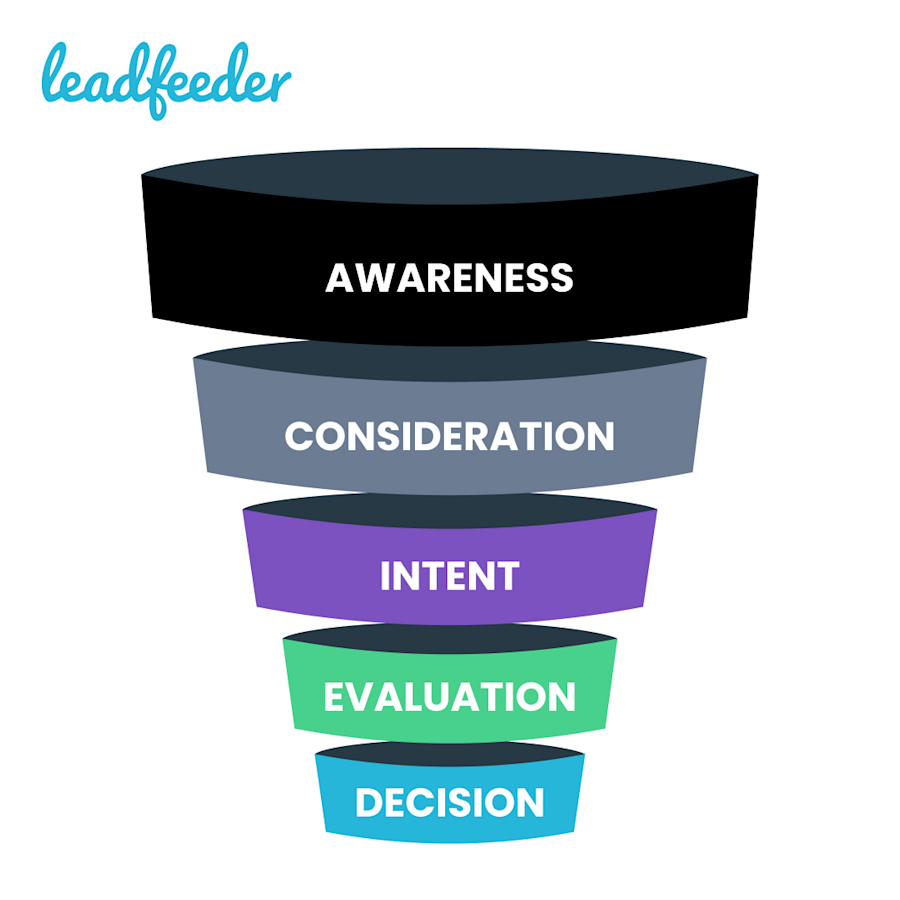
The users at the top of the funnel don't have the same needs or wants as those who are almost ready to convert.
For example, comparison guides are a fantastic growth marketing tool, but if you try to get a TOFU user to sign up from an in-depth comparison guide, you're gonna have a bad time.
To be effective, growth marketing strategies must meet prospects where they are in the funnel.
Note: Leadfeeder is a website identification tool that finds and tracks companies that visit your site — even if they don't fill out a form. Try us free for two weeks.
TOFU Growth Marketing Tactics
The top of the funnel refers to users still in the awareness or interest stage of the buying cycle. They have an issue, they're considering a solution, but they are still pretty wide open in terms of options.
Let's look at three growth marketing tactics that address users in that stage of the funnel.
1. Use exit-intent pop-ups to gather email addresses
Popups get a bad rap — and I understand why. Remember all those annoying pop-ups that covered our screens on mobile or kept bouncing around so we couldn't close them? (Luckily, Google cracked down on those.)
Those aren't the popups we're talking about.
Instead of showing all users the same popup (or using annoying pop-ups), use triggers to show targeted pop-ups to specific audiences.
For example, time-based exit-intent popups. If a user has spent more than a minute on your website and leaves your site, a popup asks them to join your newsletter, download a free guide, or try the product for free.
We have one running right now that looks like this:
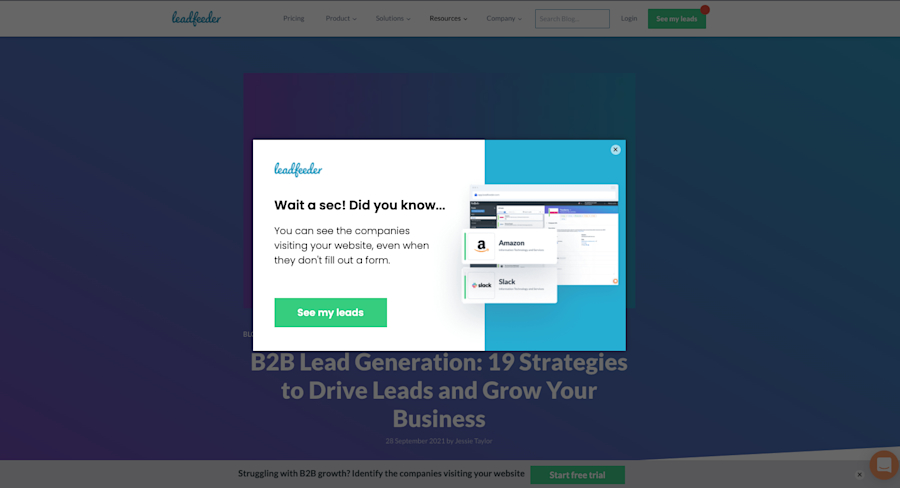
The key here is to use triggers that indicate intent.
If a user spends five seconds on your site, they might not have found what they are looking for — and are unlikely to respond to a popup.
But if they read three pages or spent a minute on your site, it means they liked what they saw and might want to hear more from your company.
2. Leverage gamification to encourage user engagement
Many B2C companies use gamification to encourage user engagement, but it can work in B2B as well.
How do you use gamification for TOFU growth?
Consider including quizzes or polls on your site.
For example, Site Improve offers a 12-question SEO quiz that tells you how good you are at SEO. It's a fun way to test your knowledge:
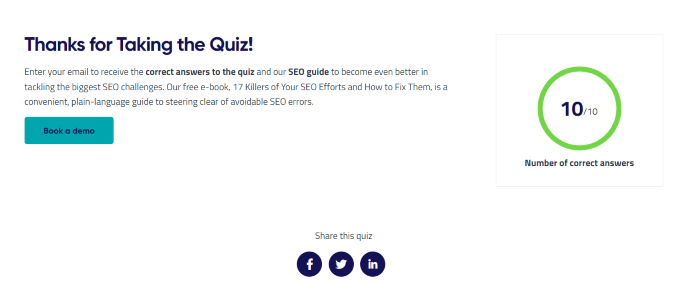
Notice how they include a button to book a demo and share on social on the results screen. That encourages even more interaction.
3. Use segmentation to deliver targeted lead magnets
You already know lead magnets can help you gather more leads.
Unfortunately, not everyone will download your lead magnet.
Instead of targeting everyone with the same lead magnet, create different assets for your different customer profiles.
For example, at Leadfeeder, we target both salespeople and marketers. Those are very different positions, so we created two different lead magnets.
Here are the separate lead magnets we created: a guide to Leadfeeder for sales, and a guide to Leadfeeder for marketers.
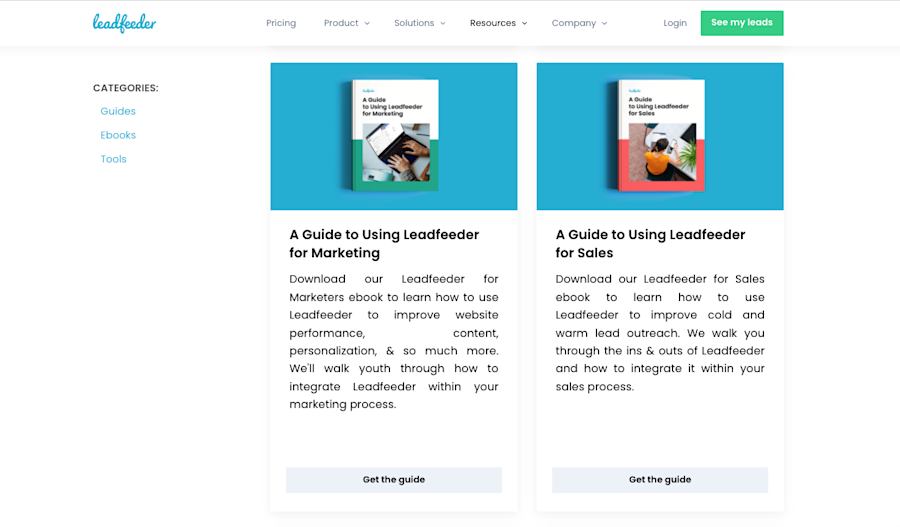
Leads that interact with sales content are targeted with cold email templates or guides on building an effective sales team.
Users who interact with marketing-related content tend to like our account-based marketing guide.
MOFU Growth Marketing Tactics
Middle-of-the-funnel users are in the "consideration" stage of the buyer's journey. They know they have an issue and need a solution, but aren't sure which company is the right choice.
The most effective growth strategies at this stage are ones that provide a solution — you might not fix everything, but you find a way to make their jobs just a little easier.
Let's look at three MOFU growth strategies.
4. Share a free tool (or download)
Building a tool or creating an in-depth download is time-intensive, but it is worth the effort.
This is seriously one of the most effective B2B growth marketing strategies out there. For example, the downloads we offer at the end of each blog generated over 7,000 leads in 2021.
Worth it!
In one case, we realized that most sales teams struggle to accurately calculate their cost per lead. There are several calculators out there, but they often omit critical data, such as the cost of content, landing page software, etc.
So, we created our own cost per lead calculator:
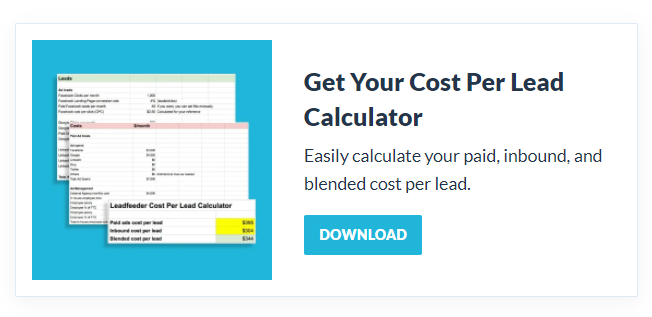
This helps users who are struggling to generate leads, which is one of our target audiences.
Even better, it helps them see how Leadfeeder can help reduce CPL. As of today, the pop-up on the blog that leads to this tool has been clicked 972 times. Neato 🤓
5. Use video testimonials and case studies
Adding testimonials and case studies to your website is a common growth marketing strategy.
But the middle of the funnel users want more than just a quick "~Love this tool!~" review.
They want details.
They want to know how your specific tool works, what features it has, and what results they can expect.
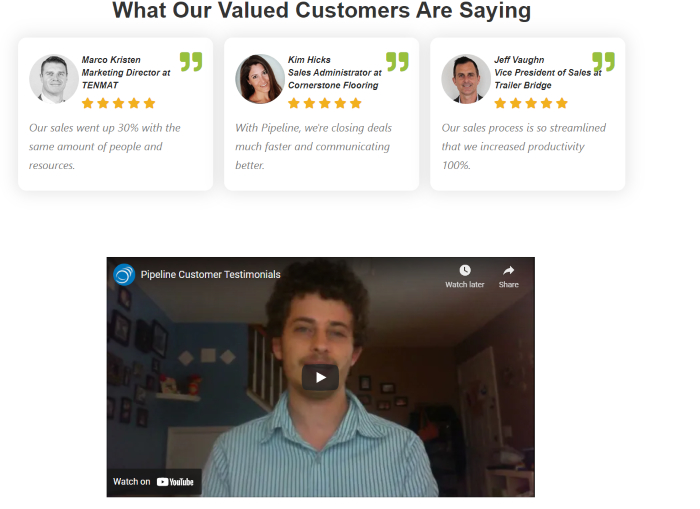
Video testimonials and case studies allow you to share more about how your tool/solution works, which is ideal for MOFU users still weighing their options.
For example, Pipeline includes both short testimonials and video case studies that dig deeper:
6. Create expert guides that solve customer issues
People in the consideration stage of the funnel are looking for solutions. In addition to sharing tools, consider other ways you can help solve issues they face.
In-depth guides or expert-level training show leads who know what you are talking about.
Expert-level content that addresses problems builds trust, so they're more likely to trust your solution to solve even bigger problems.
A cool piece of content we created in this category is a blog titled “How Leadfeeder Uses Leadfeeder”. Showing customers how you utilize your own product earns major trust points.
BOFU Growth Marketing Tactics
Bottom-of-the-funnel prospects are almost ready to convert. They know they have an issue, know your company, and are prepared to make a decision.
Which means it's time to pull out all the stops. Here are three growth marketing strategies to ensure BOFU prospects become customers.
7. Follow up with companies that visit high-intent pages
Not all website traffic indicates a high intent to purchase. For example, if a company visits your home page, they might have just heard about your company or clicked a link from social media.
Other pages — like your pricing or demo page — indicate leads are much closer to making a purchase decision.
Using Leadfeeder, you can track visitors to those pages and then pass those leads to sales for follow-up.
Sales can then create a personalized pitch or answer questions.
Even better, your Leadfeeder dashboard provides information about the company, like location, industry, and size, so you can ensure they fit your ICP before following up.
8. Share comparison sheets
BOFU users are comparing options. They are looking at features, customer reviews, support options, and pricing.
That can get overwhelming, especially when comparing several options.
Make it easy by sharing comparison sheets or blog posts (like this one that compares Leadfeeder to one of our competitors) to break down the differences between you and your competitors.
In addition to blogs on the subject, we have a section of our footer dedicated to comparison pages — these were created to help potential customers make the final decision (and choose Leadfeeder 😉).
This isn't a time to toot your own horn and ignore where you fall short.
Rather, take the time to explain exactly what you offer and how you can help.
Who are your ideal customers? Why are you the best fit for them?
Be clear, honest, and direct.
9. Be clear on pricing, features, etc.
Many B2B companies use a custom pricing plan. They want users to reach out for a demo before they share how much the tool costs.
In B2B, the cost is less of a factor, so it might seem like a good move.
But being vague about pricing and features can result in lost leads. When users are ready to buy, make sure they have the information they need to make a decision.
This doesn't mean you have to limit your offerings to just three plans (which can be impossible, especially if you have à la carte features), but at least provide leads with a point of reference.
Leadfeeder makes B2B growth a reality
Growth marketing means creating sales and marketing strategies with one goal in mind — growth.
The key to successful growth marketing is developing strategies that focus on each step in the funnel.
TOFU, MOFU, and BOFU leads interact with and respond to sales and marketing efforts differently — so make sure your strategies meet users where they are in the funnel.
Note: Leadfeeder is a website tracking tool that helps growth-focused B2B companies find and convert more leads. Try us free for 14 days.