60-Second Summary
This post explains how to measure B2B lead generation ROI using two practical calculators (break-even and profit) and outlines five ways Leadfeeder can drive revenue. Try the 14-day free trial to validate results and turn website visitor signals into measurable deals.
Key takeaways: Use the break-even calculator (monthly fee, average deal size, or required raw leads) and the profit calculator (monthly fee, qualified leads, profit per deal, conversion rate) to quantify how many leads or deals justify Leadfeeder; comparing its cost to typical $200–$300/lead shows potential savings and clearer ROI.
Standout strategies and tactics: Focus on higher-converting website leads (≈1.55% lead→deal), target companies that show intent to boost hit rates (reported ~4× vs cold lists), let sales build and monitor feeds to save marketing time, and use custom filters (e.g., Source/Medium = Google / cpc) to track campaign ROI.
Real-world lessons and frameworks: Real examples show measurable impact (e.g., 120 website leads → 25 qualified → 8 opportunities → 2 deals); factor in customer lifetime value and retention (60–70% chance to sell to existing customers) when assessing long-term ROI, and leverage visitor tracking to discover competitors, investor interest, and ABM opportunities.
*This summary was created with AI assistance, using our original content.
Understanding how Leadfeeder works is not enough. You need numbers that prove it can generate revenue and justify the cost.

This post gives you exactly that. How do I measure ROI in B2B lead generation? You will learn how to use two calculators to estimate results for your business, and see five specific ways Leadfeeder can drive profit.
Note: Try Leadfeeder's 14-day free trial to kick your pipeline up a notch.
Leadfeeder profit calculator: break-even
B2B lead generation ROI measurement starts here. This break-even calculator shows two things:
How many raw leads do you need per month to reach a sales break-even point (lead-to-deal conversion rate of 1.55%), or:
How many deals you need to make per month (based on your average deal size).
How to use it:
Let’s use the average conversion percentage for website leads to deals to make some simple calculations in our incredibly useful break-even calculator.
Check your Leadfeeder monthly subscription fee (see the pricing page if you need help) and add it to the calculator.
Next, write down your average deal size.
Now press “Calculate”.
Easy, right?
Compare Leadfeeder's monthly cost to what most businesses charge for lead generation — usually between $200 and $300 per lead, depending on your industry. You could save hundreds — maybe even thousands — a month while getting higher-quality leads.
Leadfeeder profit calculator: your lead generation ROI calculator
Ready for some more complex math? The average ROI B2B lead generation software delivers comes down to your own numbers.
The first calculator showed you how many leads you needed per month; now we’re aiming for profit!

How to use it:
Like before, enter the monthly price you pay for Leadfeeder and your average deal size.
Now enter how many qualified leads you’ve earned with Leadfeeder during the last month. Check from the app if you can’t remember.
Then, enter the profits you typically earn per deal. If you sell something for $300 and it costs $100 to produce, that’s a 67% profit.
Finally, enter your lead-to-deal conversion percentage —or if you don’t know it, enter 1.55 (typical B2B website lead-to-deal conversion).
Click “calculate profits”.
How to increase lead generation ROI: 4 ways Leadfeeder drives profits
Now, you've got those cold/hard/amazing numbers. But what other ways can Leadfeeder drive profits?
1. Increase website leads
Salesforce's B2B Sales Benchmarks: Lead-to-Opportunity Conversion Rate study found that the average B2B sales conversion rate is 13 percent from lead to opportunity and 6 percent from opportunity to deal.
This means the average conversion rate from lead to deal is around 0.78 percent.
For every 130 “raw leads” your salespeople get, just one becomes a deal. As you can see in the graph below, conversion rates vary across channels, but the average is 0.78%.
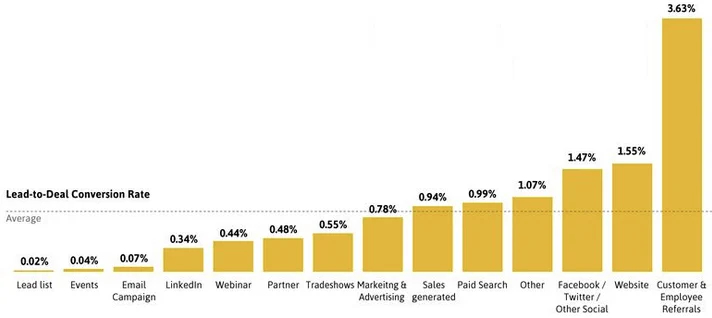
For website leads, the conversion rates are higher: 31.3% from lead to opportunity and 5% from opportunity to deal.
This gives an overall website conversion rate from lead to deal of around 1.55 percent – making your website the second-best way to generate sales for your business.
Leadfeeder improves website lead generation, so you can increase that rate by focusing on companies that are interested in what you have to offer. For instance, you’ll avoid wasting time on someone who's just looking at job listings.
2. Increased hit rate
The average B2B conversion rate from cold calls to appointments is roughly 0.3 percent. Typically, Leadfeeder customers report a 4x better hit rate than contacting cold leads (e.g., from a company database) by targeting companies that have shown interest on their website.
Imagine how much this could increase if your salespeople weren’t blindly calling through “dumb” lead lists bought from outdated company databases. Time saved by marketing.
The sales industry is becoming more intelligent, and salespeople want more autonomy to qualify leads. SaaS tools like Leadfeeder put power in the hands of sales — and reduce the time marketing spends.
Our CRO, Jaakko Paalanen, said it best in this article on analytics-based sales.:
“It is important that sales and marketing work closely together, but it’s not efficient if they keep requiring each other’s time. Especially if there are tools that can automate lead generation on your website. When lead feeds can be created and monitored by salespeople alone, it will release time for marketing people to concentrate more on driving traffic and qualifying leads from other sources."
3. Reduced costs of retention
Once you’ve closed the deal, keep monetizing the existing relationship.
The probability of selling to an existing customer is 60-70 percent (according to this study), whereas the chances of selling to a new prospect are 5-20 percent.
Clearly, selling more to current customers is more valuable.
Tracking website visitors helps you understand what your existing customers are doing on your site, which puts you in a much better position to up-sell, cross-sell, and tailor offers to current customers.
4. Long-term benefits of Leadfeeder
The long-term benefits are more difficult to put in tangible numbers (and you’re probably over my head with the formulas (emoji)).
But here are a few benefits of Leadfeeder you might not have noticed:
Track your competitors online and discover new competitors. We have a whole guide devoted to how to achieve this with Leadfeeder. Have a look.
Keep track of which investors are silently checking you out. This might be your upper management’s dream-come-true, and the payback can be enormous.
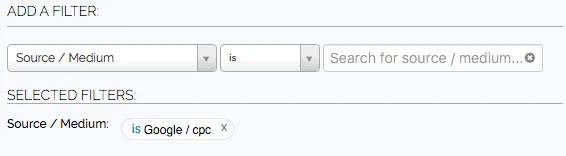
Measure how well SEM and other campaigns attract relevant leads. Want to know how to track ROI of lead generation campaigns like paid ads and other marketing efforts? Create a custom feed with filter “Source / Medium” = Google / cpc.
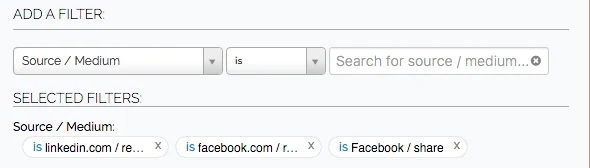
How about your social media channels? Are you raising awareness, or are your social channels attracting real B2B leads? Try creating the following filter in Leadfeeder:
Real-life examples of Leadfeeder ROI
If you’re not convinced by these awesomely simple calculators (perfect for answering those tough ROI questions from your boss), how about some real-life examples?
We asked some of our customers how Leadfeeder works for them when costs, deal sizes, and margins are taken into account.
Here’s one reply we got:
“Our lowest price point for a deal is £402. If we were able to convert at least one visitor to a small, medium, or large subscription price, we would consider this a good return on investment. That said, this doesn’t take into account customer lifetime value, whereby the cost of acquiring a customer decreases should they renew for multiple years.”
Customer lifetime value can be difficult to evaluate, but if you’re in complex sales with high-value deals and long sales cycles, it’s truly invaluable.
Another example, one of our customers jotted down their LF stats over a single month:
Leadfeeder website leads: 120
Qualified and followed-up leads: 25
Opportunities (meetings): 8
Deals: 2
Here are some impressive stats from Programmatic B2B:
A recent campaign delivered 114 healthcare leads and 155 insurance leads in under 30 days. We were able to match those leads back to outbound efforts using the URLs for account-based marketing (ABM) and a proprietary email-domain parsing algorithm.
What this means to your business
By now, you’re probably feeling a bit bombarded by all the ways you can establish the ROI of investing in B2B lead generation platforms like Leadfeeder. But, hopefully, you've got the information you need to make the case for Leadfeeder.