For B2B companies, generating inbound leads usually involves strategies like content marketing, SEO, webinars, podcasts, and email marketing that attract potential buyers during their research process.
In this guide, we’ll explain what inbound leads are and the most effective ways to generate high-quality inbound leads for your sales funnel.
Note: Want to get a head start on targeting the right audience? You can try Leadfeeder free for 14 days here to see which companies are visiting your site—and target others just like them.
What is An Inbound Lead??
An inbound lead is a prospect who initiates contact with your business. Various inbound marketing channels help potential customers become aware of your products, and once they show interest, they become inbound leads. Inbound leads are high-value as they are ready to enter the sales funnel as soon as you have a way to contact them.
There are three main types of inbound leads:
Lead Type | What It Means | Example |
Marketing Qualified Lead (MQL) | A prospect who engages with marketing content but is not yet ready to buy | Downloads a whitepaper or signs up for a webinar |
Product Qualified Lead (PQL) | A prospect who has used your product through a trial or freemium version | Starts a free trial and actively uses key features |
Sales Qualified Lead (SQL) | A prospect who has shown strong buying intent and is ready for sales contact | Requests pricing or schedules a product demo |
Inbound prospects are particularly useful in B2B lead generation, where sales cycles are often longer. Leads who show interest in your product or service are much closer to buying than cold prospects and can therefore be converted more quickly.
How to Generate Inbound Lead
Now that we have an inbound leads definition, leads explore the process of generating inbound leads. How do you turn interested customers into sales revenue?
Step 1: Attract potential customers to your brand
First, you need to use inbound marketing channels to make potential customers aware of your brand. This means using the content marketing strategies we explore later.
Useful content, like how-to guides, YouTube videos, and other materials, can help put you on the radar at the start of a buyer’s journey. Prospects can find your helpful resources organically through search engines, social media, and other means.
Step 2: Engage visitors and capture lead information
Now that you have the attention of your prospects, it’s time to deepen the relationship. Gain contact details with sign-up forms and website visitor tracking software. Next, engage them with personalized email marketing and tailored sales consultations. At this stage, it’s all about showing how your product solves the customer’s pain points.
Step 3: Convert qualified leads into customers
During engagement, your team will have further qualified your leads. They’ll have matched them to an ideal customer profile (ICP) and assessed their likelihood of buying using lead scoring. This information will help your product experts and closers to convert your leads into loyal customers.
Step 4: Delight customers and encourage referrals
Don’t rest on your laurels once the deal is closed. You still need to delight your customers by going above and beyond with follow-ups, check-ins, and comprehensive product support. Service channels, such as 24/7 live support and video tutorials, all help ensure customer satisfaction.
Gain customer feedback through surveys about your products and stay in touch to create a strong customer relationship. Satisfied customers will also become passionate advocates of your brand, generating more inbound leads.
Strategies for B2B Inbound Lead Generation
Sparkling content, polished videos, and fine-tuned search engine optimization are labor-intensive. Whether you rely on an in-house team or hire an outside agency, creating content and reaping the results from it will take time and can snowball into a budget-swallowing expense if you don’t opt for the right inbound lead generation strategies and tactics.
Our list of strategies proven to increase inbound leads and consistently fill your sales pipeline will help get you started on the right track.
1. Attract loyal leads with podcasts
Podcasts have a permanent presence in modern life. In fact, about 40% of people age 12+ listen to podcasts every week, making them a powerful channel for reaching engaged audiences and potential buyers.
When Michaell Sacca wanted to interview high-performing business people, he launched Rocketship.fm.
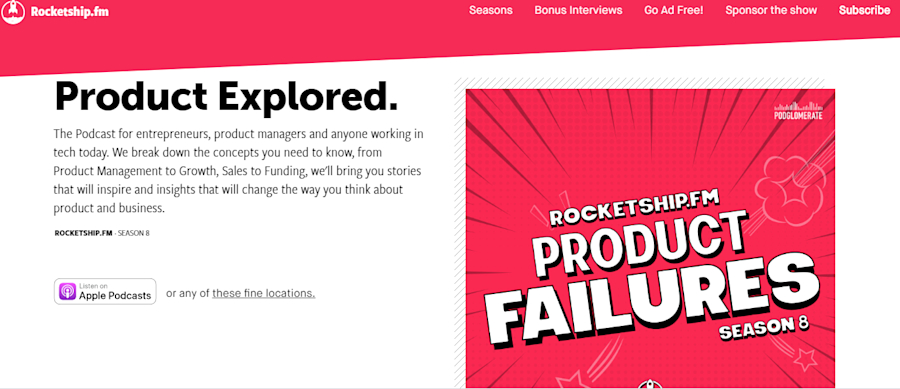
Busy with his marketing day job, he planned to record just three months of episodes and compile them later. But, the podcast struck a chord with listeners, and Rocketship.fm “took off”.
Today, it’s a thriving podcast for product managers and tech entrepreneurs that makes over $10k/month, not too shabby for something that started out as a side project.
If you’re strapped for resources, you don’t even need to launch your own podcast to increase inbound leads. Featuring your brand on other podcasts, through sponsorships or interviews, is just as effective.
This is because:
1. Podcasts introduce you to a wide audience. From the rich history of gnomes to true crime case reports, there’s a podcast for every niche imaginable. This means you have access to a range of buyers across multiple niches.
2. Podcast listeners are high-quality leads. 80% of listeners listen to all or most of each podcast episode. In other words, buyers are serious about their subject matter and have a high purchase intent.
2. Expand your inbound reach with YouTube
YouTube is the second-largest search engine in the world, with over 2.5 billion logged-in users, and a valuable platform for building inbound leads.
Keyword research tool Ahrefs, for instance, successfully ranks for extremely competitive search terms like “SEO tips” and “Local SEO” on YouTube.
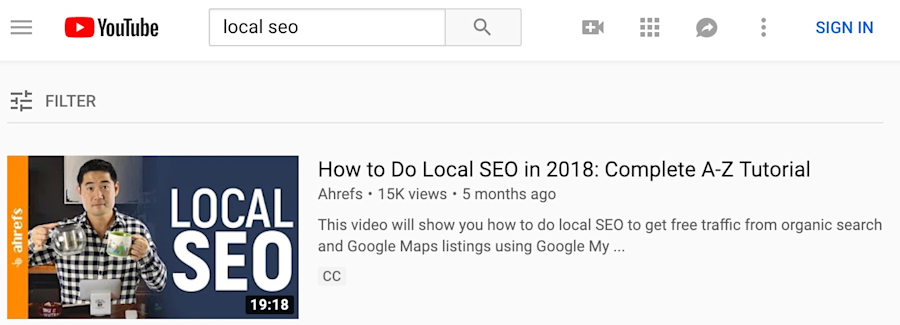
As with all inbound lead generation channels, content is king. However, Hollywood-level production how-tos aren’t necessary for each and every video.
Aside from instructional videos, you can also publish:
Interviews with experts in your industry
Group panel discussions
Customer case studies
Light explainer videos
Product demos and reviews
The great thing is, with a little bit of YouTube SEO you can repurpose existing blog posts, checklists, and Q&As into magnetic content that attracts inbound leads.
3. Bolster B2B blog traffic with laser-focused content
After a two-year content production sprint, ClearVoice’s traffic and inbound lead generation hit a painful six-month plateau, and any attempts to revive dying traffic yielded little to no results.
Despite a repertoire of successful whitepapers, ebooks, and resources to increase inbound leads, organic traffic didn’t exceed 3k/month.
After creating unique B2B blog posts, however, organic traffic jumped from 2,900 to 51,500 sustainable monthly pageviews.
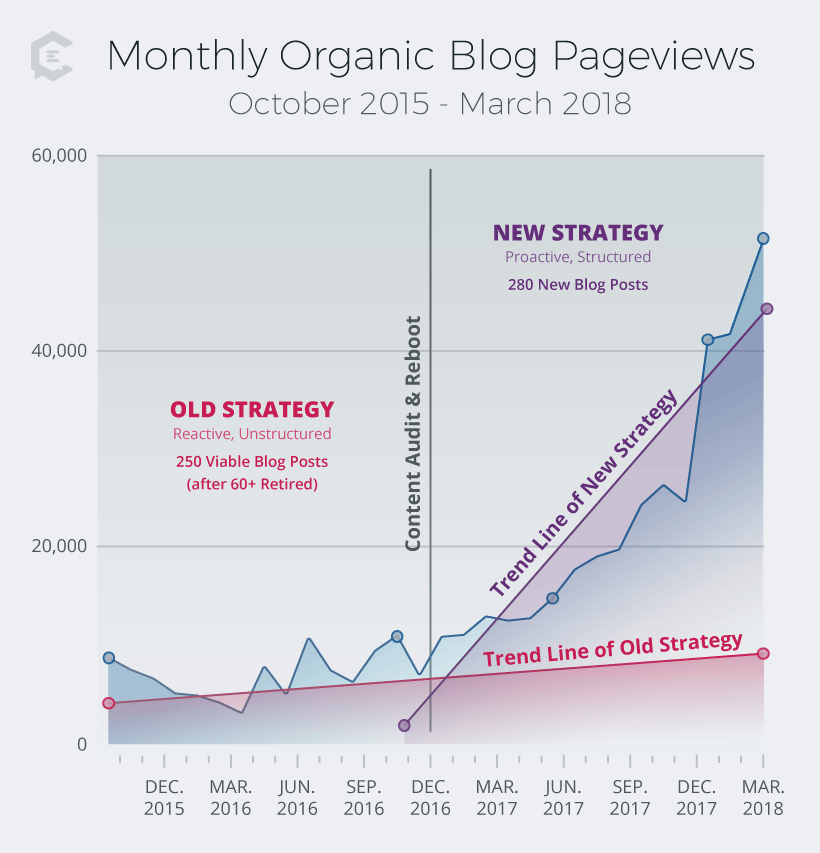
In a more dramatic example, B2B blogging rescued Groove from impending startup death when its fluff-filled content failed to perform.
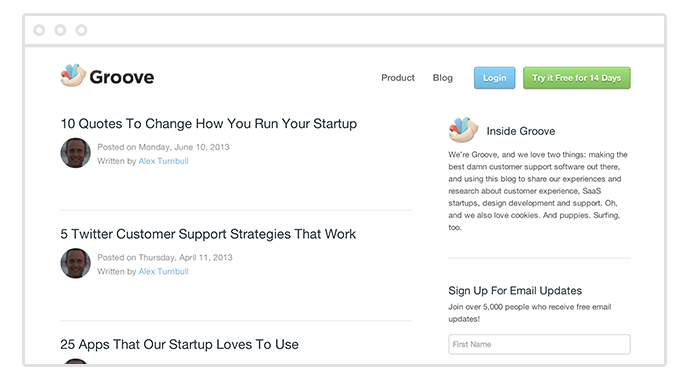
With no other options left to save his sinking startup, founder Alex Turnball went all-in on transparent content marketing. And, it had an immediate impact: 1,000 people subscribed to their email list in 24 hours.
Eventually, this small turnaround triggered a chain of events that turned Groove into the $5 million SaaS company it is today.
90% of published blog posts fail to generate a single backlink, let alone a trickle of traffic.
Content marketing is competitive, and there are more losers than winners.
The companies that win share content that leads with the customer's needs.
Look around; the B2B companies that are killing it with content right now all have a unique angle that’s valuable to their buyers:
DataBox shines at interviewing experts for long-form, heavy-hitting posts.
ClearVoice uses surveys and data to publish original research for its freelancers.
G2 specializes in extensive expert round-ups for companies who use SaaS products.
If you’re serious about increasing inbound leads, stick a fork in the idea of generic listicles and how-tos. They’re already smothering the internet and they repel leads.
Instead, carve out a content strategy that revolves around unique content your buyers will love.
4. Fortify off-page SEO with guest posting
Guest blogging is the secret behind co-founder Leo Widrich's propelling SaaS company Buffer from an obscure startup to a $5 million app.
For nine months straight, Leo became a one-man guest-posting machine, publishing 150 posts.
Hard work? Yes. Worth it? Definitely.
This intensive period of writing for other sites catapulted Buffer from an unknown app to its first 100,000 users.
But, isn’t guest blogging to increase inbound traffic and leads a dead practice nowadays?
Yes and no.
The days of guest posting with the intention of driving thousands of visitors to your site are long gone. However, it’s still a useful method for generating backlinks that improve SEO and increase inbound leads.
A survey by SEMrush reveals that, despite its turbulent past, guest posting remains the number one link-building strategy that SEOs recommend.
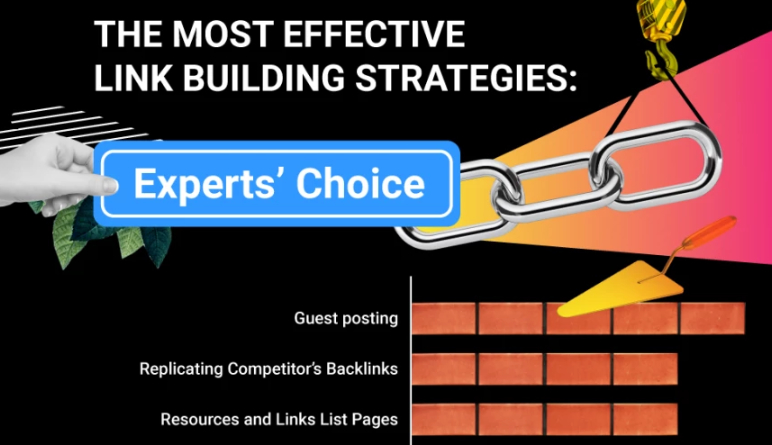
Inbound marketing pros like Hubspot, Ahrefs, and Neil Patel still use guest posting to increase inbound leads to this day.
“I’ve tried many different inbound marketing strategies, but guest blogging has remained my most treasured tool. QuickSprout wouldn’t have been as successful as it’s become if I’d neglected guest blogging.” — Neil Patel, QuickSprout Founder
Aside from earning high-quality backlinks, guest posting also unlocks doors for profitable content partnerships and introduces you to new customers.
5. Use email lists: the ultimate tool for increasing inbound leads
Every $1 spent on email marketing nets an average return of $42.
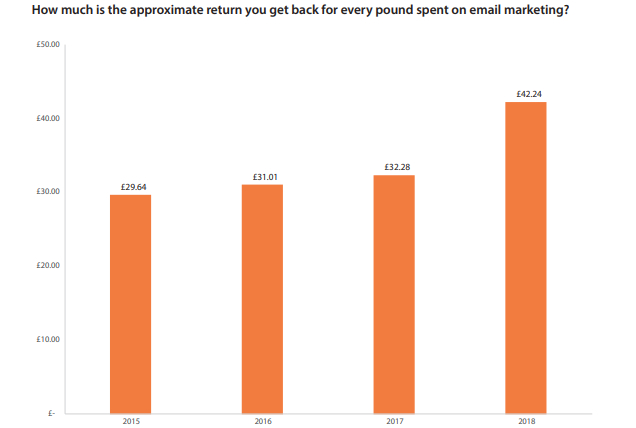
Just like being told to “eat your greens” for the umpteenth time, “the money is in the list” is a vital marketing truism that’s often overlooked.
Tying all your efforts to growing your email list is the ultimate way to attract, retain, and increase inbound leads. To accelerate the growth of your email list:
Add CTAs to all your content
Split test different opt-in forms across your website
Use gated content like whitepapers, reports, and case studies for technical hot topics
Once you’ve grown that list, you open the doors to responsive inbound leads that fill your sales funnel with high-quality prospects.
A sizable list will also synergize with your overall inbound lead generation strategy.
Because, within a few clicks, you instantly have thousands of eyeballs on a new piece of content, savvy buyers to survey, and sales-ready leads.
Summary: Inbound Lead Generation Channels
Channel | How it generates inbound leads |
Content marketing | Blog posts and guides attract organic search traffic |
Podcasts | Build authority and reach niche audiences |
YouTube | Captures high-intent search traffic |
Guest posting | Builds backlinks and introduces new audiences |
Email marketing | Nurtures leads and converts subscribers |
ROI Amplified: An Inbound Lead Generation Strategy Success Strategy
ROI Amplified, a PPC agency based in Tampa, Florida, had attempted to increase inbound leads by strengthening its content marketing. However, despite healthy-looking metrics, the strategy wasn’t working.
It turned out that while traffic, clicks, and page views were rising, visitors were failing to leave any contact information further along the funnel.
CEO Zach Bowlby used a Zapier integration to connect Leadfeeder to SharpSpring and investigate the issue. He discovered that the marketing focus on technical content was mostly attracting students and academics rather than potential clients wanting to hire the agency.
Thanks to this richer information, ROI Amplified was able to optimize its strategy. With Leadfeeder, the company adjusted its tactics to align with its ICP, focusing on top-level content for marketers and immediately generating more qualified inbound leads.
“Leadfeeder has been really good for figuring out what content is reaching who.” - Zach Bowlby
Increase Inbound Leads with Leadfeeder
Inbound lead generation demands unique content that cuts through the noise, fine-tuned SEO, and a multichannel approach to lead generation. However, successfully generating inbound leads requires investment, and the last thing you want is to burn thousands of dollars on tactics that don’t work.
With the proven inbound lead generation strategies above, you don’t have to worry about following redundant practices that waste your budget and fail to bear fruit.
Leadfeeder streamlines the inbound lead generation process by identifying your anonymous website traffic. When combined with Leadfeeder’s GDPR-compliant, B2B contact database, you can enjoy data-enriched, high-quality inbound leads straight from your website.
Sign up for a free 14-day trial and discover how Leadfeeder can increase targetable inbound leads for you today.
Inbound leads FAQs
1. What’s the difference between inbound and outbound leads?
Inbound leads are prospects who find and contact your business on their own after discovering your brand through channels like SEO, content marketing, social media, or webinars. Because they’re already researching solutions, inbound leads often show higher intent and can convert more easily.
Outbound leads, on the other hand, come from direct outreach initiated by your company, such as cold emails, sales calls, ads, or trade shows. While inbound leads build trust and long-term growth, outbound lead generation allows businesses to target specific prospects and generate faster results.
2. What are the different types of inbound leads?
The three main types of inbound leads are marketing-qualified leads (MQLs), sales-qualified leads (SQLs), and product-qualified leads (PQLs).
MQLs show interest by engaging with organic marketing materials, SQLs reach out to sales teams, and PQLs engage with products through free trials or freemium versions.
3. Why are inbound leads considered more valuable?
Inbound leads enter the funnel having already shown an interest in your product. This means they need less convincing than other leads and are more likely to convert into paying customers. Inbound leads are also more valuable because they come from sustainable channels like organic search traffic.
Inbound marketing costs are also considerably lower than outbound marketing costs, resulting in better ROI from optimized inbound marketing strategies.
4. How do I qualify inbound leads?
Qualifying inbound leads helps sales teams focus on prospects most likely to buy. Here’s how to qualify inbound leads:
Develop your ideal customer profile (ICP).
Gather lead demographics and other details.
Score leads based on information such as company size, industry, budget, needs, and other criteria.
Segment and prioritize leads based on their likelihood to buy.
Reach out and engage with prospects to further qualify and convert.

Director of Content Marketing @ Leadfeeder
Jamie Pagan is Director of Demand at Leadfeeder, where he leads demand generation and pipeline growth initiatives. His work focuses on connecting marketing activity with revenue by combining intent signals, campaign performance data, and audience insights.
With experience building scalable demand engines and launching growth-focused campaigns, Jamie brings a practical perspective on how marketing teams generate and capture demand. His experience working with intent data and marketing analytics informs his approach to identifying high-intent buyers and converting interest into qualified opportunities.