60-Second Summary
Account-based marketing (ABM) flips the traditional funnel by prioritizing a targeted set of high-value companies and engaging them with personalized, multi-channel campaigns. When combined with visitor-identification tools, ABM improves ROI, aligns sales and marketing, and accelerates pipeline conversion.
Key takeaways: ABM shifts focus from broad demand generation to targeted account engagement, delivering measurably higher ROI and pipeline impact (examples include DocuSign +22% pipeline, Invoca +200% conversions, and studies showing major revenue uplifts).
Standout strategies & tactics: Build target account lists, personalize content and ads by account, integrate CRM with marketing automation, and act on intent signals across email, ads, and direct outreach to convert high-value accounts.
Real-world lessons & frameworks: Align sales and marketing ("smarketing") to pass fewer but hotter leads, measure ROI at the account level, move quickly on intent signals, and prioritize spend on accounts with the highest revenue potential (e.g., Couchbase’s $1.5M pipeline).
Visitor identification & tools: Identifying anonymous site visitors is the missing link—tools like Leadfeeder reveal company visits and pages viewed so teams can find decision-makers, personalize outreach referencing viewed content, and increase conversion (Leadfeeder free 14-day trial available).
*This summary was created with AI assistance, using our original content.
This isn’t another discussion about marketing jargon. It’s about a strategy that has consistently shown measurable impact when used properly: account-based marketing (ABM). Companies like DocuSign have grown their sales pipeline by 22 percent using it, while Invoca reported a 200 percent increase in conversions by better understanding inbound call intent.
ABM works by shifting focus from broad audience attraction to targeted account engagement. Instead of trying to bring in large volumes of anonymous traffic and slowly filtering them through a funnel, it identifies the specific companies most likely to convert and actively engages them with tailored messaging and content.
In other words, ABM flips the traditional marketing funnel. Rather than casting a wide net and hoping a small percentage converts, it prioritizes the exact accounts that matter most and focuses efforts on turning them into customers more efficiently.
Note: Starting an account-based marketing campaign? Try Leadfeeder free for 14 days to see which companies visit your website, the pages they visit, whether or not they’re in your CRM, and more.
The rise of ABM
In today’s on-demand, digital world, personalization has become crucial to marketing. It’s the bacon to your eggs.
Account-based marketing takes personalization to a higher level. 75% of consumers say they prefer personalized marketing offers. Account-based marketing takes personalization to a higher level. And brands that want to stay competitive are taking note.
92 percent of B2B companies said ABM is “extremely important” or “very important” to their marketing efforts.
Most companies recognize the importance of ABM in their business. So much so that they are also willing to invest cold, hard cash to be more efficient at it. 61 percent of businesses said they plan to invest in tools, technologies, and services for their ABM efforts in the next year.
And it is easy to see why. 87 percent of B2B marketers reported that account-based marketing delivers a higher ROI than other marketing activities.
Chris Carter of Rep Interactive describes ABM this way:
“ABM gives marketers the opportunity to create more personalized messaging for specific groups of individuals, as opposed to creating blanket messaging for a large population. When approaching a specific account, it’s important to spend as much time and effort creating relevant content that provides value for your prospective customers.”
Does ABM mean inbound marketing is dead? Not at all! ABM and inbound marketing can work together beautifully. Let me show you how.
What are the benefits of ABM?
Interest in ABM has increased rapidly in the past few years. A look at Google Trends shows that searches for ABM have increased since early 2016.
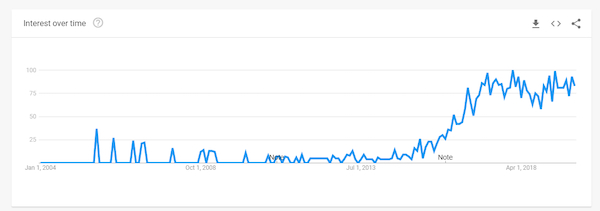
That is likely due to the approach’s effectiveness. This study found that companies that use ABM can generate 208% more revenue than those that don’t. The team at bynder group saw ABM increase engagements by 205%.
When we implement ABM initiatives for our clients, we make sure to customize campaigns for specific accounts. Our ABM campaigns consistently return higher ROI than other marketing activities for our clients. One of our clients saw a 205% increase in bottom-of-funnel engagements, which was a huge win for the company and the team. Gaining insights into buyer intent provides us with the information we need to market more efficiently and with better results. - Rob Bynder, President, Bynder Group
How, exactly, can ABM help your company grow? Here is a look at the benefits.
Benefit 1: Higher & easier to track ROI
Every business and every audience is different. There is no one-size-fits-all approach that will work for every brand.
Understanding ROI is critical to know which marketing strategies are useful. And which are not.
Companies have long struggled to track the ROI of their marketing efforts. A Google search returns more than 20 million results for tracking ROI.

That is an overwhelming amount of tips on how to track ROI.ABM makes it far easier to track the ROI of marketing efforts because it is exact and targeted.
In traditional inbound marketing, ROI is measured using broad metrics. Metrics like how much traffic a post got or how many ebook downloads.
Besides being easier to track, ABM also tends to offer a much higher ROI. B2B companies are using ABM ROI to identify content and strategies that move users down the funnel.
And, this reveals where the holes are in your funnel. But calculating ROI from your ABM efforts makes me feel like I’m having a Jessica Simpson moment. (Remember the is this tuna moment?) You don’t want the feeling.
ABM is a mystifying marketing strategy that runs on many channels, all on cylinders. That’s why a CRM integrated with marketing automation software is vital to your sanity. Trust me on this one.
Benefit 2: Better aligns sales & marketing
It is no secret that sales and marketing teams are often at odds. It’s like when Woody first met Buzz Lightyear.
The problem is that sales and marketing conflicts can have a massive impact on your bottom line. Misalignment between your sales and marketing teams can cost you up to 10 percent of your total revenue.
Did that make your eyes go? Yeah, me too. To pack more punch, sales and marketing teams need to work hand in hand.
You promise one thing in marketing. Then, deliver something different. That’s a sure-fire way to tick off prospective customers before they ever sign up. You don’t want another Chipotle moment.
Using account-based marketing, your sales team might notice they get fewer leads. GAH! Sounds terrible, right? Not so much. Currently, marketing is passing a massive amount of leads into sales with a smile and a wave.
With ABM, sales and marketing can work together to provide leads with the information they need to convert. Leads that do get passed on are hot, which lets your sales team do more of what they do best— make sales.
Better sales and marketing alignment can increase customer retention and improve sales. There’s proof. Companies have 36 percent higher customer retention. And, 38 percent higher sales win rates that companies with “smarketing” teams see.
Benefit 3: ABM is more efficient
Account-based marketing is a narrow approach. Instead of targeting everyone, you target key accounts you know will drive higher revenue.
Think about it this way. With traditional inbound marketing, you are casting a wide net. And, waiting to see what fish get caught. You might land a few minnows, a few catfish, and if you are lucky, maybe a few largemouth bass.

With ABM, you can design bait to attract those largemouth bass and keep them from slipping away.
Let’s say you have a group of high-value customers and a group of lower-value customers. You will want to cross-sell and upsell to existing higher-value customers.
You may design competitor campaigns. Or, adapt content to help deliver the right message at the right time. And that is what Couchbase did.
With a solid ABM strategy, Couchbase generated $1.5 million worth of sales pipeline. And, increased AOV by 1371%.
Couchbase’s campaign accelerated growth for its highly engaged accounts.
ABM allows your company to spend more time and money on landing that largemouth bass, instead of ending up with a net full of minnows.
Visitor Identification is the missing link in account-based marketing
Account-based marketing is one of the most effective marketing strategies for enterprise companies. But if you dive into ABM without understanding who you should be targeting, you’re limiting the potential of your campaigns.
Knowing who you’re targeting is the missing link in account-based marketing. When you understand your audience, you can provide better personalization.
By 2020, smart personalization engines will recognize customer intent. This will enable businesses to increase their profits by 15%.
But how do you better understand your audience’s needs if you don’t know who they are? Wouter Dieleman, the former content marketer at Ozmo, uses Leadfeeder to identify his audience coming to his site.
Here is a peek at what you would see.
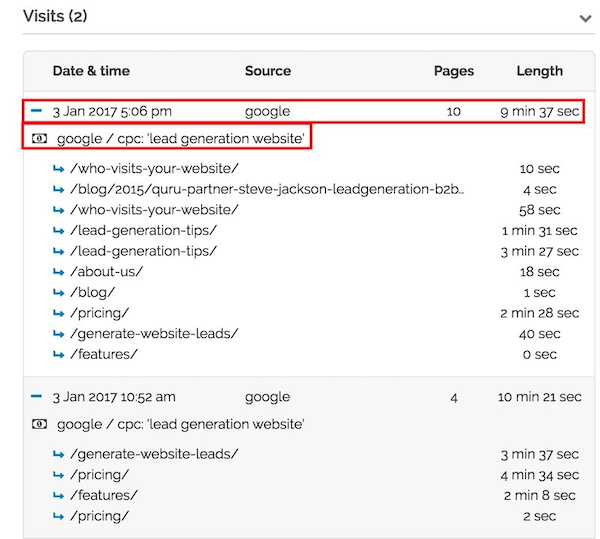
We designed Leadfeeder as an account-based marketing software. Our goal at Leadfeeder is to provide companies with the data they need to be more effective at ABM.
When you build a custom feed, you can set specific, highly targeted criteria to zero in on an actionable list of leads that are much more likely to convert.
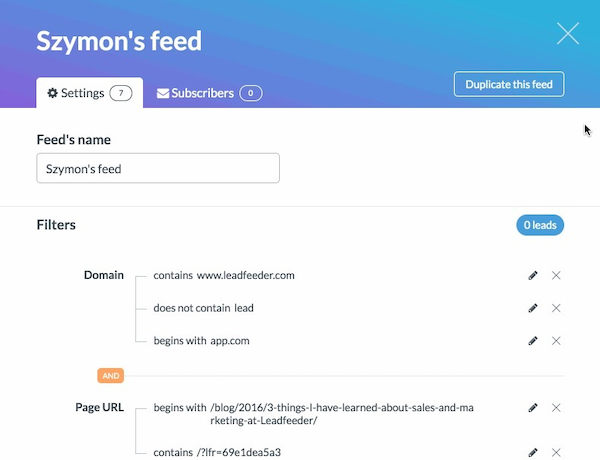
Wouter Dieleman was losing 98% of his website visitors who didn’t share their contact information via a form. He used Leadfeeder to see which landing pages a company was viewing on its site.
Next, Wouter Dieleman searches for the decision-maker on LinkedIn. And, adds their contact details to Salesforce.
Then, he sends a personalized outreach email one week after they visited the site. In the email, he leads with the landing page the company visited.
Something like this:
Hey Anna,
I noticed you were looking at our MailChimp integrations. Is there anything else I can help you answer?
Let’s schedule a time to chat.
Wouter Dieleman is a perfect example of how to align your sales and marketing teams with ABM.
He gained visibility into who is on your site and how they interact with it, which enabled him to:
Uncover and understand ideal target companies
Deliver personalized campaigns with email and ads
Create better alignment between marketing and sales teams
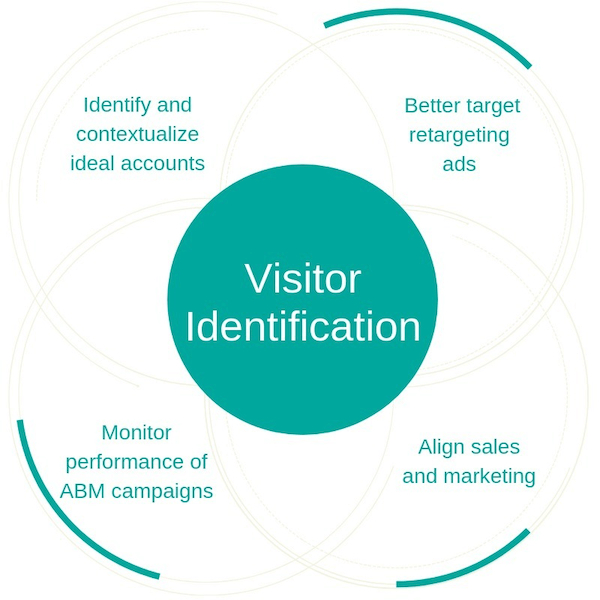
Knowing who is visiting your site is the missing link. Not knowing who is visiting prevents companies from realizing the full potential of ABM.
Account-based marketing software can bridge this gap with insights into visitor identification.
Level up your ABM with visitor identification
In an increasingly competitive online market, standing out is a significant challenge. ABM has the power to help brands break through the noise and engage with companies on a personal level.
But, like every other marketing strategy, ABM must be used strategically. And you’re not only targeting companies you want to buy your product.
But you are targeting companies that have already expressed interest in your products or services.
Companies seeing significant benefits from ABM marketing plan to dedicate 53 percent of their budgets to ABM in the next three years.
The writing is on the wall — to be successful, brands need to be willing not just to put ABM in place but to invest in it.
Note: Starting an account-based marketing campaign? Try Leadfeeder free for 14 days to see which companies visit your website, the pages they visit, whether or not they’re in your CRM, and more.