

60-Second Summary
Trigger-event outreach targets prospects at moments of real change (funding, leadership moves, product launches, hiring), making your message timely and relevant. Using automated alerts, segmenting by trigger type, and personalizing template-based outreach increases engagement and speeds up sales cycles.
Key takeaways: Trigger events (funding, hires, launches, expansion, website activity) signal prime windows for outreach—align timing, relevance, and personalization to boost response rates, trust, and efficiency.
Standout strategies & tactics: Automate monitoring with LinkedIn, news alerts, sales-intel and CRM signals; segment prospects by trigger type; use concise, context-rich templates that tie the event to a clear value proposition.
Real-world lessons & frameworks: Prioritize the triggers that matter in your industry, reach out quickly while intent is fresh, and lead with value—avoid generic check-the-box messages to preserve credibility and impact.
Implementation & tools: Set up automated alerts, integrate triggers into CRM workflows, build event-specific templates, and track lift in responses, deal velocity, and cross-sell opportunities.
*This summary was created with AI assistance, using our original content.
Cutting through the noise in today’s B2B sales landscape is harder than ever. With inboxes overflowing and decision-makers bombarded daily, generic outreach simply doesn’t work anymore.
So how do you stand out? By reaching out at the right moment, with the right message.
That’s where trigger events come in.
Trigger events help sales teams identify when a prospect is most likely to engage—whether it’s after a funding round, leadership change, or product launch. Instead of guessing, you act on real signals.
In this guide, you’ll learn what trigger events are, why they matter, and how to use them to create more relevant, timely, and effective outreach.
What Are Sales Trigger Events?
The sales trigger events definition is simple: they are specific actions or occurrences within a company that signal a moment of change for the business, and suggest a potential opportunity for outreach. A trigger event is like your green-light for outbound, providing a clue to help you figure out the right time (and way) to start a conversation with a prospect or customer.
But what can a sales trigger event tell you? It all depends on the trigger conditions. Take for example, a company just announced in a press release, a big funding round. This trigger could mean they’re ramping up operations, growing their team, or looking for new tools to support their expansion. New funding offers a huge amount of opportunity for that business, and for you as a salesperson and your outreach too!
However, different trigger conditions can suggest different things. Consider a company that’s announced a leadership change. New leadership could signal a shift in the company’s strategy, opening the door to discussions about how your product or service fits their future goals. Most senior level hires, when settling into a new role, will take a short period to learn and evaluate how things are done in the present, before looking to implement their own strategies and take up new opportunities. They will, however, be looking to make an impact, and bringing in a new service or product may well offer them the ‘splash’ they want to make as they settle into their role.
Other common trigger events include:
Product launches - these can indicate that the company in question might need complementary tools or support following their launch.
Expanding into new markets - this trigger offers a perfect opportunity to pitch solutions tailored to their growth.
Job postings - hiring for specific roles can hint at the company’s upcoming needs, providing you insight as to whether your offering can address their scaling goals.
So, why are these events so valuable? Because they give you context. Instead of reaching out with a generic pitch at the (inevitably) wrong moment, by adding triggers into your outreach you can tie your message to something that’s top of mind for your prospect. It shows you’re paying attention to their company and its progress, and that you’re a sales rep offering value, not just trying to sell at any cost.
Trigger events help you stand out from the crowd by arming you with the context to reach out at the best time, with insights that will help you tailor your offering to fit the prospect’s needs. In sales, timing can make all the difference, so building triggers into your outreach can completely elevate your outreach strategy.
Why Trigger Events Matter in Outreach
B2B sales outreach can feel like shouting into the void, unless you’re reaching out at the right time, with the right message. That’s where trigger events come in. They’re your secret weapon for supercharging your outbound communication, cutting through the noise and grabbing your prospect’s attention.
Relevance is everything. A generic “just checking in” email doesn’t exactly scream value and is so easy to delete. But referencing a recent funding announcement or leadership change shows you’ve done your homework and will grab your prospect’s attention. Afterall, who doesn’t love a pat on the back? Opening your communication with an acknowledgement to their recent news tells the prospect that you understand where their company is in its journey, and that you’re ready to help support them taking their next steps.
While relevance is essential, it’s not the only thing that will be make-or-break for you in your outreach. Timing is the game-changer. When a company is fresh off a merger or announces in a press release that they’re gearing up for a product launch, that’s when they’re open to new ideas and solutions. A trigger event signals to you that the window of opportunity is wide open, so reaching out at that moment ensures you’re not only relevant but also landing on their radar when they’re actively looking to solve a problem.
With timing and relevance now in hand, your next focus will be personalization. Trigger events give you the foundation for a message that’s tailored, not templated. Instead of a generic pitch, you can say something like, “I saw you’re expanding into new markets. I’ve worked with similar companies during this phase of growth and helped them streamline operations, let’s chat.” It’s specific, it’s timely, and will resonate with the company that’s seriously looking to take positive forward action. By combining these elements, your outreach will address your prospect’s current priorities, demonstrating that you’re not just another sales rep, but a trusted advisor offering solutions they actually need.
Benefits of Using Trigger Events in Your B2B Sales Strategy
Using trigger events delivers big results. Why? Because it’s rooted in what every prospect wants: relevance, value, and understanding.
Increased response rates are one of the biggest wins you can expect from integrating sales event triggers into your outreach strategy. When your outreach aligns with what’s happening in a prospect’s world, they’re far more likely to engage, moving your communications from ‘just another random pitch’ to someone who gets what your prospect actually needs right now.
Trust and rapport will also come naturally when you show a deep understanding of your prospect’s situation. Referring to a recent leadership change or their latest funding round shows you’re paying attention. It positions you as someone who genuinely cares about solving their problems, not just hitting your sales quota.
You can also look forward to a shorter sales cycle. Trigger events signal that a prospect is already primed for action. Instead of spending weeks warming them up, you’re connecting when they’re already thinking about making changes or needing improvements.
Let’s not forget the power of trigger events for cross-selling and upselling. A visit to your product page or a customer’s expansion into new markets can signal new opportunities to introduce additional services for existing customers. Remember, value doesn’t only come from new leads, so if you can maximize potential from your existing accounts, you’ll be hitting quota faster than you think.
The key thing to remember is that trigger events make your whole outreach approach sharper, faster, and more effective. Triggers don’t just boost your results, but enable you to elevate your entire sales strategy.
Trigger Events in B2B Outreach: Quick Summary
How to Use Trigger Events Effectively
Using trigger events effectively means you need to be using the right tools, have a solid process, and be using a bit of creativity in your outreach:
1. Track trigger events with the right tools
To spot trigger events, you need to be using the right platforms. Tools like LinkedIn and Sales Intelligence platforms such as Leadfeeder are great for monitoring company updates like leadership changes or funding announcements. With the right tool you can also get CRM alerts to notify you of customer activity, like product or pricing page visits, while news aggregators can keep you informed about broader industry developments.
What’s important is to automate what you can so that you receive notifications ensuring no valuable event slips through the cracks. Event campaigns are a good place to start, and automating lead research for events covers how to get the research running without doing it by hand.
2. Craft outreach messages that stand out
Once you’ve identified a trigger event, it’s time to put it to good use. A successful outreach message doesn’t just mention the event, it ties it directly to your value proposition offering your target decision-makers value immediately.
Example 1 Trigger: Company raises a new funding round. Message: “Congratulations on your recent Series B! With your plans to scale, I’d love to show how our solution can help you streamline [specific process]. Let’s connect!”
Trigger: Company raises a new funding round.
Message: “Congratulations on your recent Series B! With your plans to scale, I’d love to show how our solution can help you streamline [specific process]. Let’s connect!”
Example 2 Trigger: New VP of Sales joins a company. Message: “Congratulations on your new role at [Company]! I’ve worked with sales leaders during transitions like this and helped them hit the ground running. Let’s chat about how I can support your goals.”
Trigger: New VP of Sales joins a company.
Message: “Congratulations on your new role at [Company]! I’ve worked with sales leaders during transitions like this and helped them hit the ground running. Let’s chat about how I can support your goals.”
By integrating trigger events into your messages you can show you’ve done your homework while focusing on how you can solve their challenges. By using detailed outreach templates, you can personalize your messages quickly and effectively to ensure all of your messaging is tailored and timely.

Upgrade Your Sales & Marketing Skills with Leadfeeder’s Playbooks
Are you looking for strategies and tactical insights to elevate your GTM plays? Our Playbooks help you to sharpen your focus and drive results.
Discover Playbooks now3. Segment prospects by trigger type
Not all trigger events hold the same value. Segmenting your prospects by the type of event (e.g., funding, product launches, company relocation, leadership changes) allows you to tailor your campaigns and messaging. For example:
By segmenting your prospects, you’ll create focused campaigns that provide value and appropriate personalization for each of your prospects. Companies want to feel like you understand them - their challenges and their goals - so by correctly segmenting them you can ensure your communications are really tightly honed to address their specific needs and situations.
So, if trigger-based outreach is like adding a precision tool to your B2B sales toolkit, how can you get the most out of it?
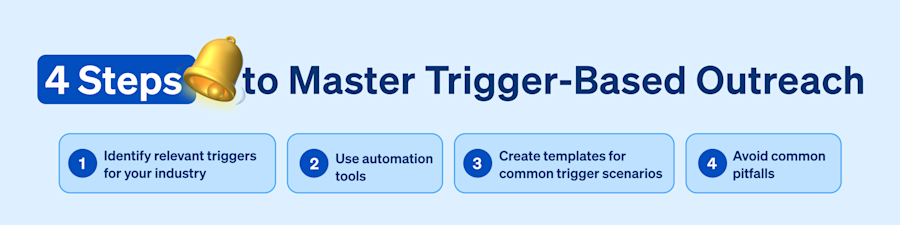
Here are four easy steps to get you started:
1) Identify relevant triggers for your industry
We’ve already established that some triggers will hold more immediate value than others. So, it’s important to pinpoint the events that matter most in your field. If you’re in B2B software sales for example, look out for funding announcements or job postings that indicate a company is scaling. In retail, it might be initiatives like a new product launch that offer invaluable insights. Try to focus on the triggers that reveal a prospect’s immediate needs or growth plans to your business specifically.
2) Use automation tools
Manually tracking trigger events through industry news or press releases can be overwhelming and hugely time-invasive, but thankfully, there are tools to make your life easier. Sales Intelligence software can keep you updated with notifications on relevant changes in your target accounts. Set up alerts for specific keywords such as, “new leadership” or “acquisition”, to ensure you’re always in the loop.
3) Create templates for common trigger scenarios
While personalization is critical, having templates for different trigger events can save you a load of time and improve your workflows. For example, a “Congratulations on your funding round” email could highlight how your solution helps companies manage rapid growth. Start with a base template, but always customize it to include specific details about the prospect’s situation.
4) Avoid common pitfalls
The biggest mistake? Sending generic messages. If your email feels copy-pasted, it defeats the purpose of trigger-based outreach. Another common trap is overloading your message. Try to keep it concise and focused on how you can help. Don’t reach out just to check a box, if a trigger doesn’t genuinely align with your offering, it’s better to wait for a stronger opportunity.
It might seem a lot, but trigger-based outreach doesn’t have to be complicated. By focusing on relevant triggers, using the right tools, and personalizing your messages, you can create outreach that not only gets noticed but also gets results.
Remember
In B2B sales, standing out often comes down to two things: timing, and how well you understand and address your prospects’ needs. Trigger events are the secret weapon that can transform your outreach from generic to timely and relevant. By identifying key moments in your target company’s journey, such as new funding, leadership changes, or product launches, you can craft hugely personalized messages that will resonate with your audience.
The result? Higher response rates, stronger trust, and a more efficient sales process that focuses on prospects who are actually ready to take action and buy. Trigger-based outreach helps you align your efforts with the right opportunities at the right time. After all, in sales, timing and relevance are everything, and trigger events give you both.
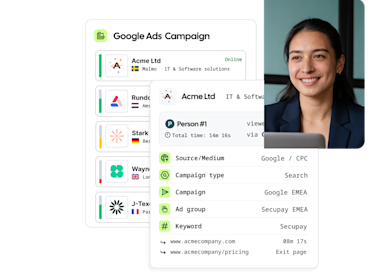
Reading great sales content is step one. Step two is knowing which prospects are already on your site and ready to talk.
Leadfeeder identifies the companies visiting your pages, surfaces their contact details, and feeds them directly into your CRM. Trusted by 15,000+ B2B teams. Try it free.
Start Sales ProspectingFAQ: Trigger Events in Sales Strategy
1. What are the most common trigger events for sales teams?
Sales trigger events examples include hiring changes, product launches, company expansion, and funding announcements. There are so many more though, so take time to understand what different triggers mean, and how they can work to your advantage.
2. How can I track trigger events effectively?
Use Sales Intelligence tools such as Leadfeeder, set up Google alerts, and monitor social media for updates. Any system that will automate the process for you will be worth its weight in gold - if it integrates with your existing techstack, even better!
3. What industries benefit most from using trigger events?
Any industry where timing and relevance play a key role, such as SaaS, B2B, and professional services.
4. How do trigger events improve personalization in outreach?
They allow you to address a prospect’s immediate needs, pain points, or goals with tailored messaging. They alert you to the exact moment a company has a change in situation, and therefore a possible change in needs. Just what you need to warm up your outreach!
5. Are sales trigger events only useful for new prospecting?
No, they’re also invaluable for cross-selling, upselling, and re-engaging dormant accounts too.
6. How do I ensure I’m not overwhelming prospects with trigger-based outreach?
You need to balance your outreach frequency and focus on providing value over immediate sales pitches. As long as you’re offering value at every step, you shouldn’t be overwhelming them.
7. How can identifying trigger events improve sales outreach strategies?
Trigger events, like a company expansion or a new product launch, signal opportunities for sales outreach. By recognizing these events, you can craft highly relevant and timely messages that resonate with prospects' current needs, improving response rates and overall engagement.
8. How do you identify and leverage trigger events for effective sales outreach?
Identify trigger events by monitoring news, press releases, job changes, or social media activity related to your prospects. Alternatively, for a less time-invasive solution, add a Sales Intelligence solution into your tech stack to automate the process and have leads delivered straight to you. Use these insights by tailoring your outreach to address the challenges or opportunities these events create, showing your solution aligns with their immediate priorities.
9. How can trigger events improve the effectiveness of sales outreach?
Trigger events provide a context for engagement, making your outreach timely and purposeful. Instead of generic messages, you can address a specific need or opportunity, helping you stand out from competitors and build rapport more effectively with prospects.
10. What are outreach events?
Outreach events are actions or activities that initiate or support communication with prospects. These can include, for example, sending emails, scheduling calls, or engaging on social media platforms to build relationships and advance sales conversations.
11. What does nurture mean in outreach?
The term ‘nurture’, in the context of outreach, refers to building and maintaining a relationship with prospects over time. Through tailored content, follow-ups, and value-based interactions, you keep your brand top of mind and can carefully guide your prospects toward a buying decision.