



This matters more than ever because the B2B buying process has changed dramatically. According to Gartner, buyers spend only 17% of their purchasing journey meeting with potential suppliers, meaning most of the research and decision-making happens long before a sales conversation begins. Research from Demand Gen Report also shows that 62% of B2B buyers consume multiple pieces of content before engaging with a vendor, making early visibility essential.
In simple terms, B2B lead generation is the process of identifying and attracting companies that may benefit from your product or service. Leads typically appear when someone interacts with your marketing, for example by downloading a whitepaper, registering for a webinar, or requesting product information.
These leads usually move through two key stages:
Marketing Qualified Leads (MQLs) – prospects who have shown interest through marketing activities
Sales Qualified Leads (SQLs) – leads that are ready for direct sales outreach
A strong lead generation strategy helps marketing and sales teams focus on high-quality prospects rather than large volumes of unqualified contacts, improving conversion rates and overall pipeline performance.
Below are 9 proven B2B lead generation strategies that companies use today to attract better prospects, build stronger pipelines, and convert more leads into customers.
1. Content Marketing
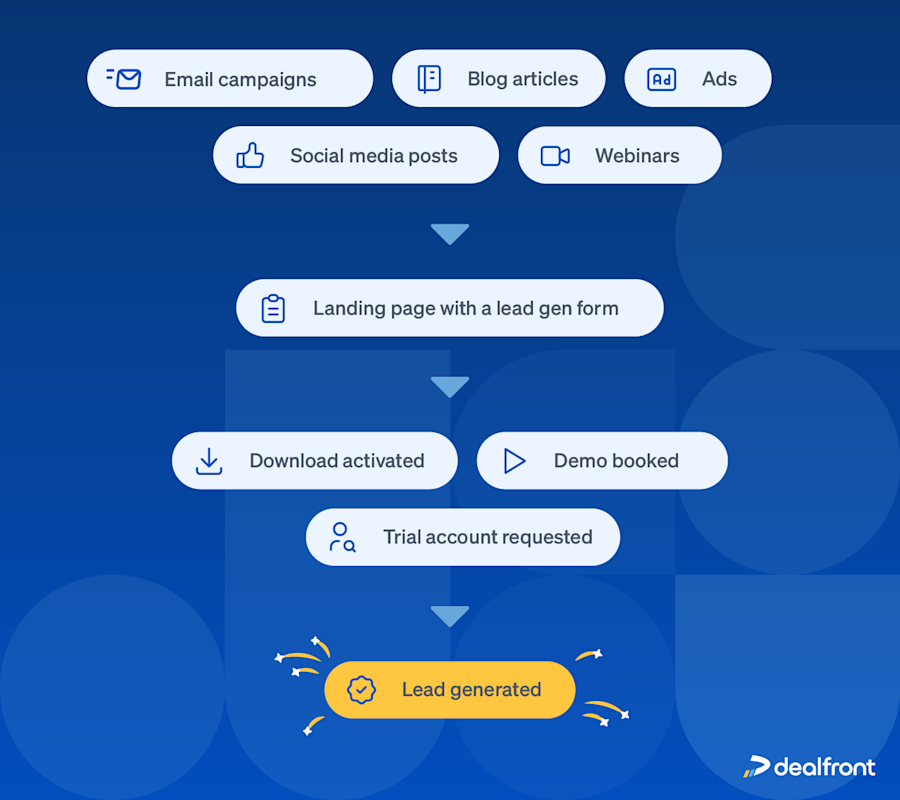
According to ecommerce-platforms.com, 93% of B2B buying processes start with an online search. This places content marketing at the center of digital B2B lead generation strategies . Producing target-audience-specific content and distributing it via appropriate communication channels has proven to be the most effective and popular source of leads in recent years.
In content marketing, a company's own website is particularly important. Individual pages, or landing pages, provide visitors with valuable content and give them the information they need about a company and its products. That's why you should pay special attention to the optimization of your landing pages.
Ideally, landing pages must meet the highest usability standards and be SEO-optimized. If potential customers need a solution to their problem and your article or landing page can help them, you'll want to optimize it to give it the best chance of ranking high on the search engine results page (SERP).
What exactly does that mean for you? When your optimized landing page ranks highly on SERPs, it's easier to find, increasing the likelihood of reaching your target customer.
Some formats have proven particularly successful in content marketing:
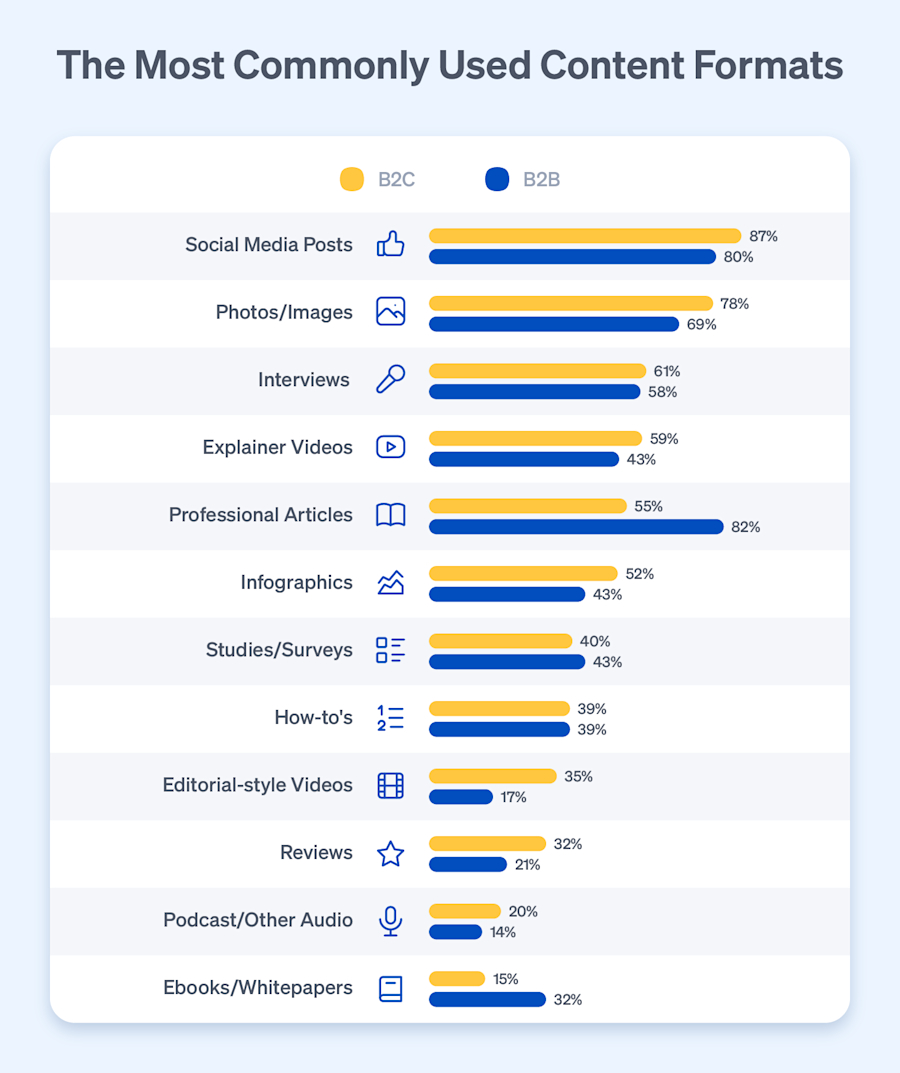
Source: Statista 2019
All formats have basic characteristics in common. They offer comprehensive, subject-specific information that educates visitors about the recognizable benefits and added value of your product.
2. Whitepapers and Case Studies
In B2B, spontaneous purchasing decisions are rare. Usually, interested parties gather comprehensive information before even considering a product.
That's why whitepapers are a proven method for generating B2B leads. With whitepapers, you can support the research process and establish your business as a thought leader in your field. They also provide your target customer with relevant information that justifies sharing a business email address in return.
You should include some sort of reference to your product in your offered content as this marks the first and basic step of lead qualification: An interested reader will automatically be curious about your product even though it's not the focus of your whitepaper.
B2B lead generation through case studies is also highly effective, as they clearly demonstrate to interested consumers how your product can address their pain points.
3. Webinars
In B2B, prospects are usually more in need of advice on your offerings than in B2C. Before purchasing something, prospects like to compare several providers and products. They want to get a feel for whether they are investing in the right tool.
When your business uses webinars for B2B sales lead generation, you can show your product to several people at once, highlight its benefits and applications, and answer questions. This is your chance to shine a light on the best sides of your product and all the benefits customers get from it! Don’t waste that chance.
Attending a webinar usually does not take much effort, and people register for it more easily than for an online demo. You can expect higher conversion rates here! Lead generation occurs when a prospect registers, who can then participate in the webinar for free.
“Webinars are a great way to gather not only new leads, but also increase the lead-pool with existing customers who might be interested in an upsell or cross-sell opportunity.” Sanjana Murali, Product Marketing Manager @ Leadfeeder
4. Blog
A blog is an excellent way to generate B2B sales leads. Try not to focus too much on marketing your product or service, but help your target audience with relevant content. Position yourself as an expert in your niche and build trust with potential customers. When it comes to a purchase decision, they will already know your product and be more willing to buy it.
Understand what your target audience is looking for when they use a search engine, and provide it to them. To do that, you'll need to optimize your content with relevant keywords or common search queries so people can find the content. Don't let your competitors get ahead of you here!
When you improve your rank on SERPs, you'll achieve more visibility within your target audience, get more views, and, you guessed it, more leads for B2B sales.
In the articles themselves, you can offer checklists, infographics, or other downloads. Known as lead magnets, these B2B lead generation activities can provide you with quick, effective visitor information. There are also tons of AI content tools like HubSpot, Jaspar, and CopyAI that can help you write and outline content for your blog.
5. Web Visitor Identification
If you have the contact details of an account that has shown interest in your product or services, it is considered a B2B lead.
Companies come to your website daily. But not everyone of them downloads your whitepaper, asks for prices, or books a demo. Any company that visits your website is still of interest to you, though. They've already shown interest in your product, they just haven't engaged yet. The question is, how do you know who is visiting your website?
The solution is called visitor identification! There are B2B lead generation tools that reveal the IP address of your website visits and can tell you which companies have a demand for your product. This gives you B2B leads that you might otherwise have missed. Also, these tools often display other relevant company data, such as employees and contact details. IP identification and visitor tracking tell you exactly which of your pages are visited and how often. This allows you to easily prioritize next steps and the sales approach to get more B2B leads from your website visitors.
A real-life example of this is Brandcave's success using Leadfeeder's API. Offering creative services and user experience design for B2B technology companies, Brandcave sought to boost the marketing flow for its Ashore product. By partnering with Leadfeeder, Brandcave was able to use 50+ filters to segment website visitors, create a custom feed of meaningful prospects, and add 200 new contacts in just one day.
Turn anonymous website traffic into leads
Reveal which companies are already looking at your website and identify accounts that need your solution.
Start Discovering Now6. Social Selling
A social networking platform like LinkedIn is an absolute B2B must-have. You won't only find a lot of useful content but can set up your profile to find and make connections relevant to your business. You can also publish relevant content to open a dialog with your target audience.
With some work and strategy, you can position yourself as an expert in your field. The goal is that interested parties will approach you or someone will recommend you because they've seen you several times in relation to a certain topic. You could also post about company-relevant topics such as webinars or other exciting insights, on your blog. This way, your company's awareness increases and helps you gather more leads!
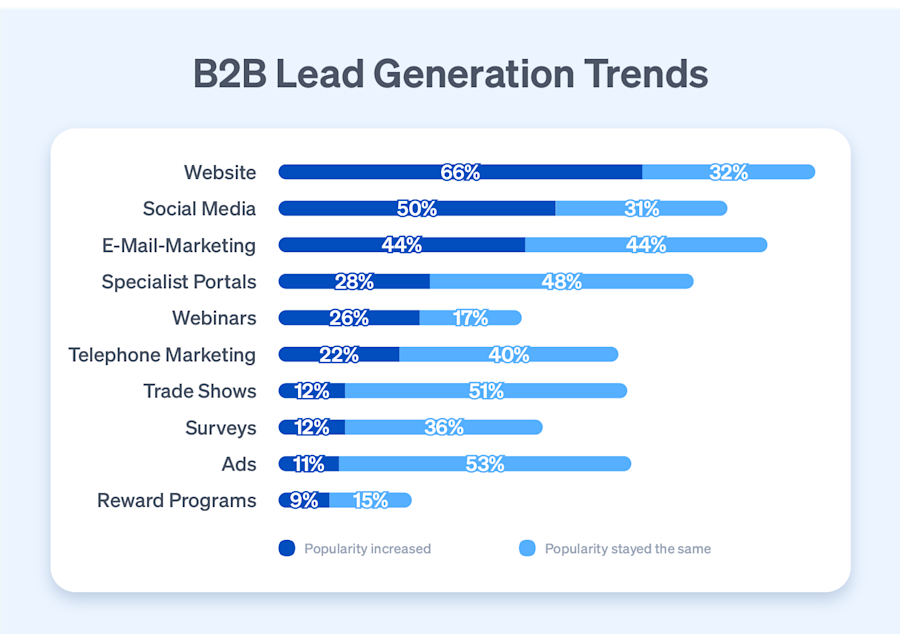
Source: www.marketing-boerse.de
Social media is becoming increasingly relevant to B2B lead generation strategies and campaigns, so be sure to jump on that trend.
7. Advertising and Traffic Generation
Effective B2B lead generation with the help of content marketing follows a clear two-step process:
Attract your target customers' attention. A detailed and carefully planned analysis of your target audience provides you with the necessary information.
See which media are suitable for a particular target audience. Which channels do certain groups like most? Touchpoints include things like social media and/or search engines. If you know which touchpoints are particularly important to your prospects, you can place appropriate B2B display ads and direct traffic accordingly.
Google Ads
As an addition to general search engine optimization of your own content, the strategic use of Google Ads has proven its worth. If your target customers are searching for specific topics or solutions to their problems, they will automatically find your ads, generating leads. When doing search engine marketing, always include a link leading to the appropriate landing page.
This page will provide them with the sought-after insights and may include a form for them to fill out to access gated content. We talked about gated content before, and as we mentioned, it can be things like whitepapers, checklists, or give them access to your price lists. In most cases, a business email address is enough for a lead form. Of course, it is always helpful to have as much information as possible from a lead. But be careful, you don’t want your lead to be deterred when you ask them to fill in too much.
LinkedIn Ads
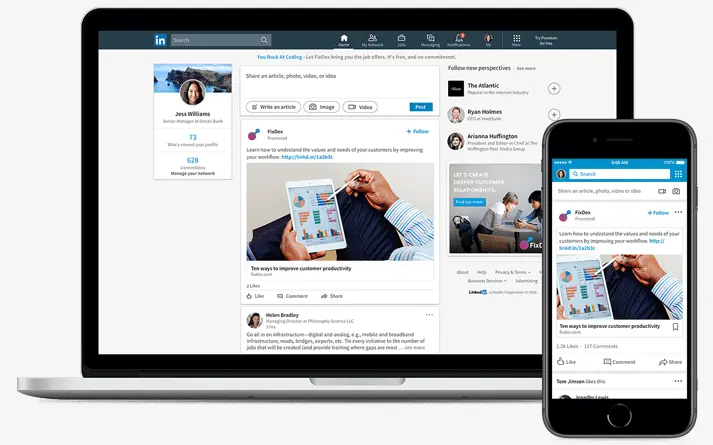
LinkedIn is an especially relevant B2B marketing channel, particularly for lead generation, while Facebook and Instagram are more commonly used for B2C. You can easily direct customers to an external landing page via a link on your social media, significantly increasing the efficiency of your marketing by saving you time and money.
The most important thing is to go where your target customers are already hanging out. Don't waste your energy on platforms and channels that they don't frequent.
Source: www.linkedin.com
LinkedIn offers Lead Gen Forms, which let you run ads, sponsored content, or InMails with a call-to-action (CTA). With one click, the user's profile data, name, contact information, company, position, job title, and location are transferred to a form and a linked e-book, for example, which can now be downloaded.
The most important piece of information for lead qualification is the company’s name. Regardless of who fills out the registration form, knowing the company is the basis for further research. The data collected via Lead Gen Forms can be downloaded directly from your LinkedIn account and transferred directly into your preferred CRM system.
8. Native Advertising
In recent years, B2B advertising has been viewed negatively. Even the largest advertising budgets no longer achieve the response that advertisers were used to. Quite a few experts even predict the end of classic advertising. At the same time, trust in independent content is growing.
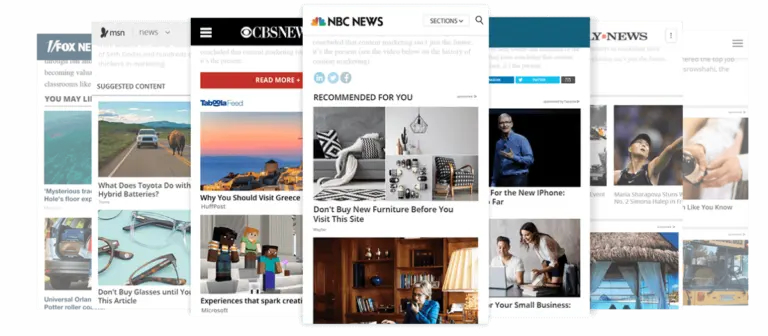
Information on companies, products, and services, given the editorial treatment, is receiving the attention that advertising is now often denied. Native advertising, for example, the service offered by the U.S. company Taboola, combines the goals of advertising with the basic principles and possibilities of editorial reporting.
Source: www.taboola.com
These days, native ads can be found on blogs, in newsletters, on news sites, and on social media. Of course, they’ve also been adapted visually and stylistically to editorial formats. As teasers, they consist only of excerpts and link to the companies' landing pages. You can build trust with these kinds of ads, which you can then leverage on the landing page through clever design. If advertorials are attractively designed, they attract attention and help you to generate new leads.
9. B2B Lookalikes: Generating Leads from Existing Customers
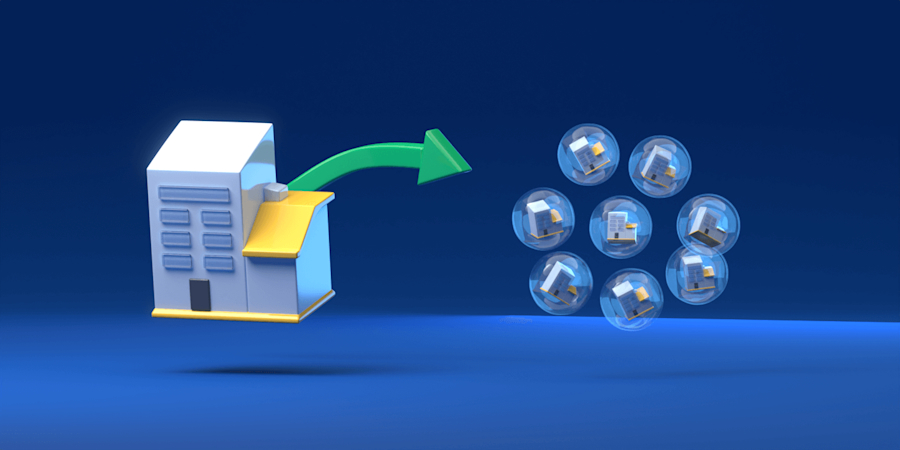
Have you ever thought about what it would be like to no longer have to wait for leads? If you simply approach companies that are similar to your existing customers? No problem! With the help of B2B lead generation companies and artificial intelligence, you can upload a customer list, and the AI will hand a list of similar companies back to you. These companies are also called B2B lookalikes. Lookalikes have all the same or some specific characteristics as the companies that you added to your customer list as a template.
You can use B2B lookalikes for cold calling or even for advertising. Often, you already have directly relevant sales intelligence stories or use cases that make it easy to convince a lookalike prospect to try your product.
B2B Lead Generation Strategies at a Glance
Strategy | How it Generates Leads | Key Benefit |
Content Marketing | Attracts potential buyers through valuable content, including blogs, guides, and industry insights. | Builds long-term organic traffic and authority. |
Whitepapers and Case Studies | Provides in-depth insights and real-world examples that demonstrate how your solution solves business problems. | Establishes credibility and captures high-intent leads. |
Webinars | Allows businesses to educate prospects and demonstrate solutions while collecting registrations. | Engages prospects and builds trust through live interaction. |
Blog | Brings organic search traffic and converts readers into leads through lead magnets and gated resources. | Improves visibility and continuous inbound lead flow. |
Web Visitor Identification | Reveals companies visiting your website even if they do not submit a form. | Identifies high-intent prospects that might otherwise remain anonymous. |
Social Selling | Builds relationships with potential buyers through professional networks such as LinkedIn. | Expands reach and nurtures prospects through conversations. |
Advertising and Traffic Generation | Uses paid channels like Google Ads and LinkedIn Ads to drive targeted traffic to landing pages. | Generates leads quickly and scales demand generation. |
Native Advertising | Promotes content in editorial-style formats that blend with trusted publications and media. | Increases credibility and improves engagement. |
B2B Lookalike Targeting | Uses data and AI to find companies similar to your existing customers. | Helps sales teams discover high-potential prospects faster. |
Bonus: 5 Actionable B2B Lead Generation Ideas
Use these top five B2B lead generation tips to ensure that your strategy always leads to success:
What do you consider a lead? What data do you need from the beginning, and can you further enrich that data? Define your B2B lead and ask for only the data that’s absolutely necessary.
Put yourself in your target audience’s shoes and provide them with relevant content that offers value. Empathizing with them will ensure your content's success.
A lead isn't just a lead. Your sales team's time is precious, so check whether you can use lead nurturing to further qualify whitepaper leads.
You can use lead scoring to assess the maturity of your leads. Hand over leads to your sales department only once it has achieved a certain score.
Time is money in marketing and sales. Use tools that simplify and automate your processes. That way, you and your sales department can concentrate on the really important tasks!
Excel in B2B lead generation with Leadfeeder
B2B sales lead generation is the foundation of success for B2B businesses. Define your target audience, analyze their customer journey, and identify touchpoints. You need to understand how to get a prospect’s attention and convert them into leads with clever advertising and strategic content marketing.
Today, B2B lead generation tools are essential for maximizing market potential. One of these tools is Leadfeeder, the largest truly GDPR-compliant B2B database of current sales opportunities in Europe.
One of Leadfeeder’s many features is targeted queries for relevant companies. Filter according to target-audience-specific company characteristics, business signals, and selected trigger events, such as upcoming expansions, location changes, or management changes, which can indicate a specific need or new pain point of your target customer.
B2B Lead Generation FAQ
1. What is B2B lead generation?
B2B lead generation is the process of identifying and attracting companies that may be interested in your product or service. It typically involves marketing activities such as content marketing, webinars, advertising, or social selling that encourage potential buyers to engage with your brand. When someone interacts with your marketing—for example, by downloading a whitepaper or requesting a demo—they become a lead that can be nurtured through the sales funnel.
2. What is the difference between an MQL and SQL?
An MQL (Marketing Qualified Lead) is a prospect who has shown interest in your business through marketing activities such as downloading content, attending a webinar, or signing up for a newsletter. An SQL (Sales Qualified Lead) is a lead that has been further evaluated and is considered ready for direct outreach from a sales representative because it shows stronger purchase intent.
3. What is the most effective B2B lead generation strategy?
The most effective B2B lead generation strategies usually combine content marketing, targeted outreach, and sales intelligence tools. Content helps attract potential buyers during the research phase, while data and intent signals help identify companies actively seeking solutions and more likely to convert.
4. How long does B2B lead generation take?
The timeline for B2B lead generation varies by industry, product complexity, and deal size. Because B2B purchases often involve multiple stakeholders and careful evaluation, the buying cycle can take several weeks to several months. Consistent engagement and lead nurturing are important to keep prospects moving through the funnel.
Identify and land your dream customers
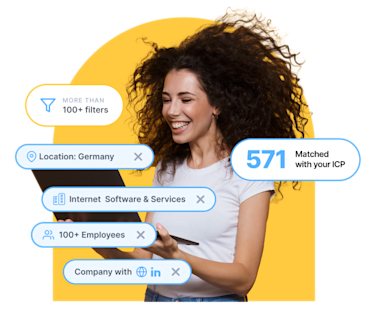
Find the right prospects, accelerate your sales pipeline, and land your ideal customers even faster.
Start Sales Prospecting
Director of Content Marketing @ Leadfeeder
Jamie Pagan is Director of Demand at Leadfeeder, where he leads demand generation and pipeline growth initiatives. His work focuses on connecting marketing activity with revenue by combining intent signals, campaign performance data, and audience insights.
With experience building scalable demand engines and launching growth-focused campaigns, Jamie brings a practical perspective on how marketing teams generate and capture demand. His experience working with intent data and marketing analytics informs his approach to identifying high-intent buyers and converting interest into qualified opportunities.