77% of marketers rate lead quality as a high or very high priority, yet 30% say generating leads remains their top challenge, underscoring the need for a structured lead funnel to systematically attract visitors, capture leads, nurture relationships, and convert prospects into paying customers.
Building your first lead generation funnel can feel overwhelming, whether you are a beginner or an experienced marketer. But it does not have to be complicated. With the right strategies and tools, you can design a funnel that captures leads efficiently and sets your sales process up for success.
In this guide, we will show you five actionable steps to create a lead generation funnel that works. By the end, you will have a clear framework for attracting, engaging, and converting leads without being a marketing expert.
Note: If you are funneling people to your site? Sign up for free Leadfeeder's 14-day trial to learn who is visiting your website and generate new leads.
Step 1. Map your customer journey
Understanding your customers' journey is the first step in generating your first leads.
After all, if you don’t know them — what they do and don’t like, the problems they deal with, etc. — how can you ever expect to find and market to them? The answer is, you can’t.
Using Google Analytics, begin pulling data on bounce rates, traffic reports, funnels, and conversion rates.
These reports identify what needs improvement on your site. But the numbers alone aren’t enough. They fail to give you personal insights into your customers.
Get to know your customers by conducting interviews, sending surveys, and reading support tickets. You want to know their pain points.
Here is an example of LEGO’s customer journey map.
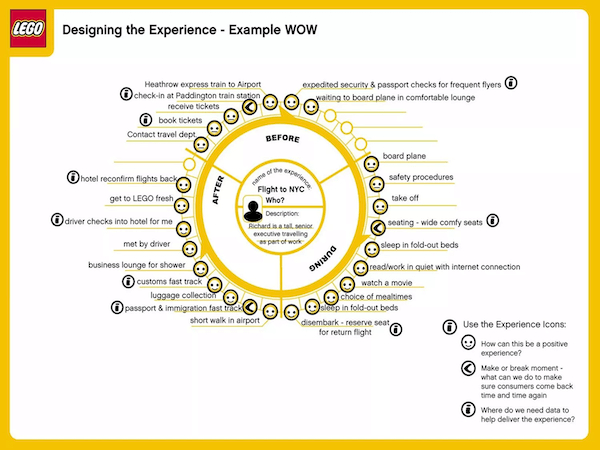
LEGO’s challenge was mapping their shoppers (parents), not their consumers (kiddos). So, LEGO created the “experience wheel” above. Mapping your customer journey represents the flow from the first touchpoint to purchase.
Martin Lindstrom quoted in his book, Small Data: The Tiny Clues That Uncover Huge Trends, > “If you want to understand how animals live, you don’t go to the zoo, you go to the jungle.” To truly understand your customers' experience, you have to talk to them.
Step 2. Create great content
Once you’ve mapped your customer journey, your next mission is to create content that surprises and delights.
We’re talking about blog posts, videos, podcasts, and ebooks — content that connects with your customer. And don’t worry; you don’t need a huge team and unlimited funds to create amazing content that your audience will love.
Take, for example, Lenovo. Lenovo, a personal technology company, created TechRevolution.
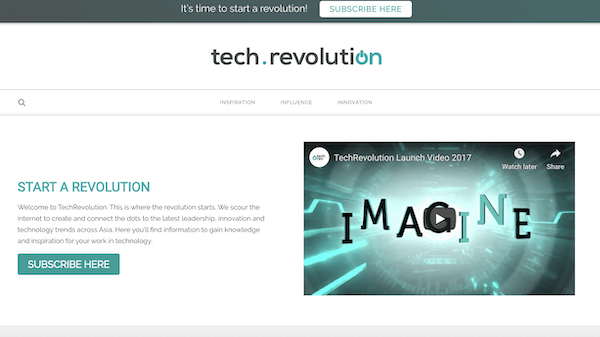
TechRevolution is a mobile-first digital content resource for IT professionals and enterprise businesses. Lenovo reaches the right target audience at the right time through lead funnels. And it worked.
TechRevolution is an innovative thought-leader site that has generated $39 million in sales in 9 months. Your B2B company can do this, too. Here’s how to craft exception content.
Beat the competition: Take a look at your competitors and the content they’re publishing. Then, create a better version. More words alone won’t beat the competition. More value will. That’s what PolicyGenius did. They outperformed an article on the same topic from their competitor, Lemonade.

Optimize for SEO: Ensure the content is optimized for search engines. That way, your audience will be able to discover you organically as they peruse the web for answers to their questions. This means including structured data, header tags, and internal linking across all content on the site. KoMarketing will increase its organic traffic by 93 percent year-over-year.
Create content for each stage of the lead funnel: Blogs, social media posts, and YouTube videos are great for the top of the funnel. Downloadable content, such as ebooks, special reports, and case studies, works best for the middle of the funnel. Free trials and discount offers will help folks at the bottom of the funnel leap into becoming customers.
Step 3. Drive traffic
Now that you’ve created a few pieces of stellar content, it’s time to drive traffic to it. Driving traffic can be done in a bunch of different ways:
Organic search
A strong SEO strategy is an effective way to drive traffic to your content.
If this topic makes your head spin, Moz’s Beginner’s Guide to SEO will simplify it for you.
SEO is, in a nutshell, the practice of understanding your target audience’s search intent crafting experiences around those searches. That way, they’ll be able to find it when they hit the internet for answers to their burning questions.
And that’s why Digital Third Coast saw an 11,324 percent ROI on its SEO campaign for Shorr Packaging.
Email marketing
After paid and organic social media, email marketing has the third-highest ROI of any marketing media. It’s an effective way to promote your company’s content.
If your organization has an email list, you can use it to inform subscribers of your new content and entice them to check it out.
If your business doesn’t have an email list, I suggest starting one now. According to Wordstream, email marketing produces an average ROI of 4,400 percent in the United States.
That’s too good to pass up!
Social media
Social media has exploded in popularity over the past 15 years. It’s not a fad but a viable way for businesses to reach their target audience.
So don’t forget to inform your social followers whenever you publish new blog posts, videos, or podcast episodes.
If you’ve been using your social networks correctly, you’ll be amazed at how much traffic a single tweet can drive. Tami Brehse, a freelance marketing consultant, drove 50% more traffic to her site through Twitter.
And MuleSoft, a B2B software company, generated 4,000 leads through Twitter marketing (now X). It’s clear that social media is worth the time and investment.
Paid advertising
Lastly, you can pay to advertise your content. Google Ads, LinkedIn Ads, and Facebook Ads are three popular channels for B2Bs.
However, other search engines and social networks also offer advertising options. The trick is finding the right ones for your unique audience. Once you do, you can start using them to target your market with your valuable pieces of content.
Step 4. Collect prospect information
Let’s recap: at this point in our lead funnel process. You’ve taken the time to learn about your audience, crafted content, and driven traffic to it. What’s next?
All the traffic in the world won’t benefit your company if you don’t have a way to collect visitor information from the dark funnel. For example, a Leadfeeder client, Reachdesk, found new leads by accessing website visitor information through our platform.
The traditional way to do this is to create a lead magnet you give away in exchange for an email address. Your lead magnet could be anything as long as it’s of interest to your target audience and relates to your business.
For example, you could offer a library of free guides to download, as Hootsuite does:
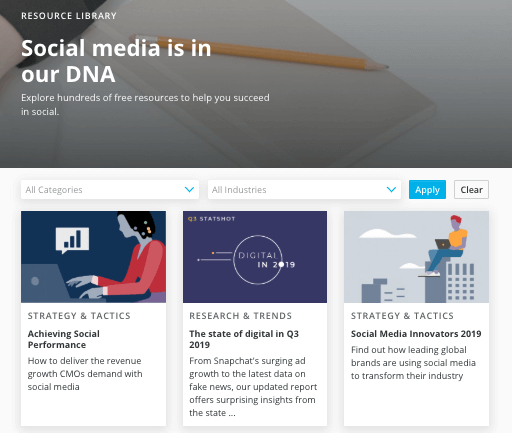
Notice how each guide has been created specifically for Hootsuite’s target audience: social media users. Make sure the free content you offer is valuable to your unique audience. Or you could use lead magnets to retarget users on your site, as Digital Marketer does.
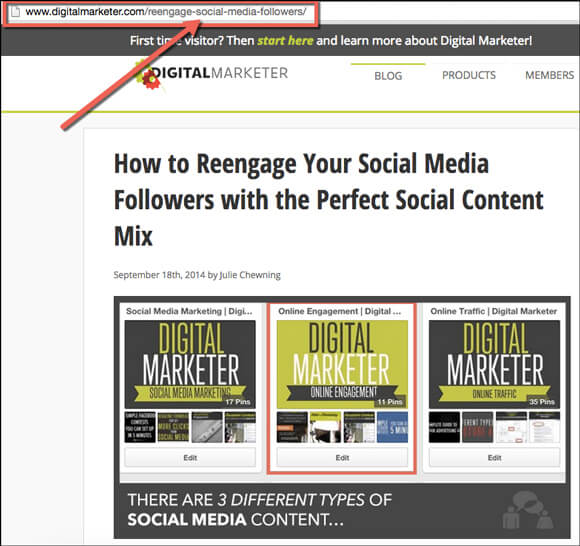
Digital Marketer generated 2,689 leads in 14 days with this tactic. When your lead magnet is ready, make it available via a landing page. After website visitors fill out the form on your page, they’ll gain access to the gated content.
Step 5. Close the sale
Now that you have the contact information of a website visitor, they are classified as a lead. The only thing that’s left to do is sell them your products.
For example, at Leadfeeder, when a new trial user signs up, depending on a few parameters, our Inbound Sales team will reach out to schedule a demo from day one.
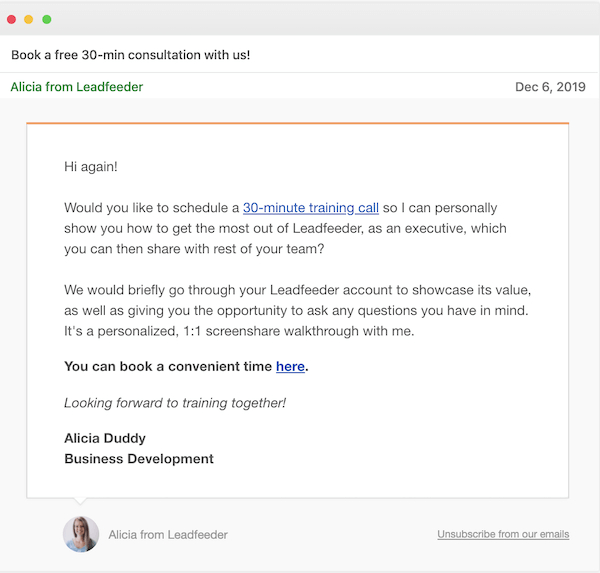
Alicia Murphy, our U.S. Sales Manager, says, “The number one thing you can do to close more sales is to let your potential customers know that you value their time and business from the start.“
Our Inbound Sales team spends about an hour investigating each website and brand to ensure we’re a good fit. However, closing the sale varies from company to company.
For some, it will start with your marketing team nurturing your leads to sign up. But, for others, it will begin with sending qualified leads to a sales team member to ignite the conversation and close the deal.
Find out what works best for you and start turning those leads into customers.

Leadfeeder for Marketing
Track site visitors, measure campaign success, and find more qualified leads.
DownloadWhat is a lead funnel?
A lead generation funnel, also called a lead funnel, is a systematic approach to generating leads (i.e., potential customers). It’s the process of guiding your target audience through distinct stages until they (hopefully🤞) decide to make a purchase.
A lead gen funnel can range in complexity from surprisingly simple to I-need-a-degree-in-rocket-science. Your funnel should align with the marketing team's growth marketing tactics to ensure you're on the same page.
A lead funnel has three stages. Let me walk you through them.
B2B Lead Generation Guide
Marketers — need some fresh B2B lead generation ideas to hit your MQL targets? Download this guide and fill up your pipeline now!
DownloadHow does a lead funnel work? Understanding funnel stages
A lead funnel moves potential customers through different stages of the buying journey, gradually building interest and trust along the way. By understanding how each stage works, businesses can deliver the right content and messaging to guide prospects from initial awareness to the final purchase decision.
Stage 1. Top of funnel leads (TOFUs - Awareness)
The first stage, the top of the lead funnel, is all about awareness. The top of the funnel is your company’s first contact with a potential lead. You get the opportunity to “introduce” yourself to a future buyer.
Content during this stage consists of blog posts, videos, and other content, as we do on our Leadfeeder blog.

Stage 2. Mid-funnel leads (MOFUs - Consideration)
Once prospects reach the middle of the funnel, they begin to engage with your company.
You need to continue nurturing them. You can offer them content such as ebooks, whitepapers, and case studies.
At Leadfeeder, we do this through our onboarding email campaigns for free-trial users.

Stage 3. Bottom of funnel leads (BOFUs - Conversion)
Lastly, there is the bottom of the lead funnel. By now, you’ve turned random website visitors into leads and started to build a strong relationship with them.
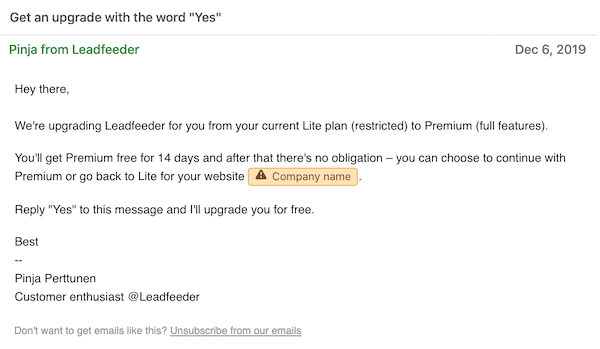
They trust your company and need a final push to become paying customers. Optimal BOFU content consists of trial extensions, demos, consultations, and discount offers.
Like this email we send to our free trial users at the end of their trial.
This three-stage funnel takes prospects from strangers to paying customers.
3 lead funnel examples that turn visitors into customers
Funnel Stage | Example Tactic | Goal |
Top of Funnel | Blog post + content upgrade | Capture leads |
Middle of Funnel | Webinar | Nurture interest |
Bottom of Funnel | Product demo | Convert prospects |
Here are three examples of how businesses use lead funnels to attract, nurture, and convert prospects into paying customers. Each example represents a different stage of the funnel, showing how specific tactics help move potential buyers closer to a purchase decision.
1. Top-of-funnel: A blog post with a content upgrade
A company publishes an informative blog post that addresses a pain point for its target audience (e.g., "10 Tips for Boosting Website Traffic").
At the end of the post, they offer a related downloadable resource, like a "Complete SEO Checklist," in exchange for the reader’s email address. This captures the reader as a lead, moving them into the funnel where relevant content can nurture them further.
2. Mid-funnel: a webinar invite
After a prospect has shown interest by engaging with initial content, such as downloading an ebook or reading several blog posts, they are invited to join a live webinar on a specific topic relevant to their needs (e.g., "How to Improve Your SEO Strategy in 2024").
This educational session allows for deeper engagement, answers their questions, and nurtures them further down the funnel as they evaluate solutions to their problems.
3. Bottom-funnel: offering a personalized product demo
Once a prospect has engaged with multiple pieces of content and shown serious interest, you invite them to a one-on-one product demo tailored to their specific needs. This demo showcases how your product or service solves their pain points, providing the final push to convert them from a lead into a customer.
How to optimize your lead generation funnel
Congratulations, you’ve built your first lead funnel! But you’re not quite done yet. If you want to score more leads, you need to commit to optimization. Here’s how.
1. Use the right tools
There are plenty of software tools that will generate more leads. You’ll be able to learn what company they work for, how long they spend on each of your web pages, and get detailed content information for employees at that company.
Armed with this data, you can then adjust your entire lead funnel strategy appropriately. If your business has the budget, look for tools that improve lead generation. Remember to pair said tools with the five-step process outlined above.
2. Qualify your leads
Not all leads are created equal. It’s in your best interest to qualify leads and spend your time on those most likely to make a purchase.
To qualify a lead, first, look at how they have interacted with your content. Those who download something that directly relates to your business, i.e., a case study, are probably a higher quality lead than someone who reads your careers page.
You can also qualify leads based on their interactions with your company after they’ve given you their contact info.
Do they regularly open your emails? Are they willing to take surveys? Do they respond to sales calls? The answers to these questions will tell you how qualified each lead is.
3. Never stop experimenting
Finally, never stop experimenting! There’s always a way to improve your lead generation marketing funnel. And what worked last year might not work today.
Your audience is changing, and your lead funnel needs to change with them. So try creating different kinds of content to see what your ideal customers connect with best. Also, adjust your advertising efforts, landing pages, and sales efforts as needed.
Lead funnel strategy best practices
Here are our top 5 lead funnel strategy best practices in a quick checklist:
Clear targeting: Define your ideal customer profile and segment your audience to tailor marketing efforts to specific needs and behaviors.
Compelling lead magnets: Offer valuable content like eBooks, webinars, or free trials to attract potential leads at the top of the funnel.
Nurture with email sequences: Use personalized email campaigns to nurture leads through the funnel, providing relevant content and offers.
Optimize landing pages: Ensure they are simple, feature strong CTAs, and have minimal distractions to boost conversions.
Measure and refine: Regularly analyze funnel performance and adjust strategies based on metrics such as conversion rates and engagement.
Effective lead funnels: the key to boosting your business
And there you have it—a comprehensive guide to creating and refining your first lead generation funnel!
By following our straightforward five-step approach and fine-tuning your funnel, you'll be well on your way to establishing a reliable, consistent lead-generation system.
Contact us today for more information on how Leadfeeder can help with lead funnels.
B2B Lead Generation Guide
Marketers — need some fresh B2B lead generation ideas to hit your MQL targets? Download this guide and fill up your pipeline now!
DownloadFAQs about lead funnels
What is a sales funnel in lead generation?
A sales funnel in lead generation is a step-by-step process that guides potential customers from their initial interest in a product or service to purchase. It usually includes stages such as awareness, consideration, and decision, helping businesses capture, nurture, and convert leads into paying customers by addressing their needs at each stage.
What is the difference between a lead generation funnel, a sales funnel, and a sales pipeline?
A lead generation funnel focuses on attracting and converting prospects into leads, while a sales funnel guides those leads through various stages toward becoming customers.
On the other hand, the sales pipeline represents the steps sales teams take to manage and close deals, tracking prospects from initial contact to a final sale. Each plays a different, distinct role in moving prospects through different phases of the buyer's journey.
How do you make a lead funnel?
To build a lead funnel, attract your target audience with valuable content or offers, such as blog posts, ads, or social media posts. Next, capture leads by offering something valuable in exchange for their contact information, like a downloadable guide or a free trial.
Nurture those leads through email marketing or personalized content to build trust and interest. Finally, guide them toward making a purchase decision with targeted offers and follow-ups. Tracking and optimizing each stage of your funnel improves its performance.
What is a lead magnet funnel?
A lead magnet funnel is a marketing strategy that entices potential customers by offering valuable content, like an eBook or webinar, in exchange for their contact information. This funnel helps collect leads and nurture them through targeted communication, guiding them toward conversions.
What is the difference between a B2B lead generation funnel and a B2C lead generation funnel?
The B2B lead generation funnel targets businesses and decision-makers, emphasizing relationship-building through personalized communication and educational content such as whitepapers and webinars, which often result in longer sales cycles.
The B2C lead generation funnel focuses on individual consumers, using engaging marketing tactics such as social media ads and discounts to capture leads more quickly. It usually features shorter sales cycles and a more transactional approach with strong calls to action and emotional connections.

Director of Content Marketing @ Leadfeeder
Jamie Pagan is Director of Demand at Leadfeeder, where he leads demand generation and pipeline growth initiatives. His work focuses on connecting marketing activity with revenue by combining intent signals, campaign performance data, and audience insights.
With experience building scalable demand engines and launching growth-focused campaigns, Jamie brings a practical perspective on how marketing teams generate and capture demand. His experience working with intent data and marketing analytics informs his approach to identifying high-intent buyers and converting interest into qualified opportunities.