60-Second Summary
This collection gives verified LinkedIn benchmarks for 2026 with source links and use-case breakdowns so you can act fast. Use these figures to set KPIs, choose formats, and plan seasonal ad tests.
Key takeaways: Include these five metrics in every 2026 deck — 1.3B registered members, ~310M estimated MAUs, $17.81B revenue (FY2025, +9% YoY), 80% of B2B social leads from LinkedIn, and 4 out of 5 members have purchase influence.
Standout strategies & tactics: Prioritise carousels for education and <30s native video for personality; post Tue–Thu 10–11 AM. Use polls for research, test audiences in January (low CPC), scale into Q3, and optimise ads for CPL/qualified leads rather than clicks.
Real-world lessons & frameworks: Invest in social selling and personal profiles (SSI leaders create 45% more opportunities; personal posts get 2.75x impressions and 5x engagement). Adopt AI in recruiting to save time, remove unnecessary degree filters to expand talent pools, and prioritise skills signals as roles evolve.
*This summary was created with AI assistance, using our original content.
This page collects verified, current LinkedIn data so you don't have to wade through outdated roundups. Every number links to its source. We've split the stats by use case so you can jump straight to what you need.
Key LinkedIn Statistics for 2026 at a Glance
Five numbers that belong in every strategy deck this year:
LinkedIn User and Audience Statistics
Who uses LinkedIn, where they live, and why that’s important for your campaigns.
Total user base and growth
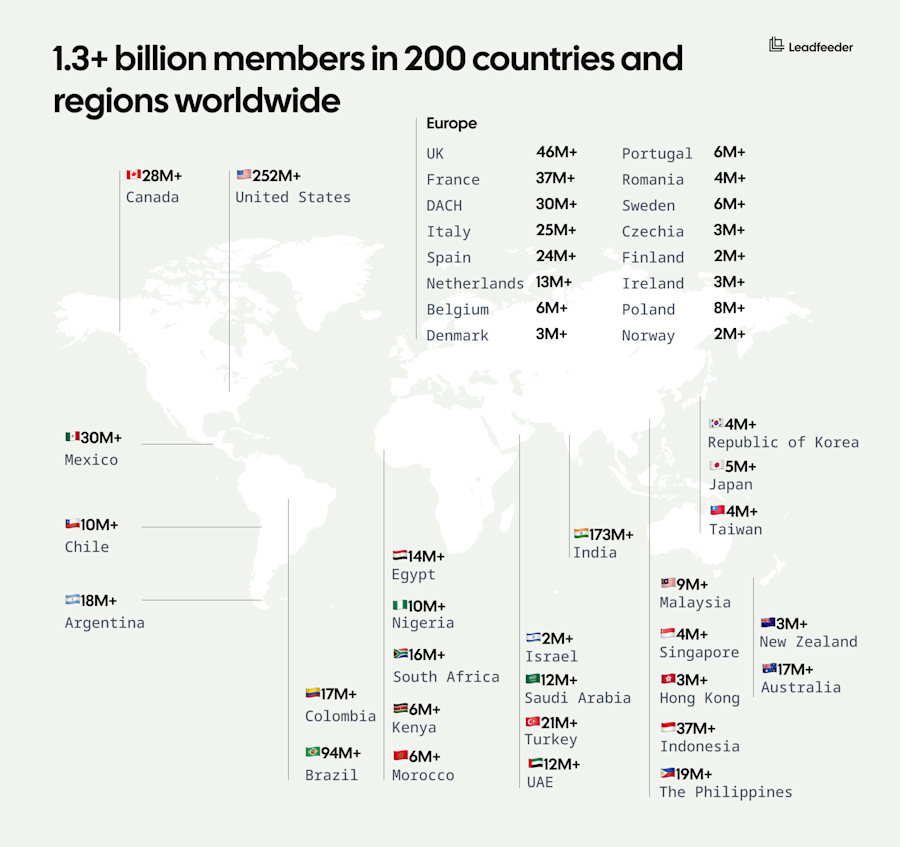
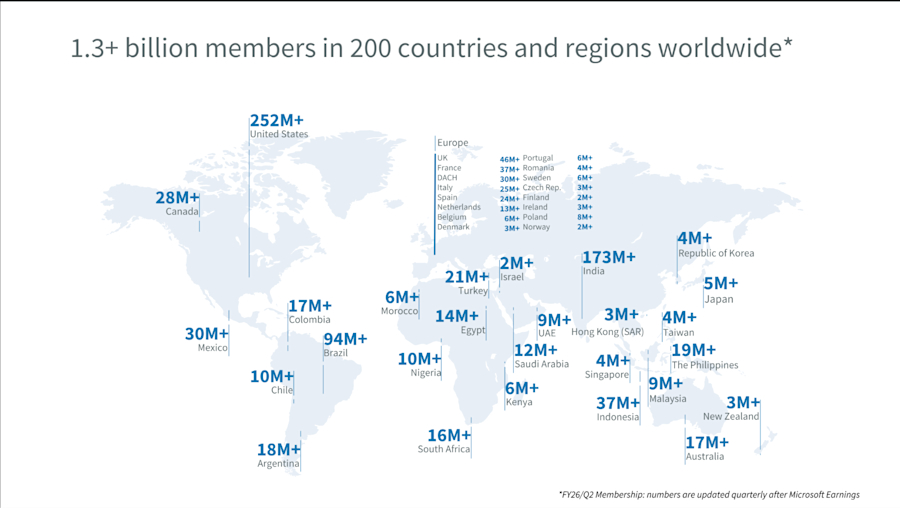
LinkedIn hit 1.2 billion registered members in January 2025. By January 2026, the count passed 1.3 billion, which marks four straight years of double-digit member growth.
An important caveat to note is "members" means every account ever created. Not how many people log in. The monthly active user estimate sits around 310 million. An analysis of EU transparency reports puts the global figure closer to 442 million if you extrapolate a 34% activity rate worldwide. LinkedIn doesn't publish official MAU/DAU numbers, so treat these as estimates.
The U.S. leads with 252 million+ members, and over 72% of all members live outside the United States, which is important if you run international campaigns.
Demographics: age, gender, education, income
The 25 to 34 age group accounts for 33.4% of LinkedIn's global audience. Add the 18-to-24 bracket (20.5%) and more than half the platform is under 35. The gender split: 56.9% male, 43.1% female.
The audience skews wealthy and well-educated. 53% of U.S. users come from households that earn over $100,000, and 53% of college graduates use the platform (vs. just 10% of those without a degree). In the U.S., Millennials represent 35.8% of users, Gen X 27.2%, and Gen Z 26.2%.
All this data indicates LinkedIn has high-intent professionals who can approve a purchase order.
Professional profile of LinkedIn users
Four out of five LinkedIn members have decision-maker authority at their company. The platform's audience has 2x the purchasing power of the average web user. LinkedIn also hosts over 69 million company pages.
If you sell complex B2B products, LinkedIn is where your buyers are.
LinkedIn Usage and Engagement Statistics
Benchmarks that should influence your 2026 editorial calendar.
Activity and session behavior
LinkedIn pulled in 1.77 billion website visits in February 2025 and the social media platform now sees around 2 million posts, articles, and videos published every day, with comments up over 30% and video uploads up more than 20% across 2025. Despite all that volume, only about 1% of members post content each week (widely cited).
If you’re willing to publish consistently, the competition for attention is a lot thinner than the audience size suggests.
Content engagement benchmarks
Format choice matters more than most marketers realize. The 2025 benchmark data makes the pecking order clear:
LinkedIn video watch time grew 36% year over year in 2024. Short-form clips lead the charge. Keep them under 30 seconds, as that length drives a 200% higher completion rate.
Best time to post is Tuesday through Thursday, 10 to 11 AM in your audience's time zone. Pair that with carousels for education and short video for personality, and you've covered the highest-ROI formats on the platform.
LinkedIn Marketing and Advertising Statistics
How LinkedIn stacks up as a paid and organic B2B channel, plus the ad benchmarks you need for budget planning.
LinkedIn as a B2B marketing channel
97% of B2B marketers use LinkedIn for content distribution. The results justify the consensus: 80% of B2B social media leads come through LinkedIn. The platform converts 277% better than Facebook and X combined and accounts for 46% of all social traffic to B2B websites.
LinkedIn works best when you sell to other businesses, target people with purchase authority, or promote high-consideration products. It's a poor fit for cheap consumer goods or audiences outside the professional world.
Ad reach, performance, and costs
Yes, LinkedIn ads cost more. The trade-off is an audience where 4 out of 5 people influence purchase decisions. For awareness, optimise around CPM. For lead gen, track cost per qualified lead, not cost per click.
How to use this data in your 2026 plan
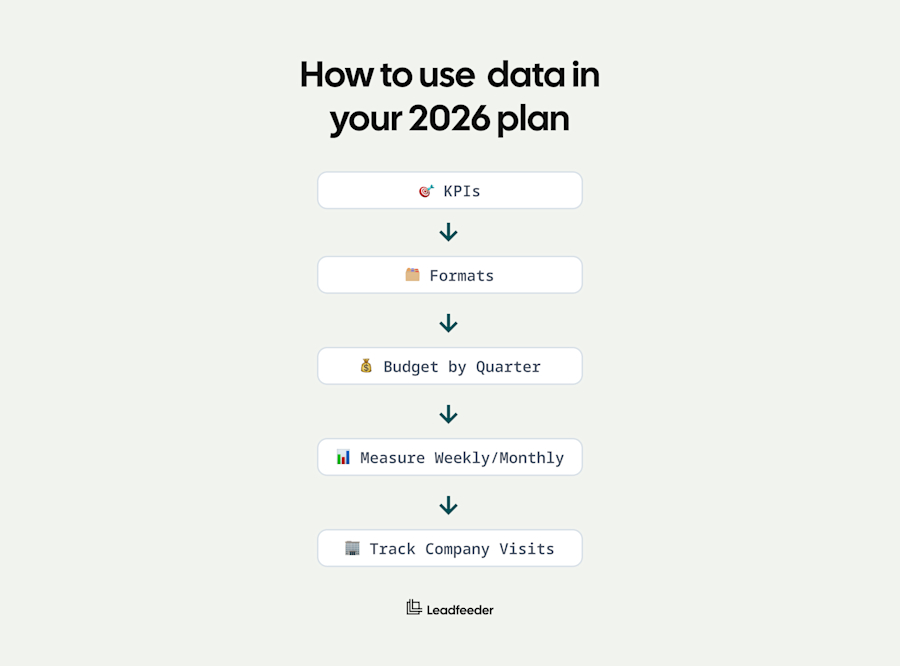
1. Set your KPIs: Use the ad benchmarks table above as your starting line. If your CTR, CPL, or conversion rate fall within 15% of those numbers, your campaigns are in good shape. If you see a bigger gap, it’s likely a creative problem or a targeting problem, so fix those before you tweak the budget.
2. Choose two formats that match your goals and go deep on them: Carousels crush everything else for engagement, so use them when you want to educate. Short videos (under 30 seconds) work well for thought leadership and behind-the-scenes content. Use polls for cheap audience research.
3. Plan for seasonality: LinkedIn CPCs averaged $10.48 in Q1 2024 but jumped to $15.72 in Q3, which is a huge 50% swing. Therefore, Run your tests and try new audiences in January, when clicks are cheap, and scale what works into Q3, when engagement rates peak.
4. Build a measurement cadence: Every Friday, check spend, CTR, and CPL. Once a month: audit the full funnel from impressions to clicks to leads to qualified opportunities. If a drop-off happens between clicks and leads, your landing page or offer needs work. If it happens between leads and qualified opportunities, your targeting is off.
5. Prove the ROI: So you got a bunch of clicks from your ads, but how do you track the ROI? Platforms like Leadfeeder help you track which companies visit your site after they see your ads. Do those companies match your ICP? You can connect the ad spend to the pipeline!
LinkedIn Recruiting and Job Market Statistics
Now we’ll look at the numbers behind LinkedIn's role in the job market.
Job search activity
Every minute, 90 people add a new role to their LinkedIn profile. The platform processes 8000+ job applications per minute, and 75% of people who recently switched roles used LinkedIn during the process. The new AI-powered job search tool already has roughly one million daily users.
The U.S. job market cooled in 2025. National hiring fell 4.9% year over year in August. The decline is flattening, though: the January-to-February 2025 shift was just +0.3%, the smallest movement since 2022. For job seekers, competition remains stiff. Profile optimization and a consistent content presence are table stakes.
Recruiter behavior and AI adoption
37% of organizations now integrate or experiment with generative AI in their recruiting workflow, up from 27% the year before. Recruiters who use AI tools report that they save about 20% of their work week. LinkedIn's Hiring Assistant cuts profile review volume by 60% and time-to-fill by nearly 30%.
Skills-based hiring is gaining ground: 26% of paid job posts on LinkedIn in 2023 dropped the degree requirement, up 16% from 2020. Remove that filter and your talent pool can expand up to 19x in the U.S. Lastly, recruiters who search by skill are 12% more likely to hire the right candidate.
Networking, Social Selling, and Community Statistics
LinkedIn rewards relationship-builders. The data below shows exactly how much.
LinkedIn's Social Selling Index (SSI) scores users from 0 to 100 on profile strength, prospect research, engagement, and relationship depth. SSI leaders create 45% more opportunities and are 51% more likely to hit quota.
Personal profiles get 2.75x more impressions and 5x more engagement than company pages. Meanwhile, 59% of decision-makers prefer content from individual people over brand accounts. Sales teams that ignore personal-profile content leave pipeline on the table.
Your LinkedIn game plan:
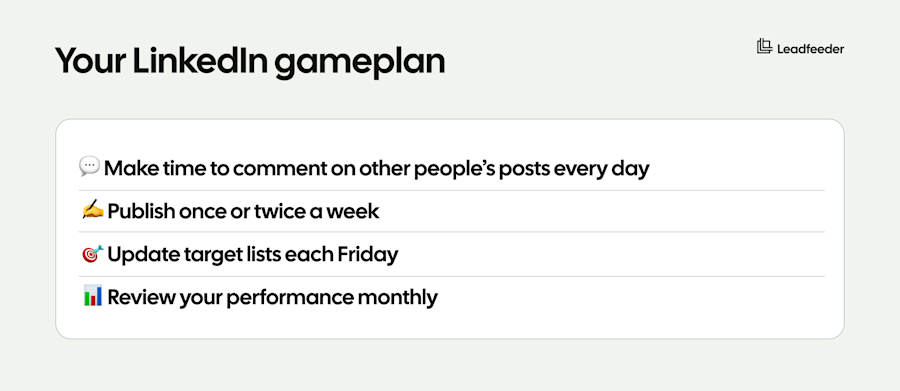
Make time to comment on other people’s posts every day
Publish once or twice a week
Update target lists each Friday
Review your performance monthly
LinkedIn Company, Revenue, and Growth Statistics
LinkedIn brought in $17.81 billion in revenue for Microsoft's fiscal year 2025 (which ended June 2025), a 9% year-over-year increase. Premium subscription revenue crossed the $2 billion mark on the back of a 50% jump in premium subscribers over two years. Marketing Solutions revenue grew 15% year over year. The platform is headed toward a $20 billion+ annual run rate in 2026.
In Q1 of Microsoft's fiscal year 2026 (ended September 2025), LinkedIn revenue grew another 10%. The company has about 18,000+ employees in 38 cities worldwide under CEO Ryan Roslansky.
Future of LinkedIn: AI, Video, and Skills-Based Hiring
Three forces will reshape the platform over the next 12 to 18 months. All of them are already measurable.
40% of premium subscribers use AI features. On the marketing side, two in three B2B marketers now use generative AI in their campaigns (up 20% from 2023), and 62% of CMOs have formal AI guidelines in place. LinkedIn's Hiring Assistant went globally available in English in late September 2025.
Video keeps on accelerating. LinkedIn saw three consecutive quarters of double-digit growth in video uploads, a 36% year-over-year jump in watch time, and 79% of businesses already use video as a LinkedIn marketing tool. If your team hasn't tested short-form clips yet, you're behind.
LinkedIn's own research projects that 70% of job skills will change by 2030. Professionals have added a 40% broader range of skills to their profiles compared to 2018. For HR leaders, L&D teams, and job seekers: invest in skills signals now.
Methodology
How we collected these stats and how to reference them.
Where these statistics come from
We follow a strict source hierarchy.
Tier 1: LinkedIn's official pages, Microsoft earnings filings, and the LinkedIn Pressroom. Tier 2: research firms like DataReportal, Pew Research, Statista, and Semrush. Tier 3: industry benchmarks from respected marketing platforms like Sprout Social, Hootsuite, Buffer, Social Insider, and HockeyStack.
How to cite these LinkedIn statistics
Link to the original source. Include the year and region if the stat is geographically specific. Most importantly, clarify whether a number refers to "members" (registered accounts) or "active users" (people who log in). These are different things, and mixing them up hurts your credibility.
Update log
Q1 2026: Full refresh with FY2025 Microsoft earnings data, Q1 FY26 results, updated ad benchmarks, LinkedIn Future of Recruiting 2025 report, EU DSA transparency analysis, and 2025 engagement benchmarks from Social Insider and Buffer.
Want to see which companies visit your site after LinkedIn activity? Explore Leadfeeder to connect your LinkedIn efforts to a real pipeline.