60-Second Summary
SaaS marketing demands a structured, metrics-driven approach that communicates long‑term product value and reaches the right audience at the right time. Below are the core takeaways, practical tactics, and repeatable frameworks to attract, convert, and retain subscribers at scale.
Key takeaways: SaaS is service-first—focus on retention and lifetime value (MRR, CLV, churn, NRR) rather than one-off sales; plan for long sales cycles with stage-specific content and clear differentiation versus competitors.
Standout strategies & tactics: Combine SEO and content to match intent, supplement with targeted PPC and programmatic ads, use freemium/free trials and tiered pricing, run ABM for high‑value accounts, and leverage referral and influencer programs to scale trust and acquisition.
Real-world lessons & frameworks: Build detailed ICPs/personas and map content to funnel stages, treat accounts as people with personalized outreach, optimize onboarding and upsell motions to reduce churn, and track CAC, CPL, MRR and CLV to drive ROI—use intent tools (e.g., Leadfeeder) to prioritize and target the right accounts.
*This summary was created with AI assistance, using our original content.
To succeed, you need to clearly communicate your product’s long-term value and reach the right audience at the right time. That means adopting a structured approach to attracting, converting, and retaining customers rather than relying on guesswork.
In this article, we break down what SaaS marketing really involves and share the strategies that help you drive more consistent and scalable growth.
What is SaaS marketing?
How do we define SaaS marketing? It describes marketing activities and strategies designed for promoting Software as a Service products. That is, software that customers subscribe to on a monthly or yearly basis rather than owning it outright.
This marketing category typically involves a mixture of content marketing, search engine optimization (SEO), and pay-per-click (PPC) advertising. It’s about creating engagement across various stages of interest and often includes free trials and demos so customers can try the software for size.
SaaS marketing strategies are twofold: they aim to retain existing customers while ensuring the product remains visible to new leads.

How is Software as a Service marketing unique?
Now that we’ve cleared up the SaaS marketing meaning, let’s take a look at how it’s different from marketing other types of products:
1. Product type and pricing
In SaaS marketing, you’re really selling a service instead of a product. SaaS solutions are typically cloud-based, so there’s no physical product for customers to see and feel. This makes it harder to promote, requiring marketers to demonstrate genuine and ongoing value.
As we mentioned, most SaaS models are subscription-based, with pricing arranged in ascending tiers. Many companies offer a free trial period or a freemium version of their product, which doesn’t often happen in traditional marketing.
2. Audience type
SaaS products are usually quite specific and target a specific industry or niche. For B2B SaaS in particular, you’ll often be selling to decision-makers within large companies—people who probably won’t be using the software themselves.
This is why marketers need to show how the product can provide value to a business and give it a competitive advantage. However, when you’re promoting software to smaller companies or solopreneurs, you’ll need to demonstrate its value to end users.
3. Focus on retention
SaaS marketers aren't trying to make a one-off sale.
The aim is to keep customers for the long haul, with recurring subscriptions month after month and recurring revenue. That puts retention at the center of the job, where relationship-building has to translate into expansion, not just keep the brand warm.
You'll have to remind customers exactly why the software is so valuable to them and justifies the monthly payment. This requires ongoing nurturing through relevant content and robust support. To demonstrate lifetime value, you'll promote the product's updates and new features.
As sales coach Niraj Kapur puts it, “We were working with a company where 30% of expansion started with a marketing email about a new integration. If your campaigns don't move NRR, you're just decorating the top of the funnel.”
4. Length of sales cycle
SaaS products have a longer sales cycle than non-SaaS products because cloud-based software is intangible and represents an ongoing investment. Couple that with the already-lengthy sales cycles in B2B, which the Dreamdata LinkedIn Ads Benchmarks Report puts at an average of 211 days, and you’re looking at nurturing potential customers over many months.
This means creating content for each stage of the customer journey, and educating them about the value of your service through demos and trial periods. Potential customers will have multiple touchpoints with your business, which makes it harder to attribute a sale to the right channel.
5. Competitors
During this lengthy sales cycle, prospects and leads will want to see how you differ from your competitors.
Think tables and comparison articles, testimonials from people who switched to your product, and social proof like star ratings and reviews. 49% of SaaS marketers report that case studies are very effective at boosting sales.
SaaS is a crowded market, so you’ll need to stay on top of what your rivals are doing and differentiate by promoting better features or support. You may find yourself up against businesses that aren’t really competitors, too, when you go after the same keywords and buyer personas in your marketing.
Main channels for marketing SaaS solutions
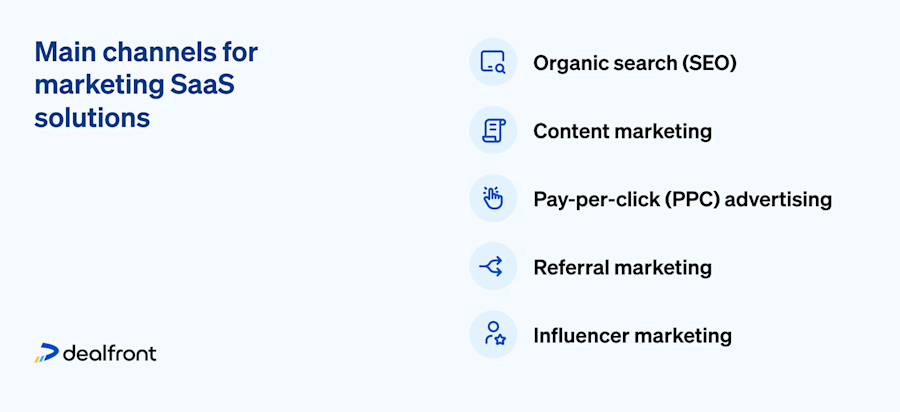
SaaS marketing takes place across various channels. Here are the ones you need, and how best to use them:
Organic search (SEO)
Search engine optimization is an affordable way to bring organic traffic to your website. And it’s very necessary for SaaS marketing, as it helps you to get your content in front of the right people.
SEO for SaaS is about matching search intent at various stages of the customer journey, and optimizing your web pages to appeal to both the target audience and the gods of Google. If you can rank highly on the search engine results pages (SERPs), more people will discover your brand—and recognize that it is trustworthy.
To build an effective SaaS SEO strategy, focus on these key areas:
Keyword Research: Identify and target relevant keywords with high search volume. Use keyword research tools to discover the phrases your potential customers are searching for, including low-competition opportunities.
Content Creation & Optimization: Create pages and articles that align with those keywords, ensuring visitors find what they are looking for. Focus on high-quality, regularly updated content, and make sure your site is fast, easy to navigate, and mobile-friendly.
Link Building Strategy: Develop a strong linking strategy by creating valuable content that earns backlinks from other sites, while also using internal links to guide users and improve SEO performance.
You will need to identify and target relevant keywords with high search volume, in other words, the phrases and topics your potential customers are actively searching for. Keyword research tools can help you uncover these terms while also revealing lower-competition opportunities you can take advantage of.
Then, create content around these keywords so visitors find what they need. Focus on quality, keep your site fast and mobile-friendly, and build links to strengthen your authority and rankings.
Content marketing
People in the market for a SaaS product want to learn about your organization and its values before making a purchase—and that’s why content is so crucial to marketing for SaaS companies. Your blogs and articles educate, inform, and entertain them as they move through the funnel.
There are multiple types of content you can use to engage your audience and provide value. Some of the most effective options include:
Videos: Engage users with visual and easy-to-digest content
Glossaries: Help explain industry terms and improve search visibility
Free Templates: Provide practical value that users can immediately use
ROI Calculators: Let potential customers measure value and benefits
Most companies use a mix of these content types to reach and engage their audience effectively.
SaaS content marketing requires truly relevant content that solves various pain points for potential customers. You’ll need to know your audience inside out. Plus, it’s about showing them what makes your product stand out, especially as they’ll be shopping around.
As we mentioned, fresh content is important, but evergreen pieces work too. Many marketers repurpose content where possible, such as turning an article into an infographic or condensing it into bullet points for a social media post.
Social networks are ideal for promoting website content and building communities of like-minded customers. You can also use email marketing as part of the content strategy—once you’ve got leads to sign up, send them interesting articles as well as company newsletters.
Pay-per-click (PPC) advertising
“PPC advertising offers SaaS companies a fast track to visibility and customer acquisition, but success depends on precision. It’s not just about bidding on keywords—it’s about reaching the right audience at the right stage of their journey with tailored messaging. Continuous testing and optimization are key to maximizing ROI and scaling sustainably.” - Pascal Wenzel, Team Lead Performance Marketing, Leadfeeder
Organic traffic is great for SaaS marketing, but it takes time to build an audience that way. The faster method is to pay your way to the top of the SERPs through pay-per-click (PPC) advertising. As the name tells you, the downside is that you’ll have to put your hand in your pocket.
If you have a big enough budget, PPC puts your website and content in front of a larger audience and boosts traffic quickly. You can maximize your spending by carrying out keyword research to attract the right people at the lowest cost per click (more on that later).
As well as using Google Ads, you can create targeted, personalized ad campaigns for the likes of LinkedIn and Facebook. These platforms allow you to set daily or campaign budgets and adjust your spending based on performance.
Referral marketing
Referral marketing in SaaS goes a long way toward building relationships and creating a community of customers who are connected by their love of your software. Because you’ve already put in the hard work to earn subscribers, you should have a base of customers who are happy to refer their friends and business partners.
However, it always helps when you offer an incentive. A referral program ensures they receive something in return for referring a new customer. Make it something valuable to them—most people would rather have a discount than a branded mouse mat.
Referral marketing works best when you give rewards to both sides; not only encouraging existing customers to help you out, but also giving new potential customers a reason to love you from the start. Make the referral process super-easy, and thank people quickly when they refer someone.
You can also reward people for leaving reviews, either on your own website, social media, or third-party platforms. Put a system in place for tracking referrals, rewards, and conversions. Otherwise, you won’t be able to gauge the success of your program.
Influencer marketing
“Influencer marketing is no longer just a B2C play. It’s now one of the fastest ways for B2B brands to grow and connect with the people that matter. When industry voices vouch for your brand, you don't just get attention, you earn credibility and trust.” - Dipak Vadera, Director of Community and Ecosystem Marketing, Leadfeeder
Because SaaS marketing involves positioning your brand as a leader and encouraging trust in your product, influencer marketing can be a good fit. If you can get someone with an online following to talk about and endorse your software, at least some of their followers will become yours.
Selling SaaS isn’t like promoting an energy drink or a beauty product. SaaS influencers need to be subject-matter experts to command respect from a business-minded audience. They don’t have to be household names; micro-influencers can work just as well on a smaller budget.
You’ll pay the influencers—either in dollars or via free use of your product—to endorse you. They can promote your brand through:
Websites
Social Media
Podcasts
You can ask them to address specific pain points or sales obstacles, and pay them based on the frequency or the success of their posts.
Again, you’ll need a deep understanding of your target audience so that you can choose influencers whose values and preferred social platforms align with those of potential customers. The last thing you want is an influencer who damages your reputation by making an inappropriate comment.
How to optimize your SaaS marketing strategy
Here are our top SaaS marketing tips for getting it right. Following these strategies can help you attract more customers, improve retention, and grow your brand effectively.
1. Target the right audience
SaaS marketing is all about proving the value and relevance of your product, and demonstrating it through your content and other activities.
You have to know what your target audience actually wants from the product so you can market it to them effectively.
Start by asking yourself what sorts of people or businesses would benefit from using your software. Consider your total addressable market—that’s the total market size if every potential customer signed up for your software. This can show where the best opportunities lie, especially if you use this handy TAM calculator.
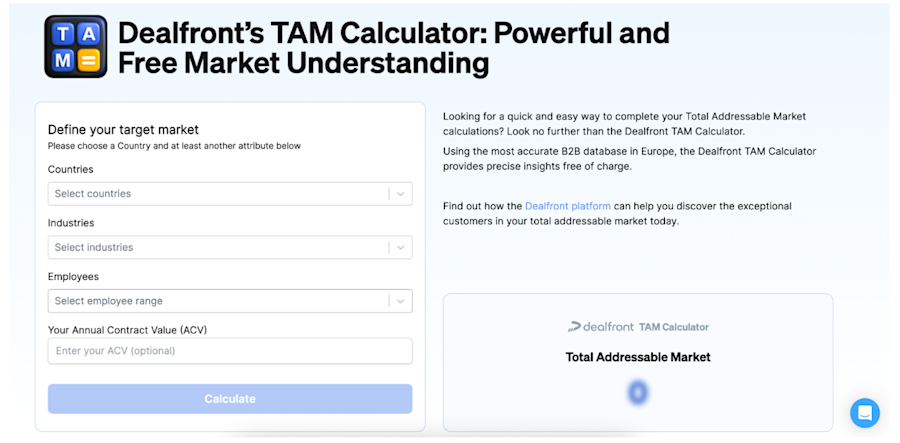
You can get a handle on common pain points and preferences by using intent data, then develop customer personas and ideal customer profiles (ICPs). Think about people’s wants, needs, goals, personality traits, and buying behaviors, and where they spend time online.
Since retention is key, look at your current user base to identify customer preferences. What drives their purchasing decisions? Which features and benefits are most important to them? What types of content get the highest engagement? Then you can look for people with similar traits.
2. Establish expertise, authority, and trust with your content
Content is a critical element of SaaS marketing, with studies showing that companies using consistent, high-quality content generate up to 3x more leads than those that don’t. It’s your opportunity to turn your website into a trusted resource for both potential and existing customers.
Well-crafted content not only raises brand awareness but also demonstrates measurable value to customers, such as through case studies, tutorials, and ROI calculators that highlight your product’s impact
Customers should be able to find relevant information at all stages of their journey. You’ll need a mix of content types—white papers, eBooks, webinars, podcasts, case studies—but all of it should aim to establish your brand as the expert in your niche.
Key types of authoritative content include:
Authoritative articles: Perform well with search engines, attract other websites for guest posts, and help you build backlinks, which will also boost your SERP ranking: such is the power of great content.
How-to guides and jargon explainers: Help users understand complex topics in your industry
Solution-based articles: Solve specific pain points while subtly presenting your product as the best option
When you’re comparing competitors, use verified data and highlight differentiators objectively. For example, include metrics such as feature coverage, pricing tiers, or customer satisfaction scores to clearly show your product’s advantages without editorial bias.
You can offer gated content to people who give you their contact details, to VIP customers, or as a reward for referrals. This allows you to track when prospects return to your website and target outreach to the stage of the buyer's journey they are in.
Update content as often as possible to avoid presenting outdated information. Even customers who’ve been with you for years should be able to find something new and interesting to read.
3. Market to people even when you’re targeting businesses
Any SaaS marketing strategy needs to keep its focus on people, not just businesses. Sure, in the B2B world, you’re selling your product to companies, but those companies are run by humans. And those humans are the ones who read your content and engage with your ads. This is why it’s so important to offer value at all times, focusing on the benefits of your solution.
We’ve already discussed knowing your audience, but it’s worth reiterating, because marketing to people means understanding what makes them tick. You’ve researched their pain points and preferences, but you can also use insights from sales calls and customer feedback to create more relevant content. Personalize it wherever you can—think dynamic PPC ads and tailored emails.
Carefully consider who you’re writing for. For example, people in leadership roles are usually busy, so they’ll probably prefer shorter articles to long-form content. Make sure the sign-up process is convenient and that your website loads quickly—busy people don’t have much patience.
You can provide ongoing value to your customers by offering stellar customer support, promptly responding to their queries and feedback, and providing premium content. Build a community on social media, sharing interactive posts that encourage shares and even user-generated content.
4. Meet your leads where they are
Convenience is important to people who have plenty of other things to think about besides your product. It makes sense to use the marketing channels where they already hang out, which again involves knowing your audience in depth.
You’ll also need to provide content relevant to people at different funnel stages. For instance, your research may show that most customers start by looking at your Facebook page before visiting your website. So you could put awareness-based content on Facebook, and use your blog to entice people at the consideration stage.
Meeting your leads where they are involves striking while the iron is hot. Let’s say someone is looking at product videos on your website. Ideally, they should see a pop-up inviting them to get in touch for a personal walk-through. It’s best to capture emails from website visitors while they’re still browsing, as they’re less likely to respond if they just see an email later.
5. Consider account-based marketing
Account-based marketing (ABM) is one of the SaaS marketing trends you should be aware of, as it brings personalization to your strategy and ensures you focus on people (and businesses) who are the right fit for your product.
In ABM, you create marketing campaigns specifically for your best-fit accounts, which are typically the ones with the highest value. You sell directly to them, instead of spending time and resources on unqualified leads who don’t have a genuine interest.
This works well for SaaS and B2B marketing where you’re aiming to retain existing high-value customers. You can make them feel special with personalized experiences—the campaign is just for them, not for their segment or industry. Basically, you treat each account like its own market.
ABM enables you to focus on a small group and target the company's main decision-makers. It also helps you see which strategies are most successful and make adjustments if needed. Bear in mind that this approach requires a lot of research and can be hard to scale.
6. Offer different pricing tiers, including free trials or freemium
To cater to different customer types, it’s a good idea to offer a range of pricing tiers from budget to premium. Make sure you display the pricing and the features side by side, with the ability to toggle between monthly and yearly pricing. Be wary of offering too many similar options.
Although a low pricing point might attract more people, they may not be the customers you want. Higher prices show that it’s a product worth having, and you can justify them by providing great value for money and excellent customer service. You can also offer large discounts for those who subscribe for a year up front.
Some companies choose to offer a “freemium” tier, with limited features. This attracts people in the first instance, but you can market the other tiers and convince them to upgrade to make the most of the software and grow their business.
Another popular method is to offer a free trial of the software—74% of SaaS companies do so. There’s barely any cost to you, and you can gain valuable feedback. Customers appreciate the chance to get a feel for the software and see that it lives up to its promises.
You may ask for the customer’s credit card details in advance to show the product’s value, but this can put some people off. Make it clear that they won’t be charged until after the trial, and send them several reminders so they have time to cancel.
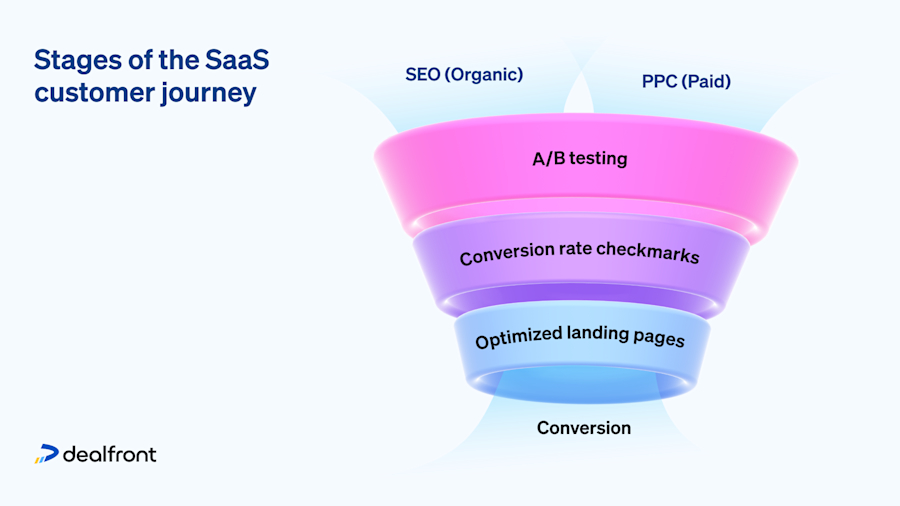
7. Smartly combine SEO and PPC
You can maximize your marketing budget by using a combination of SEO and PPC in your SaaS digital marketing strategy. An organic strategy focused on improving your SERP performance is virtually cost-free, but you can supplement it with PPC in the right places.
Set a strict budget for pay-per-click and A/B test all your ads to see which designs and calls to action work best. Review your PPC channels by checking conversion rates, so that you don’t end up wasting money on ads that don’t help your cause.
Every ad must include a strong call to action that encourages users to click through to your website. Direct people to landing pages optimized for different types of search intent, whether someone is discovering your brand for the first time, carrying out research, or ready to make a purchase.
By building visibility, PPC can actually help to boost your organic content in the search results. Meanwhile, make sure your website gives visitors a smooth experience, with easy-to-find pricing, valuable content, and a balanced, engaging design.
How to measure the success of your SaaS marketing plan
If you’re doing SaaS performance marketing, you’ll measure marketing campaigns against specific KPIs. But any SaaS marketing plan needs relevant metrics that align with your goals.
Here are the crucial ones to track:
1. Customer churn and/or retention rates
These are opposite sides of the same coin, but you can measure them in different ways.
In SaaS-based marketing, churn is measured by the number of customers who canceled their subscription in a given time period—typically one month. B2B subscription businesses have an average churn rate of 3.8%.
Churn rate (%) = (Total customers cancelling this month / Total subscribers at the beginning of the month) x 100
You’ll need to know a few other figures before calculating your net revenue retention (NRR) rate. These are the churn rate, the monthly recurring revenue (MMR), which we describe in the following section, and the expansion revenue (from people who upgrade to a higher pricing tier).
Now use the following formula to find the retention rate as a percentage:
NRR (%) = ([(MRR + Expansion revenue) - Revenue lost from churn] / MRR) x 100
A positive NRR is always greater than 100%.
2. Monthly recurring revenue (MRR)
Another important metric for SaaS is recurring revenue, which shows how much revenue you’ve generated in a month (from ongoing subscribers). Multiply the number of total accounts for that month by their rate in dollars per account.
MRR = Total number of accounts for the month x Rate in dollars per account
If you offer annual subscriptions, you may also want to find your annual recurring revenue (ARR). This includes any revenue earned from customers who pay for things like maintenance and support.
ARR = Annual subscriptions + Additional ongoing revenue – Cancellations
3. Customer acquisition cost (CAC)
Although SaaS marketing focuses on retention, it’s important to know how much it costs you to get new customers on board.
CAC is the total amount you spend on sales and marketing (add those figures together first) to acquire a new paying customer on any channel.
CAC = Total cost of sales and marketing / Total number of new customers acquired
4. Customer lifetime value (CLV)
CLV represents the total amount of money that your business expects to bring in from one paying customer during the entirety of their relationship with you.
For SaaS marketing purposes, that money comes from subscriptions rather than occasional transactions.
CLV = Average revenue from customer × length of contract
You could also use this formula:
CLV = (1 / churn rate) x ARPA
5. Website traffic
The amount of website traffic you get is a measure of your SEO and PPC efforts.
There are multiple metrics you can use, such as the total number of visitors in a given period, the number of unique visitors, and the number of times a certain page is viewed. In most cases, you can find these figures on Google Analytics.
By identifying where those visitors come from and how they interact with your website, you can evaluate the effectiveness of specific channels and ads. Your bounce rate tells you how many people navigate away before converting, giving you the chance to adjust your SaaS marketing tactics.
6. Brand search volume
This one’s a bit more specific—it involves finding out how many visitors reached your site by searching for branded keywords. You can also compare this figure with your competitors'.
If your brand search volume is low, you can try to improve it by using your brand name more prominently. For example, in meta descriptions and at the end of blog titles. You could also bid on your branded keywords.
7. Cost per lead (CPL)
Cost per lead measures the total cost of attracting new leads through a marketing campaign. It tells you how cost-effective this campaign has been. Don’t forget, new leads are still important for SaaS!
CPL = Total cost of campaign / Number of acquired leads
Your CPL figure can help you to learn which channels are your best sources of leads, and how much is left in the kitty for further lead-gen expenses.
SaaS marketing examples
Here are three hypothetical SaaS marketing plan examples that include some of the tips we discussed earlier:
Example #1: Upselling
A big part of SaaS marketing is persuading customers to upgrade to higher-priced tiers. That might mean turning free trial or freemium users into paying customers, or getting people to move toward your premium offerings. To do this, you’ll need a robust upselling strategy.
One approach is to limit features in the lower-priced tiers, so that growing businesses will need to upgrade to add more seats or increase cloud storage.
You can also add new features only to your higher plans, and tempt users by letting them try a new feature for free for a limited time. Your content marketing needs to prove the value of the more expensive plans.
Example #2: Selling to small businesses
People often think SaaS products are only for large enterprises, so it’s worth showing that your solution also addresses pain points for small companies and even solopreneurs.
Although you want most customers to move to higher tiers eventually, it’s good to offer a pricing tier that the smallest firms can use without feeling pressured to upgrade.
Include enough features in the freemium or lowest tier so that very small companies have everything they need. Demonstrate this through your content: Explain that your product is for everyone, and use social proof to highlight other small businesses you’ve helped.
Example #3: Maximizing retention
There are many points in your marketing funnel where potential and existing customers could drift away.
For example, free users who never become paying customers, people who drop out during onboarding, and those who slowly stop using the product as their engagement wanes.
SaaS marketers should identify these danger areas and find ways to retain those customers. Look for the highest-risk churners and focus on them. Could you improve your onboarding process? How can you reward loyal customers? Can you make your content more engaging?
Support your SaaS marketing with Leadfeeder
SaaS marketing has its challenges, but you can succeed if you follow our tips, identify the best channels, and track your key metrics. There are also many SaaS marketing solutions available to help with your strategy—including Leadfeeder.
The Leadfeeder platform is designed specifically for the B2B market and enables you to find and reach decision-makers from a database of company and contact information. You can discover your total addressable market and focus on accounts with genuine buying intent.
Leadfeeder delivers programmatic display ads to your targeted companies through Google Ads and LinkedIn, maximizing your ad budget. The platform tells you in real-time when the right companies visit your website—and which campaigns attracted them.
SaaS marketing FAQs
What is B2B SaaS marketing?
B2B SaaS marketing means you’re promoting Software as a Service products to other businesses, instead of to individual end users. You’ll still use a subscription model, often based on the number of users or the size of the company.
How is SaaS marketing different?
SaaS marketing focuses on acquiring long-term customers rather than aiming for one-off conversions. With a lengthy sales cycle due to high-value, intangible products and multiple decision-makers in target organizations, it’s about building relationships, demonstrating the software's value, and delivering that value throughout the customer journey.
What are some common SaaS marketing challenges?
SaaS products are intangible—customers can’t see them or try them on. Your marketing content has to explain what the software does and how this benefits the customer’s business. Free trials and demos are a good way to do this.
Other SaaS marketing challenges include standing out in a crowded market, and keeping current customers engaged while nurturing new leads. In both cases, knowing your audience and their pain points is crucial.