42% of businesses plan to increase their performance marketing budget this year to drive instant conversions and sales. To maximize ROI, they need performance marketing tools to unmask their most profitable channels and drive real-time optimization.
In this guide, we’ll discuss the top 10 performance marketing tools to consider, what they are used for, and how they can help you track results, improve campaigns, and increase conversions.
1. Leadfeeder
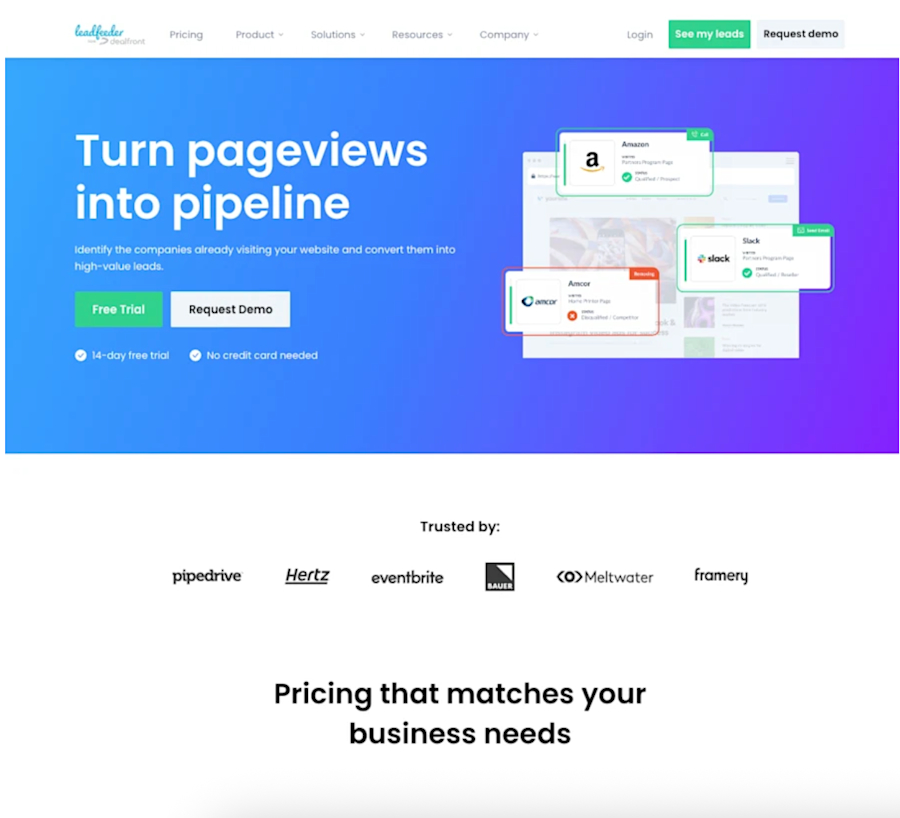
Leadfeeder is the best B2B website visitor tracking tool, helping businesses identify anonymous visitors and convert website traffic into qualified leads.
This tool tracks website visits and conversions all the way back to your performance marketing campaigns. Not only can you see exactly where visitors are coming from, but you can also see which campaigns drive high-value traffic.
It’s the kind of data that’s crucial for optimizing your performance marketing campaigns.
And that’s not all. Leadfeeder can identify which companies are visiting your website, along with details like firmographics, website interactions, and even the buying power of individual site visitors—without having to ask them to fill out a form.
In addition to providing crucial analytics, Leadfeeder can help you identify leads, score them more accurately, and target promising prospects with personalized content.
Pro tip: Try Leadfeeder free for 14 days
2. Google Analytics
You’ve probably heard of Google Analytics. It’s a popular, user-friendly tool that provides you with key website traffic and activity data, including visitor demographics, website engagement metrics, and traffic sources.
Google Analytics is beginner-friendly and free, making it a convenient tool for small B2C businesses. However, one major drawback is that you only get surface-level data, meaning that you miss out on the critical context that you get with alternative analytics tools like Leadfeeder.
3. Mailchimp
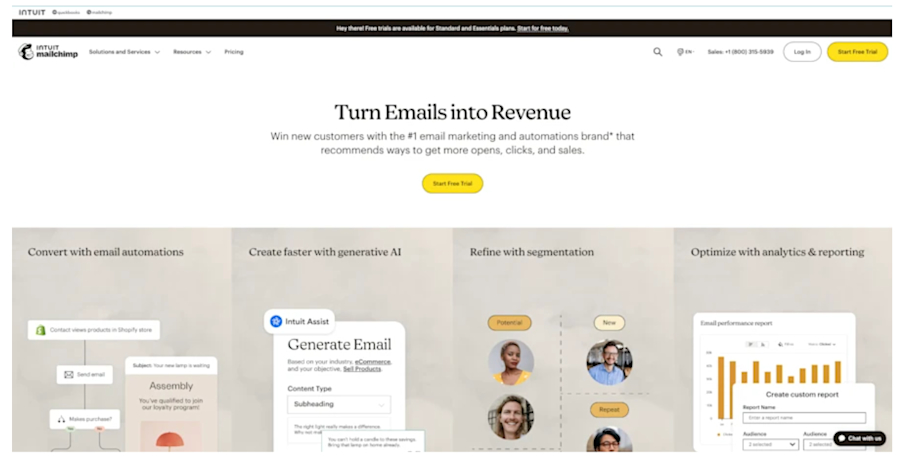
Mailchimp is an email marketing and automation software tool that can assist performance marketers in their outreach efforts.
If prospects engage with your performance marketing campaigns but don’t convert, Mailchimp can help keep the lines of communication open. Its audience segmentation features and in-depth contact profiles enable you to target prospects with personalized messages based on specific factors, such as demographic info or the campaign they interacted with.
4. Partnerize
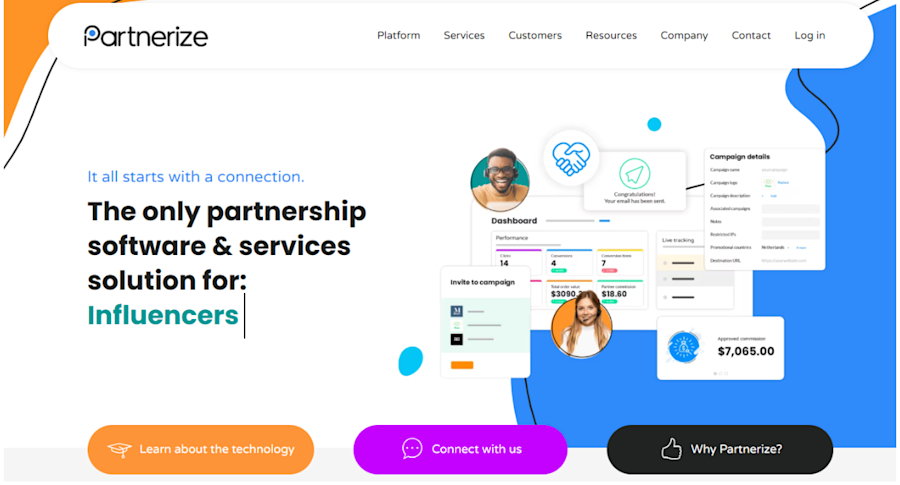
Partnerize is a performance marketing partnership tool that centralizes partnership management in one place. Its expansive database of over 250,000 influencers empowers you to easily discover and recruit new partners.
From there, you can track campaigns in real time, measure performance and revenue contribution with analytics and reporting, and even manage communications to collaboratively optimize campaigns.
5. Voluum
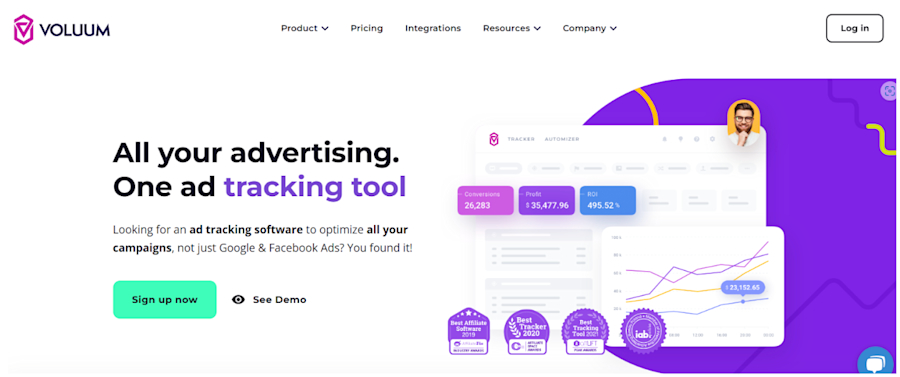
Voluum is a cloud-based ad tracker with features designed to help you track and optimize ad campaigns. You can track display, email, social, native, and search ads from one place.
Standout features of Voluum include a variety of different tracking modes, A/B split testing, rule-based traffic distribution, and anti-fraud tools. It even includes a Traffic Distribution AI feature that automatically directs ad traffic to your highest-performing landing pages to optimize conversions.
6. LeadDyno
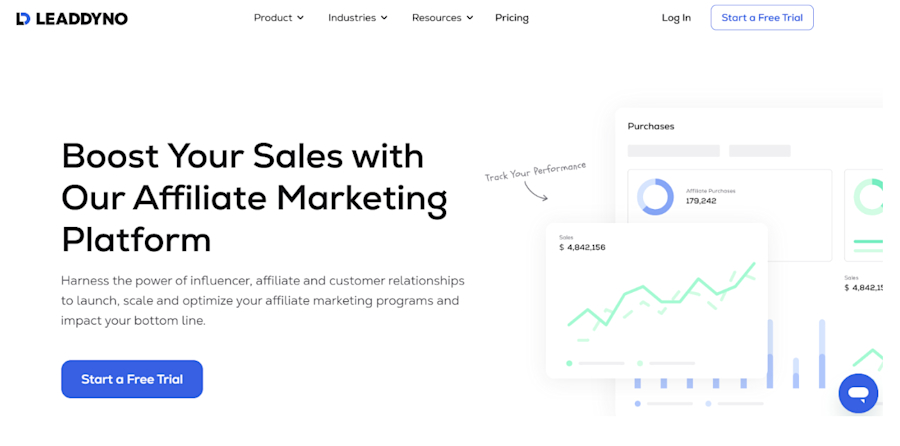
If affiliate marketing is your thing, LeadDyno’s affiliate marketing software provides you with the granular data needed to track and manage campaigns more effectively.
LeadDyno provides you with unique tracking links that you can use to accurately attribute orders to specific channels: Google Ads, blog posts, social media, and more. Plus, you can monitor the visitors, leads, and sales generated by specific affiliates via affiliate dashboards to glean key insights into long-term performance.
7. Jira
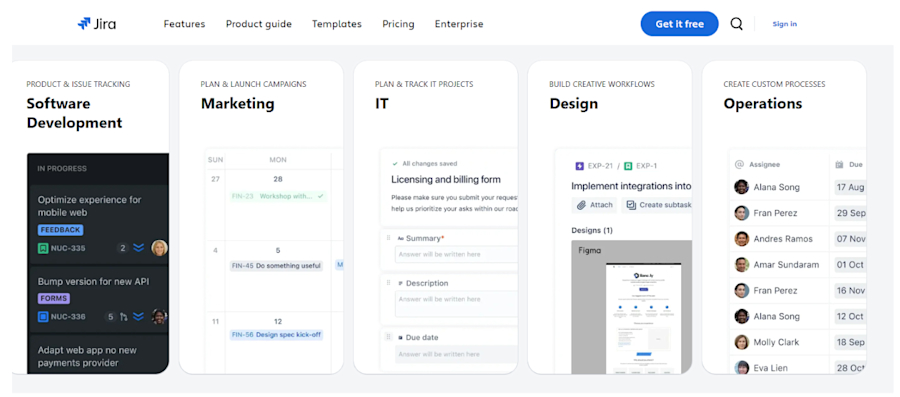
Every performance marketer needs a project management tool to keep complex campaigns on track. Introducing Jira, project management software with tools designed specifically for marketers.
Jira has a user-friendly calendar and progress tracker that lets you break down complex performance marketing campaigns into manageable chunks. Set and monitor goals, identify bottlenecks, proactively navigate obstacles, and achieve full visibility into the progress of your performance campaigns.
8. DashThis
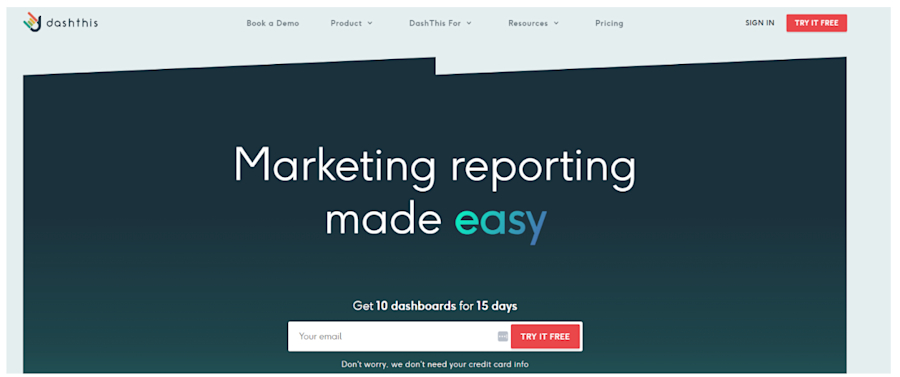
DashThis is a marketing reporting tool. It collects data across your ad channels, such as Google Ads, TikTok Ads, Instagram, Facebook, and more, and integrates it into an all-in-one dashboard.
From there, you can use the tool’s reporting templates to quickly create comprehensive reports that combine all of your KPIs.
9. Power BI
One of the best data visualization tools out there is Power Bi, created by Microsoft.
Its primary function is to pull data from your marketing channels and campaigns and turn it into easy-to-interpret visuals. It’s integrated with powerful AI capabilities, such as image recognition and sentiment analysis.
It also has a feature called Natural Language Query, which lets you ask AI questions about your data for quick, accurate insights.
10. Semrush
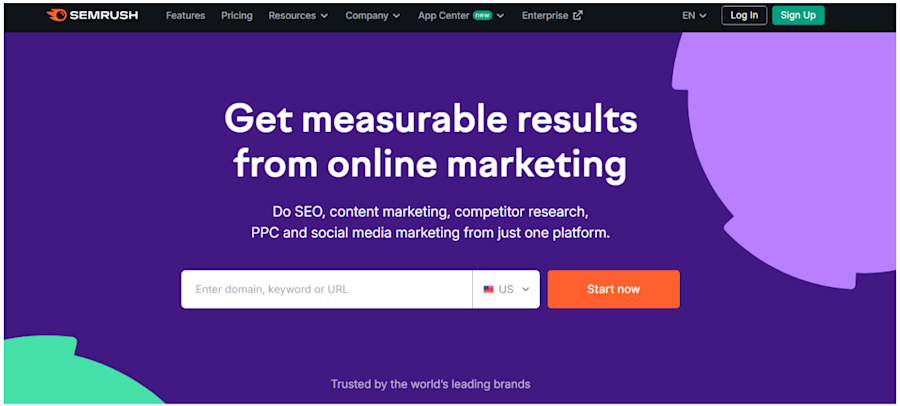
Semrush is a digital marketing tool that has specialized SEO and paid advertising features to help you create, track, optimize, and manage your PPC ads.
Semrush does have a pretty high price tag, but you get a lot of bang for your buck. Semrush offers a range of tools for PPC keyword research, paid ads management, and ad copy optimization, along with more generalized SEO, web analytics, and content marketing tools.
Comparison Table of Top Performance Marketing Tools
To make it easier to compare features and uses at a glance, here’s a table summarizing the 10 top performance marketing tools. It highlights each tool’s category and key functionality so you can quickly see which ones fit your marketing strategy.
Performance Marketing Tool | Category | What It Does |
|---|---|---|
1. Leadfeeder | B2B Website Visitor Tracking | Tracks website visits and conversions, identifies visiting companies, and supports lead scoring and personalized targeting. |
2. Google Analytics | Web Analytics | Provides website traffic data, visitor demographics, engagement metrics, and traffic sources. |
3. Mailchimp | Email Marketing & Automation | Enables email outreach, audience segmentation, and personalized messaging for engaged prospects. |
4. Partnerize | Partnership & Influencer Marketing | Helps discover partners, track campaigns, measure performance, and manage collaborations. |
5. Voluum | Ad Tracking & Optimization | Tracks multiple ad types, supports A/B testing, and optimizes traffic with AI features. |
6. LeadDyno | Affiliate Marketing Software | Tracks affiliate campaigns, attributes sales to channels, and monitors affiliate performance. |
7. Jira | Project Management | Organizes performance marketing campaigns with planning, tracking, and progress visibility. |
8. DashThis | Marketing Reporting | Consolidates ad channel data and KPIs into a single reporting dashboard. |
9. Power BI | Data Visualization & Analytics | Turns marketing data into visual dashboards with AI-powered insights. |
10. Semrush | SEO & Paid Advertising | Supports PPC research, ad management, and optimization alongside SEO tools. |
What is performance marketing?
Performance marketing is a digital marketing approach where you pay for results. An example of this is pay-per-click (PPC) ads, where you only pay for the clicks you get. Or affiliate marketing, where you only pay for the leads or sales you get.
It differs from traditional marketing, where you initially pay for exposure and get the results as a bonus.
What marketers love about performance marketing is that it makes your campaign less risky, guarantees ROI (return on investment), and gives you more control over your ad spending.
That doesn't sound too bad now, does it?
Common examples of performance marketing
Performance marketing focuses on measurable results, where businesses pay only when specific actions are taken. Below are some of the most common examples of performance marketing channels used by B2B and B2C brands to drive traffic, leads, and conversions.
1. Search engine marketing (SEM)
SEM is when advertisers pay to rank for keywords in the paid search results to drive traffic to their website. When you search for something on Google, you will find the paid search results at the top, under 'sponsored'.
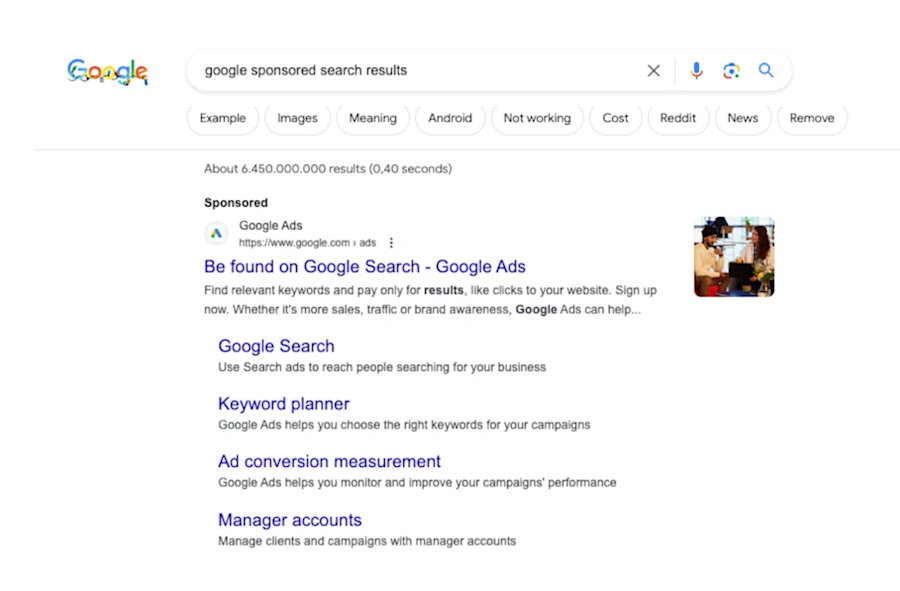
The paid search is followed by the organic search, where you can only rank through search engine optimization (SEO).
2. Paid advertising
When you think about performance marketing, the first place your mind probably goes to is paid ads. You know, those lovely things that keep interrupting you when you are browsing?
Paid ads are actually slowly losing their value as ad blockers and banner blindness increase.
However, they're not dead yet. Lots of B2B businesses are still finding success with display ads. Especially those who use interactive content, like videos and engaging graphics.
To take your B2B performance marketing to the next level, you can use a tool like Leadfeeder’s Promote to target specific companies' IP addresses with display ads. This lets you reach your dream customers with your ads, even if their employees work remotely.
3. Native advertising
Native advertising is a fancier word for sponsored content.
You know those sponsored videos that appear in the "watch next" section on YouTube? Native ads. That sofa that popped up on Facebook Marketplace and turned out to be from an actual store? Also sponsored.
Often, users don't differentiate between native advertising and organic content, which lets you promote your brand in a way that feels natural.
4. Social media advertising
For performance marketers, social media is just the best!
It makes it possible to reach users and drive them to your site–while also letting them share your sponsored content organically–extending your reach far beyond the original post.
For B2B businesses, LinkedIn is a major platform, but don't overlook Facebook, Instagram, Twitter, or, for that matter, TikTok. Your customers can be found where you least expect them, and ultimately, you need to show up where they are—wherever that is!
5. Influence and affiliate marketing
Businesses team up with influencers who promote their products or services to their followers.
Influence marketing is closely related to affiliate marketing, where advertisers use affiliates (publishers) to promote their products or services, usually through an affiliate network.
Affiliates promote products or services via an affiliate link and earn a commission when people purchase through that link. (The network usually takes a cut as well.)
As always in performance marketing, if there are no sales, there is no commission.
How to choose the best performance marketing tools for your business
Are you ready to invest in new performance marketing tools? We don’t blame you. But before you dive in, there are a few crucial considerations to keep in mind.
Let’s take a look at the steps you should take to make sure you choose the best performance marketing tools for your business:
1. Identify your business needs and goals
Do you want to increase conversions? Drive more traffic? Boost brand awareness?
Identify your specific business goals and key performance indicators (KPIs) to align with your unique needs, and determine which performance marketing tools you need most.
2. Pinpoint your must-have features
Ensure that the tools you choose will help you meet your goals by identifying your must-have features and evaluating solutions with them in mind. Key features might include real-time data analysis, marketing channel attribution, and AI-powered reporting.
3. Evaluate integration capabilities
The best performance marketing tools should seamlessly integrate with your existing platforms and tools, such as your CRM. Look for native integrations and APIs to unify tools and create consistent, real-time data flows between your new and existing apps.
4. Establish a realistic budget
Performance marketing tools come with a range of price points to suit businesses of different sizes, needs, and budgets. In alignment with your needs, goals, and must-have features, establish a clear budget to avoid overspending and improve ROI.
5. Take advantage of free trials
Many tools offer a free trial or demo so you can try before you buy, such as Leadfeeder's all-inclusive 14-day free trial. Use free trials to test the interface and play with the features to see if the tool meets your needs before you commit.
6. Consider the support offered by providers
To prevent disruptions and downtime from affecting your performance marketing strategy, consider the availability of support from providers.
For example, is customer support offered 24/7, or is it limited to specific working hours? Can you contact them across a range of channels, such as phone, email, live chat, and more? And do they have comprehensive self-support materials, such as online how-to guides, troubleshooting videos, and FAQs?
The benefits of performance marketing optimization
You might be thinking that building a performance marketing tech stack sounds like quite a lot of work. You’re not wrong, so is it really worth it? In short, yes, it is, because of these principal benefits of performance marketing, when you get it right:
1. Cost-effectiveness
Performance marketing means you don't pay unless there are results.
This guarantees you get value for your money. No more worrying about spending that precious marketing budget without seeing results.
2. Measurable results
Traditional marketing–like TV, radio, and print ads–can be hard to measure. Leaving you with a guessing game.
With B2B performance marketing, there are a lot of analytical tools available to help you measure the results of your campaigns. (We'll go through our favorites further down.)
Being able to measure marketing efforts makes all the difference, so you know what works and where improvements are needed.
3. Targeted advertising
Too many marketing bucks have been wasted on targeting broad audiences who don't want or need your products or services.
We've all been the target of these campaigns. Hint: it's that commercial you fast forward through while listening to a podcast or that annoying pop-up ad that haunts you every time you open up Facebook.
However, performance marketing helps you combat this with targeted advertising, focusing on the prospects most likely to convert and leaving the rest alone. Also, you avoid wasting money on users who will never become customers.
You can tailor your campaigns based on, for example, audience demographics, interests, and behaviors.
4. Scalability
With performance marketing, you can set a small campaign budget to test the waters and adjust it based on the results you get. Once you know what’s working, you can increase ad spending on high performers and decrease it on low performers.
Also, performance marketing happens online. (Like most things these days, but still worth mentioning.) Unlike traditional marketing, performance marketing has no physical limits. You can scale your reach locally or internationally with the same efforts.
5. Real-time optimization
After measuring your performance marketing efforts, you can and should use the insights to optimize your campaigns.
Analytical tools can be used to collect and analyze customer behavior data in real time. If an ad isn't performing, you can act right away. Going in and optimizing the copy, design, or CTA to improve engagement and conversion rates.
This is not possible with traditional marketing, where print ads, radio, and TV commercials are pretty much set in stone.
Performance marketing strategies: A five-step guide to success
Now, before you start googling for affiliate networks or signing up for Google Ads, it's important to set up a plan. Here's a step-by-step guide to being successful in B2B performance marketing.
Step 1: Set realistic goals
Don't aim too high at first. It's better to set the bar low and raise it gradually.
Doubling your website traffic in a month or increasing leads by 50% in two weeks are examples of unrealistic goals, so put those aside for now.
You also want your goals to be measurable. Define what you want to achieve, and don't be vague. A vague goal would be to say you want to 'increase conversion rates'. Instead, say you want to 'increase conversion rates by 10 % over the next six months', for example.
Step 2: Segment target audience
Customer needs change through the different stages of the marketing funnel.
The ones at the top of the funnel are just becoming aware of their needs. So, they need educational content catering to the awareness stage.
On the other hand, prospects at the bottom of the funnel are ready to buy. They need persuasive content, such as case studies and testimonials, to help them make that final decision.
Segmenting your audience ensures your campaign addresses the unique needs of prospects at different stages of the marketing funnel, grouping potential customers based on their interests and behaviors.
Now, you can tailor your B2B performance marketing campaigns to align with the preferences of each prospect.
Use marketing automation tools to segment your target audience and optimize marketing efforts accordingly.
Step 3: Choose the right performance marketing channels
You can have the most persuasive ads, but if you pick the wrong channel, you won't see any results. Find the marketing platform where your potential customers spend their time – so you can spend your marketing resources in the right place.
Performance marketing channels like Facebook and Google are old players. But new ones with a large army of users are emerging.
Take TikTok, for example; the short-form video platform arrived in late 2016 and has gathered over 1.7 billion users worldwide in less than 10 years. And Reddit, launched in 2005, has over 57 million daily users.
Where is your target audience hanging out? If you're not sure yet, it's time you find out and meet them there.
Step 4: Create compelling ad content
You need to create ads that connect with your target audience, addressing the needs and pain points that keep prospects awake at night.
When deciding on ad content, don't rely on gut feelings or guesswork. Instead, do your research. Talk to customers, prospects, sales, and customer success to get insights into your audience's challenges, questions, and preferences.
Also, conduct A/B tests to compare the effectiveness of different ads. Trying out different formats, designs, copy, and CTAs.
Step 5: Track and optimize campaigns
Performance marketing is all about results, whether it's from clicks, sales, impressions, or signups.
So, after launching a campaign, use tracking tools to measure your efforts. Look at key metrics like click-through rates, ROI, and conversion rates. These insights will help you optimize the overall campaign performance. However, we’ll talk about the different tracking tools later.
Three performance marketing pitfalls to avoid
Like with all things, performance marketing has its challenges. Here are some of the things you need to be on the lookout for:
1. Ad fraud
Scammers using bots to trick ad networks and advertisers into paying them is, unfortunately, becoming more common. Cybercriminals will deploy click bots to generate fake clicks on ads displayed on their websites.
When this happens, advertisers end up paying for fake engagement.
To avoid ad fraud, there are a few things you can do:
Learn about the different forms of ad fraud so you can identify it.
Choose networks and publishers you trust that are transparent and credible.
Invest in anti-fraud tools. Google Analytics will flag fake clicks and impressions.
2. Data security
Data security and privacy laws affecting advertisers are increasing, such as the European General Data Protection Regulation (GDPR). Businesses that handle the personal data of European customers must comply with GDPR requirements, or they face hefty fines.
Regulations like this can make it less effective to track prospects' behavior.
Let's take cookieless tracking as an example. It reduces the amount of data advertisers are allowed to collect when tracking prospects online. For marketers, this means less user behavior data, resulting in fewer targeted ads.
To combat this, make sure to use tools (and partners) that stay on top of relevant data security and privacy regulations. A tool like Leadfeeder will help you track customer behavior, like turning anonymous website traffic into company names while staying GDPR-compliant.
Here, our General Legal Counsel, Hannah-Lee Wunderlich, gives you insights on how to choose a GDPR-compliant vendor for your business:
3. Increasing competition
Ad costs are rising as more advertisers compete for the same audience. Advertisers are forced to pay more to get the best ad placements.
Statistics show Facebook's cost per mile (CPM) has increased by 89%. While Google and YouTube are up by 108%.
This makes it even more important to:
Niche down and only target your ideal customers; it can help reduce costs by avoiding irrelevant clicks.
Test different ad formats, such as video or carousels, to see which performs best for your audience.
Measure your ads and use this data to prioritize your budget for campaigns that deliver tangible results.
Performance marketing metrics and KPIs
So far, we’ve covered the performance marketing tools you may need, tips for building a successful strategy, and some challenges to avoid. All that’s left, then, is to discuss how you can keep track of your performance marketing. Here are some examples of key performance indicators (KPIs) for performance marketing (which also double as ways to pay for it):
Cost per click (CPC)
CPC means you pay based on the number of times your campaign gets clicked. Track this if your goal is to drive users to your website.
Cost per impression (CPI)
Impressions are views of your ad. With CPI, you pay for every thousand views. For example, if 25,000 people view your ad, you'd pay your base rate of 25. Impressions are good to measure if your goal is increased visibility.
Cost per sale (CPS)
With cost per sale, you pay when a sale is made from the campaign. Measure this metric if your overall goal is to increase sales.
Cost per lead (CPL)
CPL means you pay when someone signs up for something, like a newsletter or webinar. If your goal is to get leads, track CPL.
Performance marketing isn’t just numbers
The core of performance marketing is results, but remember, it's not just about the number of clicks, impressions, or even conversions – it's about quality. Targeting the right audience, creating compelling ads, nurturing the right leads when they arrive at your website, and finally, converting them into loyal customers.
Performance marketing tools FAQs
What are performance marketing channels?
Performance marketing channels describe digital marketing and advertising channels that run paid campaigns to generate specific, measurable results—such as clicks, leads, and sales. Examples include search engine marketing channels like Google Ads, social media channels like TikTok and Instagram, affiliate marketing channels, and display advertising.
What are performance marketing platforms?
A performance marketing platform is a software application that automates, tracks, monitors, and measures performance marketing campaigns. Common examples include website analytics and tracking platforms, affiliate marketing platforms, and marketing channel attribution platforms.
How much do performance marketing tools cost?
Performance marketing tools vary significantly in cost depending on the type of tool and the specific features it offers. In addition, providers typically offer a range of tiered pricing packages to suit businesses of different sizes and needs. Some providers, like Leadfeeder, even offer completely free, forever plans. Check out Leadfeeder pricing to better understand how much your tool might cost.

SEM (Paid Search) Manager @ Leadfeeder
Oscar Johnson is Performance Marketing Team Lead at Leadfeeder, where he leads paid acquisition and growth initiatives across global markets. With a background in performance marketing and search engine marketing, he specializes in scaling customer acquisition through data-driven campaign optimization.
Oscar has managed multi-market advertising programs and large paid media budgets while continuously improving targeting, attribution, and funnel performance. His experience managing B2B acquisition campaigns informs his perspective on audience targeting, paid marketing strategy, and optimizing the path from click to conversion.