60-Second Summary
Marketing automation uses tools to handle repetitive tasks, improve consistency, and enable smarter, data-driven decisions — and 91% of marketers report it helps them reach their goals. This article highlights five B2B automations — automated lead scoring and routing, tailored nurturing, chatbots, disengagement segmentation, and real-time website analysis — that tighten the funnel and boost efficiency.
Key takeaways: Automations reduce manual work and improve conversion by prioritizing high-fit leads (lead scoring), routing them appropriately (routing), nurturing interest over time, re-engaging disengaged customers, and surfacing real-time intent signals from website behavior.
Standout strategies & tactics: Use firmographic enrichment from company email to auto-score leads, route ideal fits directly to booking pages, trigger behavior-based nurture streams (email, SMS, push, chatbots), and set real-time alerts (e.g., Leadfeeder, Hotjar) so sales can act on high-intent visits.
Real-world lessons & frameworks: Favor short forms and enrichment to increase conversions; prioritize and route leads by score (direct sales, SDR review, or nurture); segment disengaged customers for automated re-engagement; and integrate CRM, analytics, and automation tools for timely, contextual outreach.
*This summary was created with AI assistance, using our original content.
Marketing automation refers to using tools to handle repetitive tasks, improve consistency, and make smarter, data-driven decisions. And it works. 91% of marketers say automation helps them achieve their goals.
In this article, you'll discover five B2B marketing automation examples that can strengthen your funnel and make your marketing efforts more efficient and effective.
1. Automated lead scoring and lead routing
Before getting into the best marketing automations for lead scoring and lead routing, we need to cover the basics.
First of all, lead scoring and lead routing are two closely related processes that can be automated to generate more leads and close more deals.
Lead scoring is the systematic evaluation and ranking of leads based on specific criteria. The leads' behavior and characteristics usually determine the score. Companies use lead scoring to prioritize leads and focus sales efforts on prospects more likely to become customers.
Lead routing is the process of determining the lead's destination, whether it's going straight to a sales call or requiring more lead nurturing from an SDR.
The best marketing automations for lead scoring
Automated lead scoring means leads are given scores automatically based on set criteria – and it’s high up on the list of popular automation features.
A common strategy for converting leads is to offer valuable content, such as a white paper, in exchange for their email address. Typically, the form to obtain the white paper will also ask for the lead's company name.
The lead scoring process begins once the form is submitted and the lead receives the white paper.
This is where the magic happens! An automation tool can now check the company name against a database to retrieve additional information about the lead, such as the number of employees, revenue, and industry type.
The information sourced from the database is often more accurate than if you had gotten it directly from the lead.
Based on this information, the lead is automatically assigned a score that determines how high the sales team should prioritize it. The requirements for each scoring category can be predetermined to match your company's ideal customer.
To make the process even smoother for the customer, you can ask only for their company email address and automatically retrieve the company name from it.
Added bonus: Say goodbye to long forms!
What's great about this automation feature is that it removes the need for those long forms. You can remove several form fields since you only need to ask for the lead's company name or company email address.
And it's well known that shorter forms = better lead generation.
Close more deals with automated lead routing
In this approach, the automation will use the same information as in the lead-scoring process, but instead of scoring the lead, it will decide on the route it should take.
To simplify, we have broken it down into three categories.
The ideal customer: If the lead-scoring criteria indicate this lead is your ideal customer, the lead route might be to send the lead directly to a landing page to book a meeting with a salesperson.
Might be a good fit: If the lead is an unsure fit, it's routed to the sales development team (SDR) for a manual check. Then, leads who SDR considers a good fit are sent to the landing page, where they can book a sales meeting. Leads considered a less good fit are nurtured for potential future conversion.
Not a good fit: Leads who are qualified as a less good fit get sent directly to the SDR team to nurture into eventually becoming customers. Hopefully, these leads will evolve into customers in the future.
Best marketing automation platforms for lead scoring and lead routing
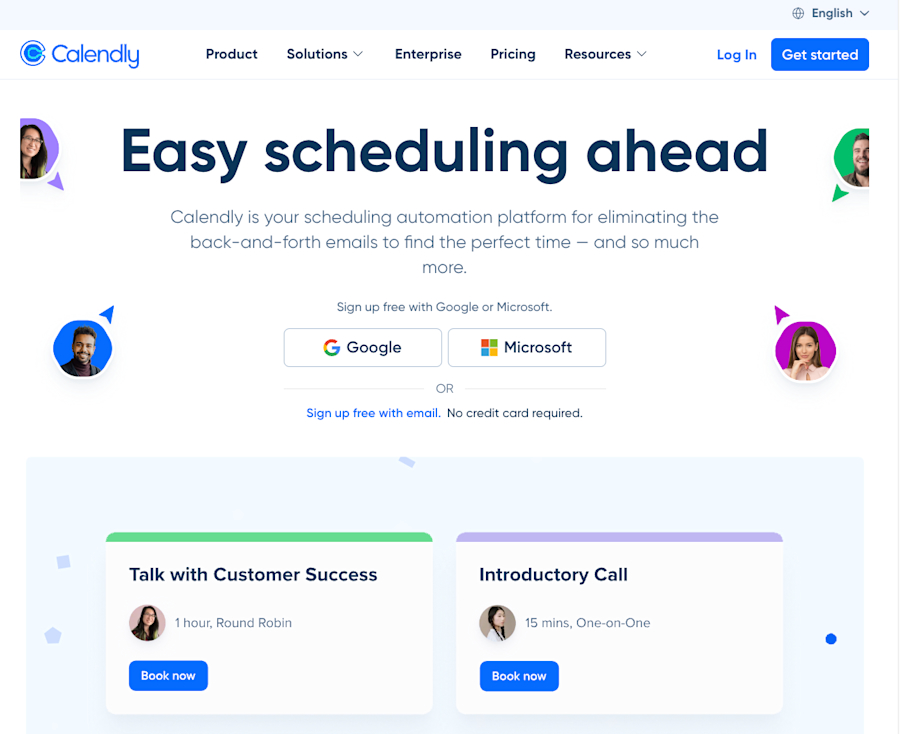
Some CRM systems offer automated lead scoring and lead routing. You can use tools like Chili Piper, or Calendly.
Want to explore more B2B marketing automations? Check out this post on the 'Best Marketing Automation Tools.'
2. Tailored lead nurturing campaigns
We simply can't list examples of marketing automation without including lead nurturing campaigns.
A lead nurturing campaign is automatically triggered by user actions (or inactions) and tailored to a specific target audience. It's an ongoing, long-term effort focused on relationship-building.
It differs from email campaigns, which are more short-term, focus on immediate action, and target a broad audience regardless of prior interaction.
In lead nurturing campaigns, content is sent to leads based on their actions, such as the pages they visit. These prospects are not fully ready to purchase but have shown interest and could become future customers.
Lead nurturing emails can be a great addition to your traditional marketing campaign, and an efficient way to nurture relationships with potential customers who may not be ready to buy just yet.
How automated lead nurturing campaigns work:
A lead downloads a white paper on your website.
Once in your system, and if the requirements are met, the lead enters a stream of lead-nurturing emails.
These emails aim to guide the lead down the sales funnel, delivering valuable content with the hope of eventually resulting in a sale.
However, lead nurturing is not limited to emails. It can also take the form of SMS, push notifications, and chatbots, to name a few.
The best email marketing automation examples and tools for lead nurturing
ActiveCampaign and Mailchimp are popular tools for creating lead-nurturing campaigns.
If you want to go further, you can use Leadfeeders integrations with these tools to track when leads from the campaign visit your website. You can see which links they click and which pages they visit.
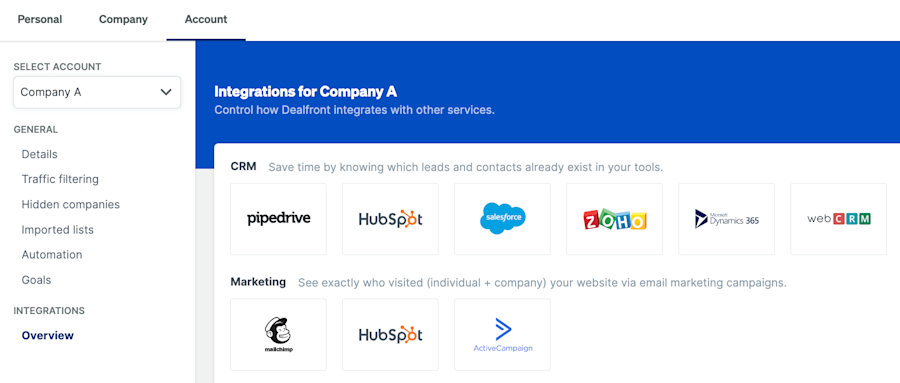
Overview of our Marketing integrations
For example, if a lead from the campaign views the pricing page, you can inform your sales team for timely follow-up. This is one way to measure the impact of your nurturing campaigns.
Unsure if the CRM you currently use integrates smoothly with your other software? Explore 'The Complete Guide to Marketing Automation Integrations.'
3. Chatbots triggered by user interactions
Chatbots have proven incredibly useful not only for customer support but also for B2B marketing automation. For example, they can be automated to nurture leads with personalized messages, guiding them further down the sales funnel by offering relevant content and information.
Marketing automation workflow examples for chatbots:
When a visitor reads an article on your blog, the chatbot can offer advice on other content to explore, such as an e-book on a related subject.
If a prospect is visiting the pricing page, the chatbot can automatically ask whether they want more pricing information, then initiate a chat with someone from the sales team.
Chatbots can recognize frequent website visitors, adjusting their message to provide fresh content instead of repeating the same information.
Also, the chatbot can ask qualification questions to understand the needs and preferences of the leads, including the solution they seek, their budget, and the urgency of their needs. Based on this, it can recommend products or services that align with their requirements.
Some CRMs, like Salesforce and HubSpot, also offer chatbot functionality.
4. Segmenting disengaged customers to prevent churning
Customer segmentation means categorizing your company's audience into groups based on demographics, behaviors, and characteristics. It's beneficial for sales prospecting, and you can automate it to make communication with various customer groups more efficient.
In other words, it’s a great tool for organizing your customer data.
Best marketing automation tools for segmentation
Automating the customer segmentation process based on disengagement can be done quickly with a marketing automation tool like ActiveCampaign.
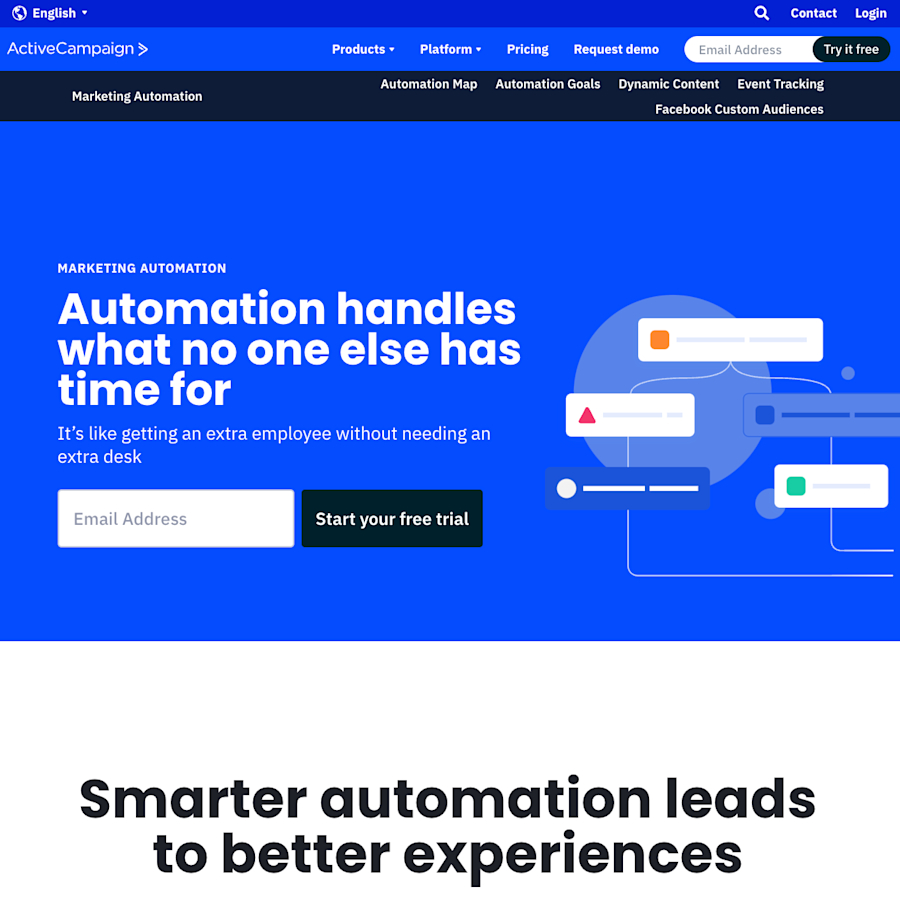
If you want to go further, you can create a segment group with disengaged customers and start them on automated re-engagement campaigns when they reach a specific level of disengagement. By addressing their disengagement through targeted marketing efforts, we can prevent them from leaving.
We'll review this more under 'Tailored Lead Nurturing Campaigns' below.
How to automate customer segmentation to prevent churning
Ensuring existing customers stay engaged is crucial since a decline in engagement often signals potential churn. With marketing automation tools, you can segment disengaged customers and launch re-engagement campaigns to prevent them from leaving.
Step 1: Categorize customers showing signs of disengagement. These signs may include decreased usage or reduced interactions with your product or service.
Step 2: Implement targeted, personalized re-engagement campaigns to win back the interest of customers who are currently disengaging.
5. Analyze real-time website user interaction
An invaluable aspect of B2B marketing automation is the automated analysis of website interactions. Wouldn’t it be great if you could analyze which pages your potential customers are viewing on your website in real-time?
Fortunately, there are marketing automation tools that help you do just that!
You can even set up automated notifications to alert you when a prospect views a specific page on your website.
Sell more by automatically analyzing website interactions
By analyzing website interactions in real time, sales teams can see exactly which pages their leads have visited and when. This information can be very valuable when preparing for a sales call.
Sales teams can also ask to be alerted when their leads are busy viewing specific pages – for example, the pricing page – and be quick to get in touch with them and 'get them while they're hot.'
What pages a lead is viewing will say a lot about how ready they are to purchase. Tracking user interaction can help sales teams reach prospects at the perfect time in the customer journey.
Tools for automated notifications of user interaction
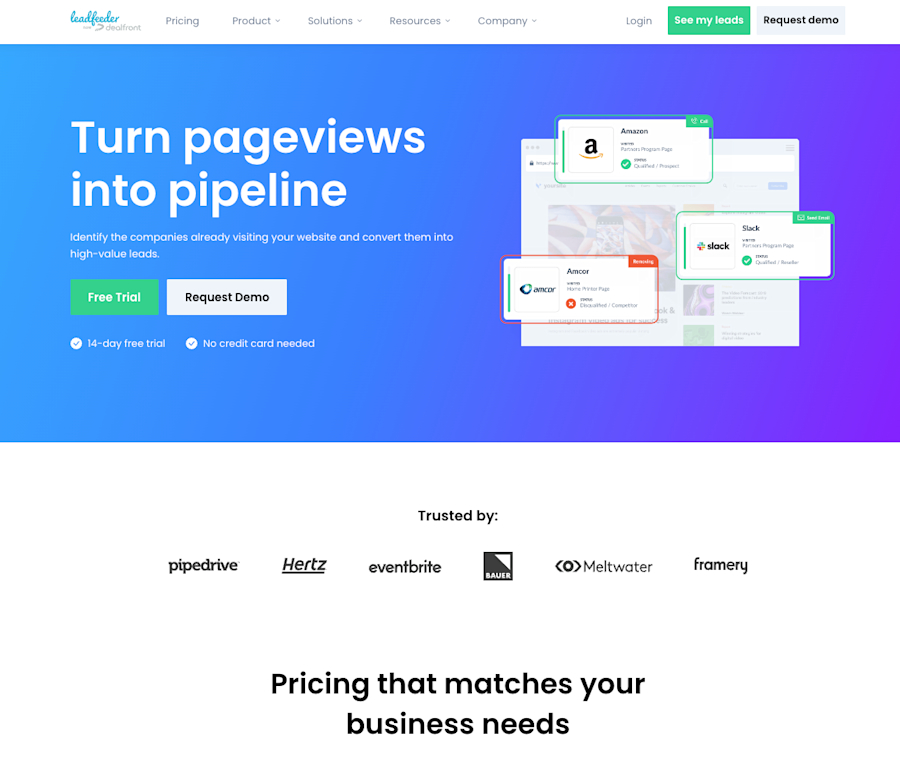
You can use Leadfeeder to identify website visits that otherwise would be anonymous – and see what pages companies view on your website. Leadfeeder detects what marketing campaign the leads come from, whether it’s, for example, social media or email marketing. With direct CRM integrations, you can set automatic notifications so a salesperson is notified when a lead views specific pages.
Another popular tool for analyzing website behavior is Hotjar.
Unlock the power of your marketing automation strategy
With 76% of businesses using marketing automation tools, it's time to implement a solid automation strategy. When you adopt these top five B2B marketing automations, your business will be empowered to optimize its digital marketing efforts.
From personalized lead nurturing campaigns to efficient lead prioritization and engaging chatbot interactions, these marketing automation campaign examples will help boost your customer relationships, enhance conversion rates, and keep you ahead. After all, we want to work smarter, not harder, so we can concentrate on doing what we do best!
Disclosure: Leadfeeder is a product of Dealfront Group GmbH. This article includes references to third-party products and services. All third-party information reflects publicly available data at the time of writing and may have changed since publication. We recommend verifying details directly with each provider. Trademarks and brand names belong to their respective owners and are used here for identification purposes only.