



If you're looking to:
Build a predictable B2B pipeline
Improve lead quality
Reduce manual research time
Personalize outreach at scale
Detect buying signals earlier
The 20 tools below are the strongest options available this year.
They include:
Sales intelligence platforms (data and intent)
Sales engagement tools (automation and sequences)
CRM-based prospecting systems
Email outreach and verification platforms
Each tool is evaluated based on data quality, automation capabilities, integration depth, and best-fit use case, so you can choose the right solution for your sales motion.
Sales prospecting involves researching potential buyers, qualifying them based on fit and intent, and reaching out with targeted messaging, but doing this manually is slow and inconsistent.
Tools like Leadfeeder streamline every step by surfacing accurate contacts, revealing buying signals, and automating outreach. This helps sales teams move faster, focus on high-quality leads, and spend less time on admin. With that in mind, here are the best sales prospecting tools to support your process in 2026.
1) Leadfeeder
Best for: B2B teams targeting European markets that require GDPR-compliant company and contact data.
The best sales prospecting tool for 2026 is Leadfeeder. Formed in 2023 via a merger between Finnish Sales Intelligence platform Leadfeeder and German marketing data platform Echobot, Leadfeeder now serves over 30,000 clients. It has the largest B2B database of truly compliant business information available.
The Sales Intelligence solution allows searching by over 100 different filters, including geographics, financials, trigger events, and keywords to enable precisely targeted prospecting. Leadfeeder also leverages a huge database combined with machine learning to help you uncover potential lead opportunities among visitors to your company website.
Key features:
5,000+ integrations including Salesforce, HubSpot, Slack, Google Ads
Database of 56M+ companies
Alerts for 30+ trigger events (financial updates, website changes)
Limitations to keep in mind: Works best for European data, although coverage is being expanded in the US, it may currently be less comprehensive than US-specific options.
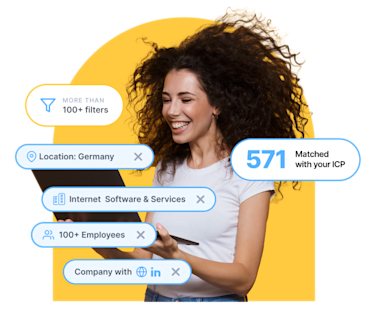
Identify and land your dream customers
Find the right prospects, accelerate your sales pipeline, and land your ideal customers even faster.
Start Sales Prospecting2) LinkedIn Sales Navigator
Best for: Account-based prospecting and executive outreach
LinkedIn is well known for being a business-focused social network, so it’s not surprising that it leverages its native database to offer a sales prospecting tool. Known as LinkedIn Sales Navigator, it comes in three tiers: the Core Edition for individual sales reps, the Advanced Edition for sales teams, and the Advanced Plus Edition, which is the highest-tier enterprise option.
All tiers include lead and account recommendations and advanced filter searching. With the Advanced Edition, you also have access to features such as smart linking, which allows you to track how users engage with your content, as well as support from a dedicated LinkedIn team. But if you want direct CRM integration or data validation, you’ll need to sign up to the Advanced Plus option.
Key features:
Access to 1B+ members, 310M active monthly
Relationship Explorer for persona-based leads
Alerts for job changes and content updates
Limitations to keep in mind: Lead recommendations can feel repetitive and pricing increases significantly between tiers.
3) ZoomInfo
Best for: Enterprise outbound teams needing scale and verified direct dials
ZoomInfo is a multifaceted business data platform that provides tools for different areas of business such as sales automation, digital advertising, and recruitment. Its B2B prospecting tool is called ZoomInfo Sales and features a database with direct numbers for contacts around the globe.
Its Engage platform allows you to set up Salesflows. These are multi-channel prospecting campaigns that include automated emails, calls, or social connections that are triggered by specific market signals you select according to your business goals.
Key features:
Extensive global database with direct dials and verified emails
Intent signals showing which companies are actively researching your category
Automated workflows that push data into Salesforce, HubSpot, and Outreach
Limitations to keep in mind: Pricing can be high for smaller teams, and some data requires frequent verification depending on the market.
4) Apollo.io
Best for: Teams needing intelligence and outreach in one tool
The Apollo sales intelligence platform gives access to a database of companies that can be filtered by buyer intent, job postings, and headcount growth.
The Sales Engagement tool lets you make calls, connect on social networks, and send emails from within a single dashboard, as well as schedule meetings with prospects. There’s also the option to use AI-driven messaging and analytics to fine-tune the engagement process.
Key features:
Database of 275M+ contacts
Sequencing tools for email and LinkedIn outreach, with optional dialer functionality
Chrome extension for instant data enrichment across the web
Limitations to keep in mind: Data accuracy can fluctuate across regions, and advanced features may require paid add-ons.
5) Lusha
Best for: Quick contact enrichment via browser extension
Lusha’s sales intelligence database focuses on the US and Europe regions. It lists contacts by geography and includes details of their roles and seniority within their organizations.
There’s a free introductory version so you can try out the basic features. However, if you want to take advantage of features like search by funding data, you’ll need to sign up for either the paid Pro or Premium tiers, or negotiate a custom enterprise package.
Key features:
Verified phone numbers and emails
Chrome extension that surfaces data on LinkedIn and company websites
GDPR-compliant data collection with strong privacy controls
Limitations to keep in mind: Coverage outside core markets can be uneven, and credits may run out quickly for high-volume prospecting.
6) Clearbit
Best for: Marketing-led prospecting and inbound qualification
Clearbit by Hubspot is a data enrichment and intent platform built to help B2B revenue teams understand and prioritise their ideal buyers. It identifies high-value website visitors in real time, enriches CRM records with firmographic and behavioural data, and helps teams personalise outreach at scale.
Beyond enrichment, Clearbit integrates with major GTM tools to trigger automated workflows based on buyer actions, from sending leads into nurture sequences to alerting reps when target accounts show intent. Its real-time infrastructure is particularly valuable for teams that rely on immediate qualification or dynamic, personalised experiences.
Key features:
Real-time enrichment for CRM and marketing tools
Reveal ID-to-Company for anonymous website visitors
Strong integrations with HubSpot, Segment, and Marketo
Limitations to keep in mind: Pricing scales with usage and some capabilities require technical setup to get the most value.
7) Cognism
Best for: Call-heavy outbound strategies.
The Cognism database includes mobile numbers for contacts across the EMEA, NAM, and APAC regions. Its Prospector tool lets you build ideal-fit account and lead lists and integrate them with other business platforms such as your CRM.
For premium-tier subscribers, the Contact tool lets you access Cognism's Diamond-verified data. In other words, the team at Cognism calls up the phone numbers to double-check they’re correct and active, so there’s less time wasted dialing outdated numbers.
Key features:
GDPR-first data collection
Verified mobile numbers
Intent data layered with firmographics and technographics
Limitations to keep in mind: Strong data coverage is in EMEA, but accuracy may vary in other global regions.
8) HubSpot Sales Hub
Best for: SMB and scaling sales teams needing integrated CRM and automation
HubSpot Sales Hub is an all-in-one CRM designed to streamline prospecting, outreach, and pipeline management for growing sales teams. It centralises contact and account data so reps have a single source of truth for every interaction.
In addition to core CRM capabilities, Sales Hub includes automation tools for email sequences, lead scoring, meeting scheduling, and task management. When paired with HubSpot’s Marketing Hub, it creates a fully connected revenue engine that supports deep insights and coordinated engagement across the entire funnel.
Key features:
Built-in calling, email templates, and sequence automation
Deal tracking and pipeline management
Deep integration with HubSpot Marketing Hub
Limitations to keep in mind: Advanced automation and reporting require higher-tier plans, which may increase total cost.
9) Salesforce Sales Cloud
Best for: Large organizations with multi-stage sales cycles
Salesforce Sales Cloud is an enterprise-level CRM built to manage accounts, leads, opportunities, and customer relationships at scale. It supports complex sales processes with structured workflows and comprehensive reporting.
Its advanced features (including AI-powered recommendations via Einstein, forecast management, and extensive customisation) make it suitable for teams with multilayered sales cycles. Plus, the AppExchange marketplace allows users to enhance Sales Cloud with thousands of prospecting, data, and outreach apps.
Key features:
AI-powered insights via Einstein
Customizable dashboards and forecasting
AppExchange integrations for prospecting, data, and outreach tools
Limitations to keep in mind: Customisation and setup can be complex, often requiring technical expertise or admin support.
10) RocketReach
Best for: Teams needing direct contact lookup and enrichment
RocketReach’s sales intelligence database provides verified contacts for creating custom lead-generation lists with the List Generation tool.
The platform allows you to match social accounts from sites including X and Facebook, by uploading a list of LinkedIn URLs, which can be useful for unifying contact profiles. You can also save database searches to look up previous queries without re-entering the details.
Key features:
Advanced filters to search by industry, revenue, employee count, and education
Data enrichment API to help scale contact intelligence across systems
AI-powered list-building function that lets you edit column type selections to optimise match rate
Limitations to keep in mind: Complicated pricing and important features like intent data are locked behind the highest-tier plan. Some users report that match rates can vary depending on industry and region.
11) Salesloft
Best for: SDR teams running multi-channel cadences
Salesloft is a sales engagement platform designed to help SDR and AE teams standardise and scale their outreach. It provides multichannel cadencing tools, email tracking, call recording, and analytics to keep sequences consistent and measurable.
The platform also includes conversation intelligence, pipeline insights, and integrations with major CRMs so reps can work from a unified workflow. With its structured engagement process, Salesloft helps teams stay organised, improve messaging, and identify the highest-performing tactics.
Key features:
Multichannel cadencing
Conversation intelligence
Pipeline visibility and analytics
Limitations to keep in mind: Can feel complex for new users, and some integrations work best only with certain CRMs.
12) UpLead
Best for: Teams prioritizing email accuracy
You can use a range of different filters to search through UpLead’s database of contacts. The data is sourced from around the world, so UpLead can be a good option for sales teams seeking global coverage rather than region-specific expertise.
UpLead places a focus on accuracy, and one way it reinforces this is by verifying email addresses in real time when you click to access them. It then allows the user to download only the email addresses that have passed the verification check, so you don’t waste credits on unusable information.
Key features:
Search filter results update in real time.
Technographics function allows you to create lists of companies using competitive or complementary technologies.
Intent Data feature tracks consumption patterns to help you time engagements.
Limitations to keep in mind: Doesn’t offer as many sales tool integrations as some competitors and database is smaller than major competitors like Apollo or ZoomInfo.
13) Seamless.AI
Best for: Teams wanting dynamic data pulls during prospecting
Seamless takes a slightly different approach to sales prospecting than many of its competitors. Rather than drawing from a dedicated database, it provides real-time search engine functionality to pull data from the public web whenever a user searches for a contact.
Its Pitch Intelligence tool uses technographics to provide insights into which technologies and tools your potential contacts are already using, including what they use them for and how long they’ve used them. The aim is to give you a clearer picture of how best to approach prospects to increase the chance of closing a sale.
Key features:
Heavy focus on CRM integration, with ready-to-go integrations available for popular CRM platforms.
Chrome extension add-on available for ease of use.
Search accuracy enhanced by topic filters.
Limitations to keep in mind: Real-time data retrieval models can sometimes lead to slower response times.
14) Instantly
Best for: High-volume cold email campaigns
Instantly is another platform with global reach. However, it only provides email addresses, so if you’re looking for phone numbers, this isn’t the best choice.
As an email specialist, it provides a handy Email Warmup function. This automates the step-by-step ramping up of your email account’s outgoing volume. The point is to ensure your emails are opened and replied to as often as possible, which, in turn, boosts your sender reputation. This increases the chances that your emails will be delivered to inboxes rather than trapped by spam filters.
Key features:
Campaign Builder tool allows users to deploy variables, sequences, and smart scheduling to maximize response rates.
Inbox Rotation function automates sending emails from different email accounts for a single campaign.
Bulk domain tester checks a user’s domain is optimized for cold emailing.
Limitations to keep in mind: The outreach and lead prospecting tools are priced separately rather than included in a single package.
15) LeadIQ
Best for: SDRs building LinkedIn-based prospect lists
LeadIQ is a prospecting platform that simplifies contact capture and list building for sales teams. It enables reps to quickly find, verify, and save prospect information directly from LinkedIn and the web.
Its Chrome extension lets users capture leads with one click and sync them instantly to CRMs like Salesforce. LeadIQ also tracks job changes across a rep’s saved contacts, helping generate warm outreach opportunities based on timely, relevant triggers.
Key features:
Capture contact data from LinkedIn with one click
Sync prospect lists directly to Salesforce
Track job changes for warm outreach opportunities
Limitations to keep in mind: Limited to contact capture (no intent data or deep intelligence), and pricing can feel high for what’s included.
16) Hunter.io
Best for: Startups and small teams needing basic enrichment
Hunter.io is a straightforward tool for finding and verifying professional email addresses, helping sales and marketing teams build accurate outreach lists. Users can search by domain to identify common email formats or run bulk queries to enrich prospect lists.
Its built-in verification system checks deliverability before sending, reducing bounce rates and improving email performance. Hunter.io is especially useful for small teams or early-stage companies that need a lightweight, reliable way to validate contact information.
Key features:
Domain search to find company-wide email formats
Email verifier for deliverability checks
Bulk list building and verification
Limitations to keep in mind: Email coverage is limited for some industries, and deliverability rates may vary depending on domain format.
17) 6sense
Best for: Enterprise ABM and predictive revenue strategies
6sense positions itself as an AI-driven platform that optimizes your approach to what it calls the “Dark Funnel.” This term refers to the phenomenon in which buyers conduct sales research online anonymously and leave a trail of data.
The 6Sense sales intelligence platform collects information and generates buyer intent insights from a broad range of digital sources including social networks, product review sites, influencer blogs, and industry publications. You can use these to build contact lists and create prospecting workflows.
Key features:
Database includes account-level insights and firmographic data, not typically direct contact lists.
Enables search by intent keyword for more targeted prospecting.
Predictive analytics help determine the best time to engage prospects.
Limitations to keep in mind: Complex user interface requires substantial training to use effectively.
18) Kaspr
Best for: LinkedIn-heavy prospecting workflows
If your focus is LinkedIn, Kaspr is an alternative option to LI’s native Sales Navigator tool. It sits as an extension that you open from inside any LI profile, list, group, or event page, and lets you download all the available contact details.
You can manage and reach out to all your leads from the Kaspr dashboard. There’s also an ROI-tracking function that monitors connection request acceptance rates and provides information about how many phone numbers and emails Kaspr has delivered.
Key features:
Bulk exporting function for easier organization of contact data.
All pricing tiers come with unlimited B2B email credits.
Free plan only allows access by up to 20 users.
Limitations to keep in mind: Lack of a native database makes Kaspr fully dependent on LinkedIn.
19) Bombora
Best for: Timing outreach based on buying intent
Bombora is a leading provider of B2B intent data that helps revenue teams identify which businesses are actively researching relevant topics. Its Company Surge® data scores organisations based on content consumption patterns, revealing where demand is building.
By integrating directly with ABM, CRM, and advertising platforms, Bombora enables more timely and targeted outreach. Sales and marketing teams can use its topic-level insights to focus efforts on accounts showing the strongest buying signals and prioritise the pipeline more effectively.
Key features:
Company Surge® scoring based on content consumption
Integrations with 100+ ABM and CRM tools
Topic-level intent insights to guide outreach timing
Limitations to keep in mind: Requires integration with other tools to activate insights, and intent data can be costly for smaller teams.
20) Owler
Best for: Refining prospect targeting using market signals
While it doesn’t have the largest database, Owler’s focus on news and market insights can be helpful for fine-tuning your sales prospecting campaigns. It allows you to search for potential contacts by a range of aspects, including location, revenue, employee headcount, and public/private company status.
The platform provides detailed company data, including an overview of funding history and acquisitions. The Owler Pro tool also monitors news events and cross-references them to companies in its database, then categorizes them by event type.
Key features:
Curated notification emails keep users up to date with market news.
Competitor graph feature for identifying direct and indirect competitors.
Chrome extension available for convenient searching.
Limitations to keep in mind: Primarily focused on research, so outreach automation options are limited.
Sales Prospecting Tools Comparison
Tool | Best For | Primary Strength |
Leadfeeder | GDPR-compliant European prospecting | Company intelligence and website visitor tracking |
LinkedIn Sales Navigator | Social selling and ABM | Persona targeting and relationship insights |
ZoomInfo | Enterprise outbound teams | Large database and intent signals |
Apollo.io | Budget-conscious teams | All-in-one prospecting and sequencing |
Lusha | Quick contact enrichment | Verified emails and LinkedIn extension |
Clearbit | Marketing-led prospecting | Real-time data enrichment |
Cognism | Call-heavy outbound | Verified mobile numbers |
HubSpot Sales Hub | Growing sales teams | CRM and built-in automation |
Salesforce Sales Cloud | Enterprise sales orgs | Customization and AI forecasting |
RocketReach | Custom list building | Contact lookup and enrichment API |
Salesloft | Structured SDR outreach | Multi-channel cadencing |
UpLead | Email accuracy focus | Real-time email verification |
Seamless.ai | Live web data pulls | Real-time contact search |
Instantly | Cold email scaling | Deliverability and inbox rotation |
LeadIQ | LinkedIn prospect capture | One-click CRM sync |
Hunter.io | Lightweight email finding | Domain search and verification |
6sense | Predictive ABM | AI-driven intent analytics |
Kaspr | LinkedIn-heavy prospecting | LinkedIn contact extraction |
Bombora | Intent-based timing | Topic-level intent data |
Owler | Prospect research | Funding and market intelligence |
Choosing and Integrating a Sales Prospecting Tool
Sales prospecting tools vary in purpose and complexity, but the right one should help you identify qualified prospects, access accurate contact data, and automate consistent outreach.
Most solutions fall into four categories:
CRM systems – Centralize customer data, track deals, forecast revenue, and increasingly use AI to recommend next steps and reduce admin work.
Sales engagement platforms – Automate and coordinate outreach across email, phone, and social channels while tracking performance metrics.
Sales intelligence tools – Provide firmographic, technographic, contact, and intent data to improve targeting precision and timing.
Email outreach & automation tools – Focus on scalable, personalized email sequencing with deliverability optimization and testing capabilities.
When evaluating tools, consider the challenges you’re trying to solve. Poor lead quality often stems from weak data sources. Low response rates may indicate messaging or timing issues. Inconsistent pipeline momentum typically signals gaps in automation or follow-up processes. The best tool directly addresses your biggest bottleneck.
Integration is just as important as selection. Start by mapping your current prospecting workflow, how leads enter, how they’re qualified, and how reps engage them. Identify where manual effort slows progress or where data silos exist. Choose tools that integrate natively with your CRM, marketing automation, and communication systems to ensure clean data flow and eliminate duplication.
Successful adoption also requires training and performance tracking. Establish clear usage guidelines, reinforce best practices, and monitor metrics like response rate, qualification speed, and pipeline creation. Prospecting technology should enhance your process — not complicate it.
The most effective B2B teams don’t rely on a single platform. They combine intelligence, engagement, and CRM systems into a connected prospecting stack aligned with their sales motion.
Discover the best sales prospecting tools for your business
Having the right tools is critical for a job well done, and prospecting in sales is no different. You’ll be more effective by focusing on practical outcomes and leveraging Leadfeeder's data-driven insights. Start turning more leads into qualified opportunities today by putting the right tools to work and streamlining your sales process.
Ready to see Leadfeeder in action? Book a demo or try it free to unlock smarter prospecting and accelerate your pipeline.
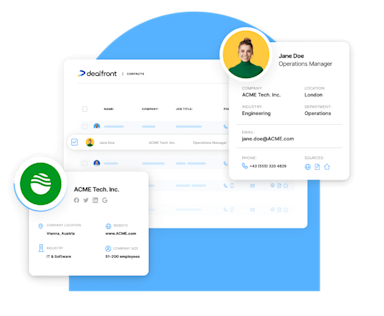
Find key decision-makers in companies with one click
Access compliant contact information for the right decision-makers and reach out equipped with detailed insights.
Find key decision-makers easierSales Prospecting Tools FAQ
What are sales prospecting tools and why are they important?
Sales prospecting tools are software solutions that help sales teams identify, research, and engage potential customers more efficiently. They save time, improve lead quality, and provide insights into buyer intent, enabling reps to focus on the prospects most likely to convert. Using the right tools can significantly boost pipeline efficiency and revenue outcomes.
How do I choose the best sales prospecting tool for my business?
Choosing the right tool depends on your sales process, team size, and business goals. Look for tools that integrate with your CRM, automate repetitive tasks, provide accurate contact and company data, and offer analytics to measure performance. Reviewing features against your specific prospecting needs ensures the solution delivers measurable value.
Can sales prospecting tools integrate with my existing CRM and marketing platforms?
Yes, most modern sales prospecting tools are designed to integrate seamlessly with popular CRMs (like Salesforce, HubSpot, and Microsoft Dynamics) and marketing automation platforms. Integration helps centralize data, reduce manual work, and provide a single source of truth for prospect information, improving team collaboration and efficiency.
What types of sales prospecting tools are available?
The main types include CRM systems, sales engagement platforms, sales intelligence tools, and email outreach/automation tools. Each serves a specific purpose: CRMs store and track prospect information, engagement platforms automate outreach, intelligence tools provide data and insights, and email automation tools help scale personalized communications.
How can I measure the effectiveness of my sales prospecting tools?
Key metrics include the number of qualified leads generated, response and engagement rates, conversion to opportunities, time saved per prospect, and overall pipeline growth. Regularly reviewing these metrics helps optimize workflows, improve tool usage, and maximize ROI on your sales technology investments.
Are sales prospecting tools suitable for small businesses or just enterprise teams?
Sales prospecting tools can benefit businesses of all sizes. While large enterprises may need advanced analytics and extensive integrations, small and medium-sized businesses can leverage these tools to streamline lead research, improve outreach efficiency, and scale prospecting without adding headcount.
Do sales prospecting tools comply with data privacy regulations?
Many leading sales prospecting tools are GDPR-compliant and follow strict data protection standards. It’s important to verify that any tool you use adheres to relevant privacy regulations in your region to ensure legal compliance and maintain trust with prospects.

Team Lead Growth AM/Sales Team @ Leadfeeder
Thijs Schutyser is Sales Manager at Leadfeeder with more than a decade of experience in B2B sales and pipeline generation. He has worked across account executive and leadership roles helping companies turn website visitor data into qualified sales opportunities.
Having delivered hundreds of product demos and worked directly with sales teams across Europe, Thijs brings firsthand experience in modern sales prospecting and buyer engagement. His experience using visitor insights and intent signals to prioritize outreach informs his perspective on building predictable pipeline and improving sales prospecting strategies.