

60-Second Summary
Sales prospecting is the sales-led process of identifying and engaging the right potential customers so your product reaches buyers who actually need it. This guide explains how prospecting differs from lead generation, outlines inbound and outbound methods, and gives practical steps and tools (like Leadfeeder) to convert prospects through the funnel.
Key takeaways: Prospecting is a targeted, manual sales activity that refines leads into qualified prospects using ICP-driven research, multichannel outreach, and funnel progression (discovery → qualification → negotiation).
Standout strategies & tactics: Combine personalized cold outreach (calls, emails, LinkedIn) with inbound content, use video and direct mail to stand out, lean on referrals and social proof, and maintain a disciplined follow-up cadence tailored to prospect temperature.
Real-world lessons & frameworks: Start small with a tightly targeted list, update your ICP regularly, rely on CRM and analytics for data-driven iteration, know when to pause outreach, and align marketing and sales via integrations to hand off qualified prospects smoothly.
Quick prospecting framework: Define ICP → research prospects and triggers → set clear outreach goals → build a multi-touch campaign with CTAs → nurture and qualify through discovery/demo → hand off to AE; use tools like Leadfeeder for intent signals.
*This summary was created with AI assistance, using our original content.
No matter how good your product or service is, it won’t sell unless the right people know about it. Prospecting helps you focus on the right audience rather than wasting time on unqualified leads.
This guide explains what sales prospecting means, why it matters, and the sales prospecting methods you can use to do it effectively.
What is sales prospecting?
Sales prospecting is the process of identifying potential customers or leads who have expressed interest in what you or your company offers. It involves researching and identifying individuals or companies that match your target market criteria. Once you’ve done that, you narrow in on them to figure out exactly how much they need you and the best ways to convey that need to them.
Sales prospecting includes cold calling, email outreach, social media engagement, attending networking events, and any other tactic a sales team uses to generate leads.
But how does prospecting in sales differ from lead generation?
While both aim to find potential customers, they differ in teams, methods, and processes. Each plays a key role in filling your sales funnel and moving prospects toward conversion.
The table below highlights the key differences between lead generation and sales prospecting at a glance.
Lead generation
Lead generation is all about finding and capturing potential customers for your business. The lead generation process is typically the responsibility of your marketing team and focuses on potential customers who have already expressed interest.
It’s the pivotal point where you get people interested and gather their information so you can start the sales process. You can do this in a few different ways, including with cold calls or cold emails, gated content like ebooks and reports, or paid advertising campaigns. There is also the importance of reading more about business leads to gain a deeper understanding.
Sales prospecting
In the gold rush era, prospecting was about finding the best and biggest nugget. Similarly, prospecting in sales means finding the client that most closely fits your ICP (ideal customer profile). Once you’ve identified potential prospects, your goal is to connect with them to ultimately generate new business.
Sales prospecting, as the name suggests, is usually led by sales teams. It involves a lot of footwork compared to the more automated processes of lead generation. There are many ways you can go about prospecting, but where in the journey should you start prospecting for sales?
Where does sales prospecting take place within the sales funnel?
Prospects and sales leads are sometimes used interchangeably, but they're distinct categories. Sales leads express their interest in your product or service and exist at the top of the sales funnel.
The sales prospecting process is a refined version of the lead process that involves investigating the potential customer to determine whether they’re a good fit.
A prospect usually starts as a lead, but not every lead becomes a prospect. Some leads simply won’t meet the criteria to become prospects, even if they show interest.
If the terminology trips your team up, we have set out the lead, prospect and opportunity stages side by side.
Sales prospects go through the B2B sales funnel, which represents the process from first contact with a lead to becoming a paying customer. The funnel has multiple stages, each representing a different phase of the sales process.
Top of funnel
At the top of the funnel are the untouched leads. At this point in the sales journey, the leads have either been contacted by you or your team or have interacted with marketing materials you've put out.
Untouched leads become leads once you make contact with them or they reach out to you. As soon as you start exchanging information about your business or service, you move on to the middle of the funnel.
Middle of the funnel
In the middle of the funnel, you qualify prospects along a temperature scale (cold, warm, or hot) depending on their level of interest and compatibility with your company.
A salesperson presents their pitch to the prospect. This pitch should be the culmination of your sales prospecting strategies, showcasing your knowledge of how you can help them. Be prepared to counter any objections that come up based on what you already know about their pain points.
Bottom of the funnel
The bottom of the funnel is where it gets real. Before the deal closes, you’ll enter a negotiation phase with the prospect where you work out the details of the sale.
Once you finish the negotiation phase, your deal is done, and ideally, you walk away with a new customer.
Why is sales prospecting important?
Sales prospecting matters because it helps you find potential customers and increase your sales. A sales prospecting plan helps you refine your leads, expand your customer base, and grow your revenue.
By using best practices in sales prospecting, you can actively seek out potential customers. By doing so, your business can stay ahead of the competition, build relationships early, and position itself as a company your clients can trust, ultimately giving you a market advantage.
How to prospect for sales
There are many different ways to prospect for sales, depending on whether you are prospecting for B2B or B2C companies and whether you are using inbound or outbound sales prospecting. We will explore these in more detail later, but for now, let’s start with the most basic steps for effective sales prospecting.
Create an ICP: The first step in any sales prospecting strategy is to define your ICP. Use your CRM to analyze existing customers and build personas based on these.
Research prospects: Using a tool like Leadfeeder can help you find companies that fit your ICP. You can then explore their websites and company news to identify pain points or triggers that might indicate they are open to offers.
Define your goals: It’s important to know what you aim to achieve before you reach out to a prospect. This will allow you to judge if your sales prospecting activities have been successful.
Create a campaign: When you know who you are targeting and what you hope to achieve with your outreach, you can build the most effective sales prospecting campaign. Include details about your offers and services, and ensure each touchpoint includes an easy-to-use call to action.
Continue nurturing prospects: The key to sales prospecting is that it is never one-and-done. You have to keep reaching out to prospects and nurturing them through your pipeline—even after a potential sale! Building a relationship with leads is an essential sales prospecting best practice that will definitely increase your chances of success.
Comparing inbound and outbound sales prospecting
Both inbound and outbound sales prospecting strategies aim to find and engage potential customers by identifying potential leads, qualifying their interest, and eventually closing a deal.
The main difference between inbound and outbound prospecting lies in the approach and initiation of contact. Inbound prospecting relies on attracting leads by producing valuable content and establishing a strong online presence to nurture leads who have already shown some interest.
By contrast, outbound sales prospecting involves reaching out to potential customers directly, regardless of prior interaction or awareness of the business.
Both strategies have advantages: inbound prospecting attracts highly interested leads, while outbound prospecting lets you be proactive by targeting specific individuals or companies that fit your ICP.
Combining both can yield a comprehensive sales prospecting strategy. If you decide to use only inbound or outbound prospecting, your choice should be informed by your business's goals, resources, and target audience.
Outbound sales prospecting
Outbound sales prospecting involves a more direct approach in which you proactively reach out to potential customers. Outbound prospecting typically includes tasks such as cold calling, email outreach, direct mail, and attending industry events. With these measures, you can initiate contact with individuals or companies even if they have not expressed prior interest in the business.
Like with most marketing techniques, there's a traditional outbound sales prospecting process that tends to work. You can adapt these steps as needed to fit the specifics of your business and target audience:
Outbound prospecting: The hands-on process of identifying potential sales prospects. You can work through a cold call list, send out emails or mailers, or show up at events for some one-on-one time to try and get people engaged.
Prospect list: Once you generate leads from your prospecting efforts, you can begin qualifying them. This is when you weed out companies that won’t be a good fit, so neither of you ends up wasting time.
Discovery call: The discovery call is the first impression your sales team makes on prospective clients. It’s also a good opportunity to find out if you’re a good fit for each other. Before this call, you should already know about the prospect, including the company's name, size, and needs.
Sales cadencing: In this stage, you’re maintaining consistent personal contact, but without overdoing it. For outbound sales, you can determine the appropriate number of contacts based on the qualification factors you already have.
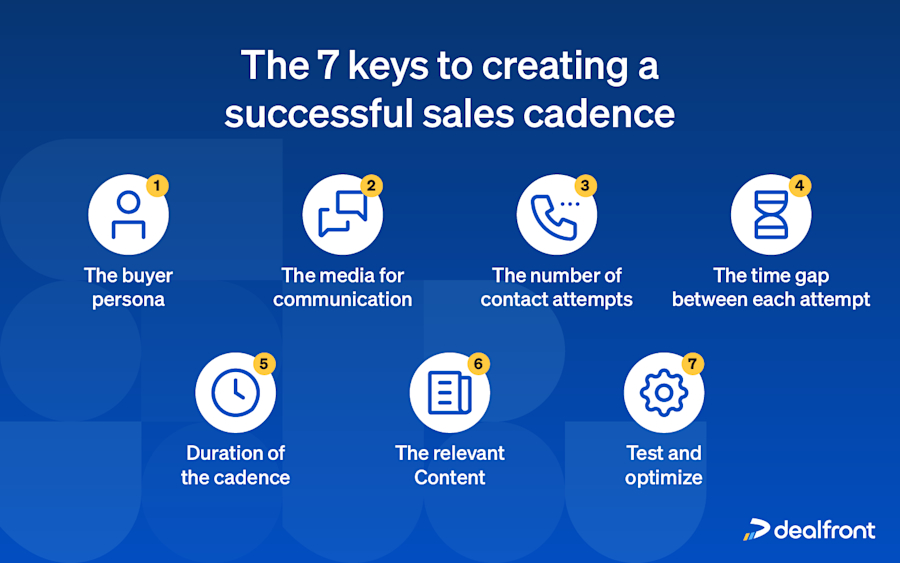
Sales cadencing is vital for successful outbound sales prospecting. Invite sent: When the sales cadence has paid off, and the prospect seems ready to transition to paying customers, you should extend an invitation to further the conversation.
Opportunity opened: If they accept the invite, then the opportunity is ready to be opened.
Alignment with an account executive: Once the sales prospect is qualified and there’s reason to believe they're on their way to becoming customers, the salesperson should begin aligning with an account executive. These are advanced sales professionals with a proven ability to close a deal.
Inbound sales prospecting
With inbound sales prospecting, you create valuable content, optimize marketing strategies, and utilize the channels you have available, such as websites, social media, and search engines. By leveraging your existing brand awareness, you can attract potential customers who already have an interest in your business to your inbox.
As you do this, you attract leads and generate interest from potential customers who can then become prospecting clients. That is, instead of you reaching out to a sales prospect, they see the marketing you’ve put out into the world and come to you. Here's a breakdown of what the process generally looks like:
Discovery call: An inbound marketing discovery call occurs when a lead reaches out to you for more information. During the discovery call, the sales professional begins to gauge their qualification level.
Sales cadencing: You don’t want to hound a potential customer, but you also don’t want them to slip through your fingers due to inattention. As described above, sales cadencing involves finding the sweet spot of follow-up frequency for prospecting sales leads.
Demo call: During a demo call, the inbound sales team can showcase the features and benefits of a product or service to a potential customer. This is your opportunity to address the sales prospect's specific needs identified during the discovery call stage.
Proposal negotiation: This is when you finalize your proposal and start negotiating. There may be back-and-forth with the prospect, and the ease of the resolution will depend on how well you understand their perspective.
Deal won/lost: If the proposal negotiation went well, then it’s time to celebrate! Whether you close the deal or not, you start over once it wraps up.
Comparing B2C and B2B sales prospecting
While there are many similarities between B2C and B2B sales, it’s important to be aware of the differences, especially when it comes to sales prospecting.
B2C sales prospects typically buy for themselves to solve a specific, often urgent, need. They complete the sales journey on their own and like to feel in control of their purchasing decisions, which are often made swiftly and influenced by emotions.
As B2B sales are conducted on behalf of an entire business, a large number of decision-makers and stakeholders are involved in purchasing decisions.
Because the purchase risk is higher, B2B sales prospects require a longer sales cycle, during which they can build trust and ensure that the product is the right fit for them. This is where the sales prospecting process is ideal, as it gives you time to build a relationship with your clients.
How do marketing and prospecting in sales work together?
Marketing is a crucial first step in any sales prospecting plan. With inbound sales, particularly, marketing is what gets the prospect’s attention in the first place. Without strong marketing and sales alignment, you won’t have leads to cultivate and hand off to a customer relationship manager.
What are marketing integrations?
Marketing integrations can automate much of the sales prospecting process. Here are some examples:
CRM (customer relationship management) integrations can help you move customer data from the initial sales rep to the customer relationship manager.
Social media integrations streamline social media campaigns and help with publishing posts to reach the right audience.
Analytics integrations provide you with useful metrics on who's visiting your website.
Content integrations can help you publish marketing materials on your company's blog.
Advertising analytics measure the success of your marketing campaigns.
Website analytics provide insight into how prospects engage with your website. This can help you personalize future conversations.
You can use these marketing integrations as sales prospecting tools. The key is to choose integrations that align with your marketing team's specific goals and needs, enabling the most efficient data sharing, automation, and targeted outreach.
What are marketing’s prospecting efforts?
Marketing has a number of sales prospecting strategies intended to capture potential customers' attention. These strategies include:
Content marketing
Search engine optimization
Social media marketing
Email marketing
Events and webinars
Affiliate marketing
Paid advertising
Eleven surefire sales prospecting techniques
While getting it right will always take work, there are many effective sales prospecting techniques that you can use to improve your chances of success.
Here are 11 ways you can use B2B sales prospecting tools and strategies to win deals in no time:
1. Hone your sales pitch
A sales pitch needs to be impactful. It should be carefully crafted, with a concise message that introduces your product or service to those who can benefit from it and demonstrates its value.
Coming up with a compelling sales pitch requires a lot of effort and attention to detail, but investing that time and energy will pay off in the long run.
2. Use impactful sales prospecting email templates
Many of us get near-daily emails from businesses that we’ve learned to tune out. Your job is to make sure your potential customers open and read your emails, instead of sending them straight to the trash. You can do that by building a winning template with a solid foundation.
You can then use your sales prospecting email examples as the bones for personalized communications for each client. Please note that different legal requirements for email marketing may apply depending on where your B2B prospects are located.
3. Master cold calling
Like cold emails, most people aren’t thrilled to receive cold calls. They either won't answer a call from a number they don’t recognize or they're ready to end the call as soon as they pick up. In fact, a study by the Kenan-Flagler Business School shows that cold calls have a success rate of only 2.5%. But the bigger hurdle is often on the seller’s side. As Alex Goldfein, founder of Revenue Growth Consultancy, puts it:
"90% of salespeople in the world do not make proactive outbound phone calls. The fear is bigger than our need to pay the bills. And so we don't pick up the phone." - Alex Goldfein
That fear is worth naming before you get into technique. Here are some tips to make sure your call ends up in that 2.5%:
Do your research on the prospect ahead of time
Have a strong introduction
Establish a connection
Tailor your pitch to the company or prospect
Make sure your selling proposition is unique
Don’t waste time
Avoid triggering sales resistance
Close the call with a good call to action
Follow up on the call
Cold calling can be an uphill battle, but once you have it down, it can be a useful sales prospecting tool. Please note that different legal requirements for cold calling may apply depending on where your B2B prospects are located.
4. Identify pain points
Finding out a company’s pain points should be part of the background research in your sales prospecting strategy. Pain points are the specific issues the company is struggling with that your product or service can help it resolve. You should already know their problems before they even open their mouths.
The quicker you can identify the problems, the sooner you will be ready to tell them exactly how you can help. Making someone’s life easier is a solid way to ensure that they'll be receptive to what you're trying to sell them.
You can identify a company's pain points using market research, social media monitoring, website analytics, and case studies from similar companies in the same target market, as well as sales prospecting software.
5. Boost referrals
One good client that trusts and respects you can breed many more. Not only are referred sales prospects usually pre-qualified leads since they tend to come from the same industry as existing clients, but they have a higher conversion rate thanks to the pre-existing trust.
You can encourage and even incentivize referrals by nurturing your relationships with existing customers and offering rewards programs.
6. Leverage social media
LinkedIn is a professional social media platform. Its search features make it ideal for seeking out the specific demographics of your ideal customer. LinkedIn even lets you differentiate between normal and high-quality prospects by using platform data to determine whether someone is a decision-maker within their organization.
You can also use LinkedIn's industry groups and communities to identify entire groups of like-minded companies in your target industry. Once you’ve found the groups that might need your product or service, you can start reaching out to individuals.
If you're willing to pay a premium, LinkedIn offers a subscription-based Sales Navigator tool. This sales prospecting software is specifically designed to help sales professionals track leads, though it can also recommend leads and streamline lead management.
7. Refine your outreach
Outreach campaigns are an age-old tactic for prospecting, and the ability to run successful campaigns can pay off in dividends. Good outreach involves ensuring your interactions are meaningful and that you’re building relationships with prospects most likely to end the sales cycle on a positive note.
There’s no right way to do outreach. Take your cues from the sales prospect, and personalize everything.
8. Be great at following up
Outreach and follow-up go hand in hand. Part of good outreach is the follow-up, or not letting the relationship you built erode from a lack of attention. Make sure to build upon your sales prospecting email templates instead of relying on them - building relationships through personalization is essential at this stage.
You should aim to maintain constant but not overwhelming contact throughout the prospecting process. It helps to stay up to date on what their company is going through so you can ask insightful questions about their pain points and show how you can help them overcome those challenges.
9. Be prepared with information
When a prospect is ready to make a purchasing decision, provide them with all the information they could need. Not only should you be ready to answer their questions, but be prepared for them to look for outside confirmation that they're making the right decision.
Social proof, such as testimonials or reviews, will reassure them, so make sure it's readily available on your landing pages and homepage. You can also share reviews on social media.
10. Don’t forget direct mail
The online world is competitive, so don’t overlook the physical world when brainstorming sales prospecting ideas. A 2022 Direct Mail Industry Report shows an average open rate of at least 90% for direct mail, which dwarfs email's open rate. Sending physical mail to even a select list of your most high-quality prospects can help ensure they keep you in mind.
And who doesn’t love a gift? Fruit baskets are a classic for a reason. Or better yet: chocolate.
11. Use the power of video
Traveling back to the modern world, you can’t forget video as a thriving platform for prospecting. YouTube, Instagram Live, Snapchat, Facebook Stories, and TikTok are all platforms with hundreds of millions of active users. Not only do people show up to watch videos on those platforms, but they keep coming back.
Video is a fantastic medium for building connections and getting noticed. And if you don’t think you or anyone else on your sales team has the star power to stand out, there’s always influencer marketing.
Best practices in sales prospecting
Many of the most important sales prospecting tips are simple common sense; however, we’ve compiled a list of considerations to keep in mind when conducting sales prospecting to ensure success every time.
1. Start small
If you are just starting out with sales prospecting, make sure not to bite off more than you can chew. Instead of creating a huge list of prospects and then whittling it down, start with a highly-targeted, smaller list. This will allow you to improve your focus on each account and increase your chances of starting your sales prospecting journey with a win!
2. Update your ICP
While creating your ICP should be one of the very first steps in your sales prospecting process, you should never leave it behind. Regularly updating your ICP is essential if you want to continue to see sales prospecting success. A good rule of thumb is to refresh your ICPs every quarter.
3. Rely on your data
As you continue to use sales prospecting, you will build a goldmine of data. Make sure to use it! Track metrics like conversion rates, response rates, time-to-close, and don’t forget to ask your prospects for feedback as well! Using this data as the basis for your future sales prospecting efforts will provide you with an incredible, strong foundation.
4. Personalize every step
It should go without saying, but successful sales prospecting relies on personalization. Templates have their place, but you should always personalize your emails and other outreach in some way. If your content and efforts don't align with your ICP, you’ll never see success, and if your prospects feel like just another number, they will likely turn to more welcoming companies.
5. Maintain contact
Make sure to maintain contact with your accounts throughout the sales prospecting process and beyond. Creating a follow-up schedule that includes emails, phone calls, and other social channels will help nurture your client relationship. This will provide you with long-term customers and a wealth of helpful feedback.
6. Know when to stop
While you always want your sales prospecting to be a success, knowing when to stop is equally important. If a prospect isn’t interested in your product at this time, continued outreach efforts could become annoying and switch them off forever. However, if you back off, you can use a tool like Leadfeeder to track if lost prospects revisit your website. This can be the perfect opportunity to re-engage!
Improve sales prospecting with Leadfeeder
Everyone needs a little help now and then. Leadfeeder offers you specific sales prospecting tools, like Companies, to help you find new customers. This tool provides extensive filters that let you determine your Total Addressable Market (TAM) and identify the buying centers within relevant companies.
Here are some examples of what you can gain by using Leadfeeder:
An extensive selection of over 100 unique filters that allow you to pinpoint ideal customers
Company profiles that give your sales team what they need to evaluate new sales prospects
Real-time alerts for buying signals like website visits, mentions in the news, and trigger events
Accurate and up-to-date contact data for decision-makers
AI-powered technology to help expand your customer base
Targeted advertising campaigns
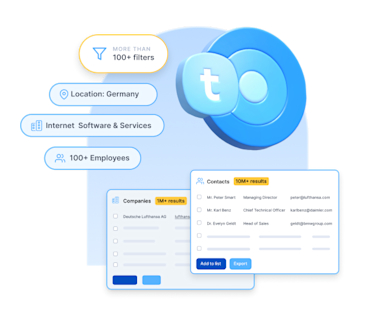
Power your revenue teams with compliant B2B data
Build lists of companies that match your ICP, prioritize with unique filters and find contacts of key decision makers.
Discover CompaniesIf you need tools to streamline your sales prospecting efforts, Leadfeeder is worth considering.
Setting yourself up for sales prospecting success
Choosing a multi-channel approach puts the power of choice in your prospects' hands and gives you the chance to personalize your outreach. Tailor-made engagement strategies boost your team’s chances of landing meaningful interactions and ultimately converting sales prospects into customers, complementing your efforts to buy leads effectively!
At the end of the day, sales prospecting is all about choosing the right outreach channel at the right time to reach the right prospecting clients. So, make sure you have all the information you need when prospecting for sales and discover untapped customers with Leadfeeder.
Sales prospecting FAQs
Why is prospecting so important in sales?
Prospecting in sales allows businesses to find potential customers and fill their sales pipeline. This, in turn, creates opportunities to expand the customer base and drive business growth. Refining potential leads and actively seeking out prospects helps businesses stay ahead of the competition and reach clients best suited to their product.
How to do sales prospecting?
The sales prospecting process has a few key steps. You will need to start by defining your ICP, researching your potential customers, and setting prospecting goals. After this, you can create an outreach strategy, create supporting content, and start reaching out to prospects.
What is prospecting in sales management?
Sales management encompasses the activities and tasks involved in running a successful sales team. As such, sales prospecting is a key process that will be overseen by any sales management strategy.