

60-Second Summary
Sales often ranks leads by firmographic fit while marketing prioritizes behavioral engagement, creating misalignment and missed opportunities. Lead scoring resolves this by combining demographic fit with engagement and intent signals so teams agree on which leads to pursue.
Key takeaways: A robust lead-scoring system combines fit (demographic/firmographic) and interest (behavior/intent) to prioritize leads objectively, accelerating follow-up, raising conversion rates, and improving revenue predictability.
Standout strategies & tactics: Combine fit vs. interest scores, use multiple scoring models for personas/products, adopt predictive scoring and automation for scale, and align sales and marketing to define ICPs and handoff thresholds.
Real-world lessons & frameworks: Validate and centralize data sources, continuously monitor conversion metrics to refine scores, separate fit and intent to avoid false positives, and keep iterative collaboration between teams.
Tools & ROI impact: Use intent tools (for example, Leadfeeder to identify anonymous company visitors) to feed on-site behavior into scores—this improves tracking ROI, focuses reps on high-propensity accounts, and yields measurable pipeline gains.
*This summary was created with AI assistance, using our original content.
Sales reps tend to prioritize prospects based on clear criteria like job role, location, or industry. Anyone who doesn’t meet these criteria may be dismissed, even if they show strong engagement.
Marketing, on the other hand, focuses on behavior: prospects who download multiple case studies, attend webinars, or regularly open emails are considered top priority, regardless of title or company size.
The gap between these perspectives creates inefficiency and missed opportunities. Lead scoring solves this problem by providing a clear, data-driven system that combines demographic fit with engagement signals, so both sales and marketing can agree on which leads deserve attention.
A strong lead-scoring system ensures your team focuses on prospects who match your ideal customer profile and demonstrate clear purchase intent. The result is faster follow-up, higher conversion rates, improved productivity, and measurable revenue growth.
Intent signals directly impact tracking software ROI by helping your team focus on accounts that are most likely to convert.
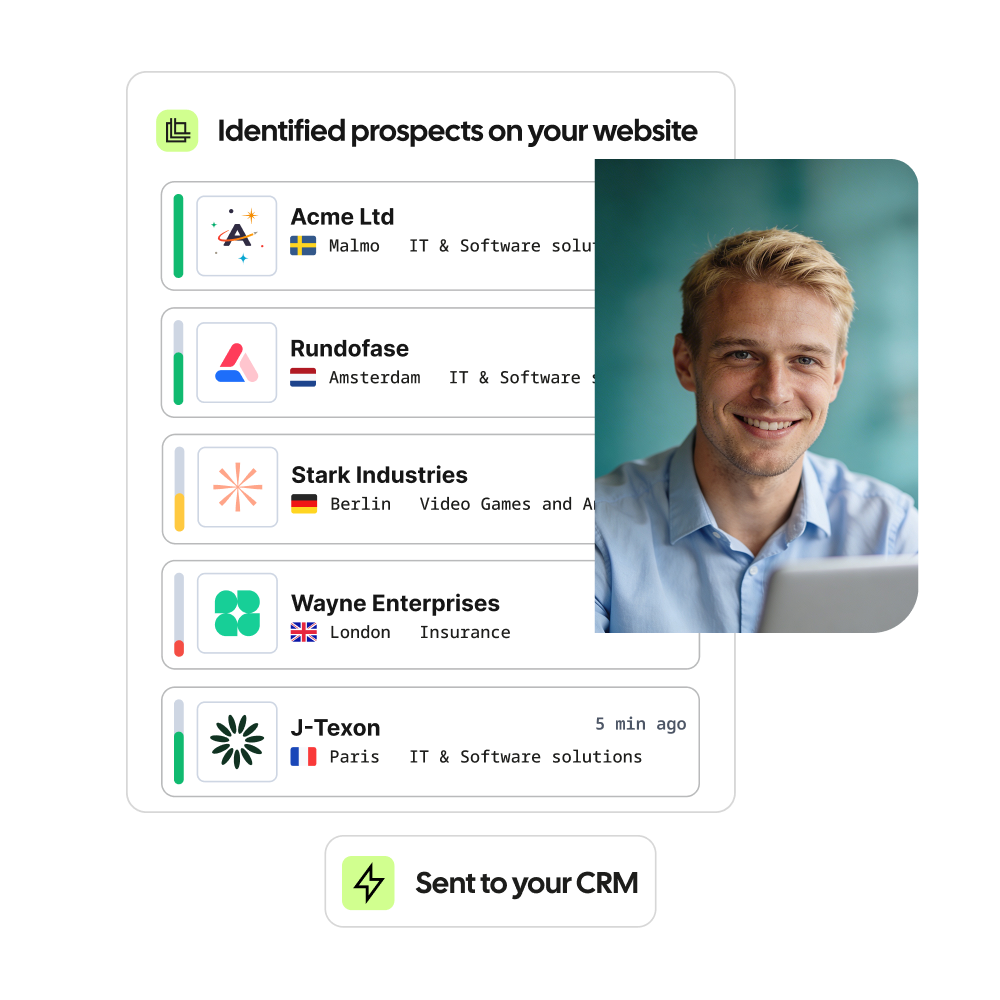
Note: Leadfeeder identifies companies that visit your site, even if they don't fill out a form. Sign up for a free two-week trial and discover the companies. The foundation of any intent model is knowing who is visiting your site -- without company identification, there is nothing to score.
What is lead scoring?
Lead scoring is a method of assigning numerical values to leads based on their likelihood of becoming customers. Lead scorers assign points to each lead based on the likelihood that they’ll convert into customers and use those numbers to identify which leads should be given more attention.
Lead scoring systems generally consider historical and behavioral data about a lead. For example, this includes whether they've visited your website before, how often they've downloaded content from it, or how long it took them to respond to an email.
Why is lead scoring important?
Knowing which leads to pursue can be tricky. Failing to differentiate a hot lead from a cold one could mean missing out on revenue—worse still, you could be wasting time and resources on leads that go nowhere. Chasing a cold lead for months while leaving a potential customer by the wayside is never a good look.
The problem with misaligned sales and marketing
Part of the problem is the disconnect between sales and marketing teams. What seems like a priority lead for one team may not be the case for another.
For example, a sales rep might have a positive conversation with a lead who seems really interested in your business, but the marketing team knows this person has never visited the website, attended one of your events, or downloaded a case study. Conversely, marketing might keep passing leads to sales that the sales team has already disqualified.
Align teams and maximize results
That’s where lead scoring comes in. With a robust lead scoring process in place, businesses can categorize and prioritize leads according to an objective quality rating. Sales and marketing departments can work collaboratively to develop lead-scoring models that reflect a potential customer's interest in the business and to agree on what constitutes a hot lead.
This means marketing and sales are aligned on the quality of leads, enabling you to engage prospects more quickly, close deals faster, and measure your sales reps' performance.
Establishing a solid lead scoring system empowers you to optimize your marketing strategies, ensuring resources are invested where they’ll have the greatest impact. The more confident you are in the quality of a lead, the more confident you can be in predicting revenue streams, too, allowing you to assess your pipeline and revenue forecasts more accurately.
Focusing on the prospects more likely to convert means better business outcomes all round, saving precious resources, improving collaboration, and accelerating the buyer journey. Lead scoring is an effective way to identify these hot prospects and ensure your organization invests time and money in the right people.
Lead scoring types
Now that you understand the importance of lead scoring, you’re probably wondering how exactly to categorize these leads. You can take several approaches to lead scoring, depending on the nature, size, and goals of your business.
1. Manual lead scoring
Manual lead scoring involves teams manually assessing certain criteria to give leads a numerical or qualitative label. Common lead scoring criteria examples include factors like demographics, engagement, and behavior, such as:
Job title
Industry
Company size
Email opens
Website visits
Resource downloads
Using this information, teams will assign a lead score to each prospect based on their likelihood of converting into customers. These scores could be categorized as hot, medium, or cold, or you might assign a numerical value (e.g., from 1-100) for more precise scoring.
The benefit of manual lead scoring is that it allows businesses to be more nuanced in their approach. This is especially useful for niche companies that have a very specific or unpredictable target market. It also provides flexibility to adjust scoring in response to real-time market or business changes.
However, manual lead scoring is a resource-intensive, time-consuming process. Getting your teams together to evaluate leads regularly removes them from other, higher-value tasks. It’s also a risky approach as it’s more prone to errors, and subjectivity may impede the process.
2. Predictive lead scoring
Predictive lead scoring uses big data, machine learning, and AI to automatically rank leads by their likelihood of converting.
While manual scoring involves human judgment and predefined criteria, predictive lead scoring analyzes historical data to identify patterns and key indicators of successful conversions. This method evaluates multiple factors, such as demographic information, behavioral data, and brand interactions, to assign lead scores.
Predictive lead scoring uses machine learning to continuously analyze behavioral and demographic data, helping businesses identify high-potential leads faster and with greater accuracy than manual methods.
Because the system is constantly learning, updating, and adapting to new data, the scoring process is refined over time. This makes it particularly valuable for companies with large volumes of leads or complex sales cycles, as it enables faster, more consistent lead prioritization.
With this data-driven approach, predictive lead scoring delivers two major benefits:
Focus and efficiency: Enables sales teams to prioritize leads with the highest probability of closing and reduces time spent on low-quality prospects.
Objective decision-making: Eliminates subjectivity by basing scores on robust data rather than opinions or gut instincts.
The success of predictive analytics is dependent on the quality of the lead scoring tools, CRM systems, and marketing tools you have in place. No matter the size or scope of your business, implementing robust, reliable technology is essential to maximizing the accuracy, efficiency, and value of predictive lead scoring.
What data do you need for lead scoring?
Both manual and predictive lead-scoring models rely on good-quality data. The more data you have, the more accurate you can be in identifying which prospects are more likely to become customers. This data should include:
1. Demographic data
Demographic data covers personal details about the lead, such as job title, location, and age. For B2B companies, job roles are particularly important as they indicate whether the lead has decision-making authority or influence.
Other factors, such as age or income, are more relevant for B2C organizations, where understanding the consumer’s profile is key to predicting purchasing decisions.
2. Firmographic data
In B2B lead scoring, firmographic data focuses on the organization the lead represents. This includes company size, revenue, industry, and location.
These factors help determine whether the company is a good fit for the product or service offered. For example, a software company targeting mid-sized businesses may prioritize leads from companies with 100-500 employees.
3. Behavioral data
Behavioral data tracks how leads engage with your brand. It includes actions such as website visits, email clicks, content downloads, event or webinar attendance, and social media interactions.
If leads frequently engage with your marketing materials, their behavior indicates a strong interest in your business, meaning they’re more likely to convert.
4. Technographic and intent data
Technographic data covers the technology stack a company uses. This is useful for B2B companies where compatibility with the lead’s existing systems may affect their buying decisions.
Intent data also provides valuable insights into topics a lead is researching, indicating their readiness to purchase.
To benefit from your lead scoring tool, you’ll want to collect data from various sources, including:
Marketing tools
Marketing analytics tools can provide a wealth of information about your potential customers’ behaviors and preferences. You can track key metrics, including email open and click-through rates, resource downloads, website visits, and conversion rates.
You can even see how much revenue your marketing activities have generated, giving you an idea of which individuals are more likely to turn into customers.
All this data can be incorporated into your lead scoring system to help you determine which leads are high priority. For example, prospects who have opened all your emails, clicked all the links, and spent a significant amount of time on your website clearly show significant interest in your business.
This data helps nurture highly engaged prospects to accelerate them along the customer journey.
Sales teams
Your sales team is out in the market, talking to prospects and customers daily. Understanding what they find useful in the sales process will help you engage prospects effectively and understand their preferences.
For example, a sales rep might tell you a particular case study always gains a lot of interest, or they close deals faster after the prospect has attended one of your events.
Customers
Sometimes, you have to go directly to the source. Speaking with customers and learning what compelled them to convert will help you understand why they chose to buy from you.
You might be surprised at what they reveal, or your discussion might validate your suspicions. Consider sending regular customer feedback surveys or scheduling interviews to discuss their experiences in depth.
When you need multiple lead scores
A one-size-fits-all approach might work if you only have one core customer. But chances are you’ll likely target several markets—especially as your company grows into new territories and product lines.
Your focus might shift from acquiring new customers to cross-selling and up-selling existing ones.
You’ll need a lead scoring tool with multiple scoring systems to manage this. This will allow you to segment and categorize prospects effectively, ensuring the lead score reflects the quality of each market.
1. Multiple personas
B2B companies often deal with prospects in different departments and roles. For example, they might have to win over an operational manager by showing the value of their product or service, but they also have to convince a financial executive that the return is worth the investment.
Each persona has a different set of needs and goals that drive their behavior. That’s why it makes sense to score these two personas differently; this will help you gauge their level of interest and avoid mislabeling prospects with an ineffective lead-scoring process.
2. Fit vs. interest
A prospect might come along that ticks all the right boxes. They’re a perfect fit for their job role, industry, region, etc., but they’ve shown little interest in your business. On paper, they sound like a hot lead, but their lack of engagement is a red flag.
Scoring prospects on a fit vs. interest basis is one of the most important lead-scoring examples. A single score would be misleading, but separating fit and interest gives you a more accurate overview of that prospect’s intentions.
3. Product/service specific
If you offer multiple products or services, your contacts will likely come from diverse markets and backgrounds. For example, if you’re a software company selling CRM and accounting solutions, you’ll probably have different ideal customer profiles for each product.
Having separate lead scores for these personas ensures leads are assessed effectively and passed on to the correct product team.
How to choose the right lead scoring models?
There are several approaches you can take when it comes to lead scoring. Depending on the nature of your business and the prospects you’re hoping to target, you might choose a system that prioritizes high engagement rates or one that prioritizes prospects based on their demographic data.
You might even prefer a negative-scoring approach, using B2B lead scoring negative attributes to disqualify unsuitable leads based on specific information and behaviors. No matter which lead scoring model example appeals to you, you must pick the right system for your needs and implement it successfully.
Let’s take a closer look at some common lead-scoring models and discover which one is the right fit for your business.
1. Demographic data
If you’re selling a product or service to one specific market, scoring leads based on demographic information might be the right option for you. This lets you quickly and easily identify leads that meet your criteria and remove outliers.
For example, if you sell luxury fashion products, you may only target leads with a minimum annual income of $100,000 or those living in an affluent urban area with higher demand for luxury fashion. If you’re an enterprise software company, you’ll likely want to target leads with a minimum of 1000+ employees and annual revenues exceeding $100 million.
2. Behavioral scoring
Behavioral scoring focuses on a lead's actions, such as website visits, content downloads, email engagement, or event attendance. Each action is assigned a value, with high-engagement behaviors (e.g., requesting a demo) receiving higher scores.
This model identifies leads with active interest in the product or service, helping sales teams prioritize those more likely to convert.
Many companies and individuals use project management software. In this case, prioritizing leads based on demographics would be impossible, but assessing their interest levels based on behavior would be more effective.
If they’re visiting pricing pages, requesting demos, and downloading case studies, this gives you a better idea of their intentions and likelihood of converting.
3. Engagement models
Tracking how often a lead engages with your brand indicates how interested they are in your products. An engagement model assigns scores to leads based on their activity, indicating their readiness for further sales outreach.
You can track your email campaigns' open and click-through rates, for instance, or measure how often an individual likes, comments, or shares your social media posts.
Once the lead has taken certain actions or accumulated enough points, you can pass them on to the sales team.
4. Predictive lead scoring
One of the newest lead-scoring models is predictive lead scoring. This is where lead scoring tools use machine learning and historical data to identify patterns that predict lead conversion.
The tools analyze demographic and behavioral data and create a predictive model that scores leads based on their conversion likelihood. The benefit of this model, besides the time it saves and the bias it reduces, is that it constantly improves as more data is gathered, making it more dynamic than traditional scoring methods.
This lead scoring system often goes hand in hand with automated lead generation software. Combining these two solutions means you can continuously gather and nurture leads by triggering personalized marketing campaigns, tracking behavior, and updating scores in real time.
The result is that your business can scale your lead generation efforts while focusing on more valuable prospects, ultimately improving efficiency and driving better conversion rates without manual intervention.
Benefits of lead scoring software
Manual lead scoring can take hours per week for sales teams and often results in inconsistent evaluations, making it less effective than automated scoring systems. Not only do you increase the chance of errors, but you also leave yourself open to subjectivity and bias.
Time spent manually scoring leads could instead be used on revenue-generating activities, such as nurturing high-potential prospects or closing deals, thereby improving overall sales productivity.
Lead scoring software provides several advantages:
Automation of tedious tasks: Streamlines workflows, frees up resources, and gives confidence in your scoring system.
Objective lead ranking: Uses data-driven algorithms to score leads based on demographic fit, behavior, and engagement.
Real-time updates: Continuously updates lead information, ensuring your team always has the latest data at their fingertips.
Behavioral insights: Track actions such as website visits, event attendance, and content downloads to provide deeper insights into a lead’s intent.
Enhanced decision-making: Supplements traditional factors such as budget, authority, need, and timeline with behavioral signals to improve lead prioritization.
This automation boosts productivity and helps align sales and marketing efforts, leading to more effective lead nurturing, higher conversion rates, and improved revenue outcomes.
For example, it can track website visits, event attendance, and content downloads. Explicit factors like job role and industry might indicate a good fit, but behavioral information is a stronger indicator of a lead’s interest level.
This automation boosts productivity and helps align sales and marketing efforts, leading to more effective lead nurturing, higher conversion rates, and improved revenue outcomes.
Use lead scoring best practices to create a successful roadmap
As we’ve seen, an effective lead-scoring process brings many benefits and improved business outcomes. But how can you make sure your system is set up for success?
Follow these lead-scoring best practices to benefit from your solution:
1. Encourage collaboration across teams
A successful lead-scoring system relies on input from both sales and marketing teams. Marketing might have access to information on lead behavior, but sales have a deeper understanding of which leads are more likely to convert.
To develop a scoring model incorporating these insights, both teams must work together to define the ideal customer profile. This means collaborating to identify high-impact behaviors, determine scoring criteria, and agree on a process that works for everyone.
This shared understanding of what makes a lead valuable keeps both teams aligned on how to nurture leads and when to hand them off to sales.
2. Check and verify your data
To ensure your lead scoring is accurate, your data must be accurate, too. Incorrect or outdated information can lead to misleading scores, resulting in teams wasting time and resources on the wrong prospects.
Keep your data sources up to date and reliable. Validate key demographic, firmographic, and behavioral data so the scoring is as up-to-date as possible.
For example, consider using phone number and email validation tools to confirm whether numbers and email addresses are current and reachable.
You should also check your marketing tools to ensure they’re accurately tracking and recording relevant behaviors. Testing key user actions, such as filling out forms or clicking on CTAs, can help verify accurate tracking.
3. Leverage technology to maximize success
Automated lead scoring tools are essential to get ahead of the competition. Advanced technologies like lead scoring and predictive analytics can save time, eliminate human bias, and predict conversion likelihood.
These tools continuously evolve and adapt based on new data, ensuring you have recent information to act on and providing real-time updates to your sales. Many sales prospecting tools now include built-in intent scoring, so your reps can prioritize the hottest accounts automatically.
4. Continuously monitor and adjust
Lead scoring is not a “set it and forget it” process. Buyer behaviors, market conditions, and business priorities evolve, and your scoring system should adapt accordingly.
Regularly review your scoring criteria and your leads' performance in the sales funnel. Analyze which leads convert more successfully than others, and adjust your scoring model to better reflect these trends.
Monitoring key metrics, such as lead-to-conversion rates, will help you fine-tune your system for optimal results, ensuring your lead-scoring roadmap remains relevant and effective.
Data is the key to successful lead scoring
While there is no one right way to qualify leads, effective lead scoring will always require collaboration, careful data management, and the right technology.
Following key best practices, including fostering alignment between teams, verifying data accuracy, and regularly refining your scoring model, will empower you to prioritize the right leads and optimize resources confidently.
Meanwhile, a high-quality lead-scoring tool can automate the analysis of key behavioral and demographic information to accelerate sales cycles, boost conversion rates, and drive more revenue for your business.
A data-driven approach to lead generation ensures your teams are always focused on the highest-value opportunities while paying close attention to buyer intent data—especially in ABM—increases lead scoring effectiveness by identifying ICP accounts that have visited your site.
Not sure where to get that intent data? Leadfeeder tracks the on-site behavior of companies—even if they never fill out a form. You can see how many pages they viewed, their location, and more. The result? Increased efficiency, happier teams, and higher ROI.