
60-Second Summary
Misalignment between sales and marketing usually stems from different definitions of success, not a lack of effort. Establishing shared KPIs, a single source of truth, and clear communication turns activity into measurable revenue.
Key takeaways: Misaligned metrics and disparate reports create silos; when both teams use the same data and KPIs, pipelines strengthen, conversions improve, and growth accelerates.
Standout strategies & tactics: Agree on joint KPIs, run fewer but more actionable meetings, pick a single communication channel, and integrate reporting so both teams see the same prospect signals.
Real-world lessons & frameworks: Use one platform as the single source of truth, integrate CRM, analytics, and communication tools, and surface intent data so both teams act at the right moment.
Practical next steps: Map shared KPIs, designate a single dashboard, integrate tools (e.g., CRM, Leadfeeder, Slack), and standardize reporting to drive shared accountability.
*This summary was created with AI assistance, using our original content.
The problem usually is not a lack of effort. It is a lack of shared direction. Marketing focuses on traffic and lead generation, while sales focuses on closing deals. Without common KPIs, shared reporting, and clear communication, both teams end up working toward different definitions of success.
At Leadfeeder, the marketing team found that most alignment issues come down to two things: teams tracking different metrics and teams relying on different reports. When sales and marketing are not operating from the same data, collaboration breaks down quickly. Better alignment starts with better visibility and shared accountability.
The solution is not adding more meetings to everyone’s calendar. It is creating smarter processes, improving communication, and making sure both teams are working toward the same revenue goals. When sales and marketing align, the result is stronger pipelines, better conversions, and faster business growth.
Note: Leadfeeder delivers sales and marketing insights to power ABM strategies, find new leads, and drive demand. Sign up for a free trial.
Sales and marketing alignment best practices from the Leadfeeder marketing team
One of the biggest complaints from sales is that they lack relevant data or material from marketing. Marketers often report that sales teams aren't clear about their needs and don't follow up with materials in a timely fashion.
It's an age-old conflict — but one that needs to be settled. Here's what our LinkedIn following thinks:
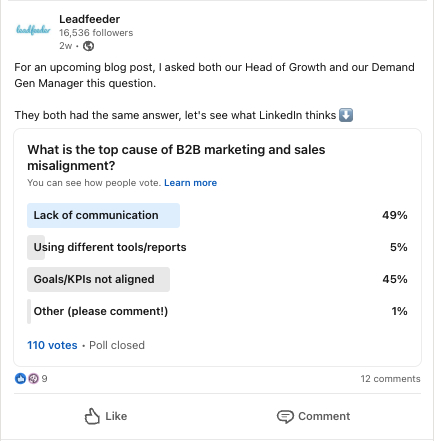
Getting everyone on the same page isn't easy, but it's worth the effort to drive growth and (most importantly, let's be honest,) increase your bottom line.
Here are five best practices to create sales and marketing alignment. ⬇️
1. Meet regularly
I know, I swore this wouldn't be about more meetings — and it isn't. (Unless sales and marketing never meet, in which case, yes, you should have more meetings.)
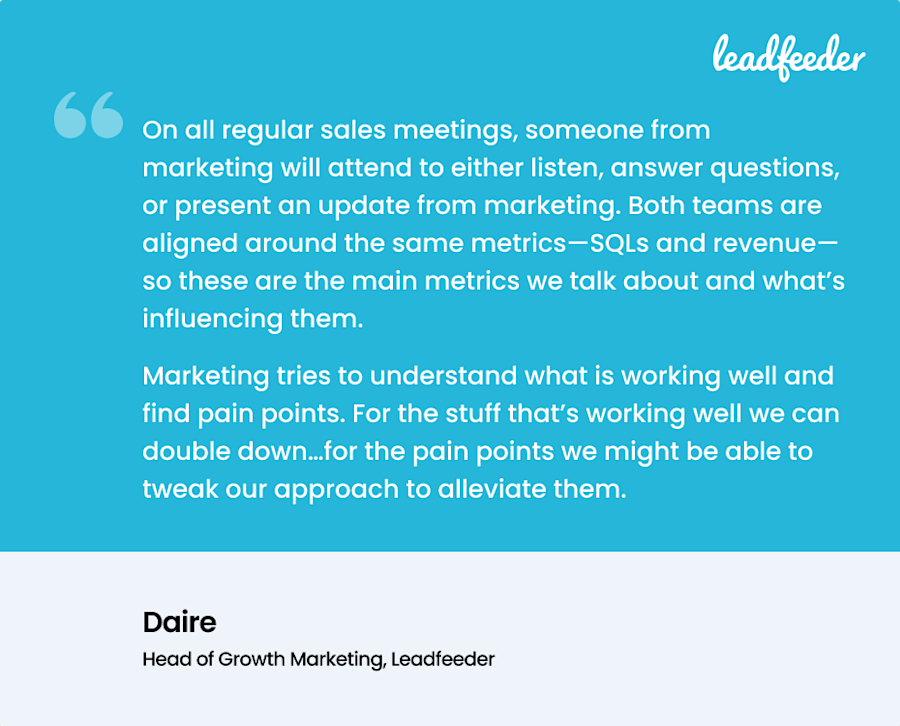
Rather than meeting more often, make sure the meetings you do have are actually productive.
Have a plan, share specific data, and take the time to understand what the other team has in the pipeline and what they've already done.
For example, did marketing launch a new initiative? Did that impact SQLs? There's only one way to know — ask.
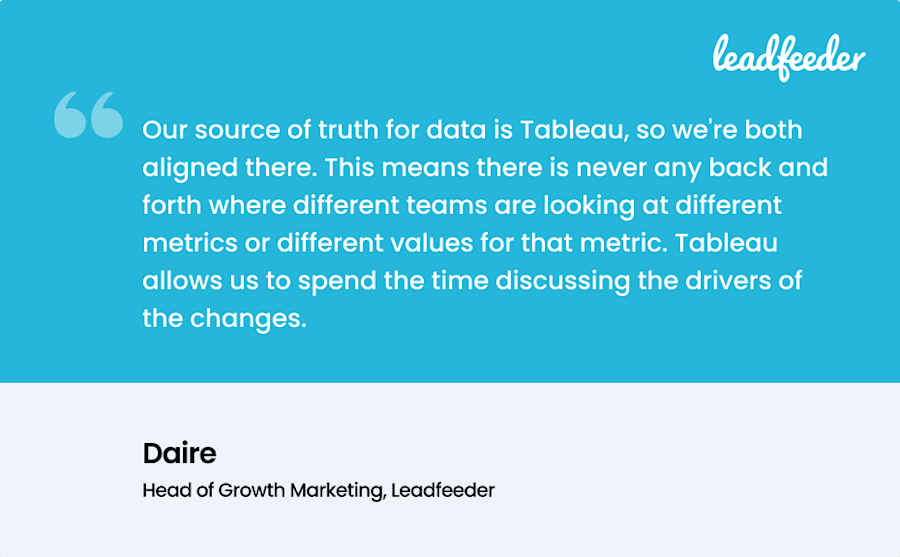
Daire says,
Anna agrees with ensuring meetings are actionable. She shares,
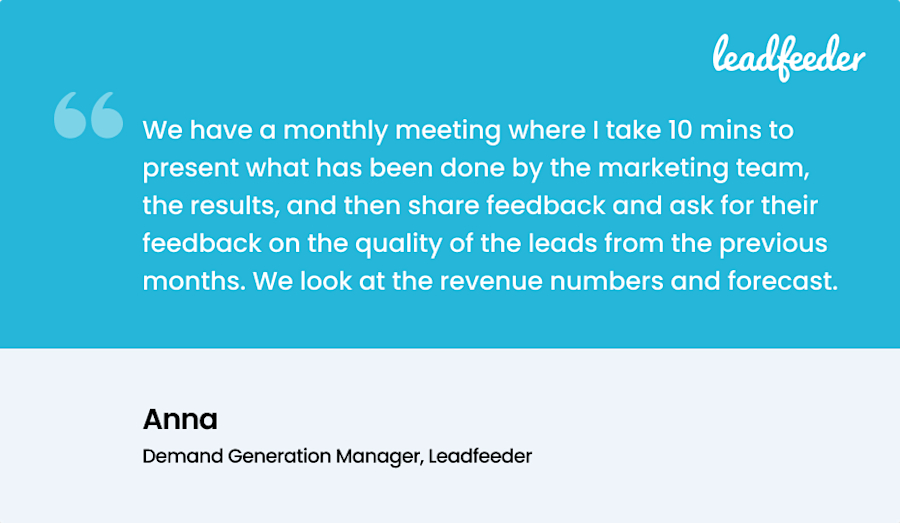
The point here isn't to meet five times a week — it's to make sure the meetings you do have actually provide value.
What does your team care about? Why does that matter? Do those KPIs match what the other side is looking at? If not, you don’t have that coveted sales-and-marketing alignment.
2. Agree on KPIs
Another area of contention between sales and marketing is KPIs. Marketing might track metrics like MQLs while sales track SQLs. Are those the same things?
Obviously, they aren't exactly the same thing, but they should be in the same ballpark.
What metrics are most important to your team? Why do those metrics matter? Both teams should be open about sharing the metrics they track and (most importantly) why those metrics matter.
For example, if a new marketing initiative sees a 2,000 percent increase in organic traffic, they might think it's a success. But sales might have noticed a very small increase (or none at all) in SQLs. Unless they share data, they won't know.
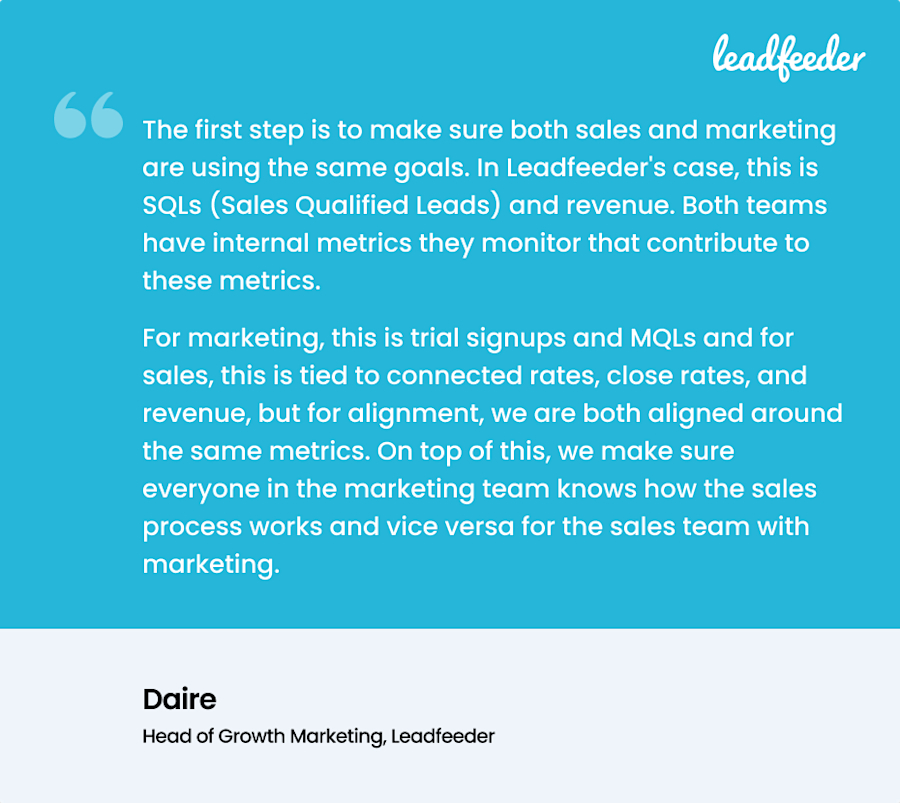
The more both teams understand which data the other team looks at, the easier it will be to work together.
It's pretty easy to do this in Leadfeeder, where both teams have access to the same dashboard and can see the same data about each prospect.
3. Create a single source of truth for data
Getting on the same page with data is crucial to sales and marketing alignment. Suppose marketing looks at conversions in one platform while sales tracks conversions in another. They might see drastically different numbers — and decide on very different strategies as a result.
Rather than allowing everyone to pull data all willie nillie, create a single source of truth for both sales and marketing data. That means one platform that both teams consider the gold standard for data.
Looking at the same data makes it easier to make the right decision at the right time.
The best way to do this? Integrate all your tools. Leadfeeder, for example, can integrate with your CRM, email platform, and even Slack. Most tools can integrate directly or by using Zapier.
Which platform you choose as your single source of truth isn't important, really. What matters is that everyone knows where to go.
4. Agree on a communication channel or method
When you need to talk to sales or marketing, where do you go? If you're leaving notes in the CRM but sales is using the Leadfeeder dashboard, you'll miss stuff.
Ideally, you want a single communication channel, something like Slack, your CRM, or even good old email if that's your thing.

Too many messages can get overwhelming, so create different channels for different topics or campaigns.
For example, you might have one channel for a specific campaign, another for all sales and marketing folks, and another for just marketing.
The point is to make sure everyone is on the same page and knows where to go for the information they need.
5. Integrate platforms whenever possible
We touched on this a little already, but it bears its own point, IMO. Integration is crucial if you want to align both the messaging and timing of sales and marketing.
By connecting the tools that gather customer and prospect data, marketing and sales gain deeper insights that lead to cohesive messaging across the buyer's journey and identify customer subsets that might be high priority or even previously ignored.
For example, integrating Leadfeeder with Salesforce (or any other CRM you use) lets you connect website visitors to current deals in progress. Sales can then see when a lead they're keeping an eye on reads a new blog post, then looks at your pricing page. That kind of data helps sales know when prospects have higher intent.
Leadfeeder integrates with a ton of other tools, including Zapier, so you can pull all that sweet, sweet data together.

Connecting tools like Slack, email marketing platforms, and Google Analytics enables sales and marketing to share data, allowing both teams to work together in harmony.
Leadfeeder brings sales and marketing into alignment
Sales and marketing alignment isn't just another buzz phrase you can ignore. (looking at you, smarketing.) It's a fundamental shift in how sales and marketing operate — and it's crucial for B2B strategies such as account-based marketing and demand generation.
Sales and marketing can no longer be siloed teams that meet once a month to talk in circles. Sales and marketing alignment means both teams know what's happening at every step of the funnel, track the same (or very similar) KPIs, and communicate regularly.
Note: Leadfeeder is a sales and marketing tool that uncovers hidden leads and tracks the impact of outreach. Sign up for a free trial and see how beautiful sales and marketing alignment can be.