This inefficiency can often be solved with just a few CRM integrations that streamline workflows and keep your team focused on closing deals instead of admin work.
The good news is that most CRM and help desk platforms support a wide range of integrations and third-party tools that fill key functionality gaps. The challenge is choosing the right ones.
This article will walk you through Leadfeeder’s recommended CRM integrations and how they can be used to improve your sales process, based on real experience with these tools.
What is CRM integration?
Let’s start with some basics. Every CRM solution has different features in its package — some cover more functions, some less. But there’s always room for improvement by connecting third-party integration to extend their functionality.
Basically, a CRM integration enables you to use other tools with your CRM, making your work in the CRM system faster and more convenient, and also providing more opportunities for data usage. Especially if you use several integrations that cover several needs at once.
“If they’re so useful, why don’t providers add all these CRM features themselves?”
Great question. You see, users might not need them all, specifically if they’re a small business or startup. And you definitely don’t want to pay extra for something you don’t use (except that gym membership since you’ll “definitely start working out next week!”).
That’s why third-party companies create separate apps that users of CRM systems can buy and integrate if necessary. A win-win for everyone, including your sales team.
How do CRM integrations make your life easier?
Sales teams live to shorten the sales cycle. Part of that involves fixing the issues salespeople often encounter at work. So let's see what concerns them most and how CRM integrations can address them.
1. Less mundane sales tasks, more marketing automation
Choosing the right integrations helps you automate a large chunk of tasks related to email marketing, marketing campaigns, and sales efforts. 53 percent of employees and 78 percent of business leaders believe they can save up to 2 or 3 hours by automating tasks.
For example, integrations with email services like Gmail and social media platforms like LinkedIn or Instagram allow your sales team to ditch monotonous data entry and messaging. Your CRM platform can retrieve the necessary data automatically through integrations and organize it.
This way, you basically remove large, complex, multi-version Microsoft Word and Excel documents and spreadsheets from your employees. And they’ll thank you for that.
Plus, with specific integrations, your CRM will automatically update lead statuses, advancing them to the next sales cycle stage and making lead management easier.
And that’s how you can automate the workflow, optimize the sales pipeline, and shorten sales cycles, improving the sales department’s performance.
2. Up-to-date data for better customer support
Integrations allow automatic updates, so your customer success and support teams will always have up-to-date information at their fingertips. Thanks to this, sales and support reps can provide a personalized customer experience using their history of interactions — it’s all stored in a single place they can access with a single click. Clients love that.
In fact, companies that use personalization generate 40% more revenue than those that don't.
By simply integrating your sales CRM system with tracking add-ons and platforms like Leadfeeder, you can improve contact management and retention rates.
3. Alerts and notifications to catch every opportunity
Research shows that companies that respond to prospect requests within 5 minutes have an 8x higher conversion rate than their tardy competitors. But sales agents often miss these requests.
With integrations, you can set up any alerts you need to respond to lead actions in a timely manner. CRM systems can notify a sales rep via email, WhatsApp, or another messenger to remind them to take action. For example, an integrated app will alert them to send a follow-up precisely 1 hour after the lead is added to the CRM.
That means no more customers waiting days for sales teams to call, and perfect timing for actions at every stage of the sales cycle.
4. Effective email management tools
Sales managers spend hours a day writing emails. And let's be honest, most of these emails are pretty similar. The important thing here is not to mess up the customer data and the details of your previous interactions. Which gets hard when many emails look the same.
But CRM integrations with apps like Mailchimp make this process much easier and less error-prone. It provides email templates and customer data that help you quickly pull together a sales pitch.
So managers don't need to jump from one tab to another to check what they’ve already discussed with this customer. This means less time wasted on double- and triple-checks and a minimal risk of incorrect details in the pitch.
5. Performance tracking tools for sales managers
Integrations make it easier to keep an eye on the team members and plan your cooperation.
For instance, integration with Google Calendar or similar apps helps plan and share schedules with the team, preventing missed important meetings. A CRM with this kind of integration can even show which tasks were completed and which weren't. And the reporting function can show you customer interactions and touchpoints, so you can see which managers are on top of your team's metrics.
At Leadfeeder, we’ve seen that CRM integrations make our team's work easier and improve performance. But you need to decide what integrations work best for you, depending on your industry, product, CRM system, and preferences.
My colleague Phill is happy to tell you about his team’s experience with CRM integrations to give you a general idea of how they work. Phil is responsible for his team’s sales process, and part of that effort is ensuring they use optimal sales tools and integrations.
Leadfeeder sales manager Phil talks about his favorite CRM integrations
It might seem like a customer relationship management tool needs dozens of integrations to do its magic. But a poll we conducted showed that 27 percent of respondents use up to 4 CRM integrations, since most are customizable and cover similar needs.
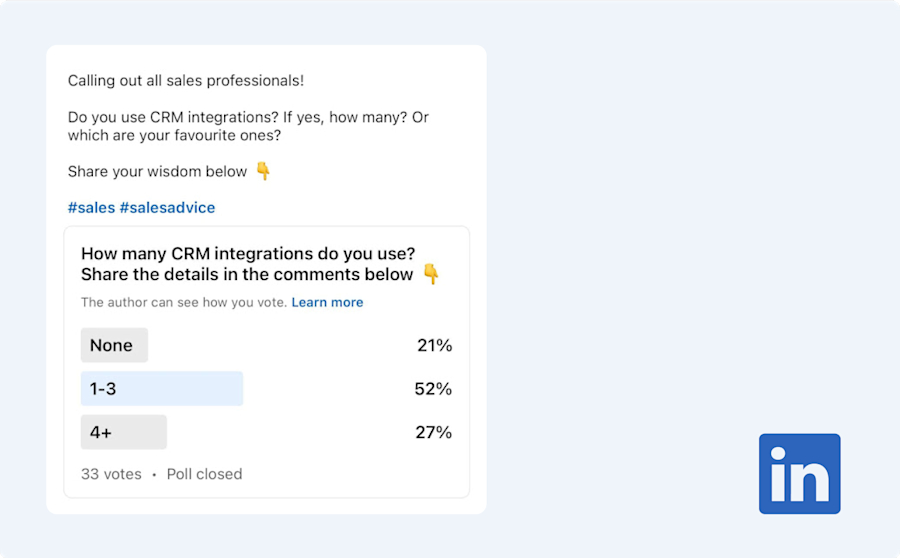
Leadfeeder is no exception. Here are the four CRM integrations our sales team loves and uses most.
1. Aircall
If you use phone calls as a customer support and sales channel, you must integrate a phone system in your CRM, or as we call it, a dialer. For us, it’s Aircall.
Aircall routes calls to assigned specialists, allows parallel calls, supports quick transfers, and even allows whispering (when a customer doesn't hear the suggestions of one colleague to another in the same call).
We can also comment on and add important notes to each contact during or after a call, record calls, and pause recordings to hide sensitive information. Every sales rep has the necessary information on each customer, even if they haven't communicated before.
Plus, as data lands in the CRM system, we can quickly analyze it and run reports for each sales rep, customer, or department.
Aircall has dozens of other features, from conference calls to call monitoring software. Or you might use another dialer that better fits your needs. Either way, phone system CRM integration is a must for your sales and support departments.
2. Docusign or Pandadoc
Integration with document management tools saves us hours of work for the sales department. Let me explain how.
Whether it's an offer, a pitch, or a final agreement, back-and-forth emails with comments and edits are almost inevitable if you don't use integrations like DocuSign or PandaDoc. They allow real-time editing and commenting on documents and inform parties when others change something.
Another time-saving feature is document lifecycle automation — when a sales rep creates a doc, they can send it to the assigned manager or legal department with a single click. The same logic underlies the entire contract cycle, from drafting to signing and storing documents in the CRM system. Yes, eSignature is also included.
But the feature we use most is quoting to create customer proposals. It works like this: a manager selects the necessary information from the CRM, and the tool organizes it in a document template with a description, price, and more. In the end, everything looks clean, and most importantly, it takes minutes.
And when you’re done, everything is neatly stored in the CRM, so our managers have no trouble finding documents, checking their statuses, or revising them.
3. Salesloft or Outreach
Salesloft and Outreach work like magic. They take the guesswork out of prospecting and suggest the exact time for exact actions to your sales reps.
These cadence tools analyze your clients' data and suggest sending an email, making a phone call, or scheduling a meeting when they would respond best to these kinds of interactions. It also directs prospects to the right specialist when they have specific requests and offers templates based on the buyer's journey stage.
All data, calls, emails, and SMS are automatically synced back to your CRM, so managers have loads of information at their fingertips.
Basically, all the sales department needs to do is review the suggestions for sales activities, adjust them, and personalize the interaction. The system handles the rest of the prediction-making and mundane organizational work.
4. Gong
Gong is another on our list of the best CRM software integrations, helping us improve customer service and increase lead generation. It analyzes customer interactions across the web, email, phone, and other channels. That means:
We see what works and what doesn't thanks to the in-depth analysis of phone calls, emails, or meeting recordings.
We use these insights for manager training.
We can accurately forecast prospects' behavior and act based on their touchpoints.
We have objective data on each rep's performance and know what they need to improve.
We use recordings, insights, and practices from top performers to train new employees.
Gong integrates with Salesforce and HubSpot, so if you use Zendesk, Zoho, or other systems, you will need to search for alternatives or check with Gong to see if it can integrate with your CRM via a third-party API.
CRM integrations are integral in driving revenue
CRM software integrations are your key to increasing sales and driving revenue. They enhance the CRM system's functionality and help your sales team focus on their work — closing deals.
The best thing is that you don’t need to pay for dozens of integrations; usually, two to five third-party solutions cover everything your CRM lacks. One handles high-quality phone call interactions, another enhances sales cadence, the third provides information to support data-driven decisions, and the fourth tracks visitor activity on your site, helping you convert them into leads.
On top of that, you can use these integrations to optimize and automate your departments' work. So, what are you waiting for? Start improving your CRM with integrations now!

Senior Director GTM Execution @ Leadfeeder
Marvin Karis is a go-to-market leader at Leadfeeder with deep experience across sales leadership, revenue operations, and GTM execution. His work focuses on helping revenue teams turn data and buyer signals into structured processes that generate predictable pipeline.
Having worked closely with sales and marketing teams across the Leadfeeder platform, Marvin brings a practical understanding of how companies use lead data, enrichment, and automation to prioritize accounts and engage prospects more effectively.