60-Second Summary
Demand generation only works when it’s data-driven — otherwise you risk optimizing for visits and leads that don’t convert. Align sales and marketing on a precise, metrics-based qualified lead, use intent signals, and track stage-specific metrics to turn demand gen into measurable growth.
Key takeaways: Demand gen is complex and requires a data-first approach — define qualified leads with specific metrics, prioritize intent data, and measure performance across TOFU, MOFU, and BOFU to prove ROI.
Standout strategies & tactics: Build first-party intent scoring for qualified accounts, assign points to key actions, collaborate on a shared scorecard with sales, and use custom feeds/filters to engage when intent is high rather than nurturing every lead.
Real-world lessons & frameworks: Track engagement per campaign at TOFU, demo/trial conversion at MOFU, and MQL→SQL plus close rates by channel at BOFU; focus on account-based metrics (visits, pages viewed, visit frequency) to follow organizations through the funnel.
Tools & next steps: Use tools like Leadfeeder to capture first-party intent, create account-level feeds, and iterate campaigns based on which channels and accounts actually drive pipeline — stop optimizing vanity metrics and optimize for conversions.
*This summary was created with AI assistance, using our original content.
You might already be using it — but are you doing it right? If your marketing metrics focus only on website visits and leads, you might not be getting the most out of demand generation. And if you're still working out where demand gen stops and inbound starts, how demand gen differs from inbound is a sensible place to begin.
So what is demand generation strategy in practice? One of its main challenges is complexity. It requires leveraging multiple channels, multiple metrics, and multiple campaigns. It's hard to track so many moving parts. But without data, you're flying blind.
This is why building a data-driven B2B demand generation strategy is crucial. Without data, you could be wasting resources on campaigns and leads that don't drive ROI. Plus, the B2B customer lifecycle has changed — companies want to be the ones to buy your product. They don't like being sold to.
We'll walk you through the steps to build a data-backed demand gen strategy, including how Leadfeeder can help you track the right metrics. Remember, the exact data points vary by industry, product, and even specific campaign.
Note: Leadfeeder helps B2B organizations track demand generation efforts. Sign up for your free trial.
1. Align sales and marketing with a data-driven definition of a qualified lead
We've been talking about the importance of aligning sales and marketing for a while now.
However, with demand generation, it's more important than ever that sales and marketing get on the same page.
That means more than just collaborating to create an ICP — it means using data-specific metrics to define what a qualified lead really means.
Not just, oh, we want companies in Utah with 400 more tech employees. You need more.
Do they meet the right demographic metrics? Are they using the software you integrate with? Are they interacting with your content? What channels are they on?
The definition of a qualified lead will vary by organization — and even by account or campaign. The goal is to get on the same page and ensure that both sales and marketing are focused on the same metrics.
Depending on your situation, joint success metrics might include demographics, on-site actions, budget, use of a specific business system, etc.
The goal here is to get very specific about what a truly qualified lead looks like, so sales and marketing can focus on the right prospects at each step of the funnel.
2. Use intent data to know when to engage
The first step of demand generation is expanding your audience by creating demand. The next step is nurturing those leads.
The issue is not that all those new prospects will convert, which is why demand generation marketing success relies heavily on intent data.
With intent data, you can target prospects at the right time, rather than wasting effort nurturing every lead that shows up.
Like qualified leads, intent data varies by campaign, organization, and other factors. I strongly suggest focusing on first-party intent signals, which you can control more easily. Then, assign points to specific actions and use that to calculate a score.
You can build a scoring system based on actions to track intent data, like this:
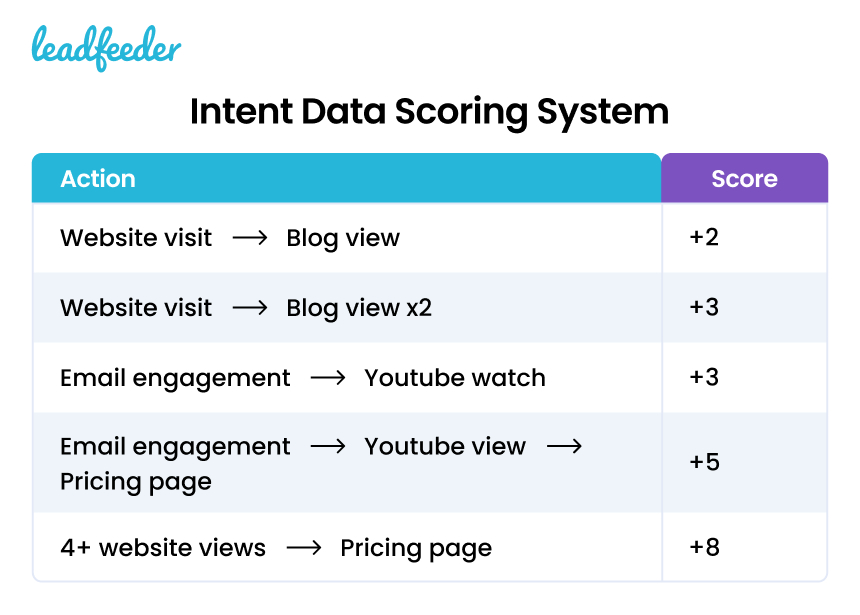
While similar to lead scoring, scoring intent focuses only on accounts that are already qualified. By tracking their actions, sales can reach out at the right time.
Marketing and sales should work together on this scorecard to ensure everyone is on the same page.
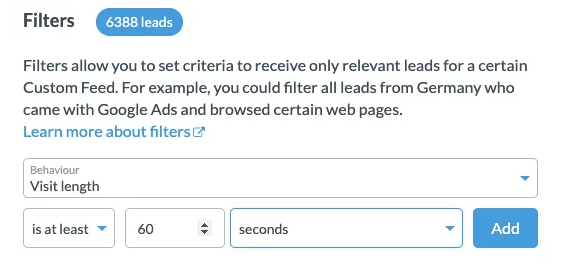
Then, use a tool like Leadfeeder to track intent data using custom feeds. For example, you can create a filter to track users based on what pages they visited or how long they stayed on your site.
3. Track the right metrics in your demand generation marketing strategy at the right time
Too often, marketers and sales focus on metrics at the top of the funnel or at the close. Data-driven demand marketing requires an in-depth analysis of metrics across the funnel.
TOFU and conversion metrics are important — but tracking metrics throughout the funnel provides a clearer picture of the overall effectiveness of your demand generation efforts.
Which metrics should you track to see if your demand gen is paying off? Like most marketing and sales strategies, the answer isn't black-and-white.
What matters is paying attention to the right metrics at the right time. Here are a few demand generation strategy examples showing which metrics to track and when.
TOFU: Engagement rates per campaign - In the beginning, your demand generation content strategy is about increasing engagement. If you create a new informative blog post, for example, you want to know how many people read or share it. Overall engagement rates are vanity metrics, but tracking per-campaign metrics shows which actions drive demand.
TOFU: Consumption metrics - Including page views, unique page views, etc. This helps track whether early-stage demand-generation metrics are working.
MOFU: Demo/trial conversion - With demand gen and ungated content, etc., the goal is to increase awareness among your ICP, improve the quality of traffic, and see more hand-raisers coming directly to the site looking for a demo or free trial.
BOFU: MQL to SQL conversion: Tracking how many marketing qualifications lead through to conversion indicates the overall health of your demand gen strategy.
BOFU: Close rate per channel: How many of your captured leads turned into sales? Tracking close rates by channel helps you see how well early demand-gen efforts pay off.
4. Focus on account-based metrics, not just channels
Tracking channel metrics for demand generation helps highlight high-intent channels. But it's not the only way to track the effectiveness of demand generation.
Tracking account-based marketing metrics, such as the number of visitors from a specific account and which pages they view, allows you to track specific organizations or ICPs as they move through the funnel.
Demand generation is becoming more account-based as cheaper ABM tools (like Leadfeeder!) become available. Using our custom feeds, you can view specific account activity, including how many times an account visits your site, what pages they view, exit pages, and more.
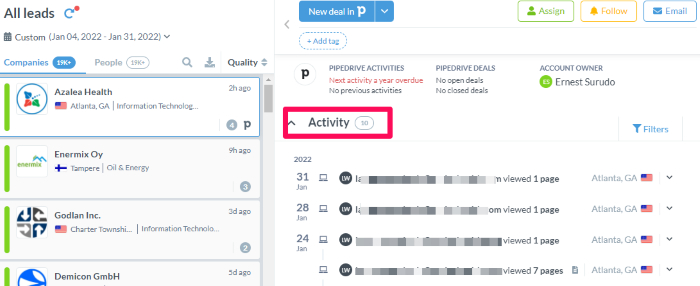
Using this data can help you refine your demand generation strategy and drive real results, not just blog views.
How to build a demand generation strategy that drives real growth
Launching a successful demand generation campaign can be tricky. Using a data-driven approach allows organizations to see what works — and why. Use these steps as a demand generation strategy template to build effective campaigns based on the metrics that matter most to you.
When you track the right data points at the right time, you'll be able to track performance in real-time — and tell which strategies are most effective for each ICP.
Leveraging data turns demand generation into an adaptive strategy that delivers results, not just more leads for you to sort. Note: Want more data to power your demand gen campaign? Leadfeeder can help. Sign up for a free two-week trial.