60-Second Summary
Lead scoring turns website noise into focused sales action by ranking prospects based on fit and online behavior. Using tools like Leadfeeder integrated with your CRM helps teams prioritize high‑intent leads, improve outreach timing, and align sales and marketing.
Key takeaways: Score leads by combining CRM-based fit with web-based interest to focus sales effort on high‑intent prospects, reduce wasted outreach, and improve conversion by engaging at the right time.
Standout strategies & tactics: Use CRM score properties for fit and tools like Leadfeeder for interest signals (visits, time on site, pages/session, traffic source, bounce rate), sync only high‑intent visitors, and prioritize real‑time outreach.
Real-world lessons & frameworks: For ABM, prioritize the interplay of fit and interest rather than checklist-only methods like BANT; let profiles evolve with engagement and align sales and marketing to act as trusted advisors.
Implementation & measurable benefits: Define scoring criteria, automate identification with your martech stack, track qualification speed and conversion uplift, and test the approach — for example, try Leadfeeder’s 14‑day free trial to validate visitor intent.
*This summary was created with AI assistance, using our original content.
We do this because there are too many choices and not enough time to evaluate everything properly. Ratings help us filter, prioritize, and focus only on what matters most.
Sales works the same way. If you want to build meaningful, personalized relationships with the right prospects, you need a way to separate high-value leads from the rest. That’s where lead scoring comes in—it turns noise into focus and helps you invest effort where it actually matters.
Note: Don’t just listen to us talk about your leads, see them for yourself. Start your free 14-day trial with Leadfeeder — no credit card required.
What is lead scoring?
Lead scoring is the “customer review” of sales. It’s a method for ranking incoming prospects based on a defined set of characteristics and online behavior.
Whether you score based on points, quadrants, or a hybrid of both, the idea is to assign value to the contacts in your Customer Relationship Management (CRM) system — to build a pipeline of high-intent online leads.
Lead scoring also helps provide context for the mass of visitors and activities on your website. If time is one of your most valuable resources, treat it as such.
With lead scoring techniques, you can make sure teams are more efficient. Focus on those with the highest purchasing intent, rather than making non-qualified cold calls for the sake of hitting an arbitrary daily sales goal.
The importance of lead scoring
Despite all the customer information at our fingertips nowadays, 82 percent of B2B decision-makers think most sales reps are underprepared.
It’s important to develop a clear understanding of your ideal customer profile prior to prospecting.
More importantly, be willing to review and see that profile evolve as potential customers engage with your marketing and sales-based content.
If the right martech stack is your team’s foundation, lead scoring is the layer on top that optimizes how you use it.
For example, think about how much time a sales rep would have to spend to follow up with every single visitor to your website. Sales teams can’t get by on their own.
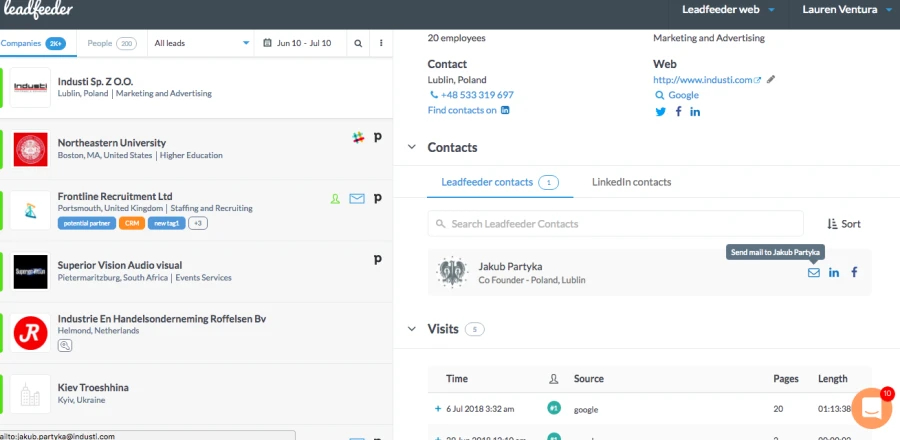
Queue marketing efforts to refine interests based on engagement. In addition, use insights from a martech stack tool like Leadfeeder to make qualifying prospects on your website even easier.
Sales reps, on their own, wouldn’t be able to deliver on personalized customer expectations. At least, not when prospecting makes up only a fraction of what their job entails.
A good lead scoring program strengthens the relationship between sales and marketing teams.
It keeps target audiences top-of-mind and ensures the efforts of both sides work in tandem — rather than at odds with each other — throughout the sales cycle.
Lead scoring for account-based marketing (ABM)
Classic demand-generation lead-scoring methods don’t always translate to the ABM way of doing things.
The BANT (Budget, Authority, Need, Timing) methodology, for example, is a way of gauging prospect fit that is often treated as a checklist.
All of these characteristics will factor into your ideal customer profile and personas, but they don’t tell the whole story.
Instead, teams that have adopted an ABM model should focus on the interplay between fit and interest.
They want to understand not only who their prospects are but what they’re engaging with.
This sets the foundation for more impactful reach-outs and follow-up communications from sales teams eager to drive real connections.
It can also turn the perception of a sales rep into that of a trusted advisor, involving them earlier on in the nurturing process to deliver top- and mid-funnel assets when relevant.
The benefits of lead scoring with Leadfeeder
To begin building a lead-scoring program that makes sense for your sales and marketing teams, consider the tools you already have.
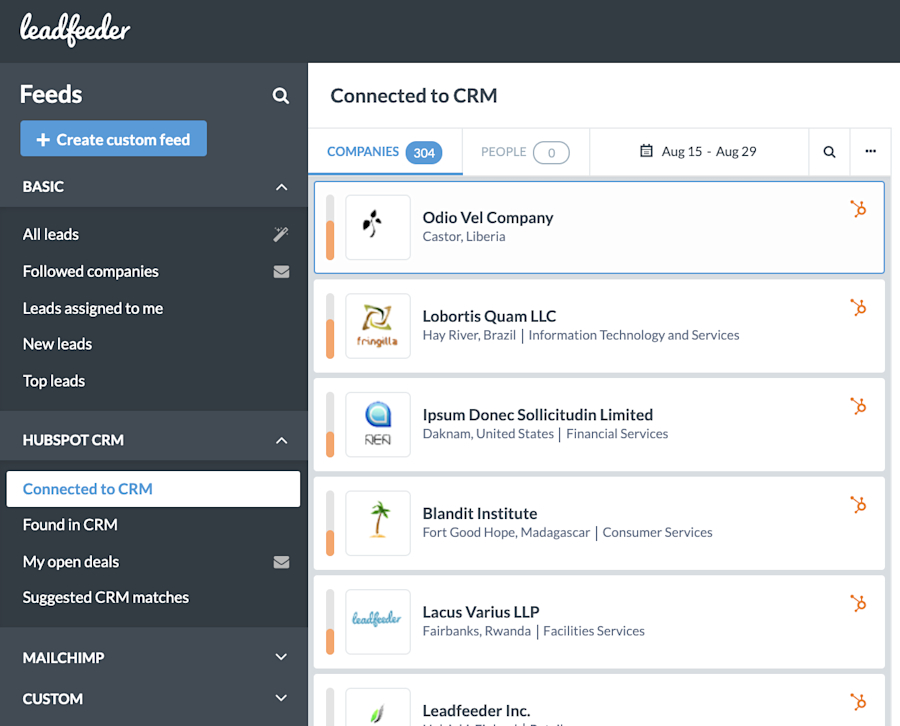
For example, if you’re using a CRM like HubSpot, you can set up lead score properties to qualify contacts automatically.
Pair this with Leadfeeder’s HubSpot integration to sync only high-intent website visitors, and you'll proactively identify the best prospects to contact.
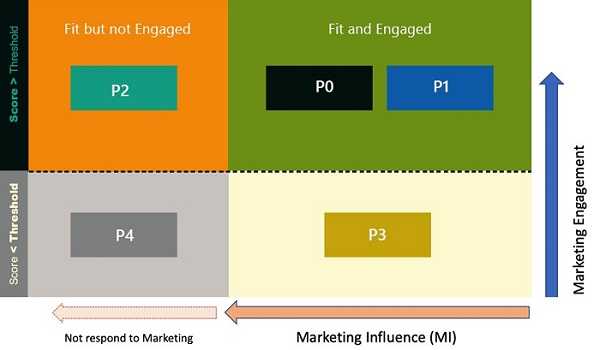
With your CRM determining one dimension (fit) of your lead scoring program, a tool like Leadfeeder can determine the second dimension (interest). Define the online and marketing-based actions that can help define “high interest”.
This might include actions like:
Visiting the website X number of times
Spending a certain amount of time on the site
Hitting a certain number of pages per session
Visitors with low bounce rates
Visitors who come in through specific traffic sources
The quality score defined by Leadfeeder can help you pinpoint your most active and engaged visitors. This, paired with a prospect’s fit with your ideal customer profile, will provide a more holistic view of purchasing intent.
The benefit here applies not only to your ability to accurately identify who you should contact but also when. If you can engage a prospect with relevant content based on web pages they’ve visited within an hour of them doing so, you keep your company top-of-mind. You also play a more active role in shaping their experience.
Rather than waiting for the majority of prospects (60 percent) to reach out during consideration, you can get in contact on the ground floor when it makes sense.
This allows you to cater to their specific needs in an authentic way—a way that shows you’re not just asking questions to check the boxes.
You’re delivering the resources (and value) prospects need before they even realize they need them.
How to develop powerful lead scoring in your martech
Developing powerful lead scoring for your sales team requires both the right tools and the right methodology.
Prospects, like the people behind them, are multi-faceted. As such, you have to be willing to define value based on more than just a subset of characteristics.
Once your criteria are in place, your martech stack takes the reins in identification. From there, it’s on your sales and marketing teams to take the proper actions.
Note: Don’t just listen to us talk about your leads, see them for yourself. Start your free 14-day trial with Leadfeeder — no credit card required.