60-Second Summary
Account-based selling (ABS) flips the traditional lead-first approach by targeting accounts and multiple stakeholders first, which is more effective for high-value B2B and enterprise deals. It depends on clear account identification and buying-intent signals—tools like Leadfeeder make that data actionable and improve sales-marketing alignment.
Key takeaways: ABS prioritizes accounts over single inbound leads, addresses multi‑stakeholder buying processes, captures multiple use cases per account, and raises close rates for long, high‑value sales cycles.
Standout strategies & tactics: Identify target accounts with intent signals and technographics, research company use cases, map multiple decision‑makers, use tools (e.g., Leadfeeder, LinkedIn Sales Navigator, CRM integrations) to find contacts, and coordinate highly personalized outreach with aligned marketing nurture.
Real-world lessons & frameworks: ABS must be embedded in an account‑based approach across sales, marketing and SDRs; behavioral context (website visits, intent signals) is essential; and centralizing target accounts in a shared dashboard keeps teams aligned and outreach timely.
*This summary was created with AI assistance, using our original content.
But the traditional account-based sales model isn’t the best strategy for B2B sales reps or companies selling high-value solutions to enterprise customers. Focusing on one individual lead at a time isn’t the most effective or efficient way to sell those kinds of products, for a few reasons:
B2B and enterprise transactions often involve multiple decision makers you have to convince.
Inbound leads offer no guarantee that the individual has the authority or decision-making power to complete a sale.
When a single lead says “no,” the relationship ends.
You miss out on selling for multiple use cases within a given account.
The solution is account-based selling (or ABS). The account-based selling definition is simple: a complement to ABM efforts, it enables B2B and enterprise salespeople to identify accounts first, and decision-makers second.

8 steps to Account-Based Retargeting
This simple checklist will show you exactly how to implement account-based retargeting via LinkedIn ads.
DOWNLOADWhile many articles on the subject focus on how to do account-based selling, we’re taking a step back in this piece. We talk about why the account-first difference is so powerful for B2B sales teams and how it fits into a broader account-based strategy throughout the business.
The backbone of account-based selling is account identification and access to key signals of buying intent. Without those, your sales outreach can’t be as targeted as ABS requires. Simply, without that behavioral context, you can’t do account-based sales.
In this article, we also explain how Leadfeeder can power account-based identification and outreach.
(Already sold on ABS? Skip to how Leadfeeder can make the process more effective.)
Note: Want to see which companies have visited your website, plus which pages they look at? Sign up and give Leadfeeder a try—free for 14 days.
What is account-based selling?
In a nutshell, the account-based selling model is an inversion of the inbound and leads-based sales methodologies. Instead of targeting individuals as leads and hoping they have the authority to buy from you, the ABS strategy targets the account first and foremost, then identifies multiple potential stakeholders and decision-makers to reach out to.
Here’s what the typical ABS sales cycle looks like:
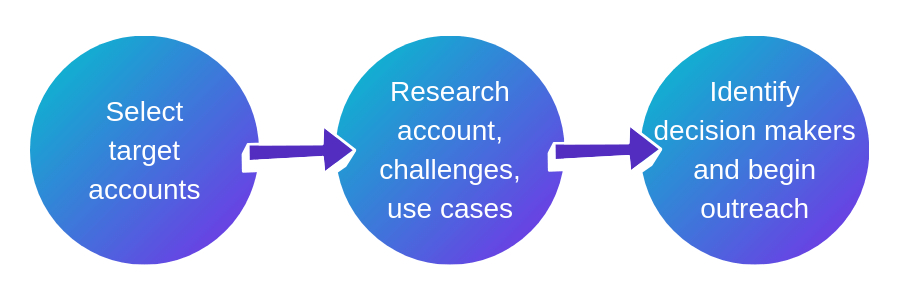
Identify ideal customer accounts to target: These can come from B2B database searches, buying intent signals (such as website visitor identification), or technographic information—among other sources.
Conduct research on each high-value account: Their business, and any potential use cases for your solution within that organization.
Identify decision makers: Determine multiple individuals within the account who are likely to be involved in buying decisions for each use case.
That account-first approach means salespeople begin the conversation with a much deeper understanding of the pain points a company may be facing and their potential use case for the product. Salespeople begin outreach knowing the company will benefit from their solution, instead of just crossing their fingers.
ABS also enables the broader organization to choose the kind of customers they want to sell to—you don’t have to sell to just anyone who fills out a contact form on your website.
How an Account-Based Selling Strategy Fits Into a Broader Account-Based Approach
Account-based selling and account-based marketing are two sides of the same coin. They work hand in hand with account-based sales development to identify target accounts and move them toward a close. There’s no true hand-off when an account moves from the marketing team to the sales team—sales and marketing outreach blend into a single overarching strategy.
And that means your marketing and sales teams have to be much more aligned than they are in your typical company.
The whole organization works together to select the right accounts to target. Sales development and marketing work together to identify the right contacts and decision makers. Then, highly personalized sales outreach is used in concert with marketing nurture campaigns to move decision-makers toward a sale.
How Leadfeeder Powers an Account-Based Selling Framework
We’ve talked a lot about identifying accounts, getting in-depth information on their use cases, challenges, and buying intent signals, and improving alignment between sales and marketing teams.
But how? Leadfeeder is one solution that can help with every stage of the ABS process.
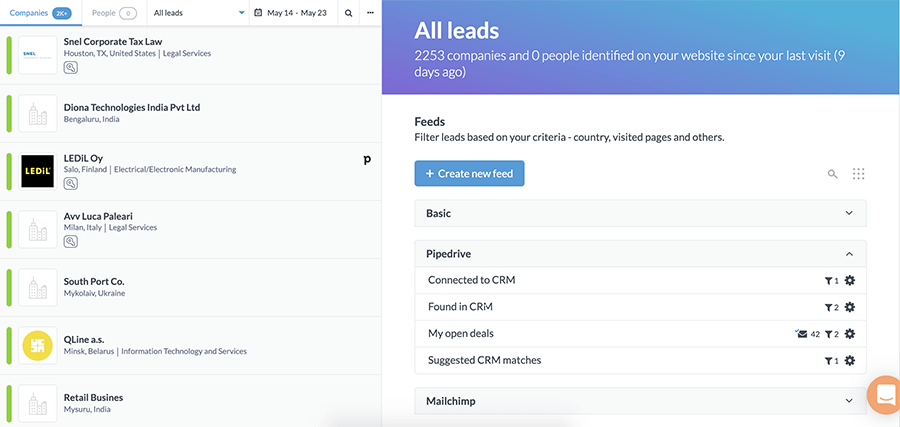
Our account-based identification tool shows you all the companies that have indicated possible buying intent by visiting your website, whether or not they filled out a form or left their contact information.
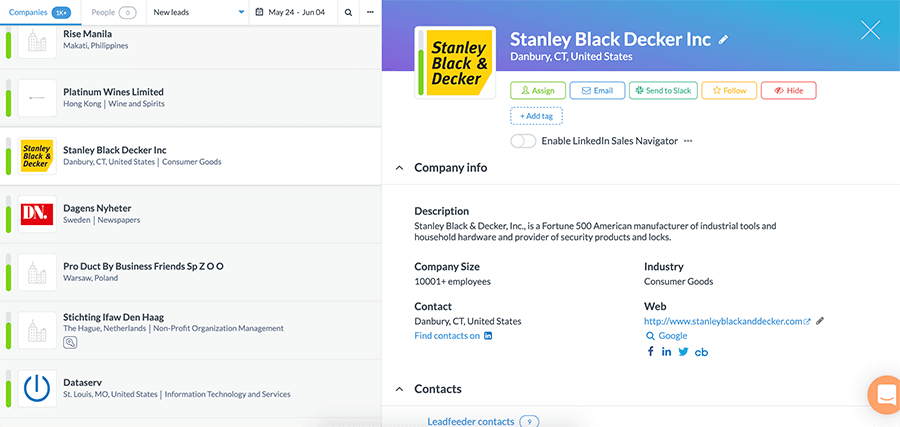
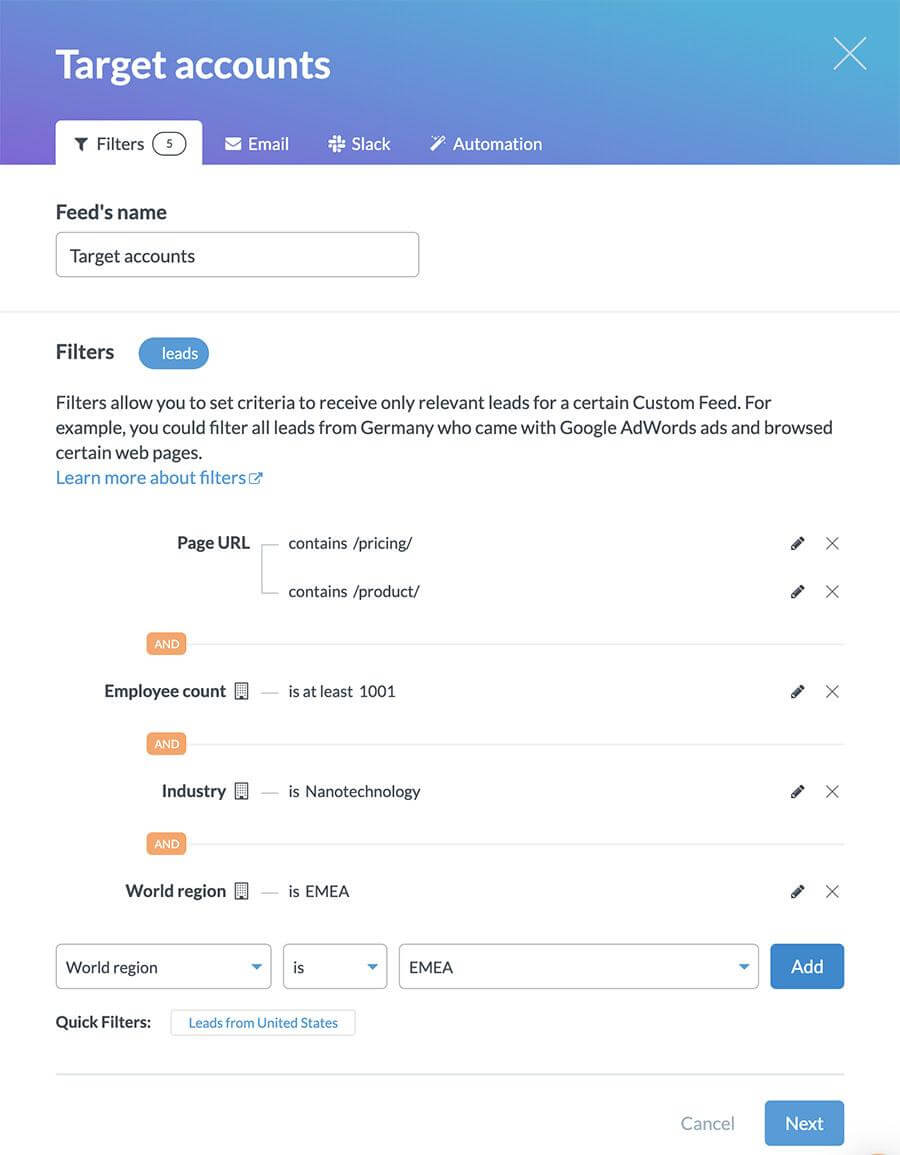
You can create a Custom Feed to narrow in on the target accounts you want, based on your ideal customer profile and all kinds of buying intent signals, including:
Traditional account targeting factors
—like revenue, location, and number of employees.
More granular intent signals
—like recent funding rounds, technographic data, social media activity, and industry/company news.
Account executives can use integrations like LinkedIn Sales Navigator (Team and Enterprise editions) and popular CRMs to identify decision-makers and buyer personas within their target accounts to start the outreach process.
All your target accounts can be stored in a single universal dashboard, so sales managers and marketing are always on the same page about who to target.
Note: Looking for more account-level context and data to inform your ABS efforts? Sign up and give Leadfeeder a try—free for 14 days.
Account-Based Selling Benefits for B2B Companies and Enterprise Sales Organizations
Simply put, account-based selling and marketing are the best sales strategies for B2B and enterprise sales teams to do their thing.
ABS enables you to spend more time talking to the right accounts and gives you a better chance to ultimately close them, which is ideal when you have high-value accounts, large deal sizes, long sales cycles, and committee decision-making processes.
With the growth of ABM and other account-based solutions and strategies, it’s the natural next step for high-value and B2B sales.
8 steps to Account-Based Retargeting
This simple checklist will show you exactly how to implement account-based retargeting via LinkedIn ads.
DOWNLOAD