60-Second Summary
Working across B2B solution sales and B2B SaaS reveals clear patterns in how buyers behave and how organizations should structure their funnels. The following bullets highlight the most actionable differences and tactics to apply when shifting between these models.
Key takeaways: SaaS favors heavy digitization and automation (customers can convert without human contact), whereas traditional B2B solution sales still relies more on human-driven promotion and relationship-building; lifetime customer value (LTV) and retention matter in both.
Standout strategies & tactics: Digitize the funnel where possible (self-serve and automated lead-to-deal flows), prioritize account-based marketing and retention to maximize LTV, and use social selling plus evidence-driven content to move buyers through adoption stages.
Real-world lessons & frameworks: Apply Geoffrey Moore’s adoption model (target early adopters with evidence, then tailor for pragmatists), align selling to distinct buyer types, and treat LTV as the north star to reduce dependence on constant top-of-funnel acquisition.
Practical next steps: If switching roles or optimizing a team, invest in automation tools and ABM capabilities, build clear evidence for each buyer segment, and balance self-serve conversion paths with human touch for high-value deals.
*This summary was created with AI assistance, using our original content.
I’ve made some striking sales and marketing observations after operating in these two sectors. I hope they give you some inspiration, whether you’re planning a career change or reflecting on both models after experiencing them yourself.
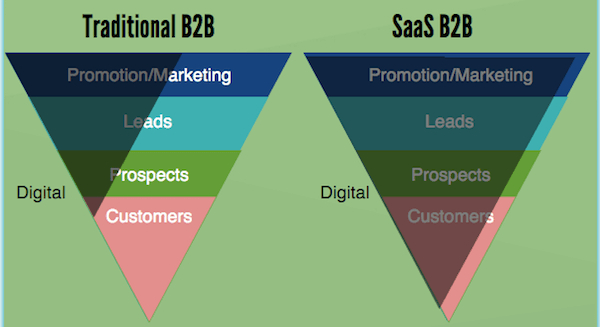
First, to understand the difference between these two jobs, here’s a neat summary of how I experienced the change:

Now that you’ve got a sense of the practical differences, let me share some of my observations on sales & marketing in these two sectors.
1. Digital footprint in the sales & marketing funnel
Let’s take the sales funnel as an example. The funnel’s upper end represents your efforts to raise awareness of your company’s offering by any means. Eventually, your marketing efforts convert to opportunities to sell (quality lead generation).
This is when your salespeople take over. If the SaaS side of that comparison is new to you, our guide to how SaaS sales works walks through the stages in more detail.
Some percentage of sales leads convert to prospects. In other words, those customers/cases where you are actually promising solutions at a certain price and scope. Finally, you close the deal and end up with a happy customer.
From my experience, the basic elements of the funnel don’t vary that much when you think of B2B Solution Sales and SaaS startup customer acquisition. What makes the difference is the extent to which you digitize/automate your lead generation, convert leads to prospects, and convert prospects into deals. This is how the digital footprint looks at traditional B2B Solution Sales compared to SaaS B2B.
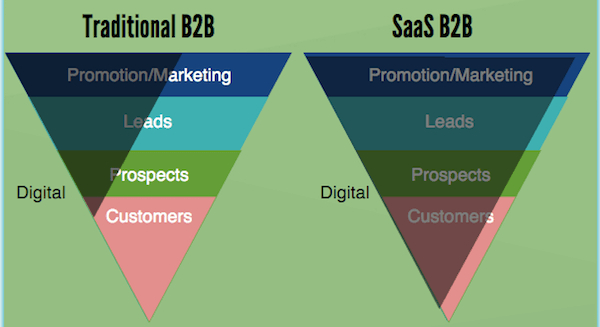
In B2B Solution Selling, the digital revolution hasn’t taken off as it has in B2C or even in B2B SaaS. This means promotion and awareness-raising still happen quite a lot, with individuals going around spreading the good news.
This is going to change radically in the coming years as customers’ and companies’ buying processes digitalize. In the future, customers will convert straight to prospects as soon as they have shortlisted you based on your digital presence.
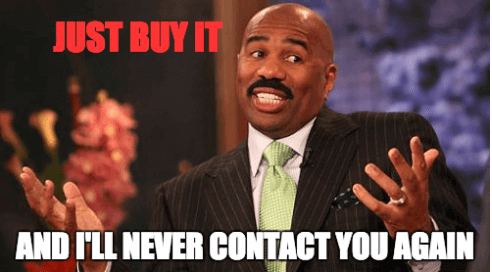
However, in a B2B SaaS business, the baseline seems to be: the more automation, the better. In other words, if a customer buys your product without ever hearing from you, that’s absolutely fine with you, and you make it possible.
2. Lifetime value of the customer is king!
In B2B, companies generally aim to build long-lasting relationships with their customers. This affects marketing (you can’t avoid hearing about account-based marketing these days) and sales. This is absolutely true in the two worlds I’m comparing here.
If you keep your customers satisfied, they keep buying from you (whether it’s renewing a recurring credit card purchase or buying a new solution from you). Long-lasting relationships make your revenue steadier and life with your sales funnel easier as well, when you no longer need to feed your funnel’s upper end with tons of leads.
3. Different buyers need to be approached with different means
Remember the old classic “Crossing the Chasm” by Geoffrey Moore?
He described the stages of growing your business, the different kinds of stakeholders, and how you should appeal to each.
Whether it’s B2B Solution Selling or SaaS customer acquisition, you still need to make sure your prospects see enough evidence before they have the confidence to buy from you. If you’re new to the market, target early adopters (technology enthusiasts and visionaries) and ensure the evidence they require is available.
Maybe the most important thing I’ve learned relates, surprisingly, not to selling but to buying. I’ve always thought that the selling process should always adapt to the customer’s buying process. But what if the buying process doesn’t want to change, and yet with digital tools, selling could evolve a lot?
Maybe this is the reason old-school B2B selling changes so slowly when both buying and selling parties stay in their trenches and keep doing things “as we’ve always done”. Luckily, we’re seeing new selling philosophies (such as social selling) changing the game slowly.
If you’d like to make a career change and join us, check out the open positions at Leadfeeder.