
So, what is meant by personal selling? How can you use it to achieve sales success, and how can you combine good, old face-to-face marketing with the Leadfeeder solution to connect with exceptional customers?
Read on to explore the advantages of personal selling as well as how you can master this sales method.
What Personal Selling Looks Like in Practice
Let’s start with a simple definition of personal selling. This sales approach involves direct communication between a salesperson and a customer. Instead of encountering generic marketing messages, customers engage directly with a salesperson through meaningful dialogue that helps them evaluate solutions.. Unlike traditional marketing, the goal isn’t simply to make a one-time sale. Personal selling aims to build loyalty so that customers keep coming back to your brand.
B2B businesses usually use the technique, though it can be effective for certain B2C organizations as well. Often referred to as ‘face-to-face’ marketing, personal selling can combine different communication forms and B2B marketing techniques, including email, video calls, and phone calls.
It’s also worth noting that personal selling is different from personal branding. The former approach emphasizes building a relationship for sales, while personal branding focuses on the identity of individual sales agents. We’ll take a closer look at this later on.
How does personal selling add value and differ from other sales methods?
As mentioned, personal sales puts relationship-building front and center of its approach. It’s less about aiming for a ‘hard sell’ and more about taking a softer, more gradual approach.
This is a vastly different tactic from the traditional B2B ‘sales meeting’. In this scenario, sales team representatives, manufacturers, and clients gather to discuss a product, and clients gain additional information and a better understanding of how it will help them.
There’s no denying that the sales meeting has a place. However, personal selling is a much stronger technique for fostering client relationships. The more time you devote to talking to clients, the more they’ll feel valued as customers. There’s a higher chance these customers will stick around long after an initial purchase.
Advantages and Disadvantages of Personal Selling
Personal selling is a tried and tested approach with many advantages. That said, there are also some drawbacks to it, too. Below, we’ve included a table to help demonstrate the benefits of personal selling, as well as the disadvantages.
Advantages | Disadvantages |
Helps build a stronger relationship with clients, strengthening loyalty. | A longer process than other forms of sales. |
More cost-effective than running regular sales meetings | Means you can only target a smaller group of customers. |
Provides a deeper understanding of the client's individual needs and tailors solutions accordingly. | Focusing on single customers can be expensive. |
Reduces churn rate as customers are more willing to stick with a business. | Risk of a customer developing loyalty to a sales agent rather than your brand. |
Better knowledge of individual customers increases the likelihood of sales. | Requires investing in specialized training for staff. |
Types of Personal Selling
There are many different types of personal selling. Let’s explore some of the most popular examples.
1. Telemarketing
A sales representative will call a customer and introduce your product. They’ll take time to answer any questions about your product or brand.
Telemarketing is a riskier form of personal selling. Not all customers will take kindly to ‘cold calls’ and in some jurisdictions, they can even be illegal. Read up on your local laws first! To ensure a warm reception, avoid falling into a script. Instead of a sales pitch, try to strike up a regular conversation. For example, a representative might ask a client about their day.
Note: Although some forms of telemarketing use robocalls, they can’t be classified as personal selling. Instead of building a rapport, these calls are often seen as a nuisance. Countries such as the US have banned many forms of robocalling.
2. Retail sales
As the name suggests, this form of personal selling occurs in a brick-and-mortar store. When a customer arrives in your store and expresses interest in a product, an agent will assist them. They’ll provide additional information and perhaps even demo an example product.
A common example of retail sales occurs in cell phone stores. You’ll speak face-to-face with an agent and compare payment plans for mobile devices. They’ll walk you through the store, showing the different models available. The agent will even help to set up your device once a contract is signed.
3. B2B sales
B2B sales take a slightly different approach. Instead of understanding the needs of an individual client, you’re trying to understand the needs of a business. This usually involves meeting more than one representative from the client company.
An agent will meet stakeholders and learn more about a client. With a stronger understanding, they’ll explain how a product can help to meet specific business needs.
4. Direct selling
Here, an agent will visit a customer directly at their home. They’ll pitch a product and provide leaflets and other materials to help customers learn more about it.
Direct selling is often used by brands offering products aimed at home improvement. An agent can demonstrate how an item will bring value to the home environment. For instance, a sales representative might bring samples of carpets or paints to show to a customer.
As with telemarketing, direct selling is a riskier tactic. Some customers won’t enjoy agents showing up at their door unannounced. To succeed, it requires friendly and personable agents. Again, following a script won’t be of much use here.
Personal Selling Across Industries
Industry | Example of Personal Selling | Typical Interaction |
Automotive | Car salesperson helping a buyer compare models | In-person showroom consultation |
Real estate | Realtor guiding buyers through property tours | Property viewings and negotiations |
Software (B2B SaaS) | Consultant demonstrating a platform | Product demos and strategy discussions |
Telecommunications | Retail representative helping choose phone plans | Store consultations |
Social Selling, Personal Selling, and Personal Branding: How can they work together?
Earlier, we briefly touched on how personal selling differs from personal branding. Let’s quickly recap:
Personal selling: focuses on building client relationships through dialogue.
Personal branding: helps to build the reputation of an individual agent.
Now, let’s bring in another term: social selling. This approach involves cultivating sales via social media platforms. Usually, this focuses on LinkedIn, X (formerly Twitter), and Facebook business pages.
Social selling is different from traditional social media marketing. The goal isn’t to create engaging posts and content. Instead, the aim is to create new contacts. By nurturing these contacts over time, you can build trust and raise the chance of sales.
Social selling, personal selling, and personal branding all play a part in sales. For the reasons we’ve explained, personal selling is essential for building lasting client relationships.
Personal branding serves an equally important but very different role. It ensures sales representatives can spread your message. Your agents are the human elements of your personal selling strategy. Clients will build relationships with them, which will, in turn, strengthen brand loyalty.
Social selling is another crucial part of the mix. With two-thirds of the world's population on social media, there is a huge potential pool of customers on those platforms. LinkedIn reports that 78% of social sellers outsell peers who do not use social media, showing how social selling can complement traditional personal selling strategies. Fostering these relationships is key to succeeding in the modern world.
When to Use Personal Selling in Marketing
Wondering when to use personal selling? Below are some examples of when the tactic can come in handy.
Your products are highly technical: personal selling is an opportunity to explain them in more detail. Agents can demonstrate products and let clients get to grips with your offering.
You have recently introduced a product: Customers may need convincing about the value of your new offering. Personal sales help to demonstrate the value of your product.
You sell luxury/high-end products: Customers will feel more comfortable investing large sums of money if they understand your product well. Personal selling lets clients ask questions and get the information they need.
You have high levels of competition: If you’re operating in a crowded market, customers will need convincing that your product is for them. By building loyalty, there’s a higher chance that customers will go to you.
Why are B2B Sales Based on Personal Selling?
If you’re running a B2B business, personal selling will be central to your approach. A B2B sales strategy is all about networking and building relationships with other businesses, and personal sales is the best way to achieve this.
This method is also the most flexible. To succeed in B2B you must adapt your offering based on the requirements of a client. Less personal forms of sales won’t be able to achieve this as effectively. Thanks to personal sales, your business can alter its package as it negotiates with a client.
According to Salesforce, 80% of customers say the experience a company provides is as important as its products or services, highlighting why relationship-driven approaches like personal selling remain essential in B2B sales.
With the right tactic, personal sales can build strong client relationships. Not only does this increase the chance of sales, but it also helps ensure repeat purchases in the future. High levels of client satisfaction also mean that customers are more likely to leave referrals. However, please ensure you act in accordance with national ePrivacy laws throughout the process.
The Personal Selling Process Explained
Although each sales process will vary, a successful personal selling strategy usually follows several steps. We’ve listed each of these seven stages of personal selling below:
1. Prospecting
Sales prospecting is the process of identifying people who might be interested in your products. These customers are referred to as leads.
To find the right prospects, organizations follow a process called lead qualification. Here, leads are gathered through various tactics, including email campaigns and white papers. Potential clients are then assessed and placed into two groups: unqualified and qualified leads.
Unqualified leads haven’t been nurtured enough to be worth pursuing at this stage. Qualified leads, on the other hand, have high levels of brand awareness and are likely to be interested in your product. These are the leads that you should pursue through personal selling.
2. Pre-approach
The second step is all about preparation. You’re not ready to start pitching yet, but with more research, a sales call is more likely to be successful. Send a simple email to get the ball rolling and begin collecting data about a lead. It’s a chance to assess their needs and begin tailoring your approach.
In B2B, this stage involves learning more about a client’s business. Consider how your offering can help a client’s business achieve its goals.
4. Approach
You’ve gathered enough information about a lead. You’re now ready to begin the sales process. Usually, you’ll now make a phone or video call to properly establish contact. This is a chance to start building a connection with a client. Kickstart the conversation by introducing yourself and your business.
The approach stage should focus primarily on listening. Learn a client's pain points and begin formulating a pitch for addressing them.
5. Presentation
It’s time to let a client see your product for themselves. If you’re running an in-person meeting with a customer, it’s a chance for them to get hands-on and experience your offering themselves. If you’re hosting a video call, you can run a live demonstration and show off the different features.
Make sure you build your pitch around the previously identified needs of the client. If a feature can alleviate a pain point, make sure it becomes a focus of your presentation.
6. Handling objections
A client won’t necessarily be positive about every aspect of your offering. At this stage, they’ll likely ask questions and air objections. It’s your job to minimize concerns and answer questions sufficiently. Consider how you can adapt your package to better meet client needs.
Remember, the goal is to reassure customers, so avoid appearing defensive or reactionary to concerns.
7. Closing
Once client concerns have been sufficiently addressed, it is time to close the sale. Here you’ll focus on finalizing your agreement, such as negotiating a contract or agreeing on payment terms.
8. Follow-up
You’ve made a sale, but the work doesn’t end there. The goal now is to keep the client happy so you can do business with them again in the future. This means providing a smooth and successful onboarding process.
Check in with customers from time to time, seeking feedback. Are they happy with your product? What features would they like to see improved? Collecting and responding to this information will help you build long-term relationships.
Winning Personal Selling Strategies
Want to improve your personal selling technique? Try some of the following strategies.
1. Avoid ‘sales talk’
As mentioned, personal selling is all about building relationships with clients. Customers don’t want to feel like they’re talking to a machine. This means doing away with sales jargon and scripts and having a more normal conversation. The stronger a connection clients feel with salespeople, the more they’ll trust your product and brand.
2. Refine your buyer personas
Buyer personas help to paint a picture of your target audience. The more accurate your buyer persona, the more you’ll understand the average customer. Consider reexamining your personas to see how yours can be improved. You might try the following methods:
Segmenting data to create personas for different subsets of your audience.
Upgrading your analytics tools to get more accurate data.
Reviewing your personas regularly to account for changing customer needs.
Gartner research shows that B2B buyers spend only 17% of their buying journey meeting with potential suppliers, which means every personal selling interaction needs to deliver clear value and insight.
3. Focus on the benefits
It’s tempting to offer customers a list of product statistics and features. While these might sound impressive, you might end up delivering an ‘information overload’. Customers might switch off and stop paying attention to what you’re saying. A better approach is to focus specifically on the benefits of your offering.
Try to tell a story that helps clients view your products in the context of their day-to-day lives. If they can clearly understand how an item benefits them, they’re much more likely to make a purchase.
Tips for Improving your Personal Selling Skills
Personal selling is a skill that develops over time through experience, active listening, and strong relationship-building.. With that in mind, here are five tips to boost your approach and improve your personal selling skills.
1. Always aim for a natural, personable conversation.
2. Try to ask questions to better understand customer needs.
3. Make sure to stay in touch with customers long after a sale.
4. Don’t shy away from criticism, understand customer concerns, and address them.
5. Be patient. If a customer isn’t ready to purchase yet, don’t try to push a sale.
Personal Selling Examples
Personal selling is a common strategy used by many types of businesses. Below are three common examples of personal selling:
Car salesperson: When purchasing a new car, a salesperson will assist you. They’ll show you the features of a vehicle and the available models. When you’re reading to make a purchase, they’ll negotiate a package that meets your requirements.
Realtor: When looking at a potential home, a realtor will give you a tour and tell you about different aspects of a property. They’ll discuss the price and terms of purchase with the customer.
Software consultant: Consultants will help businesses looking for new software solutions. They’ll take time to understand client needs before recommending a relevant software package.
Combine Personal Selling with Data, Applications, and Insights from Leadfeeder
If you started reading this article wondering, “What is the meaning of personal selling?” then, hopefully, you have now gathered all the information you could need on this topic. Personal selling is an approach that not only drives more sales but also ensures your customers return repeatedly. Of course, because the tactic is so effective, it's being deployed by many different types of businesses. To stay ahead of the competition, you need the best possible approach to personal sales.
That’s where Leadfeeder comes into play. Through a central interface, our solution gives you access to the data, applications, and insights you need to win over customers.
Uncover hidden customers effortlessly with Leadfeeder and book a demo today!
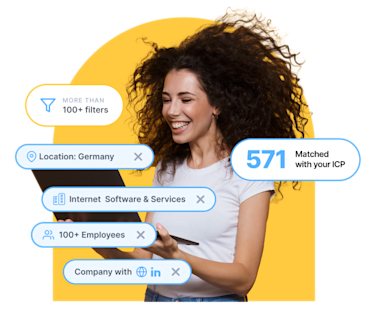
Identify and land your dream customers
Find the right prospects, accelerate your sales pipeline, and land your ideal customers even faster.
Start Sales ProspectingPersonal Selling FAQs
1. How does technology impact personal selling practices?
Technology can enhance your personal sales. With access to the right tools, you can uncover key data, helping you better understand customers. You can use this information to steer your approach, helping to achieve more favorable client interactions. You can also adapt your offering to better align with customer wishes.
2. How can sales teams effectively follow up after personal selling interactions?
You can follow up on personal sales by sending a simple email or making a phone call. Usually, you’ll remind clients about previous discussions, and you’re working to provide the perfect solution for them. A follow-up is also an opportunity to ask a lead whether they have any additional questions.
3. What metrics are commonly used to measure the success of personal selling efforts?
Below are some examples of useful metrics for measuring the success of personal sales.
Win rate: The percentage of potential sales that are closed.
Sales cycle length: The amount of time it takes a lead to become a customer.
CRM score: The percentage of customers that are likely to make a sale.
Churn rate: The number of customers that cancel subscriptions to a service.

Team Lead Growth AM/Sales Team @ Leadfeeder
Thijs Schutyser is Sales Manager at Leadfeeder with more than a decade of experience in B2B sales and pipeline generation. He has worked across account executive and leadership roles helping companies turn website visitor data into qualified sales opportunities.
Having delivered hundreds of product demos and worked directly with sales teams across Europe, Thijs brings firsthand experience in modern sales prospecting and buyer engagement. His experience using visitor insights and intent signals to prioritize outreach informs his perspective on building predictable pipeline and improving sales prospecting strategies.