60-Second Summary
Asking the right sales questions—and truly listening—turns conversations into tailored solutions. Use active listening and solution selling to uncover problems, impact, stakeholders, and emotional drivers, then align demos and closes to those insights.
Key takeaways: Open-ended, problem-first questions reveal priorities, pain points, decision-makers, and real business impact; listening to tone, wording, and omissions builds trust and exposes emotional reasons behind buying decisions.
Standout strategies & tactics: Pair active listening with solution selling—use discovery questions (business, goals, challenges, impact), probe intent and integrations, tailor demos to must-haves, and expand scope by identifying other beneficiaries.
Real-world lessons & frameworks: Follow a discovery → demo → close flow, validate timeline and budget early, map stakeholders, surface objections before they block deals, and use relevant customer stories to reinforce fit and urgency.
*This summary was created with AI assistance, using our original content.
It’s no secret that sales is a very personal and relationship-based experience for both sales representatives and prospects or customers alike – not only in B2C but also in B2B. When starting interactions with customers, it’s important to ask the right sales questions.
Often, questions are a natural part of the conversation flow, but have you ever glossed over the answers? It’s important to listen to the answers your customers and prospects are giving you; it can reveal a lot. There are two great strategies that sales professionals can use when asking prospects sales questions that could help close more deals.
Strong sales pitch questions and answers rely on two core skills: active listening and solution selling.
Active listening means fully focusing on what your prospect is saying—paying attention to tone, wording, and non-verbal cues—then reflecting it back through paraphrasing. This shows you understand their needs and helps build trust quickly.

Source: www.ccl.org
Solution selling builds on this by taking a problem-first approach. Instead of leading with your product, you use insights from your questions to position your solution as the answer to their specific challenges. making your pitch more relevant and persuasive.
To make both work, ask open-ended questions. Avoid yes-or-no prompts and focus on questions that encourage detailed responses, giving you the context you need to tailor your pitch effectively.
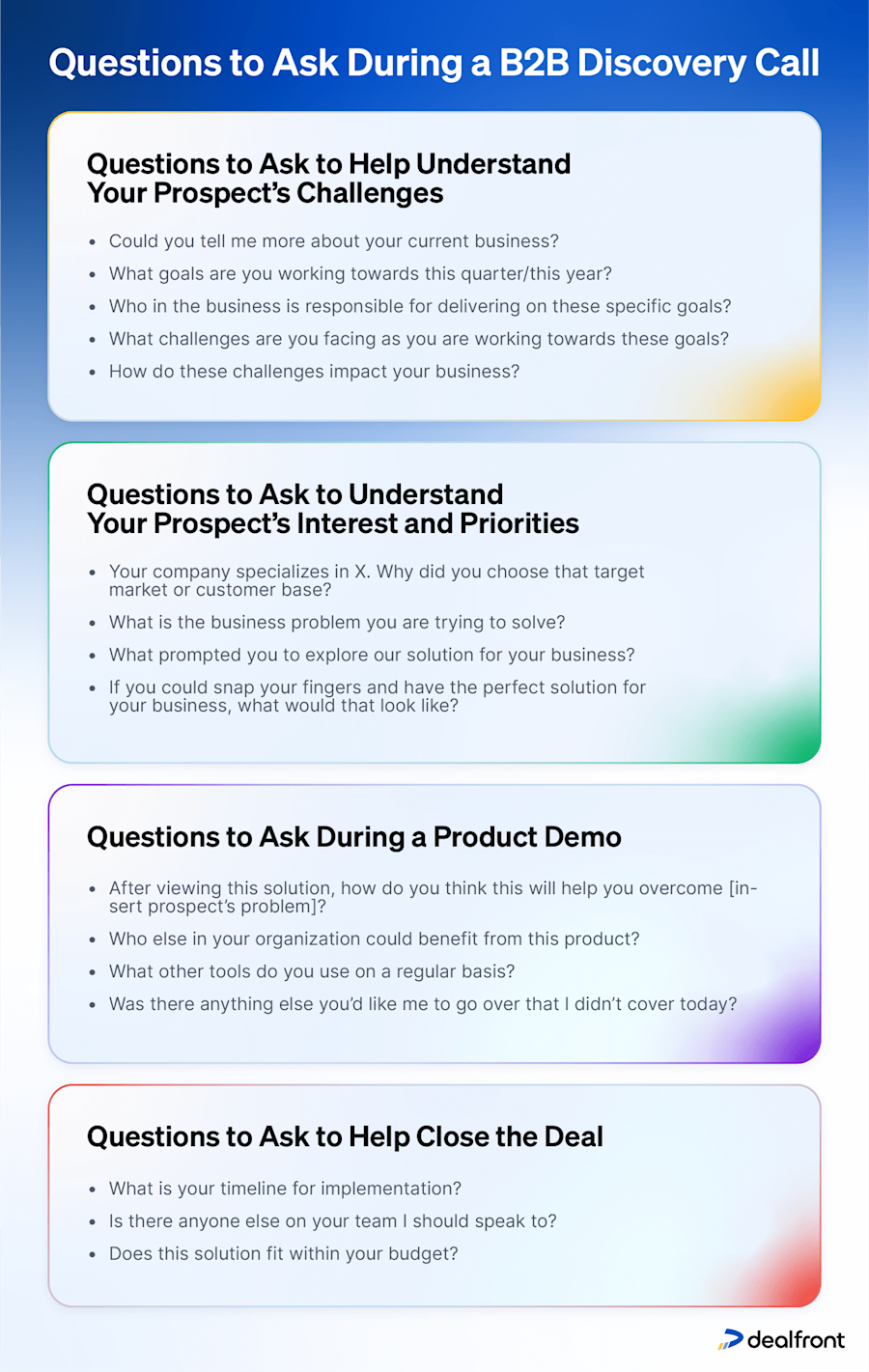
5 Questions to Ask to Help Understand Your Prospect’s Challenges
Understanding your prospect’s challenges allows you to be their helpful guide through your products and services. These questions will help you understand your prospect’s current business and the obstacles they are facing as they are working towards their goals.
1) Could you tell me more about your current business?
Why it works: Opens the conversation naturally and reveals how they think about their business.
What to listen for: Priorities, language, gaps.
Starting off, you need to understand their current business. Although it’s always best practice to do your research ahead of time, it’s great to hear how the business actually operates and the language that your prospect uses to describe their business.
Pay attention to the words that the prospect uses while they are answering this question, and what information they omit. This question is a non-threatening way to start your conversations and will eventually allow you to ask questions that get down to the root cause of their problems.
2) What goals are you working towards this quarter or year?
Why it works: Connects your pitch to measurable outcomes.
Example answer: “We want to increase qualified leads by 30%.”:
When you have an understanding of your prospect’s business, you can start to discover what goals they are working towards. When understanding, first their business, and then second their goals, you can start to find patterns or non-verbal cues as to what challenges they might be facing.
A follow-up question you could ask that would help you get even more information from your prospect is:
3) Who in the business is responsible for achieving these specific goals?
Why it works: Identifies decision-makers and stakeholders.
Example answer: “Our head of sales and marketing director.”
This will give you insight into who some of the decision-makers could be. You can also keep these personas in mind when you are presenting your solutions later on.
4) What challenges are you facing as you are working towards these goals?
Why it works: Surfaces pain points you can directly address.
Example answer: “We’re getting traffic, but conversions are low.”
This is when you can begin to understand the real challenges your prospect is facing. Whether those challenges be external or internal, it’s important to know what keeps your prospect up at night.
What’s more, asking follow-up questions about these obstacles will help you paint a full picture of your prospect’s business and allow you to start developing plans for how you will position your product or solution.
5) How do these challenges impact your business?
Why it works: Moves from problem to impact (critical for selling).
Example answer: “We’re missing revenue targets and wasting budget.”
Not only is it important to understand the challenges that leave your prospect sleepless, but it's equally as important to understand how these obstacles will impact them and the business. This question shifts the conversation away from the problem and toward what those problems cost in real life.
Jack Frimston and Zac Thompson of The Sales Stoic put it plainly: "Buying happens emotionally and then is reinforced logically. Any buying decision, no matter how big or small, will have some sort of emotional bedrock to it."
When a sales representative understands the full weight of a prospect's situation, they're not just showing empathy — they're speaking to the part of the brain that makes the decision.
4 Questions to Ask to Understand Your Prospect’s Interest and Priorities
It’s a great practice to understand your prospect's interest, priorities and expectations. During this phase you can tap into why they came across your solution, what they currently know or don’t know, and what changes they are looking to make to their business.
1) Your company specializes in X. Why did you choose that target market or customer base?
Why it works: Reveals strategy and positioning.
This question is great because not only you’ll learn more about your prospect’s business, you’ll also learn about their target customers and priorities. This can give sales professionals an inside look into how their prospects think and potentially position their own products.
Not only will these questions allow sales representatives to get a deeper understanding of their prospects' business and help build a relationship, but this question also allows them to think about which product or solution might work best. When developing the sales pitch, sales professionals can tailor their language around what would resonate well with their prospect’s customers and niche.
2) What is the business problem you are trying to solve?
Why it works: Clarifies urgency and relevance.
Example answer: “We need better lead quality.”
There’s a reason you are talking to your prospect. Now that you have an understanding of their business and their target customer, it’s time to start understanding the specific problems they are trying to solve. Are they struggling to find high-quality leads? Is there a new market or geography that they are trying to break into?
This can give you the upper hand when you move onto the product demo phase as you can pull customer stories or testimonials that match your prospect’s problems. It’s customary to talk about how great your solution is, but when you are able to share a story from a customer that’s like them (a similar use case), it can help reinforce your message.
Note: If you're talking to a prospect in the FinTech sector while you've already got two satisfied customers working in the same field, you're in pole-position! Use existing marketing material from these customers, like a success story, an interview or a video to overcome any concerns from your new prospect.
3) What prompted you to explore our solution for your business?
Why it works: Identifies trigger events and intent.
Example answer: “We saw your case study on improving conversions.”
There’s a reason that you are having a conversation with this prospect and typically it’s because you received their information from your marketing team’s lead generation strategy. Unless you’ve been conducting cold calls, you already know that your prospect is at least somewhat familiar with or interested in your solution.
Understanding what attracted them to your product or service will help you highlight the features and layer on additional benefits that are similar to what initially sparked their interest. This will also allow you to tailor your product demo around the features that attracted them to your company in the first place.
4) If you could snap your fingers and have the perfect solution for your business, what would that look like?
Why it works: Uncovers expectations and buying criteria.
Example answer: “Something easy to integrate with our CRM.”
Sometimes, you need to assume that your prospect has looked at multiple solutions and has a pretty good idea of what they want a solution to do for their business. This question allows you to understand their expectations without blatantly asking what their expectations are.
With the answers to this question, you can ensure that you are touching on their “must-haves” during the product demo. If there are certain solutions that they mention that your product doesn’t currently offer, think of other features that could meet their needs that they didn’t specifically mention. Understanding expectations during the discovery call will allow you to create a demo that will resonate with your prospect.
4 Questions to Ask During a Product Demo
After you’ve finished the discovery call, it’s time to start planning your product demo. The best thing to do is utilize the answers you collected during the discovery call to develop a product demo that touches on the information your customer gave you.
1) After viewing this solution, how do you think this will help you overcome [insert prospect’s problem]?
Why it works: Lets prospects sell the solution to themselves.
This question not only allows you to show your prospect that you were listening to their challenges and trying to solve them, but if the solution isn’t fitting their expectations, it allows you to adjust the demo and show some other solutions and features.
This could also allow your prospect to mention another challenge that their business is facing that your product could solve for. Ultimately, allowing your potential customer to see the solution in action for their specific business can be a huge influencer in closing the deal.
2) Who else in your organization could benefit from this product?
Why it works: Expands scope and increases deal size.
When investing in a great solution, a business wants to know how it can adapt to the different needs of the business. For example, if a sales solution can help with prospecting, there could be a great use case for marketing teams to utilize the solution for lead scoring or lead qualification.
When you can show the extended value of the solution, the probability of it being adopted by your prospect is high. Suggest hosting product demos with other departments that could benefit from the solution. Having additional decision makers view your solution in action, can highlight the deep value it could bring to their business.
Another great selling point to mention is the onboarding and training solutions your company offers and how that can benefit different departments.
3) What other tools do you use on a regular basis?
Why it works: Identifies integrations and switching barriers.
This question is great to ask during a demo to understand what tools work well for their business. For example, if they are using a productivity tool to manage their products or a CRM to track their customer data and engagement, you can talk about how your solution integrates with their current processes.
Your prospect is looking for a tool that makes their lives easier and with tools that integrate, that saves them time from switching between systems. If your solution doesn’t integrate, think about how you can bring this up with development teams because this could potentially be a selling point for many prospects.
4) Was there anything else you’d like me to go over that I didn’t cover today?
Why it works: Surfaces hidden objections early.
This is a question that often gets overlooked by sales professionals. During a demo, a sales representative's job is to ensure that you offer a valuable solution to their current business problem. Asking this question will allow you to understand if there is anything you missed.
If your prospect does want to see additional features, use this time to walk them through those solutions. And, if you are close to running over time during the scheduled demo meeting, don’t be afraid to go over. However, ask your prospect if they’d prefer to spend a little extra time during this demo or if they would like to schedule another one. Remember to always be considerate of your prospect’s time.
3 Questions to Ask to Help Close the Deal
After you’ve spent time learning your prospect’s needs and giving them a tailored and in-depth demo, now is the time to talk about closing the deal. During this stage, it’s best to understand what other decision-makers need to be involved, if there are budget considerations or if your prospect has any hesitations that need to be addressed.
1) What is your timeline for implementation?
Why it works: Reveals urgency and buying stage.
As you are getting towards the end of your interactions with your prospect, this question will allow you to understand their current timeline. If they are still browsing other solutions, or if they are still unsure about how your solution will solve their business problem, it might be a good idea to find additional resources to reinforce why your solution will work best for them.
This is also a great time to understand what external factors might be influencing their implementation. Are they waiting for a new quarter? Are they currently onboarding staff that will use this solution? Are people who are part of the decision-making team out of the office? The more information you have about their timeline, the better you can plan your follow-ups.
2) Is there anyone else on your team I should speak to?
Why it works: Helps you map stakeholders.
Often, decisions about products or solutions for businesses involve a team of decision-makers. Understanding who your next conversations will be with can help you tailor your pitch towards that persona’s pain points.
For example, are you going to be speaking to someone in the legal department who needs a view inside of their customer’s agreements and contracts? You might want to focus your solution on visibility. Or, will you be meeting with sales managers who need visibility into forecasting or their sales team’s performance? Understanding what these different teams will use the solution for will allow you to focus your demo or pitch on those differentiators.
3) Does this solution fit within your budget?
Why it works: Addresses pricing objections early.
It’s always best to understand your prospect’s budget. If there are concerns about price, a great sales representative will be able to highlight how the solution can actually make their teams more efficient, which could result in more revenue.
But, if budget is a huge concern, there could be certain deals or packages that you are able to offer. This is when sales teams need to work closely with legal and accounting teams to determine the best pricing structure and packages that will allow them to close the deal but to also give your prospect a solution that works within their budget. Getting your prospect invested in your solution, even if it’s at a foundational level, can allow you to upsell in the future.
Pro Tip: Always Ask Open-Ended Sales Pitch Questions
The best sales pitch questions and answers are open-ended.
Avoid:
“Does this work for you?”
Use:
“How would this fit into your current process?”
Open-ended questions:
Keep prospects talking
Reveal deeper insights
Make your pitch more relevant
Common Mistakes to Avoid
Even strong sales pitch questions and answers can fail if:
You ask but don’t listen
You interrupt too early
You jump into pitching too soon
You rely on scripted questions
You ignore emotional drivers
Conclusion: Master Sales Pitch Questions and Close More Deals
Questions will keep your prospects talking, allowing sales professionals to create the perfect pitch or demo, resulting in a closed deal and a happy customer. The sales representative’s job is to understand how the product or service can help solve the prospect’s problems and help meet their needs and goals.
To do that, you need to ask the right questions at the right time. This process should feel natural to both the prospect and the sales representative. Remember this isn’t an interview, this is a relationship-building exercise, where the goal is to offer the best solution, tailored to solving the prospect’s challenges.
Do not underestimate the power of a good question and use these tactics in your next sales calls to build a strong relationship with your prospect and close the deal faster.
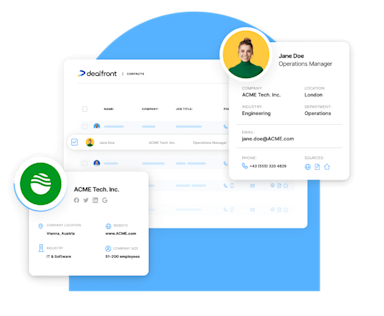
Find key decision-makers in companies with one click
Access compliant contact information for the right decision-makers and reach out equipped with detailed insights.
Find key decision-makers easier