Build audiences
Use firmographic data, real-time intent signals, and AI-powered enrichment to define precision audiences for paid, organic, and ABM campaigns. Focus your budget on the accounts that matter most.
See which companies visit your website, understand their intent, and activate smarter targeting, retargeting, and sales follow-up.
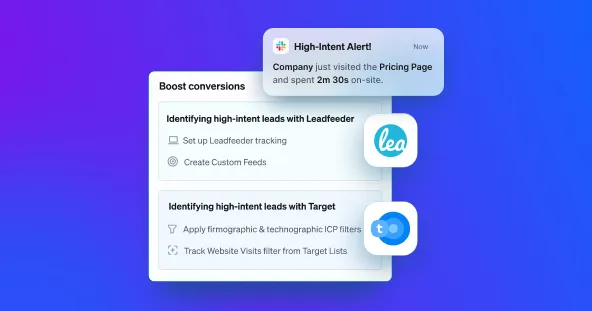
See which companies are visiting your website — even if they never fill out a form. Identify up to 45% of your website visitors and prioritize the visitors already showing buying intent.

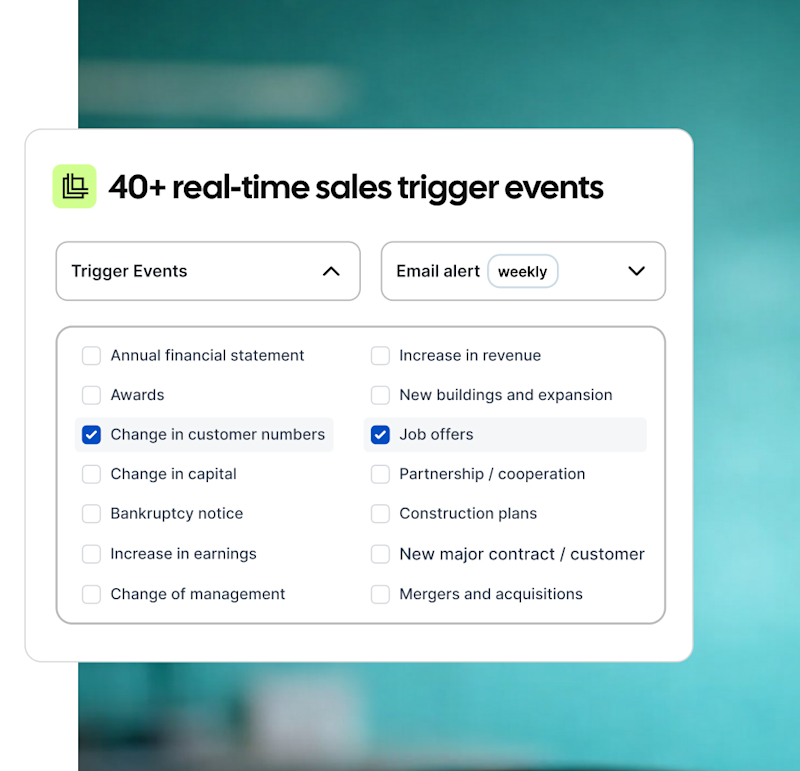
Track 40+ real-time buying signals like pricing page views, repeat visits, and engagement with key content. Act at the right moment — before your competitors do.
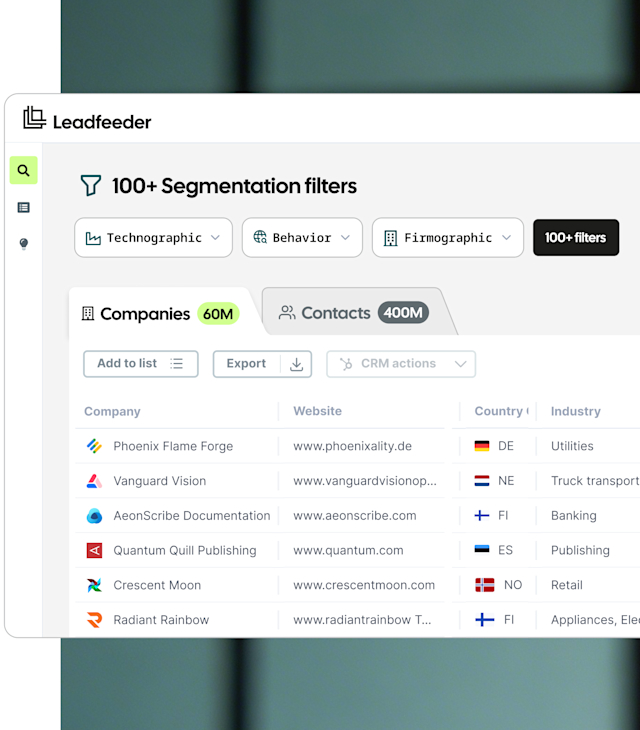
Build high-fit audiences using 100+ firmographic, technographic, and behavioral filters.
Narrow down by industry, revenue, tech stack, job title, location, and more — so your campaigns reach the right companies.

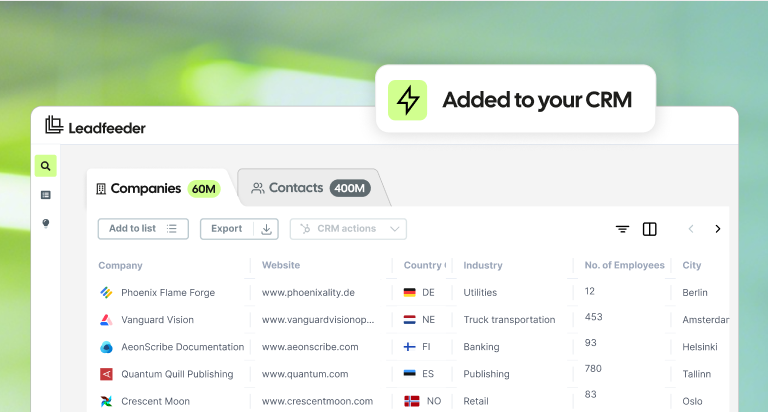
Enrich your audiences with verified company and contact data from a global database of 60M companies and 400M contacts.
Turn traffic insights into qualified, target-ready audiences.
Activate high-fit audiences across paid media, retargeting, and CRM workflows.
Launch targeted B2B display campaigns directly from Leadfeeder using your prioritized audiences — and sync them to your CRM or ad platforms to drive more efficient, high-performing campaigns.
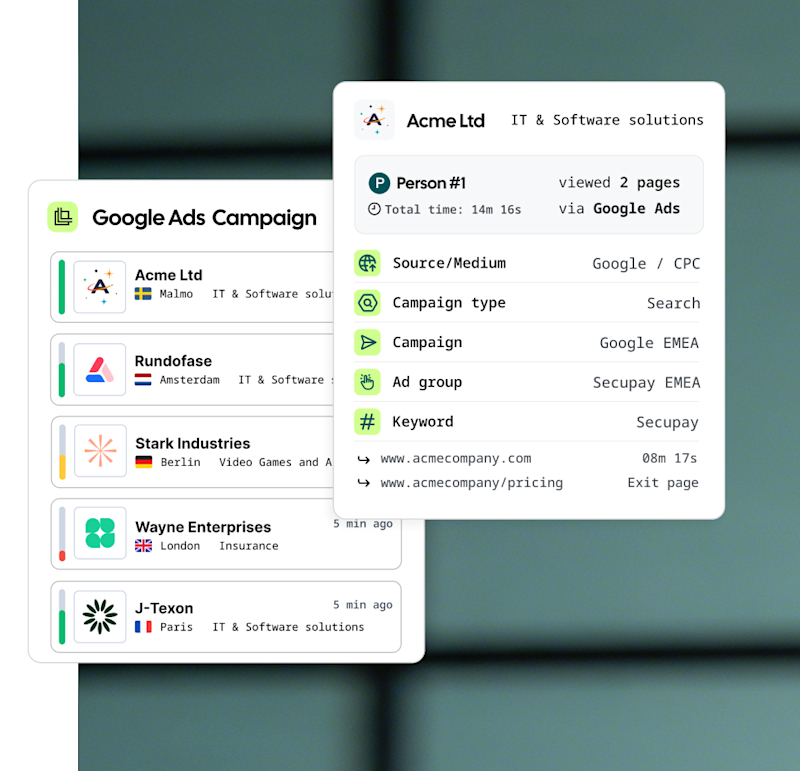
Turn anonymous traffic into high-fit audiences and measurable campaign performance.
Use firmographic data, real-time intent signals, and AI-powered enrichment to define precision audiences for paid, organic, and ABM campaigns. Focus your budget on the accounts that matter most.
Connect website engagement to campaigns and channels to see which sources drive real ICP traffic. Measure lead quality, attribute performance accurately, and double down on what converts.
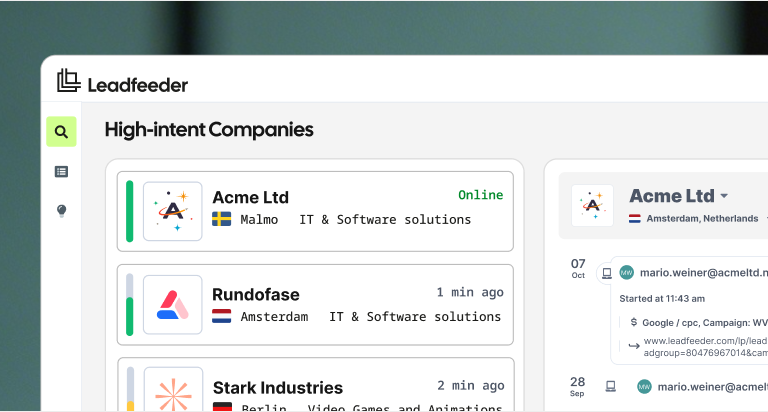
Identify up to 45% of companies visiting your website and uncover real buying intent. See which accounts are engaging with high-value pages — even if they never fill out a form. Prioritize the audiences already showing interest.
Key Features:
Identify companies behind anonymous website visits
Surface real-time buying intent from on-site behavior
Re-target engaged visitors across campaigns
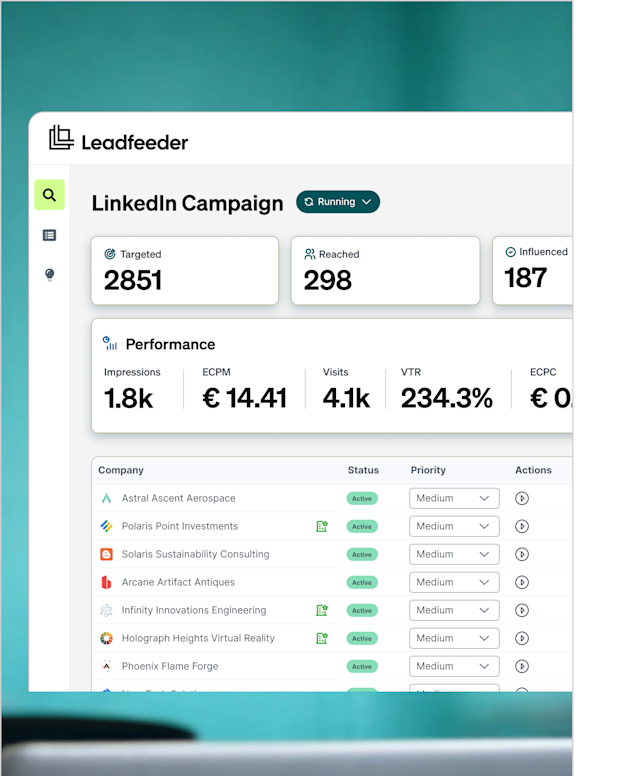
Use firmographic, technographic, and behavioral data to create high-fit audiences for paid, organic, and ABM campaigns. Refine targeting using AI enrichment and real-time intent signals.
Key Features:
Define your Ideal Customer Profile (ICP) with 100+ filters
Enrich audiences with verified company and contact data
Activate lists across paid, organic, and outbound campaigns
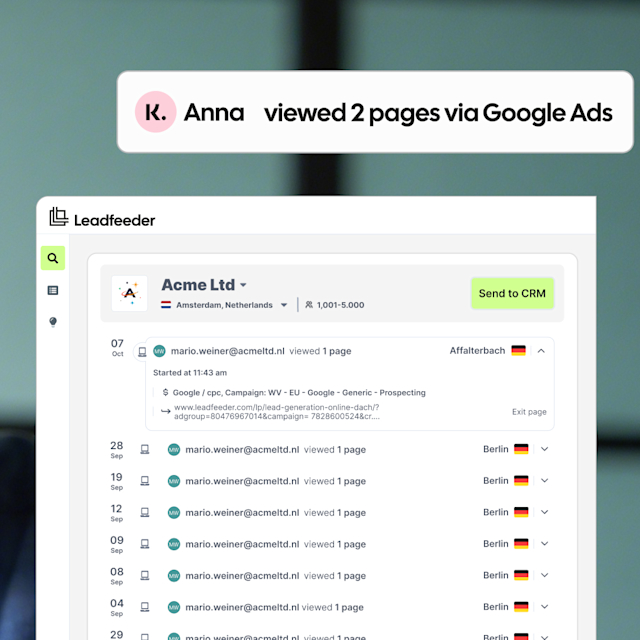
Connect website engagement to channels and campaigns to see what drives high-fit traffic.
Reduce wasted spend and improve cost per qualified lead by focusing on what converts.
Key Features:
Attribute website visitors to campaigns and channels
Measure lead quality and ICP engagement over time
Optimize spend, targeting, and messaging with confidence

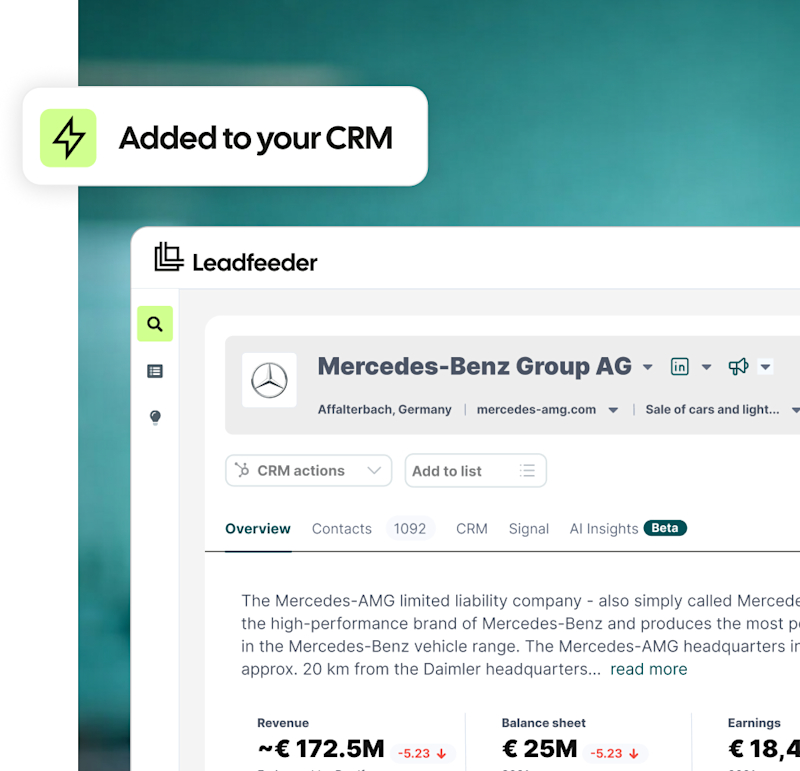
Sync enriched audiences directly to your CRM so sales teams can prioritize the leads most likely to convert.
Improve handoff, follow-up speed, and conversion rates with real-time alerts.
Key Features:
Score and prioritize leads based on fit and intent
Trigger alerts when key accounts engage
Sync enriched audiences directly to your CRM
"This is one of the best tools for tracking website visitors and understanding how they navigate through different pages. It’s also very effective for quickly finding company information and identifying key people along with their contact details. Additionally, the integration with HubSpot and Google Ads is extremely useful."
"I love that Leadfeeder shows me which companies are visiting our site and what pages they’re checking. It helps me see if my ABM campaigns are working and refine targeting to retarget accounts based on their interactions"
"The insights given are great to identify potential opportunities. It's easy to use and you can customize your own reports. It's integrated in Hubspot witch is very convenient."
"Dealfront makes it easy for us to prepare targeted campaigns. It offers a wide range of filters, and also provides the option to use AI assistance to help identify our ideal customers."
"Of all the competing tools, and we've used many, Leadfeeder does the best at providing and making useable the information sales and marketing teams actually care about."
"Data relatively current, with LinkedIn linking, quick search via direct link"
"Leadfeeder gives us valuable insight into who is visiting our website and helps us identify potential clients we may not have reached otherwise. It’s straightforward to use and provides clear visibility into which companies are visiting our site. The integration with our CRM makes it easy to follow up with the right people at the right time."
"Leadfeeder has become an important part of our lead generation process. In addition to our internal use, we have created custom feeds to share with our external commercial network (agents and distributors). With the recently added AI features, Leadfeeder has become even more useful, giving a lot of insights and precious data. Even though we do not use them for a number of reasons, the many integration capabilities add a lot of potential to this already powerful tool. Customer support is top-notch."
"Dealfront has significantly improved our sales and marketing workflows. The platform provides highly detailed firmographic and behavioral data, which allows us to better target prospects and personalize our outreach. We especially appreciate the seamless integration with our CRM system and the user-friendly interface. The support team is also very responsive and knowledgeable."
Don’t see your favorite tool listed? Use Zapier to automatically send Leadfeeder’ data to over 5,000 apps, including CRMs, spreadsheets, BI tools, and more.
Salesforce
CRM
Pipedrive
CRM
MS Dynamics
CRM
Hubspot
CRM
Zoho
CRM
Looker Studio
Analytics
Gong
Analytics
Google Ads
Analytics


"During the first month of using Leadfeeder, we have been able to target personalized content to seventeen times more site visitors than before. This is a tremendous improvement when compared with our previous results."
Titta Nummi
Head of Brand and Customer marketing (B2B), DNA


“We doubled our summit registrations. Instead of spending hours trying to figure out who visits our site, we now spend just a couple of hours a week on data collection—and focus the rest on actual outreach.”
Stefano De Carlo CEO
AutomatiKing


“It is a great tool for sales and marketing. Leads that otherwise may have gone unnoticed can now be tracked. It's a good thing that there are many connections for CRM systems, especially Hubspot.”
Tiina Salminen
COO, Snuup


“Not only does sales benefit, but marketing and paid media do too. We now have insights into which companies are coming through our Google Ads, allowing us to refine our targeting and maximize our ad spend.”
Anđela Čović
Head of Marketing
What is pipeline generation in B2B marketing?
Pipeline generation is the process of identifying, attracting, and converting high-fit accounts into qualified sales opportunities. Unlike traditional lead generation, pipeline generation focuses on account quality and buying intent rather than just volume. By revealing which companies engage with your website and campaigns, marketing teams can prioritize prospects most likely to convert and drive measurable revenue impact.
How can I identify anonymous website visitors?
You can identify anonymous website visitors by using B2B website visitor identification technology that matches IP addresses to company data. This allows you to see which businesses are visiting your website, even if they don’t fill out a form. With this insight, marketing teams can prioritize high-intent accounts and activate targeted follow-up campaigns.
How does website visitor identification improve paid campaign performance?
Website visitor identification improves paid campaign performance by revealing which companies engage with your ads and website. Instead of optimizing for clicks alone, marketers can focus on high-fit accounts that show buying intent. This leads to better targeting, higher conversion rates, and reduced cost per qualified lead.
What type of data is used to target high-fit B2B accounts?
High-fit targeting typically uses firmographic, technographic, behavioral, and intent data. This includes company size, industry, revenue, technology stack, engagement signals, and website activity. Combining these data points helps marketing teams focus on accounts that match their ideal customer profile and are actively researching solutions.
How can I reduce customer acquisition costs (CAC) in B2B marketing?
You can reduce customer acquisition costs by focusing your budget on high-fit, high-intent accounts instead of broad audiences. By identifying which companies visit your website and tracking buying signals, you can prioritize spend where conversion likelihood is highest. This improves efficiency and reduces wasted ad spend.
How does intent data help marketing teams?
Intent data shows when a company is actively researching or engaging with relevant content. This allows marketing teams to act at the right moment with personalized messaging, retargeting campaigns, or sales outreach. Acting on intent increases conversion rates and shortens sales cycles.
How does marketing and sales alignment improve pipeline quality?
When marketing and sales teams work from the same account and intent data, they prioritize the same high-fit opportunities. Automatically syncing prioritized accounts to CRM systems ensures faster follow-up and better collaboration. This alignment improves lead quality and increases win rates.
How quickly can I start seeing results?
With the right setup, marketing teams can begin identifying website visitors within minutes. Early visibility into high-intent accounts allows faster optimization of campaigns and quicker activation of sales follow-up.
Reveal high-fit visitors, activate smarter campaigns, and reduce your cost per qualified lead