

60-Second Summary
Website visitor tracking reveals which companies and people are already on your site, but single-purpose tools like RB2B often lack depth, global coverage, and activation workflows. This guide compares top RB2B alternatives and gives practical steps to turn anonymous visitors into measurable revenue.
Key takeaways: Identification alone is no longer sufficient—buyers do most research before contact, so teams need intent scoring, broad data coverage, integrations, GDPR‑compliant handling, and closed‑loop attribution to convert visits into pipeline.
Standout strategies & tactics: Run parallel tracking to validate match rates, prioritize AI‑driven intent scoring and automated workflows (CRM tasks, Slack alerts, ad audience sync), and favor platforms with strong integrations and regional data where your ICP operates.
Real-world lessons & frameworks: Choose tools that match team size and goals (enterprise ABM vs lightweight outreach), emphasize data accuracy and integration fit over feature bloat, and use ICP filters plus closed‑loop attribution to prioritize high‑intent accounts.
Quick migration checklist: Audit scripts and integrations, map data flows, run the new platform alongside RB2B to compare results, train revenue teams on new workflows, then monitor recognition rates, attribution, and lead quality to refine setup.
*This summary was created with AI assistance, using our original content.
Website visitor tracking makes that possible by revealing which companies and people are already on your site, checking your content, and evaluating your pricing before they ever fill out a form. The vast majority of B2B buyers conduct extensive online research before making a purchase, and much of the buying process is completed before they ever contact a supplier.
Tools like RB2B help surface this activity, but for many teams, basic visitor identification is no longer enough. They need deeper insights, broader global coverage, and integrations that turn anonymous traffic into a pipeline, not just data.
If you’re re-evaluating RB2B based on cost, accuracy, or overall capability, it’s worth exploring alternatives that can do more than show you who visited. They can help you convert that interest into real revenue opportunities.
In this guide, we’ll explore the top RB2B alternatives, highlighting their features, strengths, and potential limitations, so you can find the platform that fits your team’s needs and helps turn anonymous website visitors into real revenue.
1. Leadfeeder
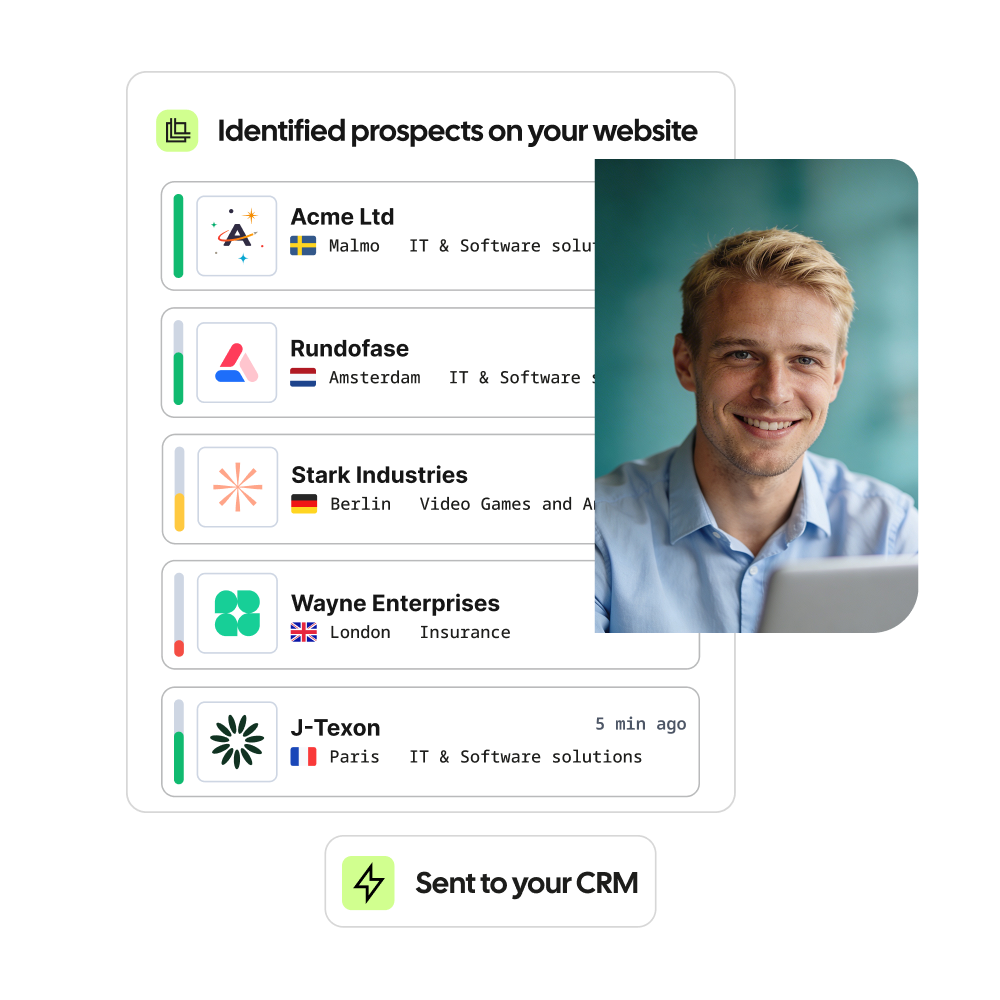
Leadfeeder is an AI-enabled B2B website intent and activation platform. It identifies companies showing buying intent on your website, enriches them against your ICP, and turns that insight into action through automated workflows — whether that's a CRM task, a Slack alert, or an ad audience update. With deep data coverage across Europe, GDPR-compliant tracking, and AI-driven intent scoring, Leadfeeder helps revenue teams focus on high-fit, high-intent signals rather than raw traffic.
Key features:
Real-time visitor identification with AI-powered intent scoring — see which companies are on your site before they fill out a form
Deep data coverage across Europe, backed by a database of 60M+ companies and 400M+ verified contacts
50+ integrations with leading CRMs and marketing automation tools, including Salesforce, HubSpot, Pipedrive, and Slack
Closed-loop attribution to prove which campaigns drive pipeline, not just traffic
Automated workflows that turn intent signals into CRM tasks, Slack alerts, and ad audience updates
GDPR-compliant data handling with transparent tracking
ICP Insights with 100+ filters to pinpoint and prioritize ideal customer profiles
Challenges:
Strongest data coverage is in Europe — US-only teams may find deeper domestic data with tools like ZoomInfo or RB2B
Best suited for teams with an existing CRM workflow; the activation features shine when connected to your sales stack
Leadfeeder stands out as more than a visitor identification tool — it's an intent and activation platform designed for connected, compliant growth. It doesn't just tell you who visited; it scores their intent, enriches the profile against your ICP, and triggers the right workflow, so your team acts while buying signals are fresh.
Its GDPR-compliant data, deep European coverage, and closed-loop attribution make it a strong choice for teams targeting international audiences who want to prove what drives pipeline.
2. Warmly
Warmly helps revenue teams identify and engage website visitors in real time. Its goal is to give go-to-market teams the context they need to act while buyer intent is still high.
Key features:
Real-time visitor tracking and lead scoring
AI-based engagement tools for active visitors
Integrations: syncs data with tools such as HubSpot, Salesforce, and Outreach
Challenges:
Limited international data coverage — strongest in the US market
Annual contracts only (no monthly billing) with a steep jump from free to $10,000/year
Occasional lag in visitor identification reported by users
Limited behavioral intent depth compared to platforms with a dedicated intent engine
Feature overlaps with existing marketing tools
Warmly delivers a strong, easy-to-use platform for US-based teams that want to identify hot visitors and act quickly. However, its narrower data coverage and lighter intent depth can make it less suitable for globally focused revenue teams.
3. 6sense
6sense is an account-based marketing (ABM) and revenue intelligence platform that uses artificial intelligence to predict which companies are most likely to buy. It analyzes behavioral, intent, and engagement data across multiple channels to uncover hidden buying patterns.
Key features:
Predictive intent scoring with machine learning
Deep account-level analytics
Integrations with major marketing automation tools
Challenges:
Complex setup and learning curve
High cost for smaller teams
A steep learning curve can overwhelm users
6sense is often considered a good fit for enterprise-level revenue teams running mature ABM programs. However, for smaller teams or those focused on direct website visitor tracking, it may feel like using a Formula 1 car to pop to the shops.
4. Lead Forensics
Lead Forensics identifies the businesses visiting your website and provides detailed company profiles for follow-up. Known for its real-time alerts and strong customer support, it’s popular among sales teams looking for straightforward lead identification.
Key features:
Real-time visitor alerts
Company and contact information
Built-in CRM integrations
Custom dashboards and analytics
Challenges:
Limited depth of intent signals
High price point for small businesses
Global data accuracy can vary
Lead Forensics provides fairly reliable visitor identification company data. However, its intent capabilities are far more basic than most newer platforms.
5. Clearbit
Clearbit was acquired by HubSpot in December 2023 and is no longer available as a standalone product. Its enrichment and identification capabilities have been integrated into HubSpot as "Breeze Intelligence." Teams that previously used Clearbit independently now need a paid HubSpot subscription plus Breeze Intelligence credits to access similar functionality.
Key features:
Data enrichment for inbound leads (now within HubSpot)
Firmographic and technographic profiling
Company identification via HubSpot's enrichment engine
Challenges:
No longer available as a standalone tool — requires a HubSpot subscription
Credit-based pricing on top of HubSpot fees (starting at $45/month for 100 credits) can make total costs significant
Limited accuracy outside North America remains a concern
Teams not already using HubSpot face a much higher switching cost
Clearbit's enrichment capabilities remain strong within the HubSpot ecosystem, but the acquisition fundamentally changed its accessibility. For teams not on HubSpot, it's no longer a practical RB2B alternative.
6. ZoomInfo
ZoomInfo offers visitor tracking as part of its broader sales intelligence platform. It combines website visitor data with its extensive B2B database to provide detailed company and contact information.
Key features:
Strong contact and company database
Intent-based visitor insights
Integration with CRMs and sales engagement tools
Challenges:
The platform offers a complex user experience
Expensive for many smaller and medium-sized teams
Some users report duplicate records and inconsistent data quality
ZoomInfo offers scale and depth of data, but it can be overkill for teams seeking straightforward visitor identification. Its broad feature set, while powerful, might be more than necessary for businesses primarily focused on identifying website visitors.
7. Instantly
Instantly provides visitor identification alongside automated email outreach. It tracks website visitors and enables teams to create automated follow-up sequences based on visitor behavior.
Key features:
Automated email outreach with unlimited sending accounts and warmup
B2B lead database with 450M+ contacts and 13 search filters
Modular pricing — separate plans for outreach, lead finder, and CRM
Campaign analytics with A/B testing (Hypergrowth plan and above)
Challenges:
Limited data accuracy and regional coverage
Limited integrations with CRMs and marketing platforms
Only basic reporting and analytics
Primarily designed for outbound sales, not marketing
Instantly is a lightweight solution for teams focused on fast, automated follow-up rather than deep insights. It’s best suited for smaller B2B teams and startups looking for a straightforward outreach tool without advanced analytics.
8. Customers.ai
Customers.ai combines visitor tracking with AI-powered chatbots and messaging. It identifies website visitors and automatically engages them through multiple communication channels.
Key features:
Multi-channel engagement via chat, SMS, and email
AI-driven visitor identification
CRM and marketing integrations
Challenges:
Chat-first focus can feel intrusive
Lacks advanced intent analytics
Reporting and analytics are relatively limited
Customers.ai works well for engagement-driven teams but offers limited depth into intent compared to more data-rich platforms. This can be particularly restrictive, as it may not provide the comprehensive insights needed for strategic decision-making or highly targeted outreach.
9. Kwanzoo
Kwanzoo specializes in person-level visitor identification and intent data. It identifies individual buyers rather than just companies and provides detailed behavioral insights for targeted outreach.
Key features:
Individual-level visitor tracking
Intent-based scoring and segmentation
Account-based marketing integrations
Challenges:
Complex setup for smaller teams
Limited accessibility for smaller teams
Higher cost for advanced intent modules
Kwanzoo delivers precision and depth for complex ABM strategies, but for most mid-market and growth-stage teams, it can feel over-engineered.
10. Albacross
Albacross identifies website visitors and helps teams connect anonymous traffic with real business opportunities.
Key features:
Company-level visitor identification
Automated lead scoring
CRM and Slack integrations
Challenges:
Narrower data coverage outside Europe
Some users report inconsistencies in matching accuracies
Reporting and analytics are less advanced than those of other platforms
Albacross delivers strong European coverage and a simple setup, but its analytics are less advanced than those of multi-platform solutions. The reputation for inconsistencies in data accuracy and customer support has led some users to seek alternatives.
Comparison Table: RB2B Alternatives
To help you quickly compare the 10 visitor‑tracking and lead generation tools we covered in the list above, here’s a clear, side‑by‑side table showing their key features and pricing:
Why look beyond RB2B for visitor tracking
RB2B has made a name for itself as a visitor identification platform, helping companies identify which organizations are browsing their websites. But as buying cycles become more complex and distributed, the limitations of single-purpose tools are becoming clear.
Think of it like using a map that only shows your local area: useful, but not enough when your audience spans continents. Many marketing and sales teams are realizing that to build a predictable pipeline, they need visibility not just into who is visiting, but why, from where, and how ready they are to buy.
Here are a few of the most common reasons teams look beyond RB2B:
Limited regional coverage: RB2B’s data primarily focuses on visitors from the United States. For companies with European or global audiences, this can leave huge blind spots in their analytics and outreach.
Credit-based pricing pressures: its model can make costs unpredictable, especially for high-traffic sites or data-driven teams that run frequent lookups. When every visit consumes a credit, even curiosity has a cost.
Shallow intent signals: RB2B focuses on identification rather than interpretation. You might know who visited, but not why. Without deeper intent data or engagement scoring, it’s hard to tell whether that visitor is ready to buy or just browsing.
In 2026, revenue teams need more than a name and an IP address; they need a connected view of buying intent across multiple touchpoints, something only true pipeline generation platforms are built to deliver.

What is RB2B and how does it work?
At its core, RB2B is a website visitor tracking tool. It identifies the companies visiting your site, even when they don’t fill out a form, and provides basic contact details for potential follow-up.
The platform works by placing a small tracking code on your website. When someone visits, RB2B attempts to match the visitor’s IP address with its company database, surfacing available information such as firmographics and contact details (like email addresses or LinkedIn profiles).
There are a few things RB2B gets right:
Quick setup: The tracking code can be added to most websites in minutes.
Simple interface: The dashboard is clean and easy to navigate.
Direct contact access: Users can click through to available emails or LinkedIn profiles to start outreach fast.
However, in reviews and user feedback, several recurring themes appear:
Data accuracy concerns: Company details can sometimes be outdated or incomplete.
Limited customization: Reporting and filtering options are fairly rigid, making it difficult to tailor insights for different departments.
Weak global data: Coverage outside North America is patchy, meaning international traffic often goes untracked.
For teams operating in global markets, this lack of depth and reach can seriously limit marketing and sales effectiveness.
Key factors when choosing a visitor identification tool
Choosing the right visitor identification tool isn’t just about finding a solution that identifies visiting IP addresses. It’s also about building a reliable engine for pipeline growth. Here’s what to consider:
Data accuracy and coverage: up-to-date and comprehensive data ensures your team can identify visitors from all your key markets, not just your home country. According to industry surveys, a majority of marketers (around 60-65%) say lead generation (or more precisely, high-quality lead generation) is one of their biggest challenges. This underscores why data quality and intent signals matter so much to revenue teams.
Privacy and GDPR compliance: privacy and compliance involve following data protection laws, especially in Europe under the GDPR. Tools that comply with these regulations handle data in ways that respect user rights and avoid legal issues.
Real-time intent and alerts: Some tools offer real-time intent and alert features. Real-time intent involves analyzing visitor actions to estimate buying interest as it happens. Alerts notify teams immediately when specific behaviors occur, such as viewing a pricing page.
Integrations and workflow fit: Integrations can define how well even the best visitor identification software performs in practice. How it connects with your existing software (such as CRMs or marketing automation platforms) can make or break your workflow. Workflow fit is about whether the tool’s features align naturally with your current processes, or whether it forces extra steps to keep work running smoothly.
Steps to switch from RB2B without losing data
Changing visitor tracking platforms can feel daunting, especially when your team relies on that data for marketing, sales, and pipeline generation. But with the right preparation, you can make the transition smooth, secure, and even uncover cleaner insights in the process. Here’s how to make the move with confidence:
Audit your current setup: Begin by documenting every tracking script, tag, and pixel currently active on your website. Note down all tools connected to RB2B, such as your CRM, marketing automation platform, or reporting dashboards. This helps you understand exactly what’s feeding data into (and out of) your system before making changes.
Map out your integrations: List every system that interacts with RB2B data, from email marketing platforms to sales enablement tools. For each, outline what needs to be disconnected and how to link it to your new visitor tracking solution. This mapping step avoids data silos and ensures that once the switch happens, information continues to flow seamlessly across your tech stack.
Run parallel tracking: Before fully switching off RB2B, install your new visitor identification platform alongside it. Run both for a set period (ideally a few weeks) to compare data accuracy, visitor match rates, and reporting detail. Any discrepancies you spot here will help fine-tune your new setup and prevent gaps in historical reporting.
Prepare and train your team. Once the technical transition is underway, make sure your revenue teams (sales, marketing, and operations) know how to use the new platform effectively. Organize short training sessions, share quick-reference guides, and highlight how certain workflows may change (for instance, how to access visitor data, build reports, or set up intent alerts).
Monitor and refine: After the switch, keep an eye on key metrics for a few weeks. Track whether visitor recognition rates, lead quality, or conversion attribution have shifted. Use this insight to refine filters, alerts, or integrations and ensure your new platform is performing at its full potential.
Switching visitor tracking tools isn’t just about replacing one platform with another. Ultimately, it’s an opportunity to improve data quality, strengthen compliance, and align marketing and sales around more meaningful insights.
Choosing a solution like Leadfeeder gives you a clear advantage: reliable visitor identification, deeper intent data, and seamless integrations backed by one of Europe’s most trusted sales intelligence ecosystems.
Whether your goal is cleaner reporting, better lead prioritization, or smarter pipeline generation, investing in the right platform now will help your revenue engine run faster and more efficiently in 2026 and beyond.
Turn anonymous visitors into revenue faster with Leadfeeder
In every business, there’s a moment when curiosity meets opportunity, when someone lands on your site, explores your products, and quietly leaves without a trace. It’s like watching footprints appear and vanish in the sand. But what if you could see who made them, understand what brought them there, and know when they’re ready to buy?
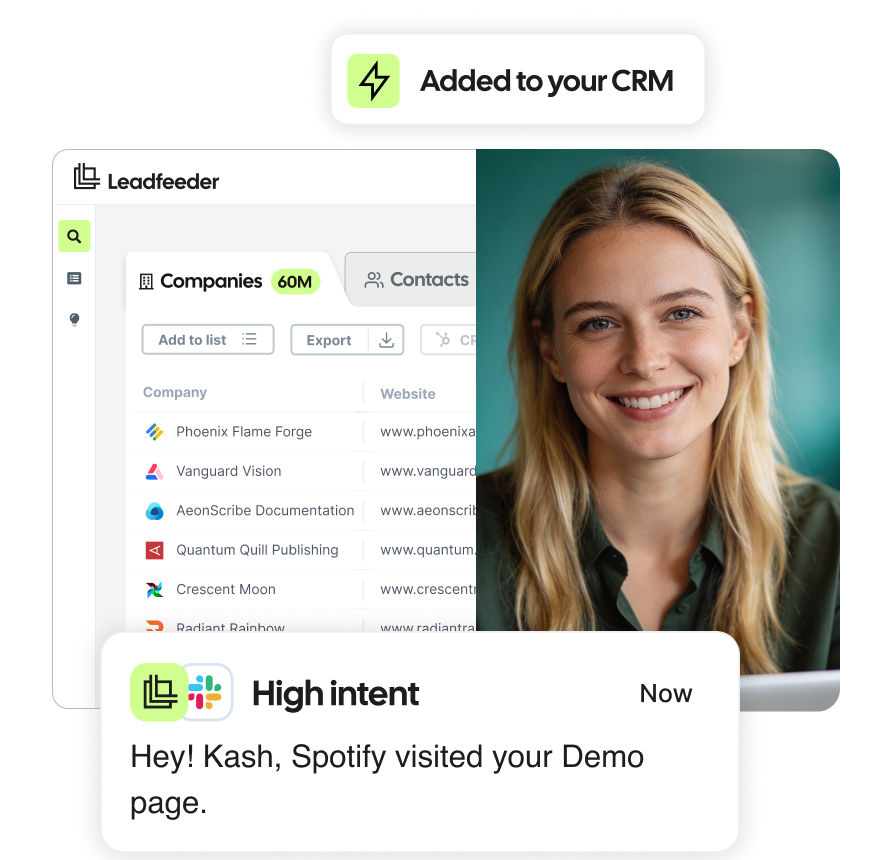
That’s exactly what Leadfeeder helps you do. By identifying website visitors in real time and connecting them to verified company profiles, Leadfeeder turns anonymous traffic into actionable insight. It has extensive European and global data coverage, AI-driven intent analysis, and strict GDPR compliance, ensuring you capture opportunities responsibly, wherever they come from.
Tools like RB2B help you identify anonymous website visitors, but they differ in terms of data coverage, pricing, and compliance.
For marketing and sales teams alike, this means sharper focus and faster results. Instead of chasing cold leads, you can engage the organizations already showing interest to see who your best-fit leads are; the ones already reading your content, comparing solutions, or visiting your pricing page for the third time this week.
Every visitor is a potential story of growth waiting to be told. Leadfeeder helps you see it, understand it, and act on it, transforming digital curiosity into measurable revenue.
Book a demo today to see how Leadfeeder helps you identify, engage, and convert your website visitors.
FAQs about RB2B alternatives
Is RB2B GDPR compliant for European businesses?
RB2B offers limited GDPR compliance compared to European-focused platforms like Leadfeeder, which is built around strict data privacy and transparency standards for European markets.
How long does it take to migrate from RB2B to a new visitor tracking tool?
Most businesses can complete a migration within one to two weeks, including setup, integration testing, and training. The exact timeline will depend on the size of your tech stack and the volume of your data.
Which RB2B alternative provides the best European and EMEA data coverage?
Leadfeeder provides the most comprehensive European data coverage, combining its real-time visitor tracking with a GDPR-compliant European database to help identify and qualify website visitors across all major regions.
Can you run RB2B and another visitor tracking tool at the same time?
Yes. Running RB2B alongside another tracking solution for two to four weeks lets you compare data accuracy, coverage, and intent signals before making a full switch.
What are the key differences between RB2B pricing plans?
RB2B plans differ mainly in data limits and available features. Pricing depends on company size and usage, though many teams find credit-based models less predictable than fixed-rate alternatives like Leadfeeder.
Disclosure: Leadfeeder is a product of Dealfront Group GmbH. This article includes references to third-party products and services. All third-party information reflects publicly available data at the time of writing and may have changed since publication. We recommend verifying details directly with each provider. Trademarks and brand names belong to their respective owners and are used here for identification purposes only.