60-Second Summary
Today’s buyers research more and decide slower, while competition quickly exploits small funnel gaps. Most firms don’t have a lead shortage — they have leaky funnels caused by weak follow-up, poor targeting, confusing messaging, or friction in the buying process.
Key takeaway: Funnel leaks — not a lack of leads — are the primary revenue risk; mapping the full buyer journey and using analytics uncovers exactly where qualified prospects drop off.
Standout strategies & tactics: Map stage-by-stage buyer behavior, use Google Analytics + Tag Manager to spot exits, apply behavioral tools (heatmaps, scroll tracking) to diagnose causes, and target long-tail keywords to attract higher-intent leads.
Real-world lessons & frameworks: Small UX or copy tweaks (clickable pricing, swapping one word) can yield big gains; pair data-driven diagnostics with quick A/B tests and prioritize retention to reduce churn and boost MRR.
*This summary was created with AI assistance, using our original content.
Today’s buyers are harder to convert than ever. They research more, compare more, and take longer to make decisions. At the same time, competition is more aggressive, which means even small gaps in your funnel can send qualified prospects straight to your competitors.
Most companies do not have a lead problem. They have a funnel problem. Leads leak out because of weak follow-ups, poor targeting, confusing messaging, slow sales processes, or friction during the buying journey. The longer those leaks go unnoticed, the more revenue your business loses.
The good news is that funnel leaks can be identified and fixed. With the right strategy, tools, and alignment between marketing and sales, you can reduce drop-offs, improve conversions, and generate more revenue from the leads you already have. In this article, I’ll show you how to find the weak points in your funnel and strengthen them.
Note: Want to create a leak-proof sales funnel that generates high-quality leads? Sign up for free with Leadfeeder's 14-day trial to track the right kind of leads and information for your business.
1. Map out the entire sales cycle
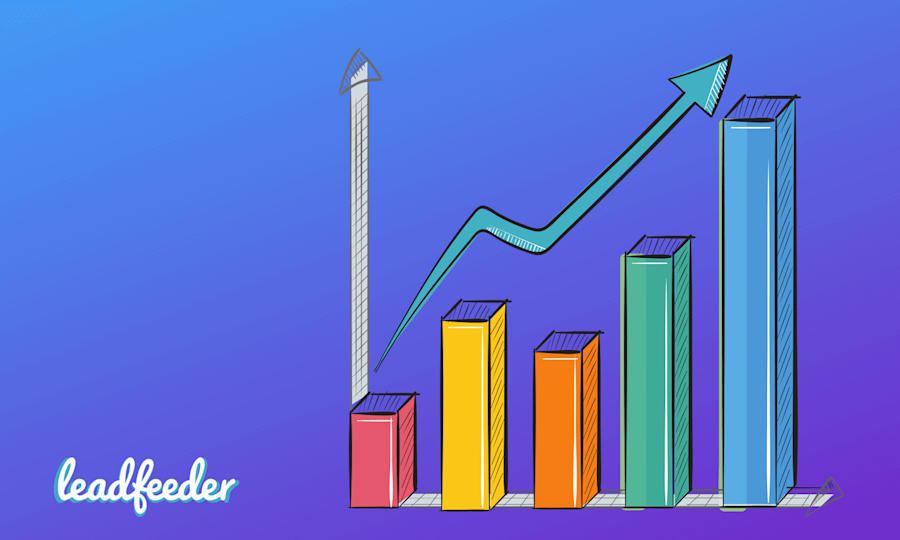
What does it take to convert a lead? Answer this question before you begin searching or even plugging a leaky sales funnel.
You need a detailed breakdown from both your marketing and sales departments that maps the buyer-to-customer journey.
This means conducting a stage-by-stage analysis of the steps a lead takes to become a buyer. Below are the points sales and marketing should consider during each stage.
The Awareness stage: The buyer is aware of the problem or solution they need and begins to learn more about it. At this stage, think about:
Why are they searching for a solution
What strong pain/opportunity is bleeping on their radar
What kind of answers are they looking for right now
How ready are they to buy or move closer to the sale
Interest or consideration stage: The buyer confirms their problem or opportunity. He/she will then start researching and talking to vendors and eventually enter your sales pipeline. At this stage, consider:
Their search criteria when looking for a vendor (this may vary by persona).
How long does it take you to respond to a lead’s inquiry
What messaging resonates best with them based on their needs
Decision stage: The buyer approaches vendors to complete a purchase or to request a quote or proposal before becoming a customer. At this stage, ask yourself:
Have their informational needs changed? There’s a strong chance the information they’re now looking for is less informational and how-to, and more comparison and review-based
What are the biggest barriers to conversion with sales and marketing? (Think about where they slowed down or backtracked during the sales process)
Which competitors have they interacted with before becoming paying customers? (Your CRM data will hold the answers to this question)
2. Use Google Analytics to identify potential leaks
“Data beats opinions.”
Here at Leadfeeder, it’s a phrase we practice and preach. If you’re looking to fix a leaky marketing funnel, you’ll need to do the same.
Start by using Google Analytics to reveal exactly where your leaks are. This is how we’ve identified pages with high interest and high drop-off rates, and plugged leaks to strengthen our sales funnel.
Combine Google Analytics with Tag Manager to identify traffic sources, pinpoint funnel leaks, and improve the customer experience.
For example, after reviewing pages with high:
Exit numbers
Bounce rates
High traffic and low conversions
We found we were leaking leads during the consideration/research stage on our pricing page.
After plugging this leak on our pricing page, we increased conversions by 30 percent and netted an additional $11,000 in monthly recurring revenue (MRR).
3. Diagnose a leaky funnel with behavioral analytics tools
If you’re looking to fix a leaky sales or marketing funnel, behavioral analytics tools are invaluable.
They’ll show you what catches or repels a lead’s attention on the page and how a lead interacts with your site.
If you’re not sure which tools you need to identify leaks in your marketing funnel, stick to the basics. Use heatmaps, scroll/ mouse tracking, and user feedback tools like surveys.
To successfully repair a broken sales funnel, use both web and behavioral analytics tools.
This is because web analytics tools like Google Analytics show you where a leak is in your funnel. Behavioral analytics tools, however, reveal the cause of the leak.
When we plugged the leak on our pricing page, for example, behavioral analytics tools like heatmaps and scroll maps showed where leads were clicking and what we should A/B test.
They wanted to click our pricing plans, but they were unclickable at the time. So we tested out clickable pricing plans.
This boosted conversions and generated an additional $11,000/month.
4. Get higher-quality leads with long-tail keywords
“We’re getting a ton of leads, but they aren’t converting, and barely any are becoming sales qualified.”
If that sounds familiar, your funnel is top-heavy: it’s attracting too many leads in the awareness stage and not enough in the consideration stage. This is where marketing can help support sales with long-tail SEO.
Focusing on long-tail keywords with higher purchase intent means that leads entering the sales funnel are at the interest/decision stage and more likely to buy.
Marketing also wins, because the cumulative effect of ranking for long-tail keywords can skyrocket your organic traffic.
5. Test the small, but significant details
For designer Jared Spool, a massive source of leaked leads was a single button. Which, once removed, generated $15 million in just one month.
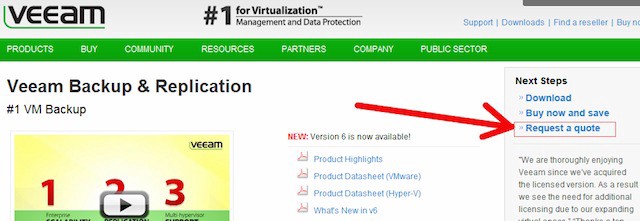
For software company Veeam, this was a single word. Based on user feedback, Veeam realized that most visitors were asking for a price, even though their copy instructed them to “request a quote.”
After replacing the word “quote” with the word that their customers were using, “price”, they increased click-through rates to their pricing page by 161.66 percent. How’s that for a quick fix to plugging a sales funnel leak?
After:
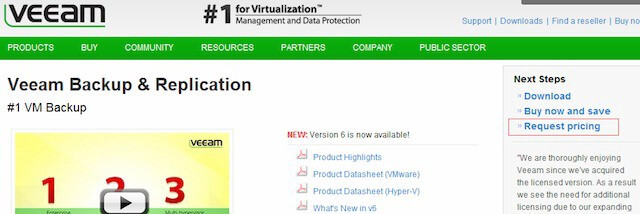
As shown by both case studies above and our own experience here at Leadfeeder, you don’t need grandiose changes or redesigns to fix a leaky sales funnel.
Sometimes the bottleneck is an unassuming technical detail or a small one.
Finally, focus on retention to minimize leaks in your funnel
As Pekka has mentioned in his post about churn, focusing on retention is a key strategy for driving growth.
Leading with retention in mind strengthens every element of your sales and marketing funnel.
It forces you to focus not only on how successful you are at acquiring new customers, but also on your ability to satisfy and keep them.
This increase in satisfied customers results in more positive reviews, sales-ready referrals, and, of course, fewer leaks in your sales funnel.
Note: Want to create a leak-proof sales funnel that generates high-quality leads? Sign up for free with Leadfeeder's 14-day trial to track the right kind of leads and information for your business.