60-Second Summary
Without a clear process, valuable leads often slip through the cracks; a strong lead management process is essential to improve conversion and protect acquisition efforts. Conversations with leaders at Metadata, Socedo, and LeadGenius reveal repeatable practices that strengthen pipelines and align sales and marketing.
Key takeaways: Clear hand-offs, early enrichment and scoring, defined lifecycle stages, and a shared success metric (ideally revenue) prevent lead leakage and raise conversion rates.
Standout strategies & tactics: Real-time enrichment and rapid outreach (e.g., Metadata’s 30-minute call), automated scoring and nurture flows (Marketo), and monitoring social/intent signals to surface leads.
Define lead criteria: Standardize MQL/SQL or equivalent rules (for example, Leadfeeder’s >20 companies rule), enrich with firmographics/tech data, and make stage definitions explicit for routing.
Real-world lessons & frameworks: Assign ownership (sales ops or marketing), ensure cross-system visibility between CRM and MAP, adopt shared revenue goals, and run data-driven experiments to optimize workflows.
*This summary was created with AI assistance, using our original content.
Without a clear process in place, valuable leads often slip through the cracks before sales teams have a chance to engage them properly. That’s why building a strong sales lead management process has become essential for companies looking to improve conversion rates and protect their lead generation efforts.
To better understand what successful teams are doing differently, I spoke with sales and marketing leaders from LeadGenius, Socedo, and Metadata about the lead management strategies they use to create stronger sales pipelines and improve B2B sales and marketing alignment.
A good lead management process includes a warm hand-off to sales
Gil Allouche, CEO at Metadata.io, said they have a process for all inbound leads that includes enriching each lead with demographics, technology stack, and marketing data, sorting them alphabetically, and assigning them to sales development team members.
Receiving leads from marketing that are already enriched can be valuable to sales teams, as they can then be qualified based on additional criteria, such as location or company size. It also helps sales team members frame the outreach conversation.
Regarding Metadata, Gil says that qualified leads receive a phone call from sales within 30 minutes of submitting a form on their website. If there is no response after a series of calls and emails, leads are then placed in an email nurture sequence.
Much of lead management is defining the hand-off to sales. Leads may not enter the sales pipeline right away, depending on how and where they convert.
In the case of Socedo, Aseem Badshah, Founder & CEO, explained that they convert leads from gated content or trial signups. They also generate new leads from monitoring Twitter via their app. Leads from all their marketing sources feed into Marketo, where they can be scored, nurtured, and passed to sales development when the lead is ready for a sales conversation.
Generally, the goal is to qualify leads as much as possible in marketing or marketing operations, thereby improving conversion rates and increasing sales performance.
Define lead criteria
This is an easy one, but it's often overlooked because team members assume there is a ‘good enough’ understanding of lead qualification.
William Wickey, Head of Content & Media Strategy at LeadGenius, says their sales pipeline fits the following workflow:
Pre-Qualified
Prospect
Demo Scheduled
Evaluation
Proposal
Committed
Closed Won
“With this general workflow in mind, lead stage definitions and processes can differ based on company size and product path. Clearly defining lifecycle stage definitions is the key to routing and building good workflows,” said William.
Both sales and marketing teams should have shared definitions of each stage of the sales pipeline.
At Leadfeeder, we don’t have marketing qualified leads (MQLs). In lieu of the consideration-stage lead, we qualify inbound leads based on how many companies we identify on their website when they sign up for Leadfeeder. We then enrich that data to get a customer profile.
For us, any lead with more than 20 companies visiting their website per month is a sales-qualified lead (SQL).
If both sales and marketing teams share a definition of each lead stage, there is no question about the sales pipeline's contribution and expectations. It then makes it easier to know where marketing drops off and sales pick up.
Most organizations will enrich leads to backfill qualitative and quantitative company and contact information. Using tools like FullContact or ReachForce makes it easy to round out a lead profile so sales or marketing can score leads based on more than just conversion activity.
Your B2B lead management process needs an owner
Most of lead management needs to be owned by a department or group of individuals. Usually, the department closest to the customer is best equipped to determine lead management workflows, which are typically done in collaboration with management or the executive team.
In a typical organization, sales or marketing operations ensure visibility into the lead management process flow, which visually communicates the progression of leads through the sales pipeline.
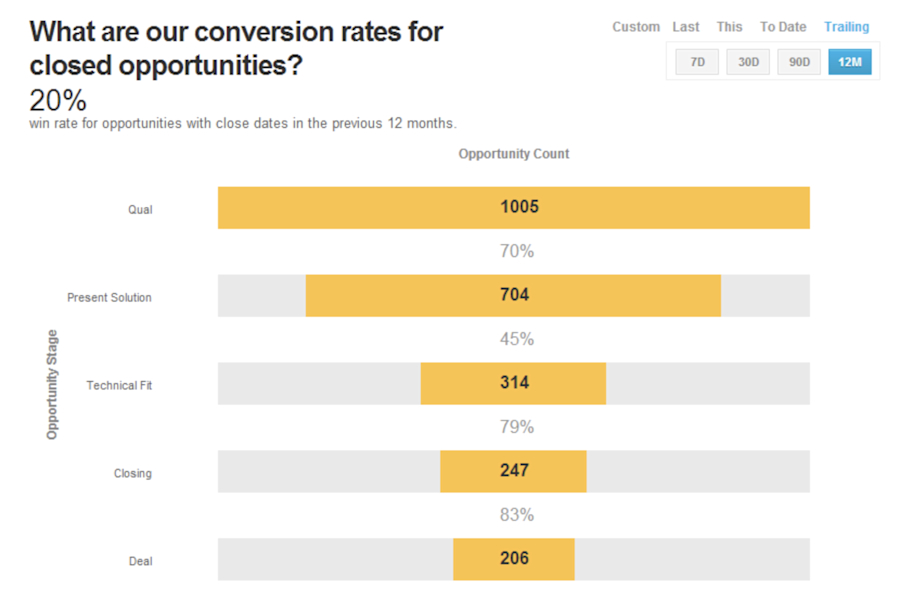
Source: http://www.insightsquared.com/2012/10/introduction-to-sales-funnel-reports/
William at LeadGenius says that sales operations owns lead management because they know what’s effective. For example, if sales development wants to make 120 calls a day rather than send personalized emails, they are given that flexibility.
“Management insists on data-driven decisions and experimentation that prove successful at least 20% of the time,” says William.
For companies focused on generating inbound leads, the marketing department will typically drive lead management initiatives, since it controls lead generation. On the other hand, sales-focused companies will develop a lead management process based on sales tactics, such as email or cold calling.
Sales and marketing tools also introduce a layer of complexity around lead ownership. If sales is working in CRM and marketing is working in a marketing automation tool, there isn’t a ton of visibility into what’s happening in the sales pipeline.
Why should visibility matter if marketing is performing okay and sales are hitting their numbers?
Because usually somewhere along the way, someone in the organization will point out a hiccup, such as the fact that marketing is spending $500,000 a year on Adwords but only seeing a 30% return. Or that sales isn’t contacting every lead that marketing is handing off.
At that point, there is a deeper dive into what’s going on with marketing channel performance, and that’s when having complete alignment of a business goal between teams really matters.
Sales and marketing alignment best practices start with one measure of success
If marketing has a marketing-qualified lead (MQL) goal and sales has a sales lead or revenue goal, there is already bias and inefficiency in lead management. To streamline the lead management process, both teams should align on a single measure of success.
A shared-revenue goal is the only measure of success I have seen work for B2B sales and marketing teams.
If marketing is too focused on rushing the hand-off to fill the top of the sales funnel faster, warm leads “leak out”.
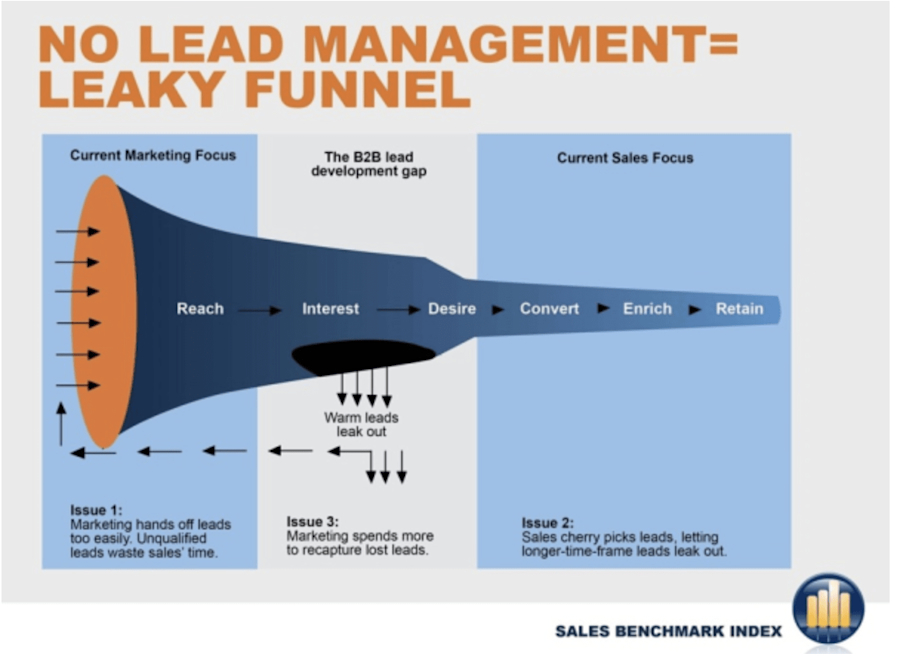
Source: https://salesbenchmarkindex.com/insights/generate-25-of-sales-pipeline-opportunities-from-marketing/
When marketing’s goal is revenue-driven, then they are incentivized to generate qualified sales leads, which in turn keeps their focus on marketing tactics that add new business. Too much focus on lead generation undermines marketing and sales alignment.
To recap, here is how to do sales and marketing alignment with a lead management process, which should include:
A warm hand-off to sales
Defined lead criteria
Ownership
The same measure of success between marketing and sales
With these lead management pillars in place, marketing teams will be more effective at generating leads, and sales teams will be more efficient at driving revenue.