60-Second Summary
B2B buyer intent data reveals which companies are actively researching your solutions, letting sales and marketing target prospects at the moment they’re most likely to buy. Using first‑ and third‑party signals shortens sales cycles, improves lead quality, and increases ROI.
Key takeaways: Intent signals (search, engagement, firmographic, technographic) identify high‑intent accounts so teams can prioritize outreach, personalize messaging, and close deals faster.
Standout strategies & tactics: Combine first‑party data (website, email, CRM) with third‑party providers, time multi‑channel outreach to active signals, align sales and marketing, and embed intent into lead scoring.
Real‑world lessons & frameworks: Prioritize actionable signals, build intent‑driven workflows, run pilots, continuously test and refine campaigns, and foster cross‑functional data sharing to turn intent into pipeline.
Tools & next steps: Evaluate vendors (Leadfeeder, Bombora, KickFire, DemandJump, TechTarget), run a short trial (e.g., Leadfeeder 14‑day), integrate results into your CRM, and measure conversion and sales‑velocity lift.
*This summary was created with AI assistance, using our original content.
Identifying highly qualified leads can be challenging. But imagine having access to buyer intent data that reveals which companies are actively searching for the exact solutions you provide, all based on their online behavior. This data allows you to target prospects at the right moment when they're most likely ready to make a purchase.
Instead of casting a wide net to find potential prospects interested in your offerings, B2B intent data providers directly connect you to companies actively looking to buy, allowing you to target ready-to-purchase businesses more effectively.
Imagine how much more effective your sales and marketing teams could be. That’s exactly what B2B buyer intent data delivers—focused insights that drive better results.
If you want to spend less time on "maybes" and focus more on finding companies ready to buy, B2B buyer intent data is the solution — and it’s incredibly powerful.
Note: Want to see which companies want to purchase solutions you can offer? Try Leadfeeder free for 14 days to uncover prospects using customer data and behavior.
What Is Buyer Intent Data?
B2B buyer intent data is an aggregated set of data showing which companies are active in the buying cycle. But here's the catch: most of the market isn't buying at any given moment. As Andrei Zinkevich, co-founder of Fullfunnel.io, puts it:
"Most of them are not in the market. Even everyone you're talking to today might not be in market to buy an intent data platform or ABM consulting services — a lot of people just want to learn best practices."
That's what makes the companies that are signaling intent so valuable. They’re actively sending out strong signals that they are ready to buy, and soon — and the power of intent data is finding them before your competitors do.
Depending on your B2B intent data provider, those signals might include:
Someone clicks on a social media ad
Several people at a company visit your website
Frequent visits to your website
Length of time on your website
Email newsletter subscriber behavior
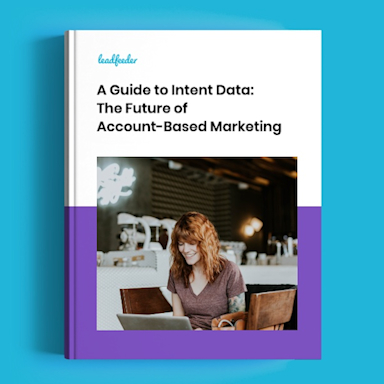
Guide to Intent Data for Marketers
Intent data is the future of ABM! Learn how to use intent signals to engage the right companies and grow your revenue with this guide →
DownloadTypes of Buyer Intent Data
Buyer intent data exists in various forms, offering unique insights into customer behavior and preferences. Understanding these types can help businesses refine their marketing strategies and improve lead targeting. Let’s explore buyer intent data's main categories and applications for driving better results.
1. First-party intent data
First-party intent data is information collected about your audience or customers.
Definition: Data gathered directly from your sources, reflecting the actions and behaviors of your customers and prospects as they interact with your brand.
Sources: Includes metrics from your website (like page views, time spent on pages), email engagement (opens, clicks), CRM data, and customer surveys.
High accuracy: Provides accurate insights into the interests and needs of your audience since it's based on their direct interactions with your content and services.
Privacy-friendly: Generally compliant with privacy regulations, as it involves data that businesses collect from their own users, allowing for greater control over data usage.
Personalized marketing: Enables the development of targeted marketing strategies, helping to tailor content and offers to specific user behaviors and preferences, thereby improving conversion rates.
Known first-party intent data is when visitors leave their information when filling in a web form on your website.
Anonymous first-party intent data is when visitors’ IP addresses are identified and mapped to their company name when they look at your website. You can use Google Analytics to review this.
2. Third-party intent data
Third-party intent data refers to information gathered from external sources that offers a comprehensive view of a buyer's intent. This data can be sourced in various ways, making it crucial to choose reliable providers that are transparent about their data collection methods.
Definition: Data collected by external sources or vendors that track user behavior across various websites and platforms, offering insights into potential buyers' interests and intentions.
Sources: Includes data from a wide range of online activities, such as browsing history, search queries, and engagement with content on third-party websites.
Broader reach: Provides a wider view of buyer intent across different industries and markets, helping businesses identify potential leads they may not have reached otherwise.
Market trends: Offers insights into overall market trends and buyer behavior beyond a company’s audience, enabling better competitive analysis and positioning.
Enhanced targeting: Allows businesses to target ads and marketing efforts based on aggregated data, focusing on prospects actively researching related products or services, thereby increasing the likelihood of conversion.
Known third-party intent data is when visitors leave their information when filling in a web form on a third-party website. Intent data companies then gather this and share it.
Anonymous third-party intent data is when visitors’ IP addresses are identified and mapped to their company name when they look at a third-party website. This is then collected and shared by intent data companies.
4 Types of Buyer Intent Data Sources
1) Search intent data
Search intent data reveals what users are looking for when they enter specific queries into search engines. By analyzing this data, businesses can understand the motivations behind users’ searches—whether they seek information, compare products, or are ready to purchase. This insight enables companies to tailor their content and SEO strategies to align with user intentions, ultimately improving visibility and conversion rates.
2) Engagement data
Engagement data tracks how users interact with a brand’s content across various platforms, including website visits, social media interactions, email opens, and clicks. By analyzing this data, businesses can gain insights into customer interests and behaviors, allowing them to create more relevant and targeted marketing campaigns. High engagement levels often indicate stronger buyer intent, helping companies identify prospects more likely to convert.
3) Firmographic data
Firmographic data refers to the attributes and characteristics of organizations, similar to demographic data for individuals. This includes company size, industry, revenue, location, and number of employees. By leveraging firmographic data, businesses can better target their marketing and sales efforts to specific segments that align with their ideal customer profile, ensuring more effective outreach and higher conversion potential.
4) Technographic data
Technographic data provides insights into the technology stack and tools companies use, including software, hardware, and IT infrastructure. This information helps businesses understand the technological environment of their prospects, allowing for more tailored marketing strategies. By knowing which technologies a target company uses, organizations can position their solutions as compatible or complementary, increasing the likelihood of successful engagement and conversion.
Summary of Buyer Intent Data Sources
Benefits of Buyer Intent Data
By understanding the behaviors and interests of potential customers, buyer intent data helps businesses unlock numerous benefits that lead to more effective targeting, improved lead quality, and, ultimately, increased conversions.
Improved targeting: Buyer intent data allows businesses to identify and focus on prospects actively researching or showing interest in their products or services, enabling more effective marketing campaigns.
Enhanced lead quality: By understanding buyer intent, companies can prioritize high-quality leads more likely to convert, optimizing their sales efforts and increasing conversion rates.
Personalized marketing: Buyer intent data provides insights into customer preferences and behaviors, allowing businesses to tailor their messaging and offers to meet specific needs, which enhances customer engagement.
Shortened sales cycle: By identifying prospects who are further along in their buying journey, businesses can engage them at the right time, leading to quicker conversions and a more efficient sales process.
Competitive advantage: Access to buyer intent data can give companies insights into market trends and competitor activities, enabling them to adapt their strategies and stay ahead in the competitive landscape.
Informed decision-making: Analyzing buyer intent data helps businesses make data-driven decisions regarding product development, marketing strategies, and resource allocation, improving overall effectiveness.
Increased ROI: With better targeting and higher-quality leads, businesses can achieve a greater return on investment (ROI) from their marketing and sales efforts as resources are allocated more efficiently.
Enhanced customer insights: Buyer intent data provides a deeper understanding of customer motivations and preferences, helping businesses refine their offerings and improve customer satisfaction.
How to Boost Marketing and Sales with B2B Buyer Intent Data
Buyer intent data provides a competitive advantage by enhancing your market awareness and offering valuable context for cold calls. Look at some use cases for leveraging intent data in sales and marketing.
For B2B sales teams
Driving sales with buyer intent data involves leveraging customer behavior and preferences insights to enhance your sales strategies. Here’s how to effectively use buyer intent data to increase sales:
1) Identify high-intent leads
Use buyer intent data to pinpoint prospects actively researching your products or services. Focus your sales efforts on these high-intent leads to maximize conversion potential.
2) Optimize content strategy
Analyze the types of content that attract your target audience based on intent data. Create and promote content that addresses their pain points and questions, positioning your brand as a valuable resource during their buying journey.
3) Timely outreach
Use insights from buyer intent data to time your outreach effectively. Engage with prospects when they show interest, whether through follow-up emails, calls, or targeted ads, to increase the chances of conversion.
4) Align sales and marketing
Ensure your sales and marketing teams are aligned in utilizing buyer intent data. Regularly share insights and feedback to create a cohesive approach that maximizes the impact of your efforts.
5) Leverage multi-channel strategies
Utilize buyer intent data across multiple channels, such as email, social media, and paid advertising. This ensures consistent messaging and allows you to engage with prospects wherever they are most active.
6) Monitor and adjust
Continuously track the performance of your campaigns based on buyer intent data. Use analytics to refine your strategies, improve targeting, and make informed decisions that enhance sales outcomes.
7) Implement lead scoring
Integrate buyer intent data into your lead scoring system to prioritize leads based on their conversion likelihood. This helps your sales team focus on the most promising opportunities.
For B2B marketing teams
Driving marketing with buyer intent data involves leveraging customer behavior and preferences insights to create targeted, effective campaigns. Here’s how to use buyer intent data to enhance your marketing strategies:
1) Segment your audience
Use buyer intent data to segment your audience based on their interests, behaviors, and stages in the buying journey. This allows you to tailor your marketing messages to specific groups, making them more relevant and engaging.
2) Create targeted content
Analyze the content that resonates with your audience based on their intent signals. Develop and distribute targeted content that addresses their needs, pain points, and interests to capture their attention and drive engagement.
3) Optimize campaign timing
Leverage buyer intent data to time your marketing campaigns effectively. By understanding when prospects are most interested, you can launch campaigns that coincide with their research and decision-making phases, increasing the likelihood of conversion.
4) Personalize marketing messages
Tailor your messaging using insights gained from buyer intent data. Personalized emails, ads, and landing pages that speak directly to the interests and needs of your prospects can significantly improve engagement rates.
5) Use multi-channel strategies
Implement buyer intent data across various marketing channels, including email, social media, content marketing, and paid advertising. This multi-channel approach ensures consistent messaging and allows you to reach prospects wherever they are most active.
6) Monitor engagement metrics
Using buyer intent data, track how your audience interacts with your content and campaigns. Analyze engagement metrics to identify what works, allowing you to refine your strategies and improve future campaigns.
7) Use lead scoring
Incorporate buyer intent data into your lead scoring system to prioritize leads according to their conversion potential. This approach lets you concentrate your marketing efforts on the most promising prospects.
8) Test and iterate
Continuously test different marketing strategies based on buyer intent data insights. Experiment with various approaches, messages, and content types, and adjust your tactics based on what yields the best results.
Where to Get the Data: 5 Best Buyer Intent Data Tools of 2026
Buyer intent data is powerful — that much is clear.
But where do you get all this data?
As it turns out, there are a handful of buyer intent tools on the market designed to give businesses access to more of the data they crave — so which one is right for you?
Below, we'll review five of the best buyer intent data tools — so you can make an informed buying decision.
1. Leadfeeder
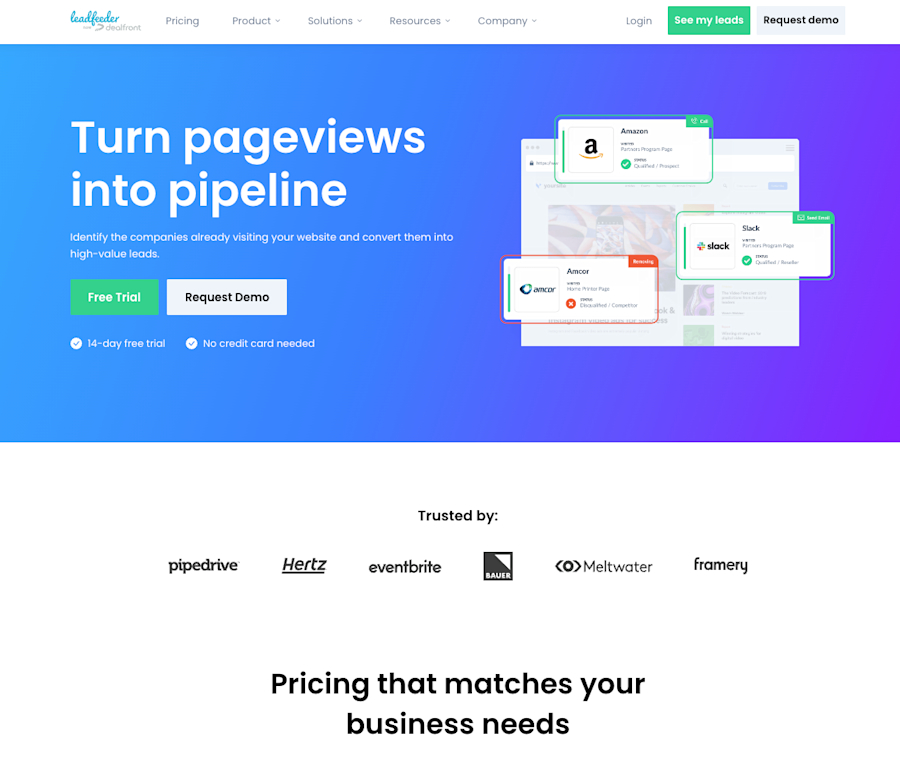
Price: Free version or paid version for $139 a month.
Rating: 4.3 stars on G2
Leadfeeder is a B2B buyer intent data tool that tells you what companies visit your website — and what they do when they get there.
It features a wide range of filters (both basic and customizable) that allow users to sort companies based on location, behavior, company demographics, etc.

Leadfeeder for Marketing
Identify which campaigns drive your highest-intent visitors, see which companies they come from, and build audiences for retargeting, all from one platform..
DownloadLeadfeeder also integrates with many other tools, including CRMs, Zapier, and email marketing tools. These integrations help provide an overview of your sales and marketing efforts across all platforms.
Final Verdict: Provides access to data you can't get anywhere else, intuitive to use, with a responsive support team.
Experience a free 14-day trial with Leadfeeder with these easy steps:
Step 1: Click the link and sign up.
Step 2: Install the Leadfeeder Tracker script on your website.
Step 3: Start seeing identified companies in your dashboard.
Step 4: Voila! You're done!
2. Bombora
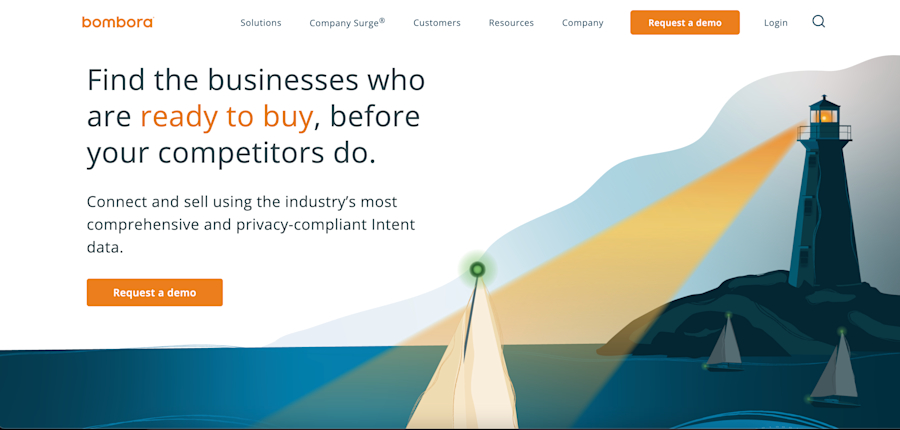
Pricing: Upon request.
Rating: 4.4 stars on G2
Bombora provides B2B intent data by tracking online behavior and signals from various sources to identify companies actively researching specific topics or products. It offers insights into intent data through its Company Surge® platform.
3. KickFire
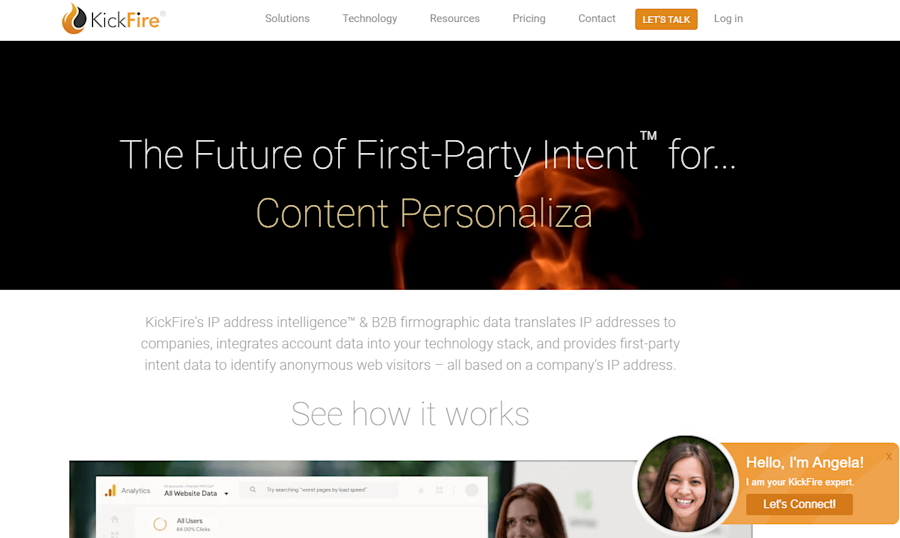
Price: Contact for pricing; based on volume and use case.
Rating: 4.0 out of 5 stars
KickFire provides businesses with access to first-party intent data by helping identify anonymous website visitors through IP addresses. Sales and marketing can use this data to provide personalized content and improve sales outreach.
There are several different versions of the tool, including LIVE Leads and KickFire for Google, which integrate with Google Marketing.
Final Verdict: KickFire provides a ton of data, but there are multiple tools, and learning how to use them can be challenging.
4. DemandJump
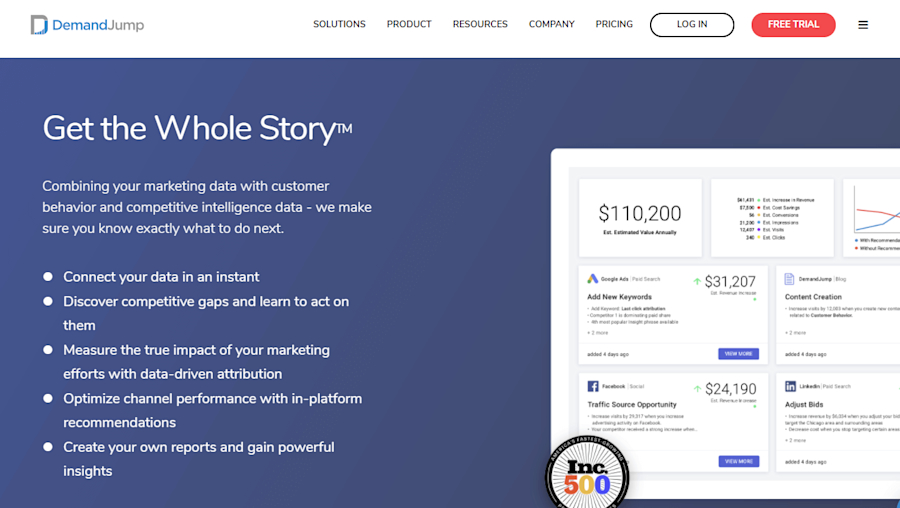
Price: Starts at $99 per month for 25 keywords and up to 3 competitors
Rating: 4.7 out of 5 stars
DemandJump is a sales and marketing tool that claims to remove blindspots by showing more of the customer journey and helping analyze your brand's competitors. You can see what prospects are doing on the web — including which websites they visit and what terms they search.
DemandJump also looks at what your competition ranks for, what type of content they publish, and the ads they are using to drive traffic.
Final Verdict: Incredibly useful information, but the cost can quickly add up if you want to track many key terms or competitors.
5. TechTarget Priority Engine
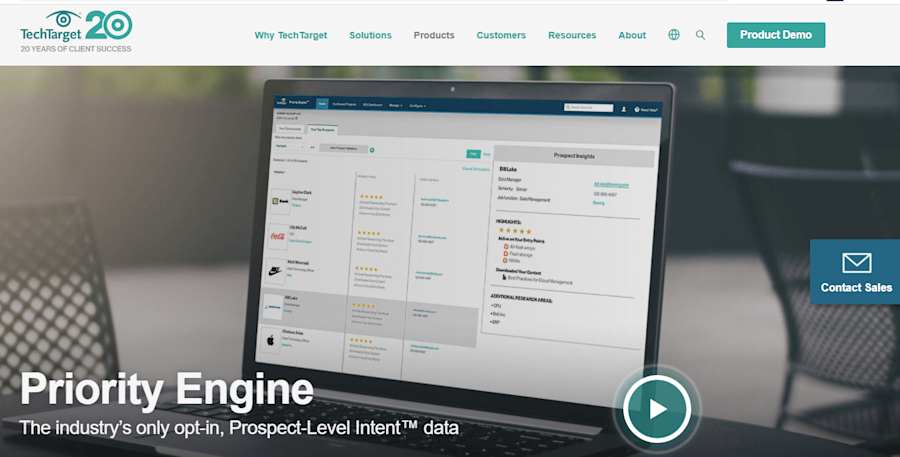
Price: None listed; call for a quote.
Rating: 4.2 out of five stars
TechTarget's Priority Engine gives businesses real-time access to leads ranked by their purchase intent and engagement level. Companies can use this information to improve their ABM strategies, refine their sales outreach, and generate more leads.
The tool shares what topics prospects are interested in, how recently they engaged with related content, and what technology they use. Priority Engine also provides contact information for leads when it's available.
Final Verdict: Powerful, but difficult to use and likely pricey. Many customers report difficulty determining what information contacts engaged with and when they engaged with it.
Guide to Intent Data for Marketers
Intent data is the future of ABM! Learn how to use intent signals to engage the right companies and grow your revenue with this guide →
DownloadBest Practices for Implementing Buyer Intent Data into Your B2B Sales Strategy
Let’s outline the key steps for effectively implementing buyer intent data in your sales strategy.
Assess your current data sources: Begin by evaluating your existing data sources to understand what information you currently have and how it contributes to your sales efforts. Identify gaps in your data collection and determine which sources provide the most valuable insights. This assessment will help you pinpoint improvement areas and leverage the most relevant and accurate data to inform your buyer intent strategy.
Invest in the right tools and technologies: To effectively utilize buyer intent data, it’s essential to invest in the right tools and technologies. Look for platforms that specialize in collecting and analyzing intent data and CRM systems that can integrate seamlessly with these tools. By selecting technologies that align with your sales objectives, you can enhance data visibility, streamline processes, and improve overall efficiency in your sales strategy.
Establish cross-functional collaboration: Implementing buyer intent data requires collaboration between sales, marketing, and data analytics teams. Foster an environment where these departments communicate regularly to share insights and align on goals. This cross-functional collaboration ensures that everyone is on the same page regarding buyer intent, leading to more cohesive strategies and a better understanding of customer needs across the organization.
Develop a comprehensive data strategy: Craft a comprehensive data strategy that outlines how your organization will collect, analyze, and utilize buyer intent data. This strategy should include specific goals, key performance indicators (KPIs), and a timeline for implementation. By having a clear roadmap, you can ensure that all teams are aligned and working toward a common objective, ultimately maximizing the effectiveness of your buyer intent initiatives.
Implement buyer intent-driven workflows: Once you have your data strategy, create workflows driven by buyer intent insights. These workflows should guide your sales team in targeting high-intent leads with personalized outreach and tailored messaging. Integrating buyer intent into your sales processes can enhance lead engagement, improve conversion rates, and drive more successful outcomes for your B2B sales strategy.
Revolutionize your B2B strategies with the best buyer intent data providers
B2B intent data providers help sales and marketing teams identify and gain deeper insights into their most valuable leads. This powerful data can shorten the B2B sales funnel and enable brands to focus their efforts where they’ll have the greatest impact.
If your business wants to stay ahead of the competition, explore one of the B2B buyer intent data tools mentioned above.
Note: Want to see which companies are looking to purchase solutions you can offer? Try Leadfeeder free for 14 days to uncover prospects using customer data and behavior.
FAQs about Buyer Intent Data
1. What is buyer intent?
Buyer intent refers to the signals indicating a potential customer's active interest in a product or service, often derived from their online behavior, such as searches and website visits. Analyzing this data helps businesses identify prospects who are more likely to purchase, enabling more effective targeting at the right time.
2. What is an example of intent data?
An example of intent data is tracking a potential customer's online behavior, such as frequent visits to a specific product page on an e-commerce site, downloading product brochures, or searching for related keywords like "best software for project management." These actions signal that the individual is actively researching and likely considering a purchase, making them a strong candidate for targeted marketing efforts.
3. What is buyer intent software?
Buyer intent data software analyzes online behavior to identify potential customers interested in a product or service. Tracking activities like website visits and search queries provides insights that help businesses target their marketing efforts effectively and optimize sales strategies.
4. Where can I find buyer intent data?
You can find buyer intent data from several reliable sources, including specialized intent data providers like Leadfeeder, Bombora, G2, and ZoomInfo, which track online behavior signals from potential buyers. Leadfeeder identifies companies visiting your website, allowing you to engage with leads who are actively interested in your offerings.
5. How is buyer intent data collected?
Buyer intent data is collected by tracking and analyzing the online behaviors of potential customers. This includes monitoring web activity such as pages visited, content downloaded, and search queries. To build comprehensive user intent profiles, data providers aggregate information from various sources, including cookies, social media interactions, and third-party analytics tools.
First-party data collected from customer interactions, like forms and surveys, further enhances insights into buyer intent, helping businesses understand potential buyers' interests and readiness to purchase.