



A lead magnet is a valuable piece of content you offer in exchange for a prospect’s contact information. It is one of the most effective ways to turn website visitors into qualified leads and kickstart your demand generation strategy.
To work, a lead magnet must be high quality, relevant, and specific to your target audience. It needs to offer real value so that sharing contact details feels like a fair exchange. When done right, it does more than collect emails. It builds genuine interest and positions your product or solution as the natural next step.
This guide will show you how to create one and what makes a lead magnet truly effective, so you can consistently attract and convert high-quality leads for your business.
Step 1: Acknowledge your customers’ pain points
As we mentioned earlier, lead magnets should solve specific problems. Therefore, the first step is to identify what problems or pain points your target audience may be having.
Here are several approaches you can take to gather information on your customers’ pain points:
Talk to sales: Engage your sales team to get firsthand insights into the challenges and pain points customers frequently encounter. These interactions can provide valuable insights into the specific pain points your lead magnet should address.
Talk to customer service: Customer service representatives interact with a diverse customer base and receive all manner of questions and complaints. As such, they may have the insights you need on customers' pain points.
Gather data from the platform: Analyze data from your platform or analytics tools to identify the most frequently used features. Then, examine the problems or pain points these features aim to solve.
Use the steps above to develop lead magnets that directly address the main points. Once you’ve done that, A/B test the different lead magnets to optimize their effectiveness.
Step 2: Establish your targeting goals
Before creating a lead magnet, set specific objectives regarding the audience you want to reach and engage. This entails determining the specific audience segments that will benefit the most from your lead magnets. For example, consider the different stages of the buyer's journey (awareness, consideration, decision) to determine the type of lead magnet needed to meet your audience's needs at each stage.
Other types of targeting goals to consider include:
Behavior-based targeting: Analyze your target audience's online behaviors and actions, such as website visits or engagement with specific channels, to create a lead magnet that aligns with them.
Demographic targeting: Identify the specific demographics, such as age, location, gender, or occupation, of your ideal customers. This way, you can develop a targeted lead magnet that addresses your users' needs.
Interest-based targeting: Focus on the passions, hobbies, and activities that ignite interest within your audience. Social media is a great place for this because you’ll see the kinds of things someone posts about regularly. This allows you to create a lead magnet that captures their attention and deeply resonates with them.
Step 3: Create and design the content
Create content around the three or so pillar points that you’ve established. Whether it’s eBooks, whitepapers, videos, or webinars, your content should deliver actionable value and fulfill your lead magnet’s promise.
To build trust in your business, ensure your content is accurate and back it up with facts and data. You can even include case studies for further credibility. And instead of merely talking about your product or service, focus on showing how it can solve your audience's needs. Show, not tell.
In addition to building content around your pillar points, you can repurpose your existing blog posts. However, make sure the content is clearly different, as Google doesn’t like exact duplicate content. Use the information on your blog to create something unique that offers value.
Also, use tools like SEMrush and Clearscope for keyword and structural research to set your blog posts up for success.
Lastly, create enticing content that people want to read to encourage more opt-ins. Very few people will subscribe to your content if they can get what you offer from countless other sources with a simple Google search.
For example, if you’re a SaaS company offering a software tool that helps service providers maximize their productivity, offering a generic checklist titled "Basic Tips for Productivity Improvement" may not cut it. Service providers are already aware of this, and you need to offer different types of lead magnets to deliver significant value.
A more enticing lead magnet, in this case, would be a comprehensive industry report titled "The State of Productivity in Service Provider Operations: Key Trends and Strategies.” This report offers unique information that service providers may not easily find elsewhere, thereby differentiating your offering from competitors.
It also provides valuable data, trends, and strategies that service providers can leverage to enhance their operations; hence, it's more likely to appeal to them.
Step 4: Build a conversion funnel
Leads don’t just magically appear out of thin air. They need to be carefully nurtured and guided through a well-crafted tunnel.
During this process, you need to strategically raise awareness of your brand, pique people's interest in your offering, and build trust before they respond to your lead-generation efforts.
Here are the five stages of the conversion funnel:
1. Awareness stage
This is the discovery stage. You need people to be aware of your brand, products, or services. Create informative and visually appealing lead magnets to capture potential buyers' attention.
You can increase your chances of being discovered by potential leads through various approaches. This can include things like running targeted ads on your social media platforms or implementing SEO strategies to optimize your website and content for relevant keywords.
2. Interest stage
Now that you have your prospect's attention, you need to maintain their interest in your brand by demonstrating that you can offer value.
Create valuable content through blog posts, webinars, videos, or any other channel that seems fit for your prospects to position yourself as a leader in your field.
3. Consideration stage
Your audience has a specific pain point—show them how your product or solution can address that pain point.
For example, you can share case studies, testimonials, or success stories to showcase the benefits and results achieved by previous clients.
4. Decision stage
In this stage, you need to convince the prospect that your product or solution can deliver what it promises, so they can make up their mind to buy.
You can provide clear call-to-action (CTAs) that prompt them to take the desired action, whether that's scheduling a consultation or making a purchase. Another way to do this is to send them automated follow-up emails or retargeting ads to remind them of their interest and encourage them to complete the purchase.
5. Conversion stage
By now, the prospect is convinced of what you are offering, so go ahead and close the sale. Be sure to provide exceptional customer support throughout the sale and promptly address any questions or concerns to ensure a seamless process.
After the sale, you can request feedback or reviews from satisfied customers to build social proof and credibility.
Step 5: Set reminders to optimize
After creating the lead magnet and sending it to the world, you can sit back, relax, and watch those sales pour in effortlessly, right?
Wrong!
Creating a lead magnet is just the beginning; continuous optimization is necessary to maximize its effectiveness. Set up reminders to analyze user feedback, scrutinize performance metrics, and make data-driven tweaks. You’ll discover new opportunities to give your lead magnet that extra oomph, increasing your chances of getting more conversions.
What is a lead magnet?
A lead magnet is a marketing term for a service that compels potential customers or viewers of your content to opt in and exchange their contact information for a resource. Marketing teams use lead magnets to generate sales leads.
What is a lead magnet funnel?
A lead magnet funnel, or lead generation funnel, is a strategic pathway that turns potential customers into leads by enticing them to provide their contact details. These funnels are important for enhancing the overall value proposition offered to your target audience and are powerful tools for collecting contact information from potential leads.
This information, especially email addresses, can be used to build relationships with these leads, possibly leading to conversions into paying clients.
By placing a clear, compelling, problem-focused lead magnet at the top of your sales funnel, you not only establish authority and rapport with your audience but also accelerate lead progression through your funnel, keeping cold prospects to a minimum.
What is a lead magnet landing page?
If a lead magnet, such as an eBook or free product, acts as a tool that attracts and draws leads to your business, what is a lead magnet landing page? Well, a lead magnet landing page is the webpage where your customer arrives and provides their email address in exchange for your lead magnet.
For instance, the landing page will feature an engaging headline, while the lead magnet will entice visitors with a message such as "Enter your email to receive your free eBook." Essentially, the lead magnet functions as a magnet that pulls individuals into your sales funnel. People usually find your lead magnet landing page by clicking an ad or another piece of promotional content.
Top-tier lead magnet landing pages play a crucial role in:
Elevating brand recognition and visibility
Showcasing your SaaS company's offerings
Drawing in more customers by providing visitors with a branded resource that is both informative and valuable
Why are lead magnets important?
So, what are lead magnets actually useful for?
First and foremost, lead magnets can help boost your sales.
By attracting prospects who are genuinely interested in your product or service, you are more likely to convert them into sales.
Lead magnet creation involves researching the needs and pain points your ideal customers face. Your sales team can use this information to personalize their approach and then tailor their messaging to resonate with each lead. This increases their chances of closing more sales.
Besides, lead magnets are crucial for building email lists. An email list lets you nurture leads throughout the buyer's journey and build relationships that drive more conversions. You can read more about business leads in our article for a deeper understanding of email lists.
Pros of lead magnets
Lead magnets are a great way to grow your business through lead generation. Let’s look at the advantages they offer.
Lead generation: Lead magnets are effective tools for capturing contact information and generating leads.
Audience engagement: They provide value to your audience, encouraging them to engage with your brand.
Building trust: Offering valuable content through lead magnets can help build trust with potential customers.
Segmentation: Lead magnets can help segment your audience based on their interests and preferences.
Conversion: They can increase conversion rates by guiding prospects through the sales funnel.
Data collection: Lead magnets enable you to collect valuable data about your audience, which can inform your marketing strategies.
Cons of lead magnets
Although lead magnets offer many benefits, it's essential to weigh the drawbacks before committing any resources to their creation. Be aware of potential disadvantages so you can decide for yourself whether lead magnets are right for your business.
Resource-intensive: Creating high-quality lead magnets requires time, effort, and sometimes financial investment.
Competition: With the prevalence of lead magnets, standing out from the competition can be challenging.
Relevance: Lead magnets must be relevant and valuable to your target audience to be effective.
Conversion barriers: Some visitors may be hesitant to share their contact information, resulting in lower conversion rates.
Maintenance: Lead magnets need to be regularly updated and maintained to remain effective.
Overwhelming: Offering too many lead magnets or overwhelming visitors with options can lead to decision paralysis.
Types of lead magnets
Let’s take a look at the different types of lead magnets most commonly used by businesses.
Interactive: Interactive lead magnets are engaging resources that actively involve your audience.
Written: Written content, such as ebooks and guides, caters well to individuals who enjoy reading and writing.
Videos: Video content is great for educating your audience using both auditory and visual elements.
Free access: Offering free access to a product or service is a commonly used lead magnet strategy, especially among SaaS providers. It allows people to get a taste of your product firsthand before making a purchase commitment, boosting their trust in your brand.
Monetary: Monetary incentives can be effective for e-commerce platforms specializing in product sales. But it's important these incentives strike a balance: they should boost customer engagement without significantly affecting profit margins or boring potential buyers.
What makes a good lead magnet?
Lead magnets vary in their effectiveness and impact. While it may be tempting to hastily assemble a checklist or some reading materials that you can offer to prospects, the anticipated results might fall short of expectations. Investing time and effort to create a genuinely valuable lead magnet for your audience is a no-brainer.
Here are some of the critical elements that a good lead magnet should possess:
1. Be relevant
If you're a B2B software provider, offering a free gardening guide may not be the best lead magnet example. Why? Your target audience is primarily interested in software solutions, not gardening tips. Besides, someone who downloads a gardening guide is unlikely to have an immediate interest in or need for B2B software.
The lead magnets you offer should serve as a bridge to your paid products. They should give your audience a glimpse of the value you provide so they are more inclined to purchase when you eventually present your higher-priced offerings.
The more relevant the lead magnet is to your audience or industry, the better. While choosing a broader topic might attract more contacts, it may not guarantee high-quality leads who are genuinely interested in your specific product or service.
2. Offer a specific solution
Closely related to relevance, a lead magnet should provide a specific solution to a problem the target audience faces. One mistake marketers make is trying to solve too many problems at once with their lead magnets. It's better to promise one thing and deliver big on it than make many promises and fall short on all of them.
Put yourself in your target audience's shoes. What are some of the biggest issues they are facing? Once you've done that, create a lead magnet that addresses one of these challenges.
If you have several Ideal Customer Profiles (ICPs), you can create multiple lead magnets addressing your audience's different challenges. But even then, let each lead magnet solve a specific problem.
3. Provide value
While it may seem obvious, it's surprising how many lead magnets fail to deliver value. Ask yourself: Why would someone want to give you their email address if they aren't getting anything valuable in return?
To capture as many leads as possible, your lead magnet should offer high perceived value to the point that people are willing and ready to go through the necessary steps to obtain it. And once they've got it, you are responsible for delivering on your promise.
In today’s competitive market, simply asking people to join your email list for free updates won’t cut it.
You need to offer something substantial.
Instead of enticing your audience with free updates, it's better to offer a free trial of your product or service. At Leadfeeder, this is one of the strategies we use to get high-quality leads.
4. Create a desire for more
The fact that we’ve said you should offer value doesn’t mean you should create a lead magnet that completely solves your audience's needs. If you do that, they won’t need your paid product or service. The purpose of the lead magnet is to get them sucked in so they can purchase your other paid offerings down the funnel.
Strive to find a perfect balance between offering value and not giving it away for free. For example, if you are offering an eBook as a lead magnet, you can mention that it only scratches the surface of the topic. Readers can enroll in your premium online course to dive deeper and access more in-depth strategies and techniques.
5. Don’t ignore the design
While the main focus should be on the content, the visual presentation of your lead magnet matters as well. Just imagine getting a free ebook promising valuable marketing insights, only to find that, as you open it, the pages are cluttered with unorganized text, mismatched fonts, and low-resolution images. Chances are you wouldn't engage with the material, and you'd also lose trust in the lead magnet creator. The same case applies to your audience.
A lead magnet generator can help you incorporate your brand colors, fonts, and style into the design. The result should be visually appealing to capture and retain the audience's attention. Just don't pay too much attention to the design. Remember that content is king. Remember, you need both substance and aesthetics.
Top lead magnet examples for inspiration
Now that you know how to make a lead magnet, let’s explore some of the top examples of lead magnets to give you some inspiration.
1. Leadfeeder’s blog lead magnets
Our article titled “61 Lead Generation Tools & Software We Love for 2024" on the Leadfeeder blog uses two guides as lead magnets to capture leads. The first guide is titled "A Complete Guide to B2B Lead Generation,” while the second one is titled “A Guide to Using Leadfeeder for Marketing.”
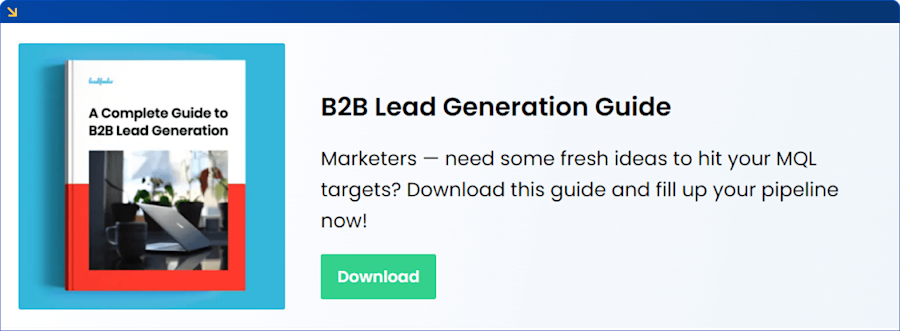
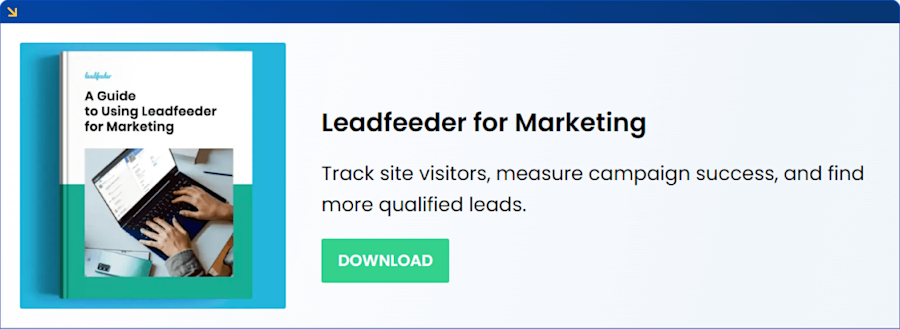
To access the full guides, readers must fill out a form, thus giving the Leadfeeder team their contact information.
2. The Semrush Academy
On Semrush Academy’s home page, you’ll find an invitation to learn a course for free from various industry experts and get a certification that can enhance your career.

To get started on these courses, you need to create a Semrush account, which requires your email address.
3. Search Engine Journal’s free ebooks
Search Engine Journal has a library offering lead magnets in the form of free ebooks. These ebooks cover a wide range of topics, including PPC, SEO, and content marketing.
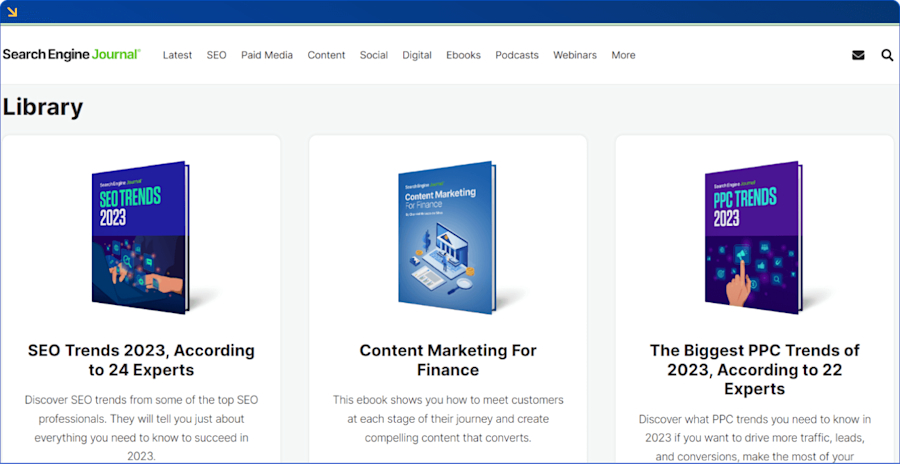
To download these ebooks, you need to provide your contact details, including your name, work email address, work phone number, job title, company name, company size, and website URL.
4. Justinmind’s free tool
Justinmind offers a free design and prototyping tool as a lead magnet for its target audience.
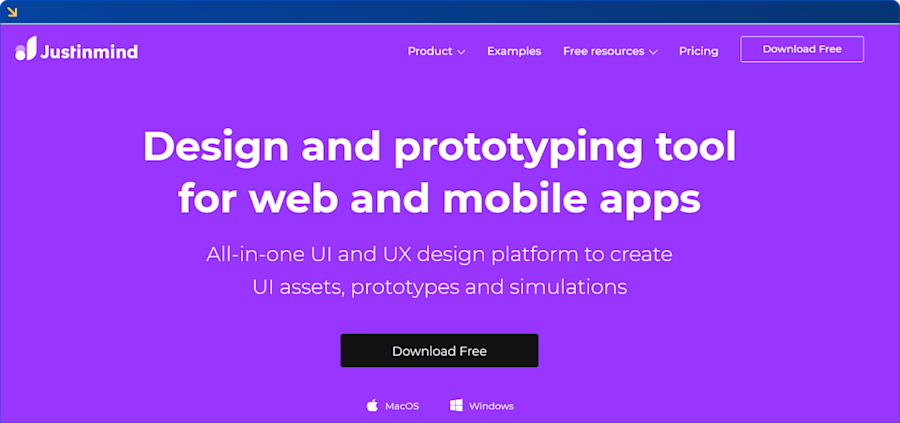
Users who install this platform get a valuable tool to create UI assets, prototypes, and simulations, while the company collects their email addresses. It’s a win-win.
Template-based lead magnets
Offering a template is one of the most popular ways to get someone’s email address. In today’s busy world, many people are looking for ways to avoid creating documents or completing activities from scratch, and lead magnet tools that offer templates are helpful.
You can create a template for almost anything, depending on your audience's needs.
On HubSpot’s blog post titled, “What is a Lead Magnet? 20 Lead Magnet Ideas and Examples [ + Step-by-Step],” there is a lead magnet at the bottom of the page providing 150+ content creation templates. Here is a screenshot of that lead magnet:
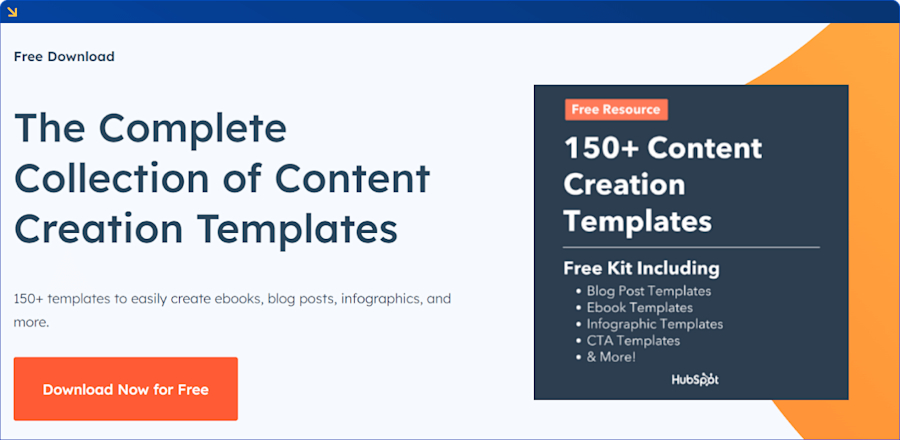
To download this lead magnet, you’ll need to complete four steps as shown below:
Step 1: Provide your name.
Step 2: Provide your email address and phone number.
Step 3: Provide your website URL and company name.
Step 4: Indicate how many employees are in your company.
15 powerful lead magnet ideas
Keen to develop some lead magnets for your business? Here are 15 lead magnet examples you can try.
1. Free ebook
Free ebooks are one of the most popular lead magnets out there, and this isn’t by mistake. Over 55% of small businesses say ebooks have the highest conversion rate of all short-form written content.
Users looking to get a deeper understanding of a topic or solution tend to love ebooks, as they offer more depth than typical blog posts.
You don’t have to write fresh content for an ebook. You can compile your most impactful blog posts on a related topic into an ebook format and then add a new introduction and conclusion.
2. Tools
Giving out a free tool as a lead magnet may seem like a disadvantage for the provider, but it's not.
Think about it. What better way to demonstrate the usefulness of your products to prospects than offering them a taste of your offering for free?
If the tool can help them solve a problem or simplify a complex task, you can be sure they will stick around for a long time, allowing you to introduce your other paid offerings.
3. Freebie
Everybody loves freebies! Offer something of value to your audience, such as a free sample, trial, or limited version of your product.
By giving them a taste of what you offer, you can create excitement, build trust, and increase the likelihood of conversion. Just ensure the freebie showcases the best features and provides a positive user experience.
4. Online course
Online courses are self-paced educational programs delivered through a video-sharing platform or learning management system. If done well, online courses can position you as an authority in your field and help you nurture long-term engagement with your audience.
However, unlike other lead magnets in this list, online courses can take time to create. You'll also need to invest in scriptwriting, recording, and editing tools to create video content.
5. Internal expert advice
Leverage the expertise within your organization by providing exclusive advice and insights from your internal experts. This could take the form of Q&A sessions, expert interviews, or downloadable guides that demonstrate your team's industry knowledge.
6. Free guide
Sometimes, coming up with original content is hard. This is especially true if you're in a well-established industry. So, what do you do?
You produce an ultimate guide that exhaustively covers an existing topic. Instead of visiting different websites to learn how to solve a problem, readers can rely on your guide to learn everything they need to know.
7. Webinars
Webinars are great lead magnets for several reasons. If you are hosting the webinar, you can connect with potential leads and build rapport right away.
Also, webinars only occur at specific times, so you can leverage FOMO (fear of missing out) to generate a ton of emails. And if you want, you can record the webinar session and use it to deliver leads for months or even years to come.
8. Cheat sheets
If your audience engages in repetitive or complex work, you can offer a cheat sheet with valuable tips, shortcuts, or step-by-step instructions to make their work easier. And who doesn't love that?
9. Worksheet
A worksheet or workbook offers refillable content that your audience can use repeatedly. As a lead magnet, it appeals to people who are looking to complete a specific exercise quickly and with less hassle.
10. Coupon
Coupons appeal to many businesses as they encourage immediate action and drive conversions. You can offer exclusive discounts, special offers, or promotional codes that incentivize prospects to make a purchase or engage with your business.
11. Email list
Building an email list is a fundamental aspect of content marketing. You can ask your audience to subscribe to your newsletter containing regular updates, tips, industry insights, special offers, and more!
As long as you keep delivering value in their inboxes, you will nurture leads and increase your chances of turning prospects into customers.
12. Email course
Unlike an online course, an email course is relatively easy to create, and you don't need anything fancy. Using email automation tools, you can send a series of emails to a user that teach them how to accomplish something. An email course also helps you grow your email list.
13. White papers
A white paper is an evidence-based leadership piece that delves deeply into a topic your readers care about. It simplifies a complex issue and helps readers understand what they need to do to resolve it. White papers are recognized as one of the best B2B lead magnets, as most users here often need a lot of information before making a purchasing decision, thereby effectively nurturing B2B sales leads.
14. Case studies
Case studies give potential customers insight into your company’s abilities to solve their problems, making them effective lead magnets.
Ensure your case study is as specific as possible by highlighting real customers you’ve worked with in the past and how your solution helped them. Then, make it downloadable, and require each website visitor to register their name and email address to access it.
15. Courses
Courses are considered premium assets. If you’ve got some knowledge or skills you want to share with the world, you can package it into a course.
Courses are considered premium assets. If you’ve got some knowledge or skills you want to share with the world, you can package them into a course.
Maximize the effectiveness of your lead magnets
To enhance the effectiveness of your lead magnet, consider implementing these tactics:
Email marketing: Nurture leads with automated email sequences that deliver relevant content and exclusive offers.
Call to action: Craft compelling CTAs that prompt users to take the desired action.
Blog posts: If you have lead magnets that fit a blog post of yours, you can place them within the text.
Pop-ups and slide-ins: Use a lead magnet generator to craft attention-grabbing pop-ups or slide-ins to promote your content and capture leads.
Landing page optimization: Create dedicated landing pages optimized for conversions and highlight the benefits of your lead magnet.
Podcasts: Offer exclusive content or bonus episodes to your podcast subscribers.
Lead generation is one of the hardest parts of marketing. Today, customers are surrounded by an endless sea of content, so your offer must stand out to earn their attention.
Enter lead magnets.
A lead magnet ensures you’re only capturing interested leads. Those who sign up for your newsletter, for instance, do so because they believe in the value you are offering.
The best lead magnets help you nurture leads and convert them into customers through personalized marketing efforts.
Create efficient lead magnets to scale your business and reach qualified leads
Creating lead magnets should be a priority for your marketing team if you want to attract genuinely interested leads.
By addressing your audience’s pain points, delivering valuable content, building efficient conversion pathways, and continually refining your strategies, you can generate valuable leads and guide them toward becoming loyal customers.
It is so important to offer something unique that directly addresses your audience's main concerns, leading them to willingly share their email addresses with you.
Why not book a demo with Leadfeeder today and discover the data, applications, and insights you need to win any market, without relying solely on tactics to buy leads?

Identify and land your dream customers
Find the right prospects, accelerate your sales pipeline, and land your ideal customers even faster.
Start Sales ProspectingLead magnets FAQs
What is a lead magnet in marketing?
In marketing, lead magnets are used to capture the contact details of high-quality leads. By providing a useful service or tool to website visitors in exchange for their details, sales teams can build email lists of leads that already have an interest in their product and are easier to move along the lead generation funnel.
Are lead magnets and gated content the same?
While all lead magnets are gated content, not all gated content is a lead magnet.
Lead magnets are often shorter content that is created specifically to generate leads by collecting contact details. Gated content is a broader term that refers to any content that requires a login. This can include more in-depth content and may be designed to deliver premium content rather than generate leads.
Do you need lead magnet tools to create effective lead magnets?
While you do not need to use special lead magnet tools to start creating lead magnet content, there are many platforms that offer helpful functions. For example, while a basic website builder will allow you to display a lead magnet, a form builder or lead magnet generator could help you with formatting to ensure cohesion with your brand. Furthermore, tools like Leadfeeder by Dealfront, which allow you to track website visitors, can help you track the success of your lead magnets and optimize them for your ICP.
How to use lead magnets?
The best way to successfully use lead magnets is to ensure that you are providing relevant and valuable content to your intended audience. Make your lead magnets easy to find and access, and make sure to continue to interact with leads using email marketing.
Can you use more than one lead magnet?
You can use more than one lead magnet—in fact, you almost definitely should! Different lead magnets can help you target different segments of your target audience. Leadfeeder by Dealfront allows you to track visitors to your website to see exactly who is engaging with your lead magnets and ensure your targeting is effective.
How often should lead magnets be updated?
While lead magnets don’t need to be updated as often as some other pieces of content, you don’t want to leave them to gather dust either. Make sure to keep an eye on the conversion rate of your lead magnets and adjust them if they stop performing well. You should also make sure to keep any links, statistics, or industry insights updated to ensure they are still relevant and working. If your lead magnet uses incorrect information, it will definitely stop performing well!
How do you measure lead magnet success?
A successful lead magnet is one that increases the number of high-quality leads entering your sales funnel. You can use Leadfeeder by Dealfront to track the number of visitors to a page and compare it to the number interacting with your lead magnet. This will allow you to calculate the conversion rate of your lead magnet and judge its success.

Director of Content Marketing @ Leadfeeder
Jamie Pagan is Director of Demand at Leadfeeder, where he leads demand generation and pipeline growth initiatives. His work focuses on connecting marketing activity with revenue by combining intent signals, campaign performance data, and audience insights.
With experience building scalable demand engines and launching growth-focused campaigns, Jamie brings a practical perspective on how marketing teams generate and capture demand. His experience working with intent data and marketing analytics informs his approach to identifying high-intent buyers and converting interest into qualified opportunities.