For SaaS and tech companies like Leadfeeder, marketing comes with a unique set of challenges. The audience is different, the sales cycles are longer, and the strategies that work for consumer brands do not always apply.
In this guide, we will walk you through the exact process we are using to build our 2026 B2B marketing plan. Use this step-by-step framework and template to create a focused strategy and set a clear marketing direction for the year.
Note: Leadfeeder is the lead generation tool you've been dreaming of. Sign up for a free trial and start finding hidden, high-quality leads today.
1. Examine your past marketing success and failures
Before you set goals for next year, consider what worked last year. Did your email marketing strategy kill it? Was your new lead generation tool a flop? Are paid ads spending more than they're bringing in?
You can also use tools like Leadfeeder (and, obviously, Google Analytics) to see which content your website visitors spent time on vs. quickly bounced from. Hotjar could be another neat tool to literally see where people hung out on the site.
I'm going to be honest — this step can be lengthy, but it's crucial to avoid wasting time and resources on strategies that don't work.
Review each segment of your marketing strategies and answer these questions:
What was the goal of this strategy?
Did we meet those goals? Why or why not?
What tools did we use? Did they meet our needs?
What can we improve? (Or, should we scrap this strategy entirely?)
2. Pay attention to new and changing marketing trends in 2026
No one can predict the future, but paying attention to the current marketing landscape is crucial to designing an effective 2026 marketing plan.
Here are a few trends our team is paying attention to this coming year:
Automation: Automation is taking over the marketing world. While we don't suggest turning your entire marketing strategy over to the robots, there are areas it can help, such as marketing automation tools, automated bidding for paid ads, and automated integrations that push data from one tool to another.
Machine learning and AI: This exciting field keeps growing. Machine learning and AI enable algorithms to analyze a set of data or rules and apply them to unrelated data. AI helps B2B companies better understand their customers, personalize their marketing, predict industry changes, and inform content creation.
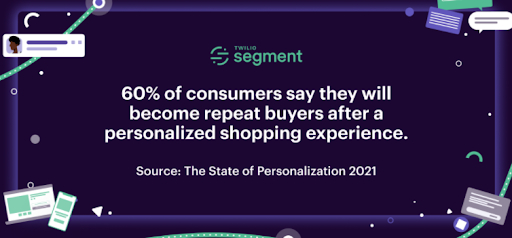
Personalization: There's been a permanent shift towards personalized marketing efforts. More than half of all consumers say they will keep buying from a company that offers a personalized experience. Consider adding it to your marketing plan.
More (and better) content: B2B buyers read an average of 13 pieces of content before they decide to buy, so creating engaging content should still be a key part of your 2026 marketing plan.
SEO is still the reigning champ: Nope, SEO is not dead. In fact, Google is getting smarter and smarter. Pay attention to emerging SEO trends, such as natural language processing and passage ranking.
3. Review your buyer personas
A good marketing plan is designed to move a specific customer through the buyer's journey. Do you know who your customers are?
At Leadfeeder, we actually have two main buyer personas — sales and marketing teams. We've found that most of our top customers derive from the marketing side, so we've adjusted our content and marketing strategies to focus on them.
And it's made a huge difference. We wouldn't have realized the shift if we hadn't taken the time to review our buyer personas and make sure we were targeting the right market.
4. Consider new marketing tools
There's a ton of marketing tools out there. (That might be an understatement.)
It's overwhelming, I know. Rather than trying all the new tools out there, take a look at your biggest challenges of the last year.
Where did you fall short? What took up most of your time? Where do you want to improve?
Then look for marketing and sales tools that specifically target those tasks.
For example, if finding leads is a problem, Leadfeeder can help. Using a small bit of code, we track who visits your site and show you how to reach out to them. It only takes a few minutes to set up and we have an awesome free trial.
Here's a peek at our dashboard, where you can see new leads, filter them by location, industry, etc., and view contact information:
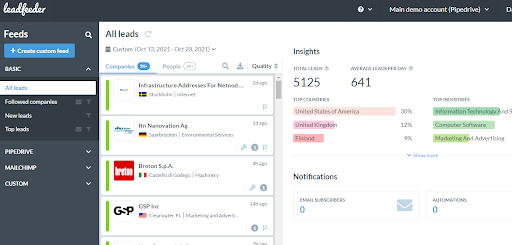
Other tools we love include Pipedrive, a sales CRM and pipeline management tool, and Mailchimp, a killer email automation platform — we have an integration with both of these tools.
The point is to find marketing tools that solve problems for you, not just ones that pay for the most ads on LinkedIn.
5. Outline short and long-term goals
Now it's time to lay out some goals. What do you want to accomplish in the next year? Does that goal align with your C-suite's overall business goals? It's important to outline both short and long-term goals to keep yourself on track.
For example, your long-term goal might be to increase lead generation by 24 percent in the coming year, while your first-quarter goal might be to implement a new lead gen tool and increase leads by 15 percent.
Having both goals creates a framework for reaching the larger goal.
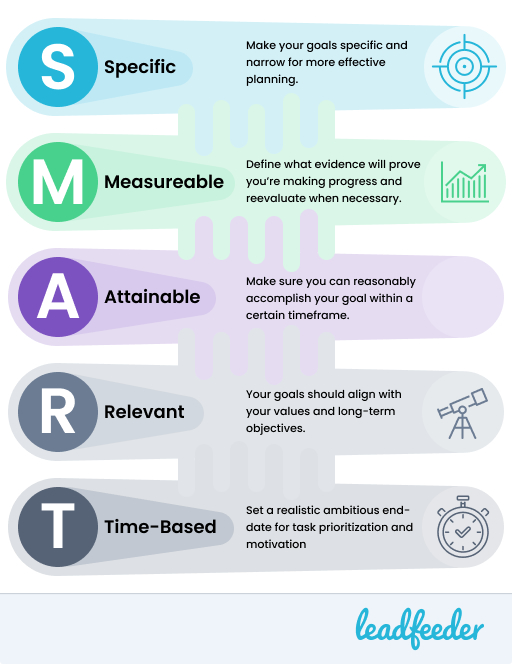
We like to use the SMART framework for goal setting to ensure goals are clear and trackable.
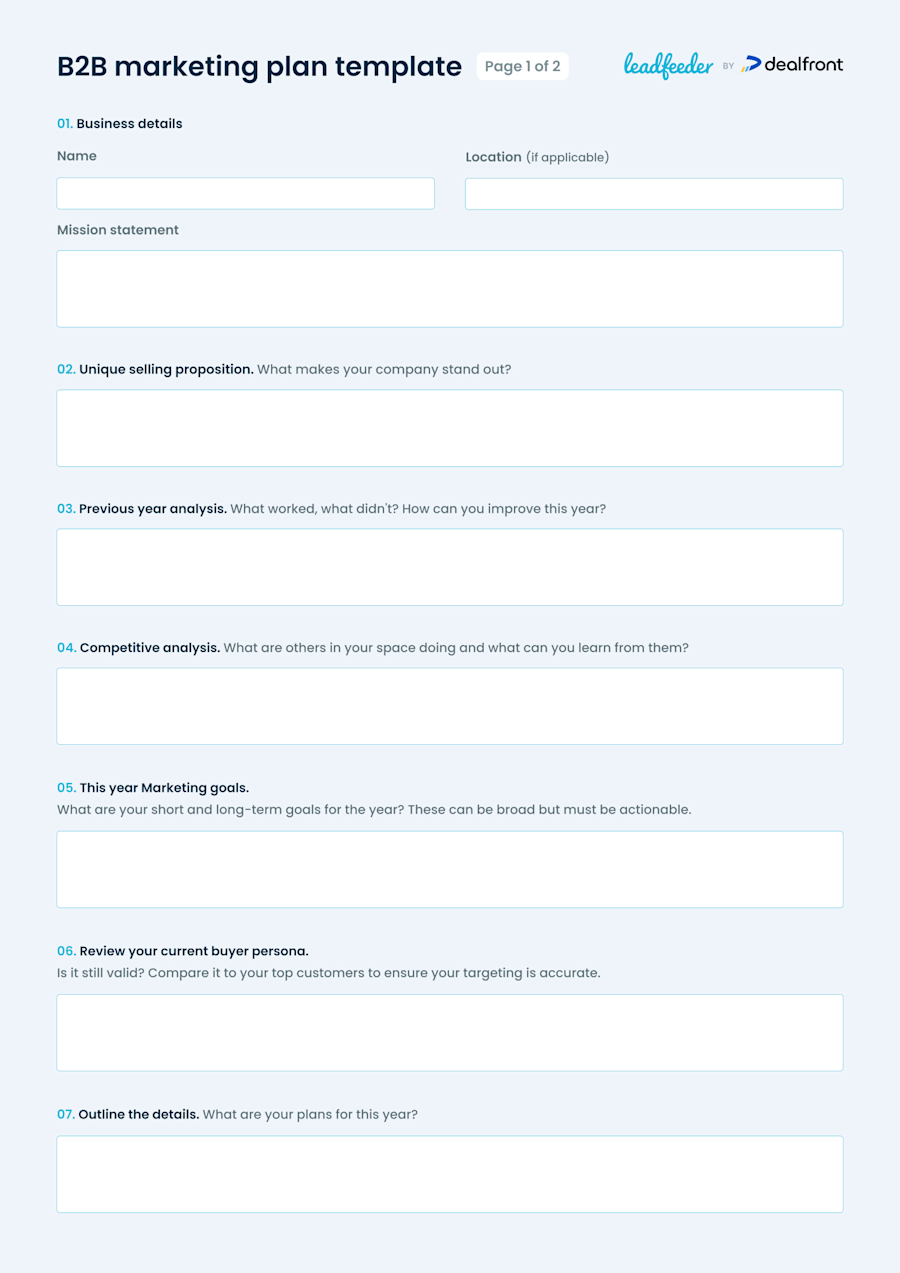
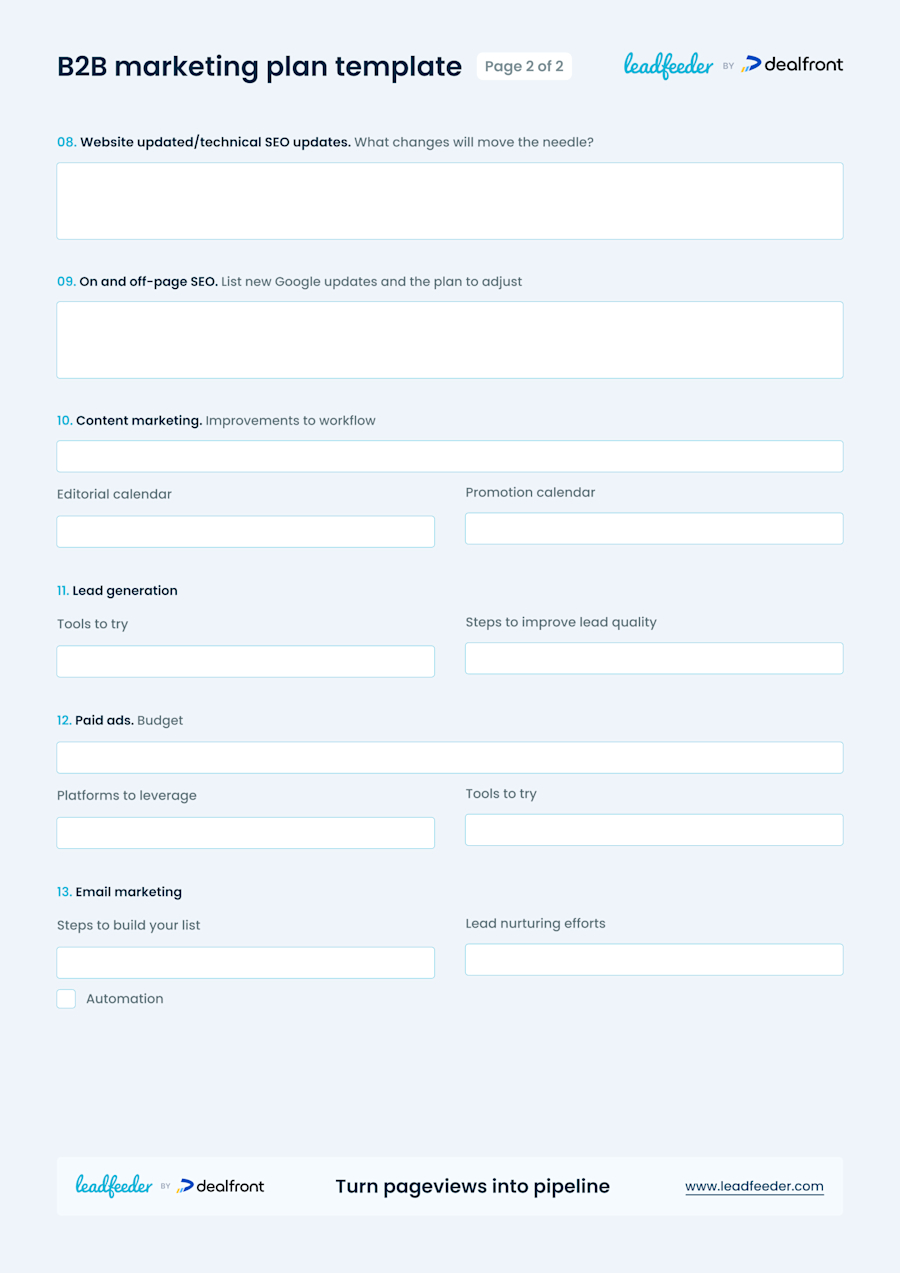
B2B marketing plan template
After following the steps above, you should have most of the information needed to create your 2026 B2B marketing plan.
This checklist will help you create a usable document:
Why do you need to create an updated B2B marketing plan?
Marketing is always evolving.
The strategies and tools you used this year might not help you get ahead next year. Even if the core tenets of marketing are the same (think lead generation, SEO, paid ads, and content marketing), the strategies and martech tools you use to implement a successful strategy may differ.
When you think back, COVID-19 completely changed how many companies worked, who they hired, what goals they focused on, and even their revenue.
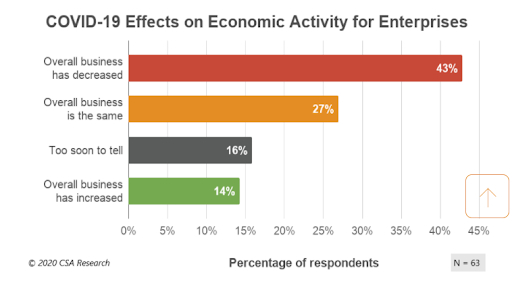
As a B2B company, it's crucial to be ready to adapt to whatever's happening in the world.
For example, with Leadfeeder, we use IP addresses to identify the companies visiting your site. During the pandemic, we had to change how we track companies to ensure we remained accurate.
Other companies have changed the platforms they use, the ads they create, even the type of content they publish.
It's not a whole new world, but things have definitely changed.
Success starts with a strong marketing plan
Creating a winning B2B marketing plan for 2026 is the key to growing your business in the new year. Yes, it can be time-consuming. But investing the time now will ensure your team is ready to hit the ground running in January.
Note: Is lead generation part of your 2026 marketing plan? See how Leadfeeder can help you uncover hidden leads and turn them into customers. Sign up for your free 14-day trial today.
CMO
Jillian Als is Chief Marketing Officer at Leadfeeder and a B2B SaaS marketing executive with nearly two decades of experience leading global go-to-market teams. She specializes in revenue-driven marketing strategy, demand generation, and aligning marketing and sales organizations.
Throughout her career, Jillian has helped SaaS companies scale marketing-sourced revenue and build high-performing marketing teams across international markets. Her leadership experience shapes her perspective on marketing strategy, attribution, and the systems modern revenue teams use to drive sustainable growth.