60-Second Summary
Most cookie-based retargeting fails in B2B because buying decisions involve multiple stakeholders and gatekeepers, not a single consumer. Account-based retargeting (ABR) focuses on companies and decision-makers, but it only delivers value when sales and marketing operate as one team.
Key takeaways: Traditional retargeting wastes budget on individual visitors; ABR treats the company as the unit of value, directs spend to decision-makers, improves ROI, and depends on tight sales–marketing alignment to convert intent into deals.
Standout strategies & tactics: Identify company visitors, filter by role/title to reach decision-makers, serve highly personalized content, pair digital ads with direct mail (personalized envelopes, handwritten notes), and use role-specific offers to increase relevance and conversion.
Real-world lessons & frameworks: Treat accounts as the primary unit, prioritize automation to scale ABM, leverage mutual contacts to open doors, and coordinate cross-department workflows so marketing intent signals feed timely, personalized sales outreach.
Compliance & industry fit: Ensure GDPR and other privacy rules via consent, transparency, and legal review; ABR performs best in long-cycle, high-value sectors (tech, finance, healthcare) but can be adapted to other industries with the right targeting and messaging.
*This summary was created with AI assistance, using our original content.
Most “B2B retargeting ads” simply do not work. They rely on tracking individual users with cookies and repeatedly showing them ads as they browse the web. That approach may work in B2C, where one person can make a purchase decision.
But B2B does not work like that. You are selling to companies, not just the person who visited your site. The buying process involves multiple stakeholders, not a single individual.
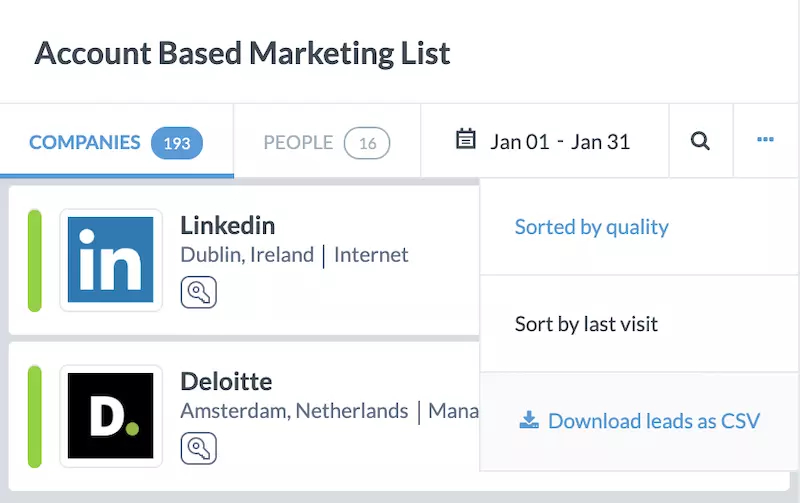
Most of the time, the person you are targeting is not the decision-maker. They are a gatekeeper who is researching options and gathering information, not approving purchases.
Account-based retargeting solves this problem by focusing on the right people within the right companies. It helps you reach decision-makers and move deals forward, but it only works when sales and marketing operate as one team.
Note: Want to see which companies have visited your website and are ripe for retargeting? Sign up and give Leadfeeder a try—free for 14 days.
Account-based marketing vs inbound marketing
Inbound marketing is incredibly effective for B2C because it casts a sweeping net of valuable content via blogs, search engines, and social media platforms.
It can be a great tactic to build trust and create positive brand equity. Conversely, account-based marketing has traditionally focused on a few highly valuable companies.
Who wants to settle for a handful of vital clients when you can have a few hundred? With Leadfeeder, it’s possible to take account-based marketing to the next level by scaling it in ways unimaginable a decade or two ago.
Instead of waiting for a prospect to stumble onto your content, you deliver highly personalized content that cuts through all the clutter and resonates with that specific potential client.
Traditional retargeting sucks for B2B — seriously
To be as kind as possible about it, let’s just say that the traditional method of retargeting customers is hogwash for B2B.
The standard system of retargeting customers online was designed for B2C — plain and simple.
Those professionals are chasing down every single person who engages with their brand via social media, newsletters, blogs, or their website.
But that’s not an efficient (or particularly good) way for a B2B marketer to generate leads for their sales team.
Why? Because in B2B, you’re targeting a whole company — not individuals. The truth is that these buying decisions aren’t made by only one person.
Usually, several decision-makers work together or have others in the company provide possible solutions.
Imagine it this way:
A CTO asks her virtual assistant to research solutions for a problem the company is facing.
Once the assistant has done their research and delivered the options, they’re no longer part of the purchasing process.
Why on Earth would your marketing team waste their time, energy, and dollars on retargeting the virtual assistant?
Instead, you want to be retargeting the CTO and other decision-makers within the company who may or may not have even visited your site yet.
How account-based retargeting makes you money
Account-based retargeting lets you focus your ads on company decision-makers rather than gatekeepers.
This works by creating a single company account that includes everyone who works there.
With filters, you can retarget only those with specific job titles or other key indicators of buying for companies.
You can generate a list of companies that have engaged with your brand (the sort of companies that really matter), and create account-based website visitor identification with Leadfeeder.
Though you could retarget everyone, you know that's not the best way.
Instead, you can put your entire ad budget to work retargeting the right people — the decision-makers.
Oh, and, of course, account-based marketing fits in a lot better with everything else you have going on, from account-based selling to account-based marketing strategies.
Because, in the B2B world, it’s all about accounts — we get that.
Though it will always depend on your business and the market, account-based retargeting is a powerful tool because it:
Syncs up the efforts of your sales and marketing teams
Requires you to leverage automation tools to more efficiently use your time
Allows you to develop meaningful relationships with key decision-makers
Is highly effective for enterprise-level customers
Account-based marketing tactics to try
Account-based marketing is a cross-departmental initiative between marketing and sales in which new best practices are forged daily.
That said, some of the most effective tactics never seem to change.
The best account-based marketing tactics to try include the use of:
Website and direct mail personalization
Role-specific offers
Mutual contacts between team members to connect directly with gatekeepers and decision-makers
1. Website and direct mail personalization
Though it can be hard to believe, incorporating a direct mail element into your account-based retargeting campaign can be highly effective.
In general, email marketing and direct mail campaigns have about the same response rate. However, it’s been found that direct mail initiatives lead to significantly larger purchases.
In an age where CFOs are swamped with dozens of emails every day, they don’t get that much physical mail. So, your letter stands out.
But if a key decision-maker can tell that they’re getting a generic mailer, you can count on it ending up in the recycling bin without ever being opened.
There are, in general, three elements to your mailer that can be personalized:
The envelope
The letter
The reply card
Personalizing the envelope is vital to the letter ending up on the right person’s desk. If you send it to the company or “to whom it may concern”, it’s safe to assume that it concerns no one.
However, by addressing the letter to the CFO or another decision-maker, it will at least get to the right person.
Personalizing your letter is the key to your direct mail campaign and driving conversions.
By taking advantage of the information from a reverse DNS search, you can identify which companies are scoping out which solutions you offer.
Armed with this data, you can create a personalized letter that begins by focusing on the specific pain point you suspect they are suffering from.
Such a focused, personalized message creates the one-on-one experience that nurtures leads and helps move prospects down your sales funnel.
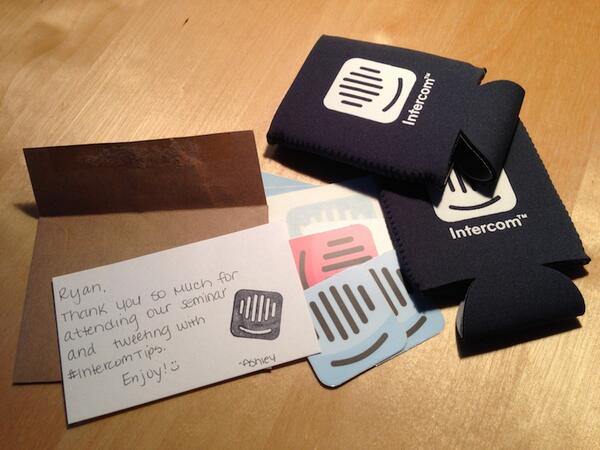
Nothing beats a personalized, handwritten note. They’re hard to ignore.
Lastly, make it easy for your prospect to connect with a sales representative, receive additional information, or make a purchase.
2. Role-specific offers
Developing role-specific offers is a powerful way to segment your retargeting marketing campaign.
Though the individual needs of a company vary from business to business, the general issues that key decision-makers deal with are similar.
By creating offers specifically designed to address the pain points CFOs face, you're more likely to convert them in a retargeting campaign.
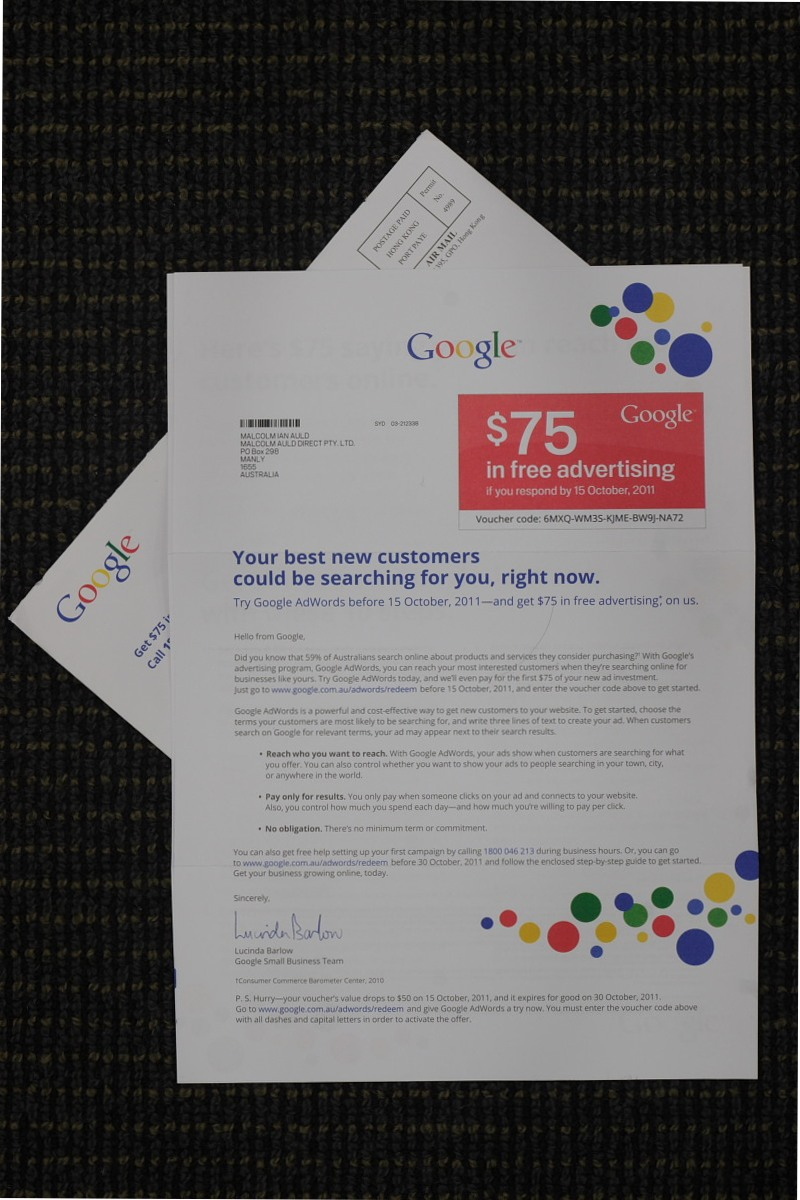
Google sends free AdWords credits via mail to small business owners and agencies.
Because these offers are focused on someone who plays a specific role within a company, it’s easier to create content that resonates with them.
3. Mutual contacts
When it comes to retargeting, old-fashioned networking still gets the job done more often than not.
The key is to leverage any mutual contacts your team members have with the target company's gatekeepers and decision-makers.
These contacts don’t always have to be significantly strong. Even connections on social media platforms can be enough to open a door, start a dialogue, and convert a prospect.
How do privacy regulations, such as GDPR, affect account-based retargeting practices, and what measures should companies take to ensure compliance?
Privacy regulations like GDPR significantly impact account-based retargeting strategies.
Companies need to ensure their retargeting practices comply by obtaining explicit consent from users, maintaining transparency about data use, and providing users with options to opt out.
It's crucial to work with legal and data privacy experts to develop compliant strategies that respect user privacy while achieving marketing objectives.
Can the effectiveness of account-based retargeting vary by industry, and if so, which industries see the most benefit from this strategy?
The effectiveness of account-based retargeting varies by industry.
Typically, industries with longer sales cycles and higher value contracts, such as technology, finance, and healthcare, benefit more from account-based retargeting.
This is because these industries often involve decision-making by multiple stakeholders, and retargeting can help keep the product or service top-of-mind throughout the decision process.
However, businesses across sectors can tailor account-based retargeting strategies to their specific audiences and market dynamics.
Final thoughts: Account-based retargeting — your B2B solution for boosting your bottom line
With 80 percent of the buying decision made before someone engages with your brand, plus 98 percent of potential customers leaving without making a purchase, retargeting is essential.
By setting up an account-based remarketing initiative, you can be more effective in engaging with key decision-makers at companies that need your products or services.
Note: Want to see which accounts have visited your website and are ripe for retargeting? Sign up and give Leadfeeder a try—free for 14 days.