60-Second Summary
B2B buyers complete much of their decision process before speaking to sales, so brands that aren’t visible early lose prospects. Retargeting reconnects high-intent accounts across channels, turning anonymous site traffic into higher conversion, stronger recall, and better marketing ROI.
Key takeaways: Retargeting rescues the ~98% of visitors who don’t convert initially by maintaining multi-touch engagement with accounts, improving conversion rates, and maximizing existing traffic when executed account‑first.
Standout strategies & tactics: Build transient, funnel-stage remarketing lists (account-based where possible), push matched audiences to LinkedIn/Google/Facebook via CSV feeds (e.g., Leadfeeder → LinkedIn, Metadata.io), and serve tailored ads + landing pages per stage.
Real-world lessons & frameworks: Map remarketing to lead generation, nurturing, and proposal stages; use CRM triggers to move prospects between lists; match content type (blogs, white papers, case studies, demos) to intent to accelerate conversion.
Quick implementation checklist: Identify high-value accounts visiting your site, segment lists by stage, create tailored landing pages and CTAs, deploy search/display/social PPC and lookalikes, and iterate using tools like Leadfeeder, LinkedIn Audiences, and Metadata.io.
*This summary was created with AI assistance, using our original content.
This matters because most B2B buyers complete a large portion of their decision-making process before ever speaking to sales. If your brand is not visible during that time, you risk losing those prospects to competitors who stay top of mind.
Retargeting solves this by helping you reconnect with high-intent audiences across different channels. Instead of starting from scratch, you continue the conversation with people who are already familiar with your business.
As a result, retargeting helps increase conversions, strengthen brand recall, and better utilize your existing traffic. It is a practical and essential tactic for improving overall marketing ROI.
Guide to LinkedIn Retargeting
Take advantage of a better way to retarget ads via account-based B2B retargeting using our step by step guide!
DownloadNote: Want to see the companies that have visited your website and are ideal for retargeting? Sign up and give Leadfeeder a try—free for 14 days.
Does retargeting work for B2B? The B2B retargeting difference
Before I get into the real nitty-gritty, a quick recap.
Letting 98 percent of web visitors enter and exit without so much as a wanting glance = bad. 👎
Re-capturing their attention with remarketing = good. 👍
Retargeting tactics help maintain (and build upon) brand awareness, nurture leads by keeping potential customers engaged with your business, and recapture lost leads.
Online display advertising is a common example of retargeting that people will point to. In the wild, think about the last time you visited an e-commerce site, put a pair of shoes in your shopping cart, checked your bank account, and then talked yourself out of buying them.
You closed the window in your browser and breathed a sigh of relief — proud of yourself for beating consumerism. Until those same shoes start appearing in ads across the web.
This is a go-to method of B2C retargeting. Unfortunately, it doesn’t work in quite the same way for B2B marketers.
B2B retargeting differs from B2C in the fact that:
The buying decisions aren’t made by a single person. They involve input from multiple decision-makers and stakeholders at various levels of involvement.
Because of this, the sales funnel for B2B companies is much longer than it is for B2C companies.
The buying decisions aren’t typically made by the final decision-maker. It’s often an employee of the decision-maker who makes the call after hours of researching, demo-ing, and presenting their top choices to those at the top.
B2B marketers are targeting entire accounts. When retargeting, it helps to reach as many key personnel within a company as possible.
In summary, traditional remarketing fails B2B marketers because their focus is on companies, not individuals. This explains why the phrase “account-based retargeting” is all the rage right now.
B2B retargeting best practices and strategies
Knowing that B2B remarketing is a worthwhile tactic for your business — and that it comes equipped with its own set of nuances to consider — where to start?
For a business starting from scratch, that question is especially daunting — even more so when you’re fielding it from higher-ups looking to you to answer it.
The key here in easing your fears and setting forth a B2B retargeting strategy you can actually deliver on is to focus your efforts.
Identify the ways in which remarketing could be used to further enhance what you’re already doing. Here are some B2B remarketing best practices and strategies to consider.
1. B2B retargeting funnel strategies: remarket at each stage of the sales funnel
Objective: capture leads according to where they’re at in the sales funnel.
The typical sales cycle for B2B businesses can range from 4 to 7 months. This is a considerably long time to keep prospects engaged.
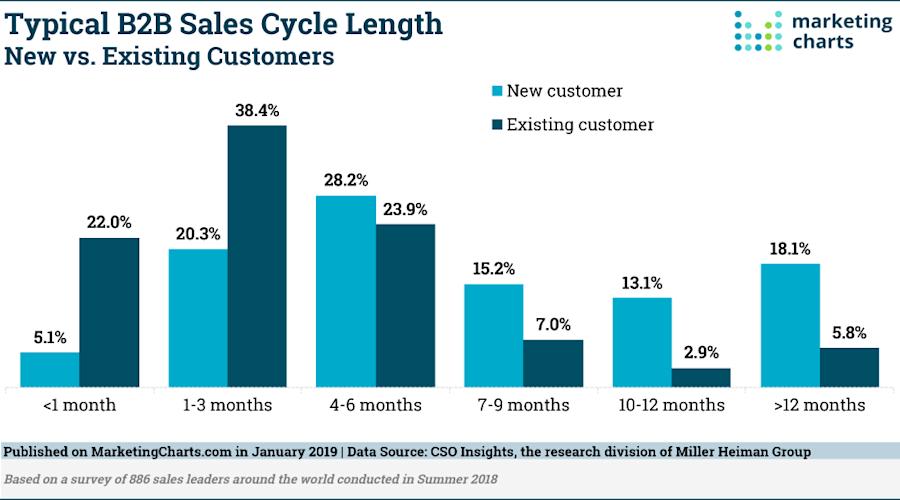
And a major driver behind the need for multiple touchpoints. In fact, it takes six to eight touchpoints to generate a viable sales lead.
If you’re heavily relying on search traffic currently, consider the aforementioned stat — only 2 percent of said traffic converts to business.
This leaves 98 percent of prospects left hanging in the awareness or consideration stages of your funnel.
Remarketing opens the door to connect with that 98 percent — pending you know where they’re at and how to engage them.
Approach your B2B retargeting journey by first acknowledging the three main stages at which you can remarket to customers:
Lead generation
Lead nurturing
Proposal
Then, get to work with the finer details.
2. Create remarketing lists
Objective: understand your users as subsets of a larger whole. Target them with highly unique, crafted messaging.
It’s important to have your sales funnels mapped out — you know that. But more importantly, it’s essential to map your prospects through sales funnels.
Leadfeeder users can segment and create custom remarketing lists with custom feeds.
These remarketing lists should be transient in nature. You should be working to move potential customers from one list to the next — or, more broadly speaking, to conversion.
Set parameters in your CRM so that certain actions will trigger the reassignment of a prospect to new lists as they move further down the funnel. In doing so, you can deliver hyper-relevant content that suits their evolving level of interest.
Targeting leads based on where they are in the buying process, whether through ads or email, boosts conversion rates by 72 percent.
Example: accounts-based remarketing lists for ads
Creating account-based B2B remarketing lists for ads is easier than it sounds, especially with help from Leadfeeder.
With our platform’s ability to identify website visitors and track behavioral data, you can retarget whole accounts on LinkedIn, the Google Display Network, Facebook, and Instagram.
For LinkedIn, simply download a Custom Feed from within Leadfeeder as a CSV and use it to upload and create a Matched Audience in LinkedIn.
Below is an example of a custom feed created in Leadfeeder for remarketing lists on LinkedIn.
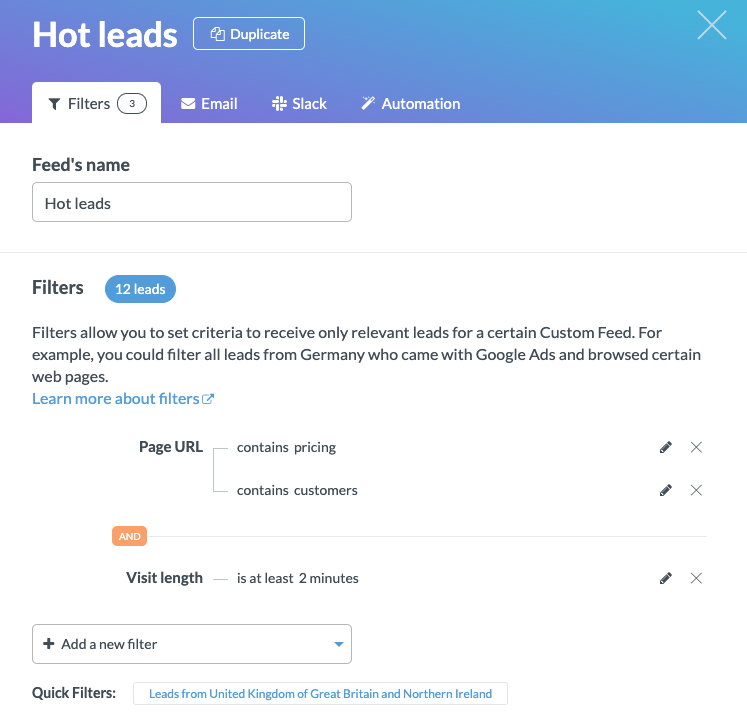
For B2B Facebook retargeting, plus Instagram and Display Ads, load your Custom Feed CSVs into Metadata.io and let the platform work its magic.
Consider this tutorial your new best friend. 👯♀️

Leadfeeder for Marketing
Identify which campaigns drive your highest-intent visitors, see which companies they come from, and build audiences for retargeting, all from one platform..
DownloadExample: remarketing lists for your existing email subscribers
Just because someone signed up for a webinar or downloaded a piece of content doesn’t mean they’re automatically on their way to becoming a paying customer. They need nurturing, just like everyone else.
Here is a great example from Iterable.
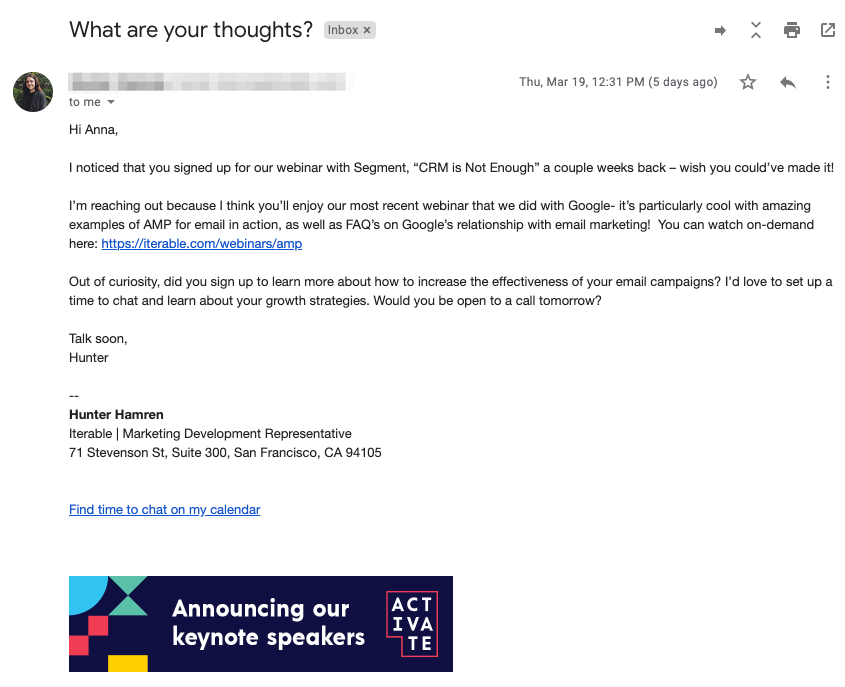
When you have a list of emails at your disposal, remember that not every email is created equal. They’re all at different stages of consideration based on what they’ve shown interest in.
For this reason, you can approach remarketing to email subscribers based on the following groupings:
Prospects that visited a landing page (e.g., webinar, content download, or newsletter-focused) but exited.
Webinar signups that didn’t attend.
Webinar attendees who didn’t convert.
Prospects who downloaded content but didn’t convert.
Newsletter subscribers who aren’t yet customers.
To help in list segmentation, consider the quality of your forms. Are you asking for the right information? Are you asking for too much information?
Make sure your forms reflect where a prospect is in their journey. Those at the bottom of the funnel probably aren’t as likely to hand over as much information as those further along in the journey.
3. Create unique landing pages specific to the user experience
With an understanding of who you’re trying to remarket to based on where they’re at in the sales funnel, you can begin thinking through what messages to serve them with.
You’re likely delivering said messages through an email, ad, or — more often than not — a landing page. An effective landing page should encourage a specific call to action. The keyword here is specific.
You didn’t put all of that work into segmenting customer lists only to send them all to the same landing page. Each segment is relative to a unique customer experience.
A prospect presumably reaches a landing page by clicking on a website search result, social post, ad, email newsletter, or blog post.
If the offer is relevant to them and intriguing enough, they’ll take the steps to fill out a form on the landing page, which then converts them from a visitor to a lead.
Or from one remarketing list segment to the next.
If a prospect lands on a page and does not convert, it may not be because they’re uninterested in your product or service. The information on the page simply wasn’t relevant to them.
They might just need a follow-up and additional information that better speaks to the problems they’re looking to solve.
In building out an effective landing page, make sure to include:
A short and persuasive headline that sets up the offer
A subheading that frames the offer with a hook
An image or video that visually displays the quality of the offer
A brief paragraph of copy that explains the benefits of the offer (i.e., what someone will receive in exchange for their contact information)
One clear, compelling CTA that entices the visitor to claim the offer
A short form to complete to claim the offer
Social proof, in the form of a testimonial quote or review, further highlights the value of the offer
A couple of types of landing pages you can use in moving a prospect toward conversion include:
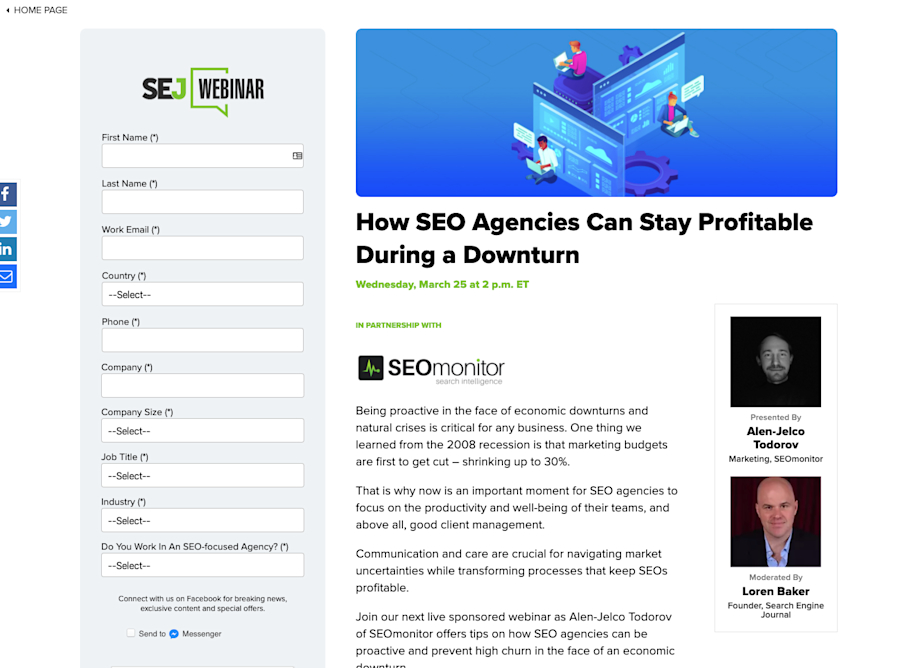
Example: B2B content landing page
A content landing page is a page on your website that provides further details on topics relevant to your product or service (e.g., a blog post or white paper download page).
The idea here is to help prospects advance from awareness to consideration. You want to show that you know your stuff — that you understand the problem at large and how to solve it.
Here is an example of a B2B landing page from Search Engine Journal.
Example: social proof landing page
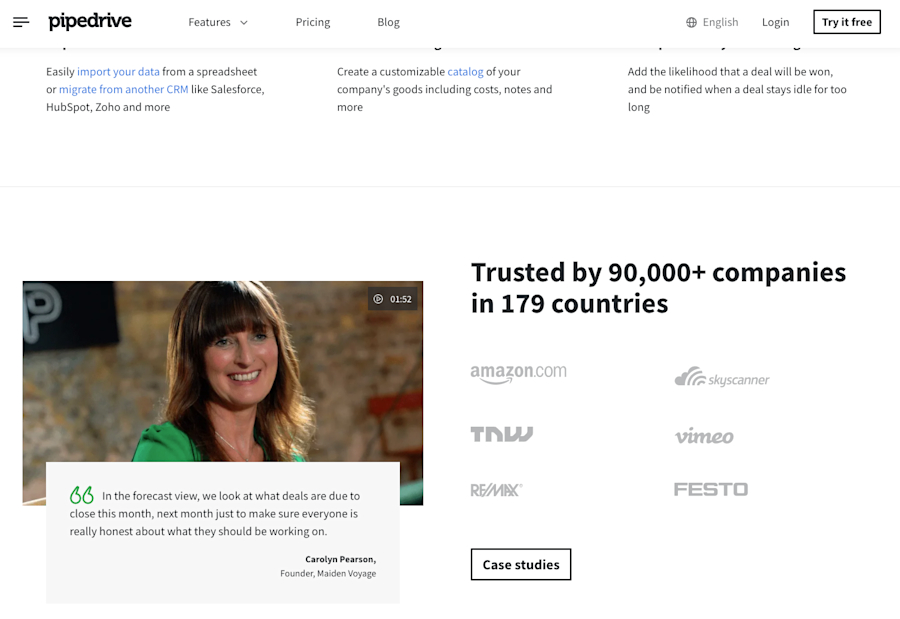
A social proof landing page showcases how customers used your product or service to successfully meet their needs. Think in terms of case studies and testimonials.
B2B marketers seldom market to the final decision-maker. Because of this, it’s better to provide this level of information to visitors so they can collect it during the research phase and make recommendations internally to those in charge.
Here is an example from our friends at Pipedrive.
Example: B2B sales landing page
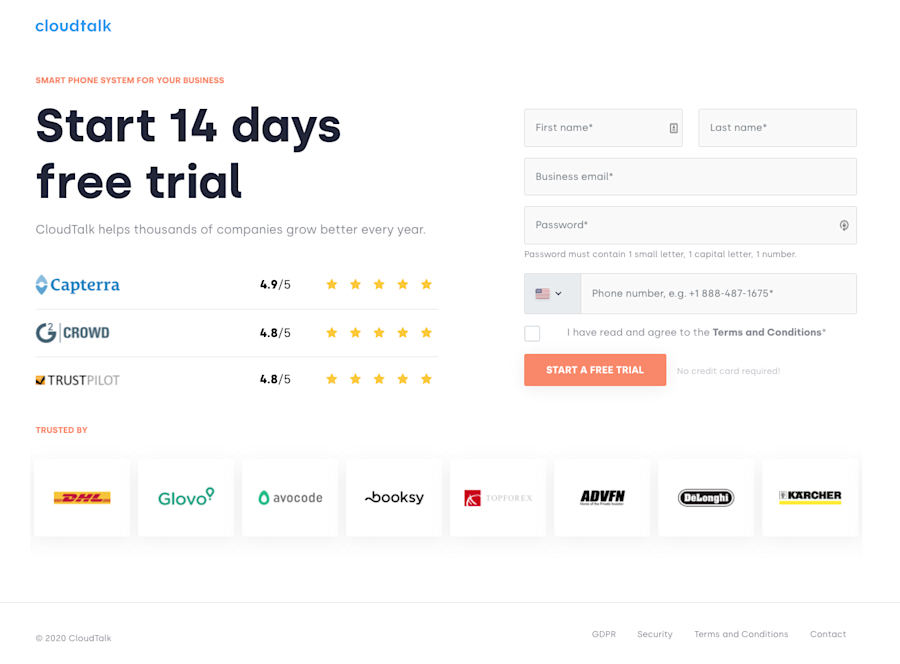
A sales-based landing page is used for those further down the funnel. You’re making a more direct call to action for purchase.
These could be realized as a demo, price quotes, or free trial pages. They essentially allow those who have shown enough interest in your content to contact your company and convert.
While you’ll want to diversify your content across these different types of landing pages, you don’t necessarily have to start from scratch for each one.
Instead, consider repurposing content across landing pages (e.g., blog posts, videos, infographics), using the messaging around each to frame relevance.
Here is an example from our customers at Cloudtalk.io.
4. Create supporting B2B sales content
Think of content as an overarching word for how you choose to package a particular message.
The specific types of content you create may include blog posts, infographics, videos, flowchart graphics, white papers, and emails.
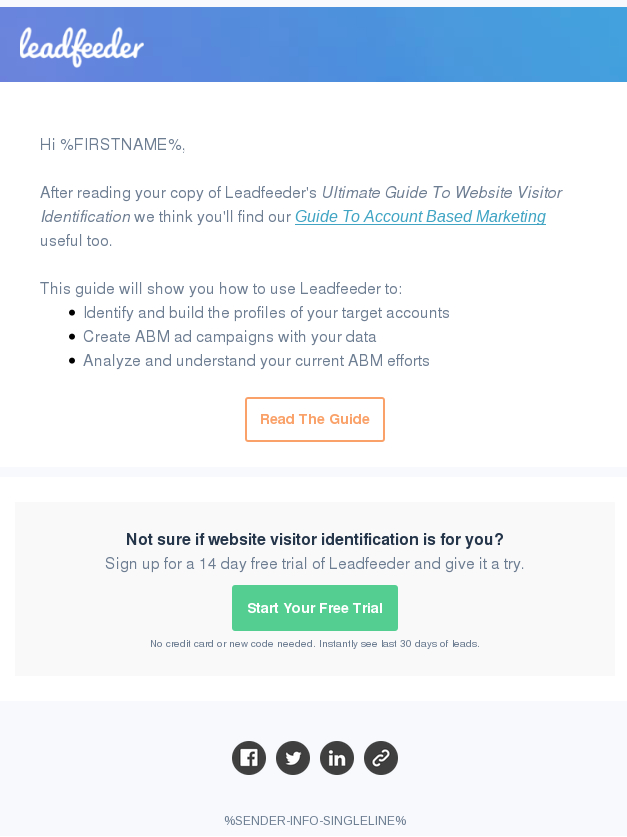
Like this follow-up email to users after they have downloaded our website visitor tracking guide.
Instead of constantly promoting your products and services, B2B marketers have embraced the softer sell of content marketing.
Distributing relevant content is a more effective approach for attracting and retaining prospects than pushing what you’re selling with no care for where someone is in their buying journey.
Constantly delivering content that provides insights and addresses prospect pain points can help marketers gain valuable insights into their audiences.
The short-term goal might be to send an email that subscribers want to open. But the long-term goal is to nurture a relationship that results in a sale. This comes back to the idea of multiple touchpoints.
For example, here is the last email Leadfeeder sends 30 days after the initial ebook download.
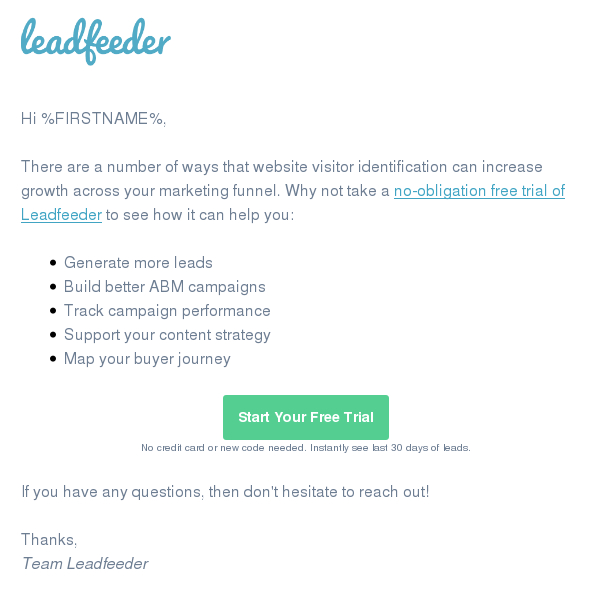
While many organizations aggressively bombard prospects with sales pitches during the last 43 percent of the buyer’s journey, there’s plenty of opportunity prior to piquing interest.
Here are some common types of content to produce at different stages of the B2B sales journey:
B2B sales content for lead generation:
In the lead generation stage, visitors are identifying their problems and ways to solve them. And, more importantly, the role your company has to play in helping to do just that.
Blog posts developed around relevant keywords and subject matter deemed important to your audiences are a great way to attract visitors to your website.
Keywords used should display informational intent. In other words, you’re looking to answer questions often posed by your intended audiences.
The end goal of this type of content is to position your company as one with thorough industry knowledge and a clear understanding of customer needs. You can be trusted.
Companies with a blog tend to generate 67 percent more leads than those that don’t.
B2B sales content for lead nurturing:
At this stage of the sales journey, you’ve captured a customer as a lead. But leaving them as such doesn’t do either of you any good.
They’ve shown interest in your product or service and identified it as a viable solution relative to whatever problem it is they’re trying to solve. The goal here in nurturing their consideration is to continuously build trust.
You need to produce content for them that further establishes your expertise in the field, driving home the fact that your product is the optimal solution.
This can be done by creating longer-form, more detailed content. If you can include original research and data, even better.
Gauge interest for leads by offering white paper downloads, guides, or newsletter sign-ups. You’re essentially upping the ante — asking prospects for more information in exchange for more in return.
>>Find extensive detail on lead nurturing in our full guide on the subject.
B2B sales content for proposals:
After nurturing, come proposals. You’ll inevitably reach a point where it’s time to make that hard sales pitch — which means you’re close to sealing that deal.
The goal at this stage is to assure customers of their decision and remove any lingering doubts or fears from the equation.
Prospects at this stage are often deep in the competitive research phase. They’ve likely narrowed in on their top choices and are actively weighing the pros and cons of each.
Hit them with case studies, testimonials, reports, or white papers with original research. It may also be useful to complement this content with discounts and demos.
It’s still a good idea, even in this top-funnel stage, to avoid overly sales-y calls-to-action. Instead, opt for CTAs like “Request a Demo” or “Contact Us” to ease them into motion.
5. Create B2B lookalike audiences
Objective: find other audiences relevant to your product or service.
Both Google and Facebook’s advertising platforms make it easy to reach new audiences with their lookalike features. But the catch is in what you feed them. As Andrei Zinkevich, co-founder of Full Funnel.io, puts it:
"A lot of products talk now about creating look-alike audiences, but this look-alike audience development is ridiculous — it just takes the firmographic criteria. You generate a deal with Microsoft, but you could be selling to one tiny department. In your CRM, you have Microsoft. Now [the tool says] you can sell to Apple, Adobe, Oracle."
That’s the point: firmographic similarity is a blunt instrument. It can point you toward companies that resemble your customers on paper, but it won’t tell you whether they’re a genuine fit for what you sell. In Google Ads, this functionality is referred to as Customer Match, while on Facebook it’s known as Lookalike Audiences.
Another way to retarget similar audiences is to use LinkedIn’s website retargeting feature. LinkedIn is a no-brainer for B2B businesses, and it's 277 percent more effective at generating leads than Facebook and Twitter.
6. Create ads for remarketing (with B2B retargeting ad examples)
With lookalike audiences built out and retargeting pixels in place, ads are the next piece of the puzzle. And often, paid promotion is necessary to get in front of audiences, both old and new.
Have you probably seen something like this scrolling through Facebook?
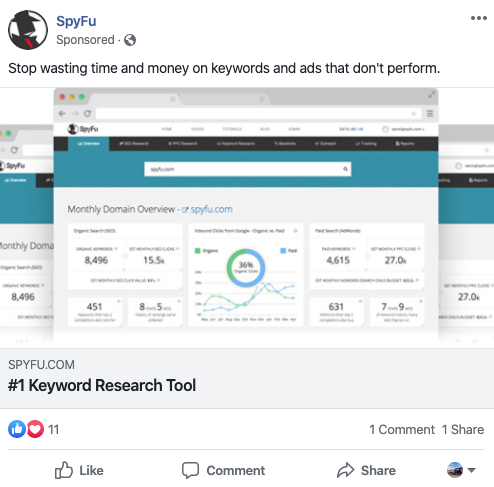
That's a retargeting ad.
B2B marketers tend to go with PPC (pay-per-click) ads. Essentially, an advertiser pays every time someone engages with their ads online.
Clicks are the most common form of engagement. But depending on the type of content served in an ad, marketers can also target other actions, such as video views or lead form submissions.
There are three types of PPC ads used in B2B remarketing:
Search ads
Display ads
Social ads
A Sample B2B retargeting strategy: putting all of the pieces together
It’s one thing to know what goes into a successful B2B retargeting strategy. It’s another thing to actually implement one.
Here are a few basic scenarios for putting these tactics to work for your business:
1. Lead generation
B2B retargeting strategy end goal: drive a lead to schedule a meeting or call.
Remarketing strategy: use lists built around prospects in the consideration stage; target them with branded ads that point to a demo or discount-focused landing page.
The idea is to keep your company top of mind online. For leads that visit the landing page but don’t sign up, retarget them with testimonial-based content to further establish trust.
For leads that visit the landing page, sign up, but don’t show up for the call or meeting, follow up with a personalized email from a sales rep that further establishes the benefits of your product or service.
2. Lead nurturing
B2B retargeting strategy end goal: drive a lead to get a price quote or proposal.
Remarketing strategy: Send your segmented list of leads consideration-based content that further establishes proof of value.
This can be in the form of testimonial videos or downloadable case studies. If a lead downloads the case study, you can follow up with a personalized email from a sales rep that makes a harder pitch for your product or service.
3. Proposal
B2B retargeting strategy end goal: drive a lead to make a proposal, inquiry, or purchase.
Remarketing strategy: Use a personalized email from a sales rep to tailor the messaging around highly relevant content and pricing details.
You can also incentivize sign-up with discounts or extended free trials. Once a deal is closed, you can use remarketing to drive retention. The idea is to nurture loyalty, drive referrals, and encourage upsells when it makes sense.
Final thoughts: how to use B2B remarketing for lead generation and conversion
In a digital world driven by personalization, I can’t stress the benefits of retargeting B2B audiences with useful, relevant messaging enough.
And despite the many moving parts, it’s not as complicated as it’s made out to be. Especially with tools at your disposal to organize and identify the audiences you’re trying to connect with.
Consider Leadfeeder, one such tool. I’ll help your team turn anonymous website traffic into loyal customers and fancy account-based marketing buzzwords into ROI.
Guide to LinkedIn Retargeting
Take advantage of a better way to retarget ads via account-based B2B retargeting using our step by step guide!
DownloadNote: Want to see the companies that have visited your website and are ideal for retargeting? Sign up and give Leadfeeder a try—free for 14 days.