Marketing automation platforms allow teams to streamline repetitive tasks such as email workflows, audience segmentation, CRM updates, lead scoring, and campaign analytics. Instead of managing campaigns manually, marketers can build automated workflows that trigger actions based on customer behavior.
Automation is becoming essential as customer expectations continue to rise. Research shows that 71% of customers expect personalized experiences from brands, while 76% say they feel frustrated when companies fail to deliver personalization.
However, the right marketing automation tool depends on your team’s strategy, budget, and marketing channels. Some platforms provide all-in-one marketing automation, while others specialize in email marketing, social media automation, customer journey management, or advertising optimization.
Below, we’ve compiled a curated list of the 15 best marketing automation tools for 2026, covering the platforms that help marketing teams automate campaigns, manage leads, and scale their marketing efforts efficiently.
Best All-in-One Automated Marketing Tools
Organizations looking for an all-in-one marketing automation platform have usually already found several effective marketing channels, regardless of which ones they are. That means:
You’ve seen success across more than one or two channels.
You’re already financially investing in scaling your marketing operation.
Your team needs to scale the channels that are working or experiment with additional avenues.
If that sounds like your team, you’ll benefit most from platforms that support the best marketing automations, such as lead nurturing, behavioral triggers, and multichannel campaigns — designed to streamline and scale your marketing efforts efficiently.
1. ActiveCampaign
Best for: Businesses looking for an all-in-one inbound marketing automation platform
Key automation features: Lead nurturing workflows, CRM automation, email automation, analytics dashboards
Pricing: Free tools available; paid plans start at $15 per seat per month
Ideal users: Startups, SMBs, and growing marketing teams
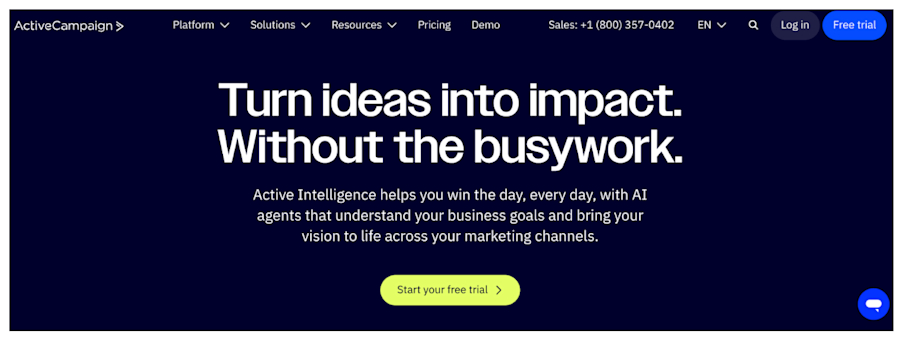
As a marketing automation tool, ActiveCampaign does the best job of working automation into real human processes. The reality is that marketing automation platforms can’t handle everything; a human touch.
ActiveCampaign built its software around that idea, adding features like notification emails that empower marketers and salespeople rather than replace them.
2. Marketo Engage
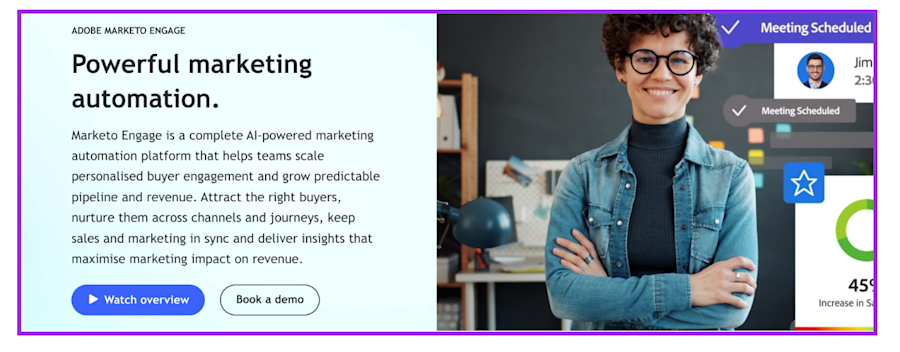
Best for: Enterprise marketing automation
Key automation features: Account-based marketing, multichannel automation, advanced analytics
Pricing: Custom pricing via Adobe
Ideal users: Large enterprises and B2B marketing teams
Marketo Engage claims to offer marketing automation that covers every channel and engagement type. Since Adobe’s acquisition, the list of tasks that work together on Marketo Engage has only multiplied.
The full-featured software can handle everything from digital advertising to social media to account-based marketing, making it a perfect option for larger marketing operations.
3. HubSpot
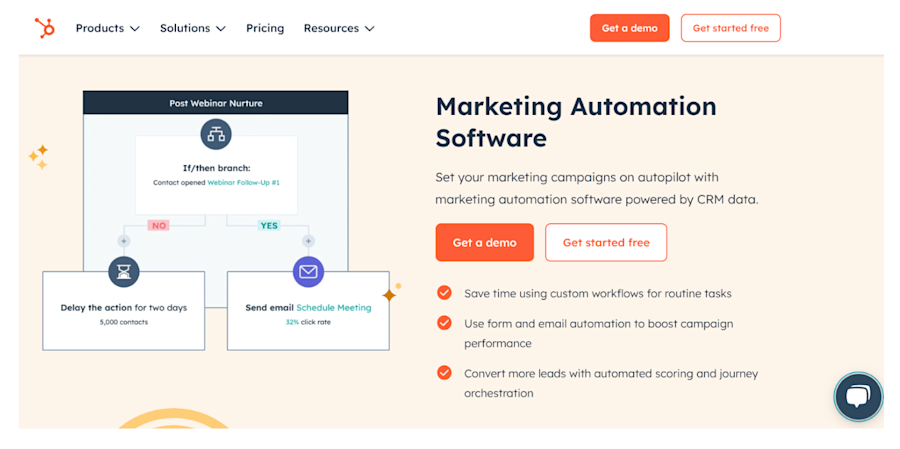
Best for: Businesses looking for an all-in-one inbound marketing automation platform
Key automation features: Lead nurturing workflows, CRM automation, email automation, analytics dashboards
Pricing: Free tools available; paid plans start at $15 per seat per month
Ideal users: Startups, SMBs, and growing marketing teams
HubSpot's Marketing Hub fundamentally differs from other marketing automation tools for a few reasons. Its focus on inbound marketing (including content and search marketing) is unparalleled. It also offers the added benefit of CRM, Sales, and Service Hubs, allowing your team to work more effectively together, even across departments.
For individuals and small teams, HubSpot offers free tools that allow two users to start generating and emailing new leads.
Best Email Marketing Automation Tools
Although the comprehensive tools mentioned so far are well-known, email automation is the first thing most people think of when they hear "marketing automation platform."
Email marketing automation tools are significantly more cost-effective than all-in-one solutions. , So, investing in more than what your team requires or will actively utilize is impractical.
Email automation also has a wide range of use cases. Your team could likely benefit from it if:
You’ve seen some baseline success with email marketing.
You need to send transactional emails in addition to marketing material.
Someone on your team has been manually sending the emails for every campaign.
Email marketing automation tools handle tasks such as sending triggered emails and enable marketers to build complex automated campaigns and personalized audience segments.
4. Mailchimp
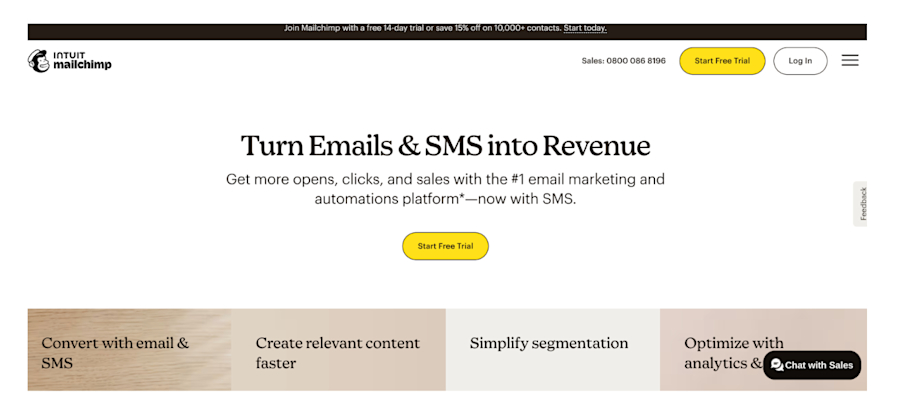
Best for: Beginner-friendly email marketing automation
Key automation features: Automated campaigns, audience segmentation, landing pages
Pricing: Paid plans start at $13 per month
Ideal users: Small businesses and growing online brands
Intuit Mailchimp is one of the original email marketing tools. Now, it has transformed into a marketing automation and email platform that’s designed to help businesses grow their audience and build strong customer relationships.
It offers tools to help with a variety of tasks, including creating and sending targeted email campaigns, building websites and landing pages, and automating marketing workflows.
It can be integrated with many popular apps and e-commerce platforms, making it an all-in-one solution for small to medium businesses aiming to enhance their marketing efforts.
5. Customer.io
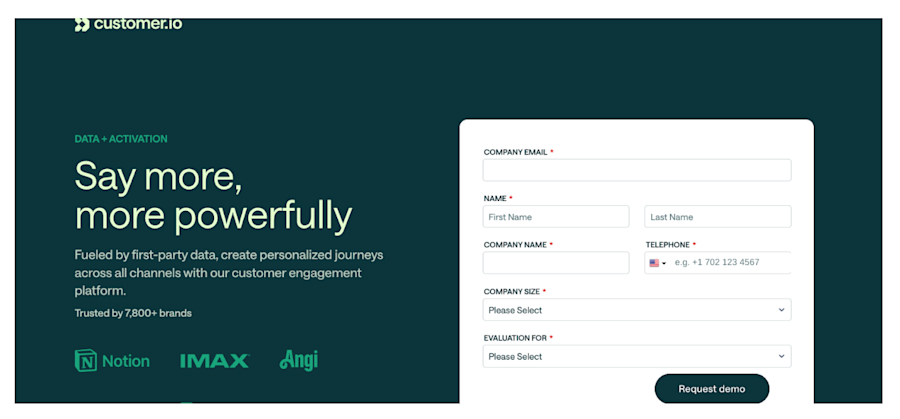
Best for: Behavior-based messaging automation
Key automation features: Event-triggered messaging, segmentation, multichannel communication
Pricing: Starts at $100 per month
Ideal users: SaaS companies and product-led growth teams
Customer.io is a versatile platform that’s primarily focused on behavior-based email and messaging automation. It allows businesses to create targeted and personalized communication campaigns based on user behavior, interactions, and specific triggers.
With Customer.io, you can send tailored messages through various channels, such as email, push notifications, and SMS.
Tons of integrations make it easy to funnel data from across your technology stack and turn it into automated segments and email campaigns that resonate with your audience.
6. Drip
Best for: E-commerce marketing automation
Key automation features: Customer segmentation, purchase tracking, automated campaigns
Pricing: Starts at $39 per month
Ideal users: E-commerce brands and online retailers
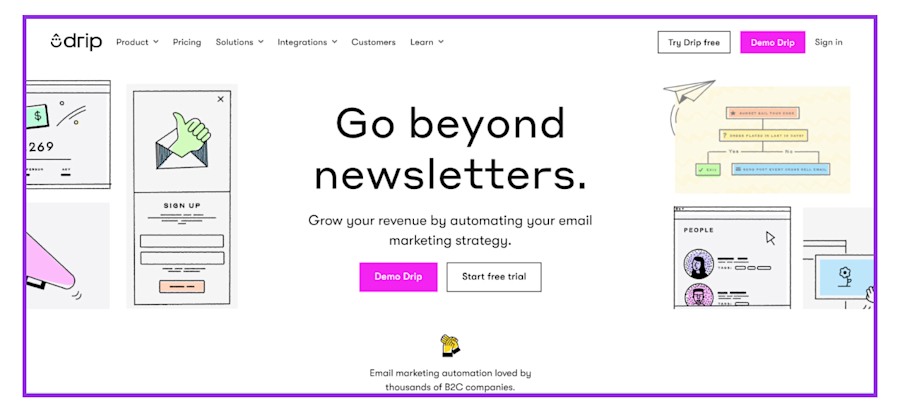
Drip’s email marketing automation is built for e-commerce businesses, meaning it works with all of the other e-commerce tools you use.
You can create relevant, personalized content and automate your campaigns based on customer behavior. Drip also offers more than email automation, so your messages stay consistent and work together to drive customers toward a purchase.
Best Social Media Automation Tools
Social media automation tools automate social marketing tasks, such as scheduling, monitoring, and analyzing content. They simplify managing your social media efforts.
That said, you probably don’t need a fully fledged social media automation tool unless:
More than one person is publishing under your brand’s social media accounts.
Your brand is active on multiple social networks.
You’re using social media for multiple purposes, such as paid advertising and customer support.
7. Hootsuite
Best for: Managing multiple social media accounts
Key automation features: Content scheduling, social listening, analytics dashboards
Pricing: $99–$249 per user per month
Ideal users: Marketing teams managing multiple social platforms
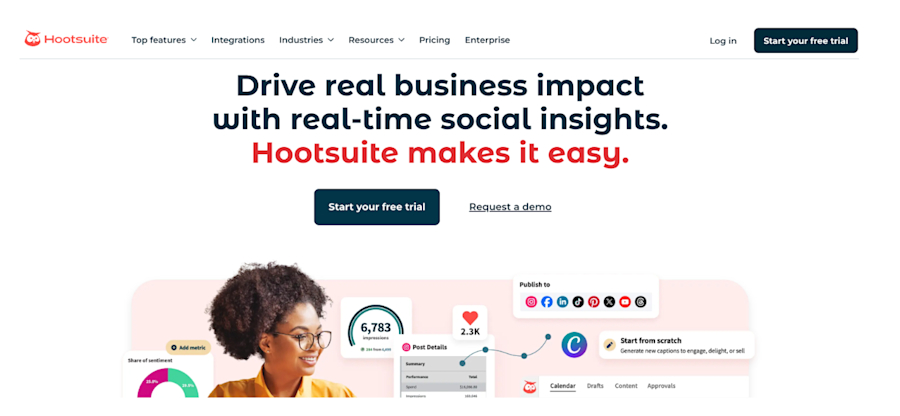
Hootsuite is one of the most comprehensive social media automation tools. It lets you manage all your social media accounts in one place.
With features that help you schedule content, curate from a pre-approved library, and monitor conversations about your brand and industry, Hootsuite has everything you need to establish a social media presence that makes a difference for your brand.
8. Buffer
Best for: Simple and affordable social media scheduling
Key automation features: Post scheduling, analytics, collaboration tools
Pricing: Free plan available; paid plans start at $5 per month
Ideal users: Small teams and independent marketers
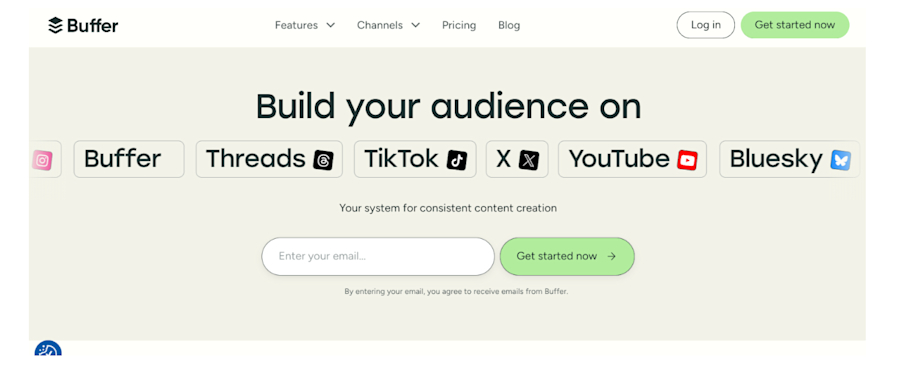
Originally a social media content scheduling tool, Buffer has grown to reflect how today’s brands use social media. Buffer is designed to simplify and streamline scheduling, publishing, and analyzing content across social media platforms.
It allows users to manage multiple social accounts, collaborate with team members, and analyze performance metrics to optimize their social media strategies.
9. Sprout Social
Best for: Advanced social media analytics and collaboration
Key automation features: Publishing workflows, customer care automation, analytics tools
Pricing: $199–$399 per seat per month
Ideal users: Enterprise marketing teams
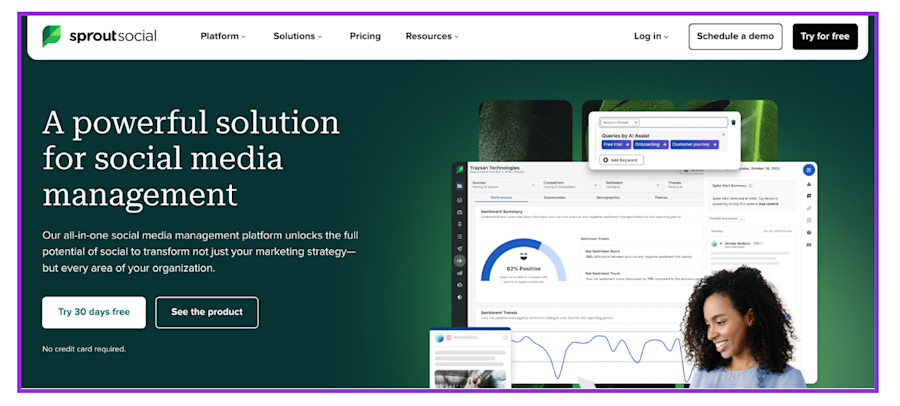
Sprout Social has one of the broadest feature sets among the social automation tools on our list, with individually tailored solutions for everything from social management and marketing to customer care, employee advocacy, and data and intelligence.
Sprout Social includes features that enable you to gather, analyze, and derive actionable insights from your social media data, helping you make informed decisions and optimize your strategies based on the collected intelligence.
The publishing wing of Sprout Social’s solution is also great for teams, making it easy to collaborate on strategies and execution.
Best Customer Journey Automation Tools
When we talk about customer journey automation from a marketing perspective, we’re talking about three main stages of the lead management process:
Lead generation
Lead scoring
Lead nurturing
The automated marketing platforms in this section are designed to make one or more of those steps work more efficiently without a human babysitter.
Customer journey automation tools are best suited for enterprise and B2B marketing and sales teams. They could help you scale your operation if:
You’ve already mapped out the journey a customer takes from new lead to sale.
Your marketing and sales teams work closely together to manage the customer journey.
You’re using an account-based sales or account-based marketing model.
10. Leadfeeder
Best for: Identifying companies visiting your website
Key automation features: Website visitor tracking, lead identification, CRM integration
Pricing: Free trial; paid plans start at $99 per month
Ideal users: B2B marketing and sales teams
Rating: 4.3 stars out of 5 on G2 (based on 725 reviews)
Leadfeeder tells you which companies visit your website, even if they never fill out a form or contact you.
Leadfeeder also shows you employees' contact information. This allows you to follow up with visitors who have not yet inquired about your product or time your outreach efforts to potential leads in your sales pipeline.
To try out Leadfeeder, all you need to do is install the Leadfeeder Tracker (It takes less than five minutes!).
A 14-day free trial is available, with paid plans starting at $99 per month. Note: Want to generate more leads from your website? Sign up and try Leadfeeder for free for 14 days to see all of the companies that visit your site, plus info on the pages they looked at, how much time they spent there, and more.
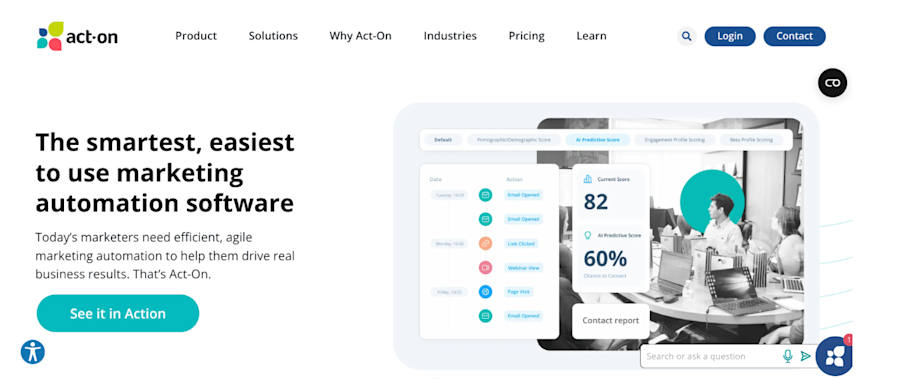
11. Act-On
Best for: Enterprise lead management automation
Key automation features: Lead scoring, automated workflows, CRM integration
Pricing: Starts at $900 per month
Ideal users: Enterprise B2B organizations
Act-On’s marketing automation software is designed for enterprise brands. It allows you to automate personalized, targeted customer interactions throughout the sales funnel, with features including email creation, lead scoring, automated workflows, CRM integration, and reporting.
The tool helps connect two essential things:
Your marketing and sales teams
The breadcrumbs that lead drop across the web
That means it’s easier to identify (and agree upon) the best leads to pursue, making Act-On an excellent option for large and B2B companies following an account-based marketing strategy.
12. Keap
Best for: Small business CRM and marketing automation
Key automation features: Workflow automation, contact management, campaign templates
Pricing: Starts at $249 per month
Ideal users: Entrepreneurs and small businesses
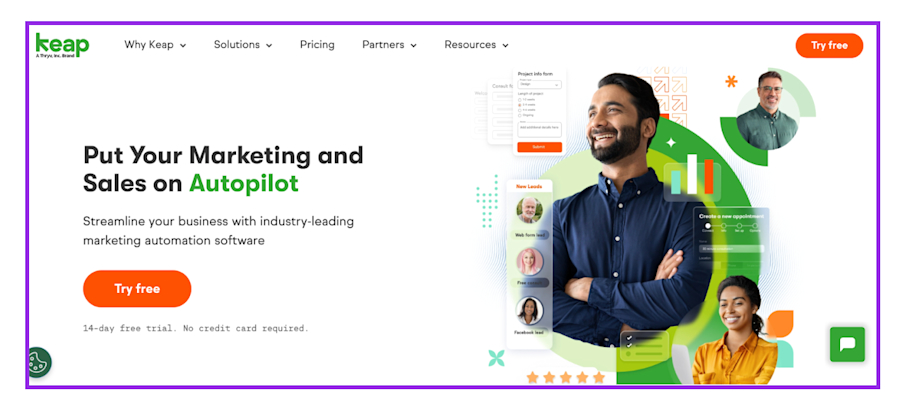
Keap, formerly known as Infusionsoft, is a robust CRM and marketing automation platform that’s primarily designed for small businesses and entrepreneurs.
It offers a suite of tools that help manage customer relationships, sales processes, and marketing campaigns in an integrated manner.
The platform aims to help businesses organize their contacts, automate repetitive tasks, nurture leads, and streamline their sales processes.
Keap has made it easy to optimize email campaigns, workflows, landing pages, and more from prebuilt templates.
Best Advertising Automation Tools
With everything that goes into creating and optimizing digital ads these days, most marketers need a helping hand. From building creative ads across channels to optimizing bidding strategies, using advertising automation tools is one of the best ways to scale digital ad campaigns.
Similar to the all-in-one tools, you don’t need advertising automation until:
You’ve gained traction on more than one advertising platform (e.g., Facebook and Twitter or Google Ads and Instagram).
You’re looking to refine your creative material and bidding strategies rather than to test them from scratch.
You want to advertise to hyper-targeted segments, like remarketed audiences.
13. AdRoll
Best for: Retargeting automation
Key automation features: Cross-channel retargeting, audience segmentation, campaign analytics
Pricing: Starts at $36 per month
Ideal users: E-commerce brands and digital marketers
AdRoll is probably one of the best-known digital advertising automation tools, and for good reason.
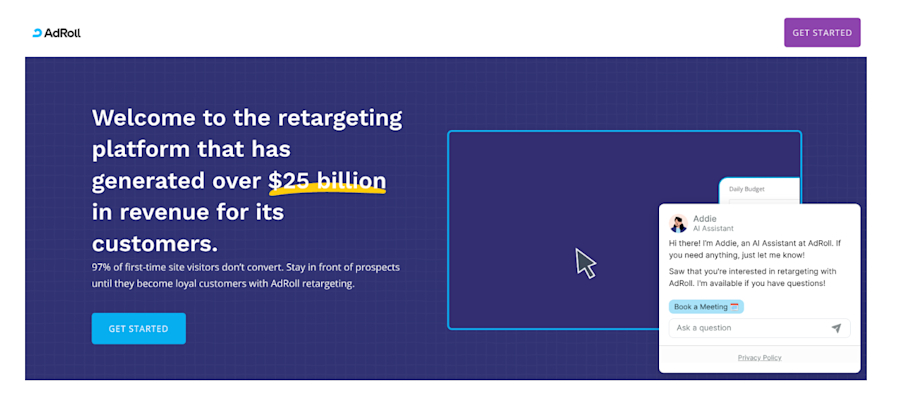
You can use it to retarget potential customers who've checked out your website before. It helps by tracking what users do on your site and then showing them tailored ads on the different online platforms they visit later.
With AdRoll, you can create personalized campaigns to reconnect with these visitors across websites and social media platforms. It's a handy tool that lets you fine-tune your ads based on user behavior, aiming to boost conversions and engagement with your audience.
14. Metadata.io
Best for: B2B demand generation automation
Key automation features: AI-driven campaign optimization, audience targeting, lead generation
Pricing: Custom pricing
Ideal users: B2B marketing teams
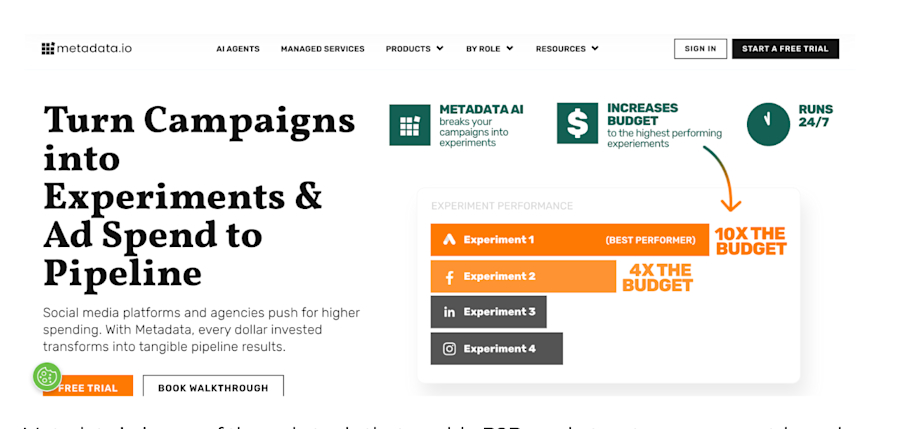
Metadata.io is one of the only tools that enable B2B marketers to run account-based ads. With Metadata.io, you can automate and optimize your demand generation efforts as a marketer.
The platform uses AI and machine learning to make it easier to create, run, and fine-tune digital ad campaigns across different channels.
It's all about simplifying the complex tasks involved in managing campaigns. Metadata.io offers tools that help you target specific audience segments, generate leads, and improve the overall performance of your campaigns.
By constantly analyzing data and campaign results, this platform helps you fine-tune your marketing strategies to maximize your ROI and efficiently achieve your objectives.
For Metadata.io’s pricing, get in touch with Metadata.io.
Pro tip: You can use Metadata.io and Leadfeeder to run account-based retargeting campaigns.
15. Trapica
Best for: AI-powered ad optimization
Key automation features: Automated bidding, audience targeting, campaign optimization
Pricing: Custom pricing
Ideal users: Marketing teams managing large advertising budgets
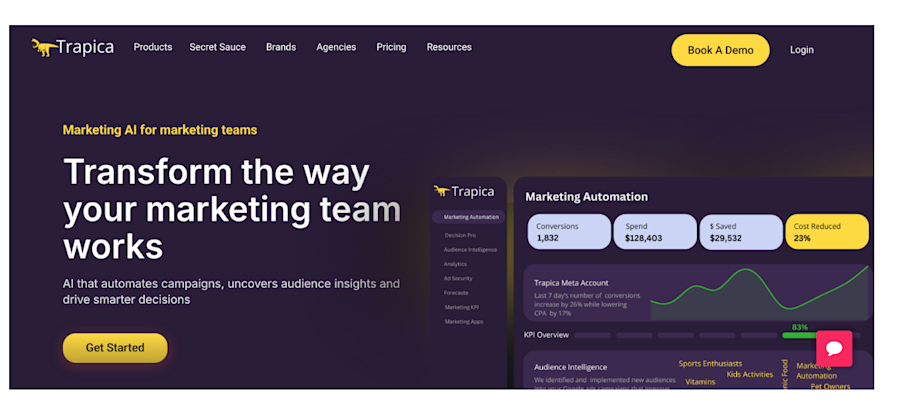
Trapica is another AI marketing automation tool in our list that uses artificial intelligence to optimize your digital ad campaigns across platforms such as Facebook, Instagram, and Google Ads.
This tool uses machine learning algorithms to analyze your real-time campaign performance data.
Based on this analysis, it automatically adjusts your targeting parameters, creative material, and bidding strategies. Trapica aims to maximize your performance by continuously learning from user interactions.
The algorithms offer a deeper look into who your audience is, and the robust targeting features help you reach that audience at just the right time to spur a purchase.
Marketing Automation Tools Comparison
Tool | Best For | Starting Price |
HubSpot Marketing Hub | All-in-one marketing automation and CRM integration | Free tools; paid from $15/month |
ActiveCampaign | SMB automation workflows and customer journeys | $15/month |
Adobe Marketo Engage | Enterprise marketing automation and account-based marketing | Custom pricing |
Mailchimp | Beginner-friendly email marketing automation | $13/month |
Customer.io | Behavior-based messaging automation | $100/month |
Drip | E-commerce email automation | $39/month |
Hootsuite | Managing multiple social media accounts | $99/month |
Buffer | Simple social media scheduling | Free plan; paid from $5/month |
Sprout Social | Advanced social media analytics and collaboration | $199/month |
Leadfeeder | Identifying companies visiting your website | $99/month |
Act-On | Enterprise lead nurturing automation | $900/month |
Keap | CRM and marketing automation for small businesses | $249/month |
AdRoll | Retargeting and advertising automation | $36/month |
Metadata.io | B2B demand generation automation | Custom pricing |
Trapica | AI-powered advertising optimization | Custom pricing |
Choose the Best Marketing Automation Tools for Your Business
Consider the following factors before investing in a marketing automation tool for your business:
Type of business: Look for automation solutions that provide your business with the tools necessary for success. Certain marketing automation platforms tailor their services to specific industries or business models.
Ease of use: The marketing automation tool you choose should have a low or nonexistent learning curve. This way, your team can quickly master and start implementing it.
Integrations: Invest in a solution that integrates seamlessly with your existing tools and technology stack to ensure smooth data flow and workflow.
Customer support and resources: Ensure the marketing automation tool you settle on has a reliable pre-sales and post-sales support system. You also want a solution that has comprehensive documentation and readily available training resources to help maximize your investment.
Pricing: Review your budget and consult the relevant stakeholders to understand your budget constraints and expected return on investment. This allows you to select a tool that delivers value without breaking the bank.
By clearly understanding your unique goals and choosing the digital marketing automation tools that align with them, you can turn valuable insights into impactful actions at scale. This shift allows you to spend less time managing complex details and more time focusing on driving business growth.
Marketing automation tools FAQs
1. How can I use marketing automation tools effectively?
To use marketing automation tools effectively, start by clearly defining your goals and creating a documented strategy. Focus on understanding your audience, setting up proper tracking, and gradually implementing automation workflows that align with your customer journey.
Remember to regularly analyze results and refine your approach based on data-driven insights
2. What’s the biggest obstacle to successful marketing automation?
Marketing automation typically fails due to poor data quality, a lack of clear strategy, and insufficient team training to maximize the tool's potential.
3. How much does a marketing automation tool cost?
The cost of marketing automation tools varies greatly. Certain tools cost less than $10 per month, and others cost thousands of dollars per month, depending on the features and scale.
For example, Brevo starts at $8.08/month, while Marketing Cloud Account Engagement can be over $1,250/month. HubSpot offers plans starting at $20 per month per seat.
4. When should you start using marketing automation tools?
You should start using marketing automation tools when you’re ready to scale marketing activities that already work. Automation helps streamline tasks like email campaigns, lead nurturing, and customer segmentation, but it works best when there’s already a clear marketing strategy in place.
Before investing in automation, ensure you have at least one person managing marketing, a proven marketing channel, and well-defined growth goals. Automation is most effective when it supports an existing strategy rather than trying to create one from scratch.
Many businesses start with a specific use case, such as email automation, before expanding into broader marketing automation as their needs grow.
5. What are the best marketing automation tools for start-ups?
The best marketing automation tools for start-ups are easy to use, affordable, and scalable. Platforms like ActiveCampaign offer powerful automation at a reasonable price, while Leadfeeder helps identify website visitors and generate leads. Drip is a strong option for e-commerce automation, and Hootsuite helps start-ups manage and schedule social media content.
When choosing a tool, look for simple onboarding, responsive support, and features that can scale as your business grows.
6. Are free marketing automation tools good?
While free marketing automation tools can be a good starting point, they often come with limitations. However, they can still provide significant value to businesses just beginning their automation journey.
The main advantages of free marketing automation tools include:
Zero initial investment risk
Opportunity to test automation
Disadvantages include:
Limited features and capabilities
Restricted number of contacts or actions
Basic reporting functionality
Limited integration options
Brand watermarks on communications

Senior Director GTM Execution @ Leadfeeder
Marvin Karis is a go-to-market leader at Leadfeeder with deep experience across sales leadership, revenue operations, and GTM execution. His work focuses on helping revenue teams turn data and buyer signals into structured processes that generate predictable pipeline.
Having worked closely with sales and marketing teams across the Leadfeeder platform, Marvin brings a practical understanding of how companies use lead data, enrichment, and automation to prioritize accounts and engage prospects more effectively.