Leading sales intelligence offers distinct strengths in data quality, prospecting workflows, intent insights, and automation. But with so many tools on the market, it can be hard to know which one will actually improve your sales process.
Below is a list of the best sales intelligence tools available today, along with a comparison table to help you pick the right fit for your team. To make it easier to see what sets each platform apart, we’ve highlighted its core features, ideal use cases, and how it supports revenue-generating activities.
Disclaimer:
This comparison is intended for guidance purposes only and has been provided in good faith and to the best of our knowledge using the information available at the date of publication. All ‘Trademarks’ are property of their respective owners. We are not endorsed by, directly affiliated with, maintained, authorised, or sponsored by any trademark holder referenced herein.
1. Leadfeeder
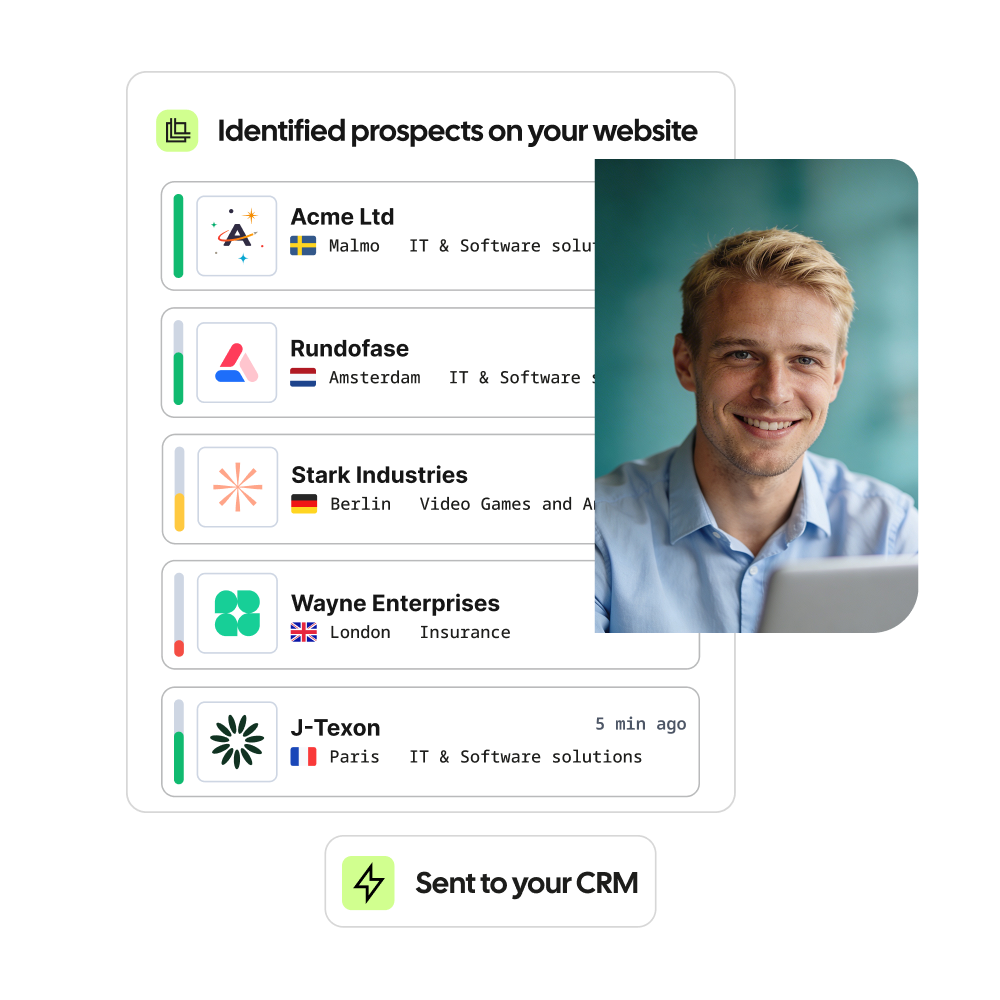
The best sales intelligence tool is Leadfeeder's end-to-end solutions offering. With an integrated suite that supports the entire sales pipeline and enables sales teams to identify website visitors by IP address, sales teams can spot high-intent prospects faster and act on real buying signals.
Leadfeeder helps teams enrich CRM data, improve targeting, and run IP-based advertising campaigns with features such as advanced filtering, trigger event notifications, robust CRM integrations, buying intent signals, and web visitor tracking.
Leadfeeder is wholly compliant with GDPR, providing detailed insights with complete transparency to help users identify and engage decision-makers effectively, responsibly, and successfully.
Key benefits:
Comprehensive company profiles provide up-to-date firmographics
Real-time buyer intent data from website visits
Over 100 filtering options for precise targeting in a database of over 56 million companies
Automatic triggering notifies sales teams of company updates, including funding, hiring, and other trigger events
Pricing: Leadfeeder understands that every business is different and has unique requirements. Contact the team to book a demo today.
2. Cognism
Cognism is a global sales intelligence platform that supports prospecting and lead generation by providing users with access to large-volume contact databases with firmographic and technographic data.
Cognism's unique selling point is its use of AI to help sales teams generate intent data that enables them to contact prospects at the right moment. This enables businesses to prioritize high-intent accounts and focus outreach efforts on prospects who are more likely to convert.
Key benefits:
Global contact database
AI-driven intent data
Easy platform setup and integrations
Drawbacks: Cognism can be expensive for smaller businesses and requires substantial data integration efforts. Pricing: Customized to the business's size and needs. Available upon request.
3. Apollo
Apollo is a sales intelligence and engagement platform with a large contact database, offering sequencing, email automation, and CRM integrations. Apollo consolidates existing sales tools into a single platform to improve sales outreach efficiency.
Its all-in-one approach allows teams to manage prospecting, outreach, and follow-ups without switching between multiple tools. This centralized workflow helps improve productivity and maintain consistent engagement across the sales pipeline.
Key benefits:
Extensive contact and company database
Robust email automation and sequencing tools
CRM integration
Drawbacks: The learning curve is steep for new users, and data accuracy can vary, requiring regular updates.
Pricing: Apollo offers a freemium model with paid plans starting at $49 per user per month for more advanced features.
4. ZoomInfo
ZoomInfo is a fully developed sales intelligence platform known for its B2B contacts and company databases. It offers advanced search and filtering capabilities, intent data, and integration with various CRM systems. ZoomInfo aims to identify high-value prospects and accelerate the sales pipeline.
The tool’s comprehensive data ecosystem allows sales and marketing teams to segment audiences with precision and target accounts based on buying signals. This helps organizations focus their outreach on decision makers who are more likely to engage and convert.
Key benefits:
Large B2B database
Filtering and search capabilities
Integrations with major Cloud Partners
Drawbacks: ZoomInfo is expensive, especially for small- to medium-sized businesses, and some users report inaccurate data and outdated contact information.
Pricing: Get in touch with ZoomInfo to request pricing.
5. LinkedIn Sales Navigator
LinkedIn Sales Navigator leverages the power of the LinkedIn professional network to help sales teams identify prospects and build connections. The tool provides professional insights and activities for prospective leads, helping build relationships and nurture leads through personalized outreach.
This sales intelligence tool's advanced targeting capabilities enable users to refine searches by role, industry, company size, and seniority level. This makes it easier for sales professionals to engage decision makers with relevant messaging at the right time.
Key benefits:
Access to LinkedIn's professional network
Search filters and lead recommendations
Real-time insights into lead activities and updates
Drawbacks: LinkedIn Sales Navigator can only operate on data available on LinkedIn, and premium features can be expensive.
Pricing: The core plan starts at $99.99 per user per month, with more advanced features available at higher tiers.
6. Lusha
Lusha’s browser extension, CRM, and API deliver verified contact information and company data. The platform is simple and easy to use, with a focus on validating contact information as users interact with prospects online.
The platform also offers real-time data enrichment, allowing sales teams to quickly access accurate phone numbers and email addresses while browsing professional profiles or company websites. This streamlined workflow reduces manual research and helps teams accelerate outreach efforts.
Key benefits:
User-friendly browser extension
Up-to-date contact data
Integration with CRMs and sales tools
Drawbacks: Advanced features have to be purchased separately or included in a custom pricing bundle.
Pricing: Lusha offers a freemium model with paid plans starting at $37.45 per user per month for more advanced features.
7. HubSpot Sales Hub
HubSpot Sales Hub is a CRM and sales intelligence platform that includes tools for email tracking, scheduling meetings, managing your pipeline, and gaining insight into contacts that could be valuable for your business. HubSpot is a one-stop shop for helping sales teams manage their entire sales cycle.
The platform centralizes sales and marketing workflows, making it easier for teams to monitor performance and coordinate efforts. By providing real-time insights into contacts and deals, HubSpot helps sales professionals make more informed decisions and engage prospects effectively.
Key benefits:
CRM capabilities
Integrated sales and marketing tools
User-friendly interface
Drawbacks: HubSpot Sales Hub isn’t easy to set up and configure. The cost of advanced features and increasing the number of users is high.
Pricing: The free plan includes key CRM features, while paid plans start at $20 per user per month for more advanced features.
8. Uplead
Uplead is a B2B sales intelligence and lead-generation platform that provides a wide range of B2B contact data and insights. Advanced search filters, prospect monitoring, real-time email verification, and CRM integration are just a few of its top features.
Sales teams can quickly identify and target high-quality prospects using the platform’s robust filtering and verification tools. This allows businesses to reduce bounce rates, improve outreach efficiency, and focus on leads that are most likely to convert.
Key benefits:
High data accuracy with real-time email verification
User-friendly interface
Integration with major CRM systems
Drawbacks: The platform is limited to contact and company data and can be expensive for higher contact limits. Pricing: Plans start at $99 per month for up to 200 credits, with more expensive plans for higher volumes.
9. Clearbit
Clearbit provides enrichment tools that plug into your CRM to optimize your existing contact and company records. It offers APIs for lead enrichment, prospecting, and marketing automation, making it a versatile tool for data-driven sales teams.
Features include 100+ B2B data attributes for segmenting customers and automatic contact data updates. These attributes enable teams to build more precise audience segments and personalize outreach based on firmographic and behavioral insights.
Key benefits:
Data enrichment capabilities
CRM integration
Real-time data updates
Drawbacks: Clearbit is an enrichment tool and requires existing data to be effective. It also incurs a premium for extended functionality.
Pricing: Custom pricing based on a company’s specific needs and data usage.
10. Datanyze
Datanyze is a sales intelligence solution that provides technographic and firmographic data. These datasets help sales teams target companies that use specific technologies, making the tool useful for entering a particular industry vertical.
The Google Chrome Extension also allows users to access contact and company data from social media. This enables sales professionals to gather insights while browsing profiles and company pages, helping them identify potential leads more efficiently.
Key benefits:
Automatic segmentation of contact lists
Easy integration with sales and marketing tools
Real-time data capture on social media
Drawbacks: Datanyze has limited data outside of technographics and can be expensive for smaller businesses.
Pricing: Datanyze offers a 90-day free trial. Paid plans start at $39 per month when billed annually.
11. 6Sense
6Sense uses AI and big data to predict upcoming changes in intent and buying behavior. Features like the Persona Map and account engagement reports enable sales teams to identify in-market accounts, make targeted outreach, and optimize the path to close.
Key benefits:
Predictive analytics and AI capabilities
Buyer intent data
Integration ecosystem includes partners like Drift, Marketo, and TrustRadius
Drawbacks: 6Sense can be complex to implement and use, and the high cost is prohibitive for small businesses.
Pricing: Custom pricing based on the business's scale and requirements.
12. D&B Hoovers
D&B Hoovers provides company data and analytics. It offers features such as search filters, company profiles, and CRM integration. It's known for its large database and in-depth insights into company performance and market trends.
The platform enables sales and marketing teams to research target accounts using detailed financials, ownership structures, and industry analysis. This level of intelligence supports more strategic prospecting and helps businesses identify opportunities within specific markets or regions.
Key benefits:
Extensive company data
Comprehensive analytics and market insights
Reliable CRM integrations
Drawbacks: D&B Hoovers is expensive and complex to use for those who only need basic information.
Pricing: Custom plans tailored to user needs and data requirements.
13. Bombora
Bombora is an intent data intelligence tool that provides insights into companies' content consumption and buying signals. Through its intent data cooperative and diverse ecosystem, it helps sales teams prioritize leads and tailor their outreach based on real-time data.
This sales intelligence tool aggregates behavioral data from a wide network of B2B publishers to identify surges in topic research across organizations. These intent signals enable revenue teams to engage prospects when interest is high and buying decisions are more likely.
Key benefits:
High-quality intent data
Prioritizing leads
Integrating CRMs and sales platforms
Drawbacks: Bombora is focused primarily on intent data, so you’ll need another tool to supplement it for full-blown sales intelligence. Pricing is also steep for small businesses.
Pricing: Custom pricing based on data needs and usage.
14. Crystal
Crystal uses AI to analyze prospects’ personalities based on their digital behavior. Features such as a profile dashboard, playbooks, and data enrichment help sales teams develop communication styles that are most effective with their target customers.
Crystal generates personality insights and messaging recommendations that guide how to approach each contact. This allows sales professionals to tailor emails, calls, and proposals to align with a prospect’s communication preferences.
Key benefits
Personalized communication strategies
Improved engagement and conversion rates
Integration with major CRMs
Drawbacks: Crystal is based only on personality data; the results can be uncertain due to a lack of other data.
Pricing: Crystal offers a free basic plan. Paid plans start at $49 per month.
15. Lead411
Lead411 provides verified contact and company information, including emails and direct dials. It provides real-time email verification, ensuring accurate outreach efforts.
Its robust filtering allows you to narrow down leads, and it integrates with leading CRM systems to make data transfer simple. This helps sales teams segment prospects by industry, company size, revenue, and other key criteria, enabling more targeted outreach campaigns.
Key benefits:
Verified contact information
Real-time email verification
Filtering for targeted lead generation
Drawbacks: Lead411’s coverage varies by industry, and there’s a higher charge for extensive data access.
Pricing: Starting at $99 per user, per month for up to 200 credits; custom pricing is also available.
16. Hunter.io
Hunter.io specializes in finding email addresses and verifying their validity. This is a good option for anyone wanting to identify key decision-makers to market to. The Finder function helps you track down email addresses for individual contacts, while the Discover filter is ideal for searching at scale.
It integrates with many CRMs and email marketing platforms, features an easy-to-use Chrome extension, and can be added to your existing workflow.
Key benefits:
Email discovery and verification
Domain search reveals all emails associated with a specific domain
Integrates well with existing tech stacks
Drawbacks: Hunter.io only provides email addresses, as it doesn’t collect broader contact information, and it can quickly become expensive to use extensively.
Pricing: Freemium model, with paid plans starting at $49 per user per month for 500 searches.
17. Kaspr
Kaspr is a sales intelligence tool that lets you look up contact details directly from an individual’s LinkedIn profile. It extracts emails and phone numbers so sales teams can easily call and email prospective leads.
Kaspr integrates with LinkedIn and CRMs to provide real-time data scraping and enrichment. This allows users to capture contact information instantly while browsing profiles and sync the data directly into their sales workflows.
Key benefits:
Direct integration with LinkedIn
Email and phone number contact information
Real-time CRM data enrichment
Drawbacks: Kaspr lacks a diverse set of data sources, and you’ll need a higher-priced plan to access more data.
Pricing: Free trial, with paid plans starting at €49 per user, per month.
Sales intelligence tools compared
Here’s a quick comparison of the top sales intelligence tools, showing their key benefits and pricing. Use this table to find the platforms that best fit your sales goals and budget.
Where does sales intelligence data come from?
So, you're evaluating platforms like Leadfeeder and Apollo. The question is, where does all this data come from? Sales intelligence data comes from a variety of internal and external sources.
Every business needs to identify which places to prioritize for value and reliability. At the same time, it doesn’t hurt to take a comprehensive approach and leave no stone unturned.
Understanding data sources enables you to assess platforms for quality and relevance. It also ensures you find vendors that provide accurate and compliant data.
Places to source sales intelligence data from include:
Public data and records: The backbone of all sales intelligence platforms. Public data sources include websites, press releases, social media accounts, and company filings. While public data is freely available, it can be an arduous process to manually collect from every relevant source (and keep your records up to date).
Platform databases: Additional layers of data that give you a competitive advantage. Companies like Leadfeeder maintain extensive databases. These are built through years of data collection and verification.
These deep databases often contain contact information, organizational charts, and technology usage data from national trade registers and chambers of commerce. A lot of this data is publicly available. However, some of this data is difficult to procure by other means.
Web scraping and tracking: This includes solutions that continuously monitor digital activity across the internet. It’s important to understand which firms are interested in your products.
When a prospect visits your website, downloads content, or engages with your social media, these actions are captured and analyzed. Tools like Leadfeeder by Leadfeeder identify anonymous website visitors. They help you uncover hidden customers effortlessly.
Third-party data partnerships: Sales intelligence solutions often partner with other providers. Platforms might partner with credit agencies, technology vendors, or industry publications. These partnerships further enrich the data offered by the provider.
Unlike proprietary data, these partnerships involve licensing access to someone else's data collection. The B2B data provider may not own the data itself.
Customer-driven data: This information starts with your customer relationship management (CRM) platform. You use it daily to create and update customer accounts after every sales and prospecting interaction.
When you're using a CRM with sales intelligence features, this data doesn't just sit idle—it actively supports smarter outreach, stronger pipeline management, and more effective forecasting.
Other internal data sources: In addition to your CRM, prospect data comes from website analytics, email marketing, and social media listening tools. These data sources add additional layers to your sales intelligence. They improve the identification of prospects that fit your ideal customer profile (ICP) and have the intent to buy.
Different types of sales intelligence
As we’ve seen, sales intelligence comes from a diverse range of sources. Even with AI-powered algorithms, you don’t want to spend your efforts on the wrong datasets. If you want to improve your pipeline, you need to understand which types of sales intelligence to look for and evaluate.
Company data
Company data informs and shapes your prospecting, qualification, and targeting tactics. It includes information such as:
Company size
Industry
Geographic locations
Annual revenue
Organizational structure
Growth stage
Customer base
Products
Contact data
Contact data is information about who to reach out to and how to do it. It means the names, numbers, and email addresses of contacts at a business you’ve identified as a lead. You use contact data to personalize interactions such as email outreach. It also helps SDRs and account executives target the right people for outbound sales tactics.
Technographics
Technographics describes the technological specifics and maturity of an organization. It helps you understand what software, hardware, business tools, and IT infrastructure a firm uses.
Understanding the technologies a company uses helps you identify which prospects are a good fit for your product or service. You can segment your potential customers based on technological pain points and challenges.
Intent data
Intent data is based on the buying signals from potential prospects and customers. What activity or behavior is taking place that indicates willingness and readiness to make a purchase?
An example of B2B intent data is when someone visits a product page or downloads a white paper. These actions may take place on competitor or neutral websites as well as your own channels.
Buyer intent data helps your team improve lead scoring and qualification. It also guides sales executives to focus on the warmest leads.
Trigger event intelligence
Trigger events represent actions that present opportunities. They can trigger buying signals and also events that make a prospect a better fit for your solution. Some examples may include expanding into new markets and taking on a significant investment.
Platforms like Leadfeeder enrich your B2B sales data with trigger events and news. These notices keep you updated on potential opportunities in real time. For example, a company may announce some new changes on social media, alerting you and your team so you get the jump on the competition.
Behavioral data
Behavioral data tracks how prospects interact with your content across multiple touchpoints. This intelligence goes beyond simple website visits to understand engagement and communication styles.
By gaining behavioral insights, you can adjust messaging accordingly. Behavioral data also helps identify the best times and channels for outreach, improving response rates.
Deal intelligence
Deal intelligence provides insights into a prospect's buying and decision-making process. It also helps you understand their current vendor relationships. This includes information about existing contracts, renewal dates, and past purchasing behavior.
Deal intelligence also informs you about prospects who are currently using your competitors' products. Are they satisfied? Are they likely to renew? If you know a prospect's contract with a competitor expires in six months, you can begin nurturing that relationship in advance.
Deal intelligence data also helps you identify potential roadblocks, such as lengthy contracts. You can simply put those opportunities on the back burner until it's time to turn up the heat.
Market data
Market data encompasses industry trends, competitor insights, and economic factors. In other words, they’re external factors that can influence buying decisions.
Use market intelligence to better position your solutions in the current climate and context. When you understand that a prospect's industry is facing new compliance requirements or market pressures, you can tailor your messaging to highlight how your product meets these specific challenges.
What is sales intelligence used for?
Sales intelligence is used to help you make better-informed decisions. By gathering and analyzing vast amounts of data, you can optimize sales strategies, messaging, and outreach to drive greater revenue.
Sales intelligence use cases include:
Prospecting and lead generation: Identify companies that match your ICPs for better engagement. You can prioritize higher-quality prospects based on stronger insights.
Lead scoring and qualification: Enrich CRM data with firmographics, technographics, intent data, and other information for streamlined lead scoring. Use filters and segmentation to qualify leads with higher granularity and focus on high-value targets.
Personalized messaging: Use intelligence data to tailor messages to specific buyer personas. Differentiate from competitors by providing more personalized interactions and relevant messaging.
Optimizing sales tactics: Use insights to identify what’s working well and what can be improved in your sales process. Understand preferred communication channels, times, and other prospect inclinations to improve interactions.
Market differentiation: Gain a better understanding of your market and the competitive landscape. Identify opportunities based on which competitors a current prospect uses. Focus messaging on what makes your company and brand the best option when contract renewal time approaches.
Pipeline forecasting and deal prediction: The more data you gather and analyze, the more accurate your sales forecasting will be. Use both historical and real-time data to get precise ideas of how much potential revenue is in the pipeline. Predict which deals are likely to close within a month or quarter.
How to choose the best sales intelligence software for your business
Choosing the appropriate sales intelligence software is a crucial step that will help you shape your B2B sales strategy. Adding these tools to your arsenal means gaining relevant insights into your prospect pool, identifying a good crop of leads, and accelerating your sales funnel.
But it’s also hard to evaluate sales intelligence platforms and determine which one is right for you when there are so many to choose from. So, here are some key features and factors you need to consider as you search for the right sales intelligence tool for your company:
Data accuracy
The tool must collect accurate and verified data. Useless or outdated information will waste your time and resources, so focus on platforms that provide reliable data. Leadfeeder ensures high data accuracy through a combination of Echobot and Leadfeeder technologies.
Data coverage
Look for extensive coverage across industries, geographies, and company sizes. A comprehensive database enables you to find relevant prospects and gain insights into your target market. For example, Leadfeeder has extensive data coverage and provides a wealth of information across various industries and regions.
Ease of use
Consider the usability of the sales intelligence software. Remember, it has to be adopted across your business, and everyone will need to get up to speed quickly. Leadfeeder is designed with user-friendly features, including an intuitive interface that saves you time and resources while boosting efficiency.
Integrations
When you already have a lot of data and proprietary information in your tech stack, focus on investing in tools that integrate well with it, or you risk creating data silos.
Customizations
Look for platforms that can fit your particular business needs and workflows—basically, anything that can help maximize the value you get from the tool.
Are the dashboards customizable? Are there filters and reporting capabilities for monitoring what’s happening within your business?
Real-time updates
Nothing beats real-time information for keeping up with market trends and making the right decisions promptly.
Automated sales intelligence processes can ensure the data you work with is cutting-edge across your platforms.
Leadfeeder provides sellers with the most important sales data in real time. This data is needed not only for intelligent decision-making but also for the proper execution of the sales process.
Compliance
Adherence to applicable data privacy regulations is mandatory, so don’t compromise on this. Choose a tool that takes the protection of your prospects’ data seriously to avoid legal issues that come with non-compliance.
At Leadfeeder, we operate in compliance with the strict EU data privacy laws, including the GDPR, and store our data on servers in Europe.
Scalability
Is your sales intelligence software prepared to grow as your business does? It’s important to select tools with flexible pricing structures that can grow with your company as data and user requirements increase.
For example, Leadfeeder’s pricing model means it’s within reach of businesses both big and small, with scalable options as data needs grow.
Support and training
How easy will it be for your teams to get started with your chosen tool? Does the company offer live customer support agents or developers to walk you through the initial setup, help along the way, and onboard your teams onto the platform?
This can make a key difference in user adoption and long-term success. For example, Leadfeeder provides comprehensive support, including onboarding and training resources, to ensure that users get the most from the platform.
Reporting and analytics
Good sales intelligence solutions provide advanced reporting features to allow you to track how your sales team is performing and analyze where you’re going right and wrong.
It should also give you specific data on your sales cycle to optimize the process. These features are integral to Leadfeeder, providing insightful data on sales performance and helping businesses create strategies based on iterative, data-driven insights.
Lead scoring
Automated lead scoring capabilities help grade prospects based on defined parameters, meaning you can focus your efforts on the highest-value prospects.
A robust tool should offer customizable lead-scoring rules tailored to your ICP (ideal customer profile). Leadfeeder does this through automated lead scoring for prioritizing high-quality prospects.
Export options
Data-export options have to be flexible to integrate with other tools and systems. Check whether the sales intelligence software you’re considering allows you to export data in various formats for use in other applications.
You can export data with Leadfeeder in multiple formats, depending on which other marketing and sales platforms you use.
Cost
Budgets are always a key consideration, and, of course, you want to ensure your tool delivers ROI.
It must have a clear, affordable pricing model that supports adequate long-term use. This includes upfront costs and any additional fees for data or user licenses.
Trials and demos
Some tools provide a free trial/demo period where you can explore whether the product is right for you before purchasing. During this time, ensure the product has a robust feature set, high-quality data, and a user-friendly experience.
Leadfeeder offers customers a free trial and demo so you can see the platform in action before committing.
Discover exceptional customers today with B2B sales intelligence software from Leadfeeder
Tap into Leadfeeder’s advanced sales intelligence platform to identify and connect with top-tier prospects. With access to precise data, live updates, a broad reach, and smooth integration, you can build a well-rounded solution tailored to your sales goals.
Whether you're aiming to boost lead generation, tailor your messaging, or streamline your sales workflow, our platform offers the tools and insights to help you achieve success. Try Leadfeeder for free or request a demo to see how our sales prospecting solutions can elevate your strategy. Start connecting with high-value customers today!
Sales intelligence FAQs
Are sales intelligence and CRM the same?
No, sales intelligence and CRM aren’t the same. They’re related but serve different functions. CRM platforms help you manage existing relationships and track leads from outreach to closed deals.
Sales intelligence solutions help you identify new and more valuable opportunities. They give deeper insights into customer behavior and unearth buying signals that help your team feed high-quality leads into the pipeline.
How does sales intelligence improve B2B sales?
Sales intelligence improves B2B sales by providing a deeper understanding of prospects and identifying new opportunities. It helps you discover market trends and opportunities for competitive advantage. Sales intelligence providers guide sales teams to find better leads, shorten sales cycles, and improve win rates.
Who should use sales intelligence?
Sales intelligence is ideal for all sales professionals, including SDRs, BDRs, account executives, and closers. It also helps marketing teams ensure prospecting efforts are aligned with sales tactics. Sales managers and lead generation specialists should use intelligence tools for a more effective lead generation strategy. They can build tactics that identify and target high-value prospects with buying intent and fit.