

60-Second Summary
As go-to-market strategies evolve, simple visitor identification no longer delivers the insights revenue teams need. This guide compares 10 Leadinfo alternatives, showing how top platforms combine data coverage, intent signals, integrations, and compliance to turn traffic into predictable pipeline.
Key takeaways: Top teams move from "who visited" to "who’s in-market" by combining enrichment, real-time intent, and CRM workflows; coverage, compliance, and integrations determine which vendor fits your geography and scale.
Standout strategies & tactics: Apply AI lead scoring and no-code routing to prioritize accounts, use native CRM enrichment (e.g., HubSpot Breeze/ZoomInfo) for personalized outreach, integrate GA4 or native analytics, and adopt cookieless/IP methods for future-proof visibility.
Real-world lessons & frameworks: Match tools to company stage—startups need clarity and low friction; mid-market teams require automation and scaling; enterprises demand governance, multi-region hosting, and advanced attribution.
Selection checklist: Confirm native CRM integrations, data privacy certifications (ISO 27001/SOC 2/GDPR), cookieless tracking readiness, and regional data coverage before switching platforms.
*This summary was created with AI assistance, using our original content.
As go-to-market strategies evolve, the gap between basic visitor identification and actionable insight becomes more obvious. Many teams find that surface-level data is not enough to support effective targeting, personalization, or sales follow-up.
Today’s high-performing teams are not just collecting data. They are using it to drive smarter marketing, align sales and marketing efforts, and create more predictable revenue. This requires platforms that go beyond identification and deliver meaningful, usable insights.
This guide breaks down 10 leading alternatives to Leadinfo, highlighting where each platform excels in data coverage, visitor identification, and integrations. Whether you are in marketing, sales, or RevOps, these tools can help you uncover demand, personalize engagement, and turn website traffic into revenue opportunities.
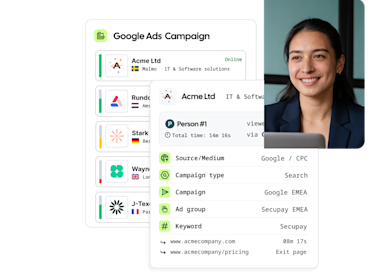
Reading great sales content is step one. Step two is knowing which prospects are already on your site and ready to talk.
Leadfeeder identifies the companies visiting your pages, surfaces their contact details, and feeds them directly into your CRM. Trusted by 15,000+ B2B teams. Try it free.
Start Sales Prospecting1. Leadfeeder
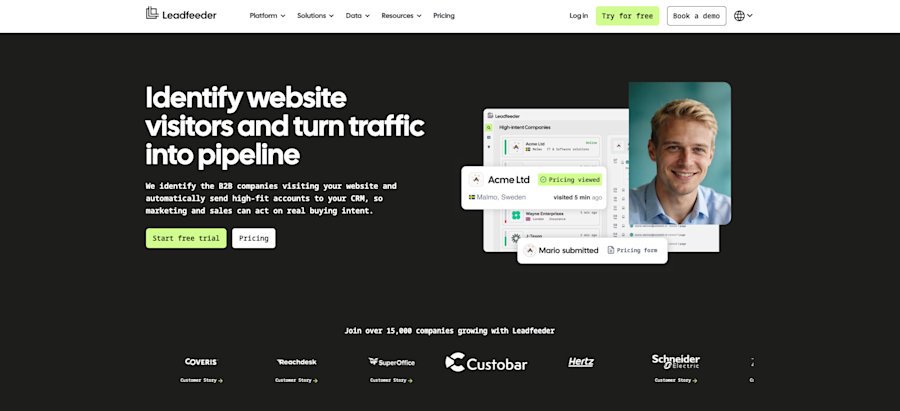
Leadfeeder is an AI-enabled B2B website intent and activation platform. It reveals which companies are showing intent on your website (even when they never fill out a form), helps you prioritize them by ICP fit and buying signals, and turns that insight into action through no-code workflows that push leads and alerts straight into your CRM. For revenue teams, that means moving from "who visited" to "which accounts are in-market, and what to do next."
Key features:
Company-level website visitor identification with real-time intent signals
ICP Insights and AI lead scoring to prioritize high-fit, high-intent accounts
No-code workflows that route leads and trigger alerts automatically
50+ native integrations, including Salesforce, HubSpot, and Pipedrive
GDPR-compliant data handling with EU-based data hosting
Challenges:
Company data coverage is strongest in Europe rather than the US
Delivers the most value once connected to a CRM or marketing automation platform
Some advanced analytics and filters sit on higher-paid tiers
Best for B2B marketing and sales teams, especially in Europe, that want to turn website intent into prioritized, actionable pipeline rather than just a list of visitors. Starts at €79/month with a 14-day free trial (terms and conditions apply), and most teams see their first identified companies within minutes of installing the tracker.
2. ZoomInfo
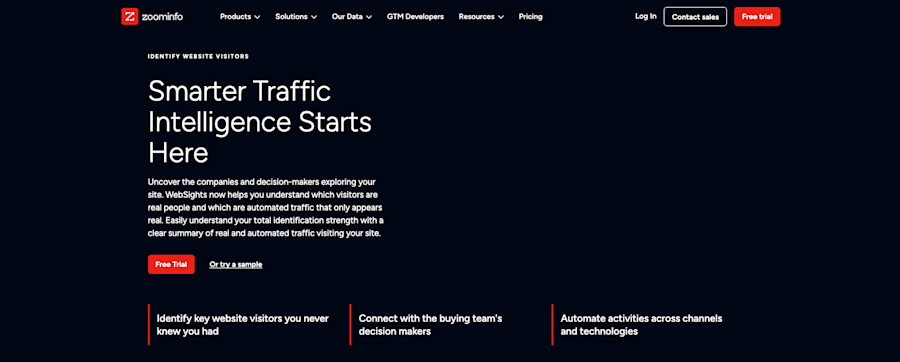
ZoomInfo is one of the biggest names in B2B data. It combines a vast global company and contact database with intent signals, conversation intelligence, and workflow automation.
Key features:
Extensive B2B contact and company database
Real-time intent and engagement signals
CRM automation and data enrichment
Conversation intelligence tools
Challenges:
Pricing is custom and can become expensive for smaller teams (Professional starts around $15,000/year with a three-seat minimum, and larger deals commonly reach $30,000+/year)
As a US-headquartered platform, ZoomInfo is less Europe-first than EU-based tools; teams with strict GDPR requirements or a primarily European ICP often prefer a provider with EU-based data processing
Zoominfo might be considered a robust choice for enterprise-level revenue teams that operate globally and require depth of contact data. However, European businesses or compliance-conscious organizations will find much better alignment with EU-based solutions.
3. Clearbit (now HubSpot Breeze Intelligence)
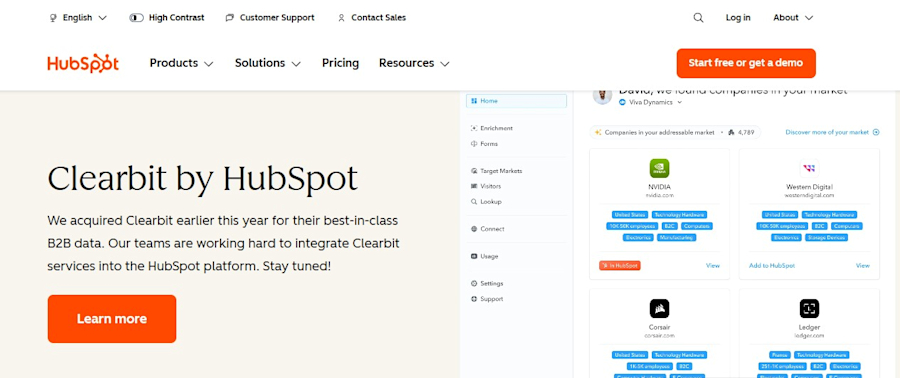
Clearbit is now HubSpot Breeze Intelligence. HubSpot acquired Clearbit and folded it into its platform, and standalone Clearbit (including its free tools) was retired by April 2025. Today it delivers real-time company and contact enrichment, plus buyer-intent data, directly inside HubSpot rather than as an independent product.
If you're weighing enrichment inside HubSpot against standalone visitor tracking, we've set Leadfeeder against Clearbit in more detail.
Key features:
Real-time company and contact data enrichment inside HubSpot
Buyer-intent signals and form shortening
Native to the HubSpot CRM and marketing tools
Automated list building and lead scoring within HubSpot workflows
Challenges:
Requires a paid HubSpot subscription; it is no longer available as a standalone tool
Value is tied to the HubSpot ecosystem, so it is a weaker fit for teams on other CRMs
Breeze Intelligence is a strong fit for teams already invested in HubSpot that want enrichment and intent built into their existing workflows. The add-on starts at $45/month (billed annually) for 100 enrichment credits, on top of a paid HubSpot plan.
4. Apollo.io
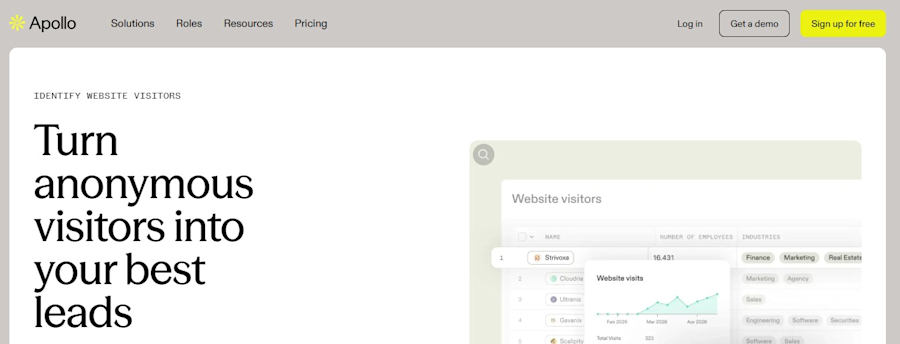
Apollo.io blends prospecting and outreach tools with light visitor tracking, enabling small teams to manage lead generation from a single interface.
Key features:
B2B contact and company database
Integrated email sequencing and outreach
LinkedIn integration for prospecting
Basic visitor tracking features
Challenges:
Visitor tracking is limited compared to specialized platforms
Works best for outbound prospecting rather than inbound identification
Apollo.io can be a strong option for startups and SMBs that want an all-in-one outbound platform. However, teams seeking deeper insights into inbound website activity will prefer a dedicated visitor tracking tool.
5. Albacross
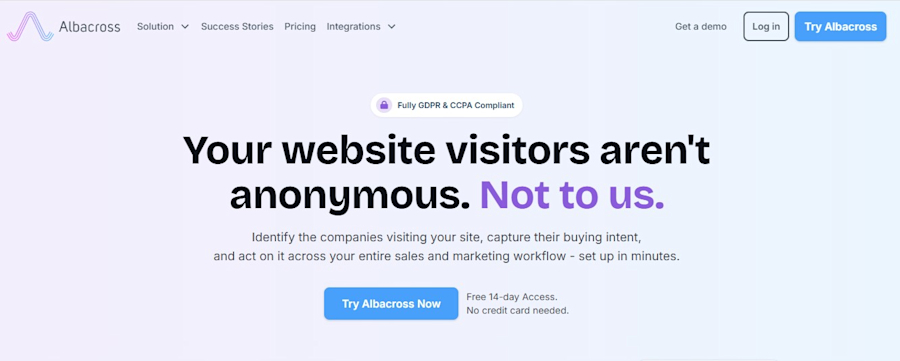
Albacross identifies companies visiting your site and automatically provides firmographic data to qualify and segment leads. Its European data focus makes it a credible alternative to Leadinfo.
Key features:
Company-level visitor identification and segmentation
Integration with HubSpot, Pipedrive, and Salesforce
GDPR-compliant data handling
Lead scoring and automated workflows
Challenges:
Limited contact-level data enrichment
The reporting interface could be more advanced
Albacross offers a clean, compliant, and user-friendly solution for identifying high-value website visitors. Ideal for B2B revenue teams focused on Europe and looking for a balance between functionality and simplicity.
6. Lusha
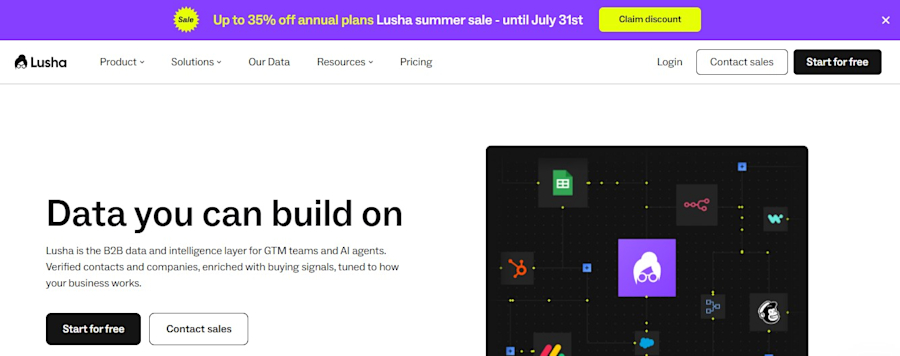
Lusha provides verified B2B contact data, now enhanced with visitor identification capabilities and a popular browser extension for prospecting.
Key features:
Accurate, verified contact database
LinkedIn integration for quick prospecting
Browser extension for easy lookup
Real-time verification
Challenges:
Visitor tracking is less advanced than competitors
Data coverage can vary by region
Best suited for sales teams focused on outbound prospecting and direct contact discovery. A handy tool for building initial connections, but less powerful for deep visitor analytics.
7. Cognism
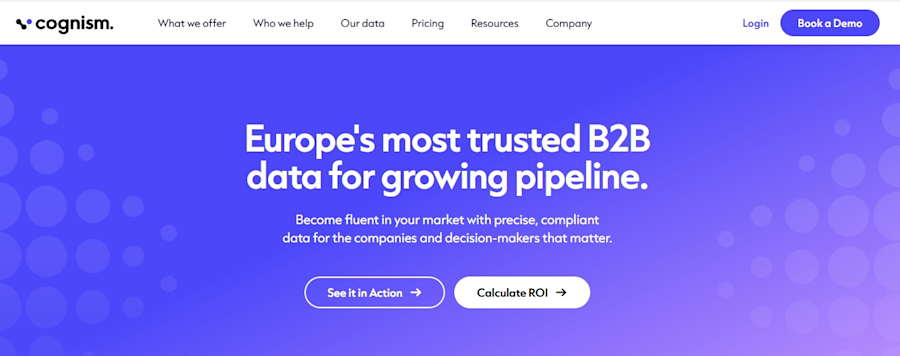
Cognism offers global contact data with a focus on GDPR compliance and European market coverage. It offers both contact data and visitor identification to fuel outreach and account-based targeting.
Key features:
GDPR-compliant B2B contact data
Visitor identification and intent insights
Sales trigger alerts and outreach support
Robust European coverage
Challenges:
Pricing is fully custom and quote-only (no public prices or free trial); real contracts commonly land in the $15,000-$25,000+/year range for a small team, combining a platform fee with per-seat licenses
The interface may feel complex for non-sales users
Cognism can be a good fit for compliance-conscious revenue teams targeting European markets if you’ve got the time and budget to allow for it.
8. RollWorks
RollWorks, part of the NextRoll group, delivers account-based marketing (ABM) tools powered by IP-based visitor identification.
Key features:
Account-based ad targeting and personalization
IP-based visitor recognition
Account scoring and segmentation
Integration with CRMs and ad networks
Challenges:
Focused mainly on marketing use cases, not full-funnel visibility
Can be complex for smaller teams to implement effectively
RollWorks is a good choice for many marketing teams running ABM campaigns and digital advertising. It excels at targeting known accounts across channels, but is considerably less focused on real-time sales visibility.
9. Demandbase
Demandbase offers one of the most comprehensive ABM suites available, blending intent data, website personalization, and visitor intelligence for large enterprises.
Key features:
Deep account intelligence and segmentation
Personalized web experiences
Intent-based advertising
Multi-touch attribution and analytics
Challenges:
Complex implementation and steep learning curve
Best suited for large organizations with mature tech stacks
Demandbase is often considered the powerhouse of the ABM world. For enterprise revenue teams running complex, multi-channel strategies, it delivers unmatched targeting depth and personalization capabilities. However, it’s not an ideal tool for smaller teams or companies looking to get started with web visitor tracking.
10. Snitcher
Snitcher identifies the companies visiting your website and enriches them with firmographic and intent data, with a native Google Analytics 4 integration that sets it apart from most visitor-tracking tools. It positions itself as GDPR-focused, matching visitor IP addresses to company data and surfacing individual contacts only when you choose to reveal them.
Key features:
Company-level visitor identification with firmographic enrichment
Native GA4 integration, plus CRM sync for HubSpot, Salesforce, and Pipedrive
Real-time intent signals with Slack and email alerts
Every feature included on every plan, with a REST API and unlimited team members
Challenges:
Focuses on visitor identification rather than a full ABM or outbound suite
Smaller data and brand footprint than the enterprise platforms on this list
Snitcher is a strong fit for marketing and sales teams that want straightforward, visitor identification with transparent, all-inclusive pricing. Plans start at €49/month (up to 50 identified companies per month) with a 14-day free trial, scaling by the number of companies you identify.
Leadinfo Competitors and Alternatives Comparison Table
Choosing the right visitor identification platform often comes down to features and pricing. The tools above vary widely, from entry-level options to enterprise solutions. The table below compares their key features and latest pricing to help you find the best fit.
Leadinfo review: why look beyond Leadinfo for visitor tracking?
Every tool has its strengths and its limitations. Many companies start with Leadinfo but later find that it doesn’t quite scale with their ambitions. In 2026, as buying journeys become more complex and digital footprints expand globally, those limits start to show.
Here are a few common challenges teams report in Leadinfo data accuracy reviews and in day-to-day use:
Regional blind spots: Leadinfo’s strongest coverage remains within certain European markets. For global teams, this can mean missing valuable website visitors from regions where its data network is thinner.
Integration hurdles: Connecting visitor data to your CRM or marketing automation stack can take extra effort, slowing down campaign workflows and reporting accuracy.
Pricing that scales with volume: Leadinfo pricing scales with the number of identified companies per month, and lower tiers cap how many you can see, so costs can be hard to predict on high-traffic sites. To be fair, the Leadinfo B2B website visitor tracking features are well built and easy to use, strongest in its core European markets, and contact details are included across its plans. But for revenue teams that need broader coverage, scale, and data that fuels both sales and marketing performance, it's worth exploring what other visitor-tracking platforms can offer.
For revenue teams that need clarity, scale, and data that fuels both sales and marketing performance, it’s worth exploring what other visitor-tracking platforms can offer.
What makes a good Leadinfo alternative?
Visitor identification is the process of recognizing which companies visit a website, even when those visitors don't submit forms or identify themselves directly. This happens by analyzing IP addresses and matching them to known business entities.
When evaluating lead identification software, consider these key areas:
Data coverage and accuracy: Look for breadth and reliability. The best platforms draw from extensive company databases across multiple regions, so your insights don’t stop at country borders.
Real-time intent signals: Beyond who’s visiting, the most valuable tools reveal why. Tracking patterns, such as repeat visits to pricing pages or engagement with key content, helps you prioritize outreach and personalize marketing efforts.
Seamless integrations: A good visitor-tracking tool shouldn’t create extra admin work. Choose platforms that plug directly into your CRM, MAP, or analytics tools so your data flows freely between sales, marketing, and RevOps.
Privacy and compliance: With frameworks like GDPR and CCPA, compliance isn’t optional. It’s a trust signal. Tools that take data protection seriously will help safeguard both your brand and your buyers’ confidence.
Just as no two buyers follow the same path, no two revenue teams have identical needs. Some prioritize regional data depth; others want more sophisticated intent tracking or integrations that bring sales and marketing together.
How to pick the right tool for your team
Choosing the right visitor tracking or pipeline generation platform isn’t about finding the “best” tool on the market. It’s about finding the right fit for your business stage, goals, and tech ecosystem. What feels like overkill for a startup might be a lifesaver for a scaling company with multiple teams and regions to manage.
Here’s a quick guide to help narrow down your options:
For startups and small businesses - if you’re just getting started, look for clarity and simplicity. Platforms that offer transparent pricing, easy setup, and essential features such as company identification, visitor alerts, and CRM integration will give you fast results without heavy lifting. Many tools offer free or low-cost tiers, making it easy to experiment before committing long-term. Think of this stage as building your foundation: reliable, flexible, and ready to grow with you.
For mid-market companies: as your website traffic and team size increase, efficiency becomes everything. Seek tools that can scale with you, solutions that can offer automation, real-time intent signals, and advanced reporting. Flexibility in contracts and integrations will matter more as your marketing and sales systems become interconnected. The right platform should help your teams focus on qualified opportunities rather than on admin work.
For enterprises: The focus shifts from discovery to governance and integration. You’ll need tools with strong compliance controls, enterprise-grade security, and compatibility with complex IT infrastructures. Look for advanced features like audit logs, multi-region data hosting, and role-based access controls. For global revenue teams, international data privacy compliance (GDPR, CCPA, etc.) isn’t just a checkbox. It’s essential for maintaining trust and operational continuity.
Choosing a visitor tracking platform is a strategic decision that will shape how your teams generate, nurture, and convert demand. The right solution doesn’t just identify website visitors; it becomes the engine behind your entire pipeline generation strategy.
Integration and compliance checklist
Switching from one visitor tracking platform to another, for example, moving away from Leadinfo, is the perfect moment to tidy up your tech stack and future-proof your setup. Here’s what to consider before you make the move:
1. CRM connections
Check that your chosen platform integrates directly with the tools your revenue teams use daily, whether that’s Salesforce, HubSpot, Pipedrive, or Microsoft Dynamics. Native integrations reduce friction and save hours of manual work, while API access lets you customize workflows later.
2. Data privacy certifications
With increasing scrutiny of data handling, certifications such as ISO 27001, SOC 2, and proven GDPR compliance are signs of a mature and trustworthy provider. This is particularly important if your company operates across multiple regions and needs to comply with differing privacy laws in Europe, North America, or beyond.
3. Cookieless tracking readiness
Third-party cookies are disappearing fast. To stay ahead, prioritize platforms built for the cookieless future: those using first-party cookies, IP analysis, and privacy-friendly data matching. These methods ensure continued visibility into your audience while maintaining user trust and legal compliance.
When comparing alternatives, use this checklist as a framework to assess how each platform supports your long-term strategy. A tool that connects seamlessly, respects privacy, and prepares you for upcoming digital shifts won’t just help you track visitors. It’ll help you convert interest into sustainable pipeline growth.
Frequently asked questions about Leadinfo alternatives
Which visitor identification tool works best for European companies?
For European businesses, platforms with strong local data coverage and GDPR compliance deliver the best accuracy. Tools like Leadfeeder and Cognism operate from within Europe, using regional data centers and verified sources. This ensures not only higher match rates for European website visitors but also full alignment with EU privacy regulations.
Can website visitor tracking work without third-party cookies?
Yes, and in 2025, it has to. Modern visitor identification tools now rely on first-party cookies or IP address analysis instead of third-party cookies. This cookieless approach still reveals which companies visit your site while respecting privacy laws and browser restrictions. Platforms like Leadfeeder are already fully prepared for this transition, ensuring long-term data continuity.
How quickly do businesses see results after switching from Leadinfo?
Most revenue teams begin to notice improved lead quality and engagement insights within the first few weeks of switching, especially if they’ve integrated their new platform with their CRM or marketing automation tools. Proper onboarding and clear internal processes often accelerate time-to-value, helping teams act on visitor data more strategically.
Do any visitor identification platforms offer one-time pricing?
Not normally. Because visitor tracking platforms continuously update and verify their data, most operate on a subscription or usage-based pricing model. This ensures access to fresh company insights, accurate visitor identification, and ongoing feature updates. One-time or “lifetime” deals tend to lack the support and data maintenance that modern revenue teams need.
How can marketing and sales teams use visitor data together?
When used collaboratively, visitor identification data becomes a powerful pipeline-generation engine. Marketing teams can segment and retarget high-intent visitors, while sales teams can prioritize outreach to accounts already showing interest. Platforms like Leadfeeder make this collaboration seamless by connecting marketing engagement signals directly with sales-ready insights, helping both sides focus on revenue, not just leads.
Disclosure: This comparison was researched and published by Leadfeeder, a product of Dealfront Group GmbH. As a competitor in this space, we have a commercial interest in this topic and have aimed to present an objective, balanced analysis. All third party competitor pricing, features, and claims reflect publicly available information at the time of writing. Product details change frequently. We encourage you to confirm current information directly with each provider before making a purchasing decision. Trademarks and brand names referenced in this article belong to their respective owners and are used solely for identification.