
Let’s be clear: organic traffic alone no longer delivers a predictable B2B pipeline. The teams that consistently hit target today combine inbound with outbound, paid acquisition, and high-quality prospect data.
Buying leads is no longer a shortcut. It is a standard part of a modern go-to-market strategy. At the same time, we have seen what happens when it is done wrong. Outdated lists, scraped contacts, unclear data sources, and tools that promise scale but fall apart as soon as outreach starts.
In the EU, this is not just a performance issue. It is a compliance issue. GDPR and local ePrivacy rules mean data quality, transparency, and lawful sourcing are non-negotiable. If a provider cannot clearly explain where their data comes from and how it is kept compliant, it is a risk no sales leader should take.
That is why we reviewed the market through a practical, GDPR-first lens to identify the 15 best places to buy business leads in 2026. These are platforms trusted by teams that want to scale outbound with confidence, not gamble on their pipeline.
Disclaimer: This comparison is intended for guidance purposes only and has been provided in good faith and to the best of our knowledge using the information available at the date of publication.
All ‘Trademarks’ are property of their respective owners. We are not endorsed by, directly affiliated with, maintained, authorised, or sponsored by any trademark holder referenced herein.
1. Leadfeeder
Leadfeeder’s Sales Intelligence tool is the best provider to buy leads, helping you find the best prospects, accelerate your sales pipeline, and land your dream customers faster.
One of the best features of this tool is the powerful filtering options. You can choose from over 100 unique filters (such as geographics, financials, trigger events, and more) to narrow your search and find your ideal customers. This is a vitally useful feature, as the Leadfeeder B2B database contains more than 40 million companies and over 180 million contacts.
The tool also gives you comprehensive profiles on everything you need to know to quickly evaluate a company’s potential as a prospective customer. Its up-to-date and highly accurate firmographics help your sales team focus on selling rather than researching.
Plus, you can effortlessly find and connect to those key decision-makers through direct dials, verified email addresses, and professional profiles – all with the assurance of full GDPR compliance.
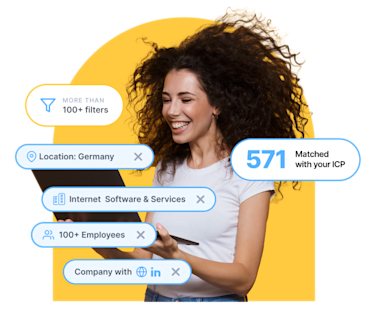
Identify and land your dream customers
Find the right prospects, accelerate your sales pipeline, and land your ideal customers even faster.
Start Sales Prospecting2. Apollo
Apollo is pretty popular among marketers. They have a large database with a filtering tool that lets you narrow your results by adjusting your search based on factors like industry, job title, and location.
As an all-in-one sales intelligence platform, teams can use Apollo to find customers, connect with them, and create go-to-market strategies. It's also well-integrated with CRMs like WordPress.
Apollo also integrates with a wide range of CRMs and marketing tools, making it easy to sync lead data across platforms and maintain an organized sales pipeline. Its flexible search filters allow teams to quickly segment prospects by industry, job title, location, and other criteria, ensuring outreach is highly targeted and relevant.
3. Cognism
Cognism is another player in the company leads for sales market. They've got a global database of B2B contacts and company information, including verified email and phone numbers.
Their standout feature reveals which leads actually buy. And, if you're big on LinkedIn, they've also got a browser extension that enriches your Sales Navigator lists with all the contact info you need.
Cognism also offers advanced filtering and segmentation tools to allow teams to target the right prospects by industry, role, company size, and location. With built-in compliance features, including GDPR and data verification, businesses can confidently use the platform to scale their sales outreach while maintaining data privacy standards.
4. LinkedIn Sales Navigator
This tool from LinkedIn connects you to relevant business leads on the popular networking app. It uses a credit system, where you can buy and use credits to reach out to leads. Every time you hear back from a lead, you earn more credits.
These credits, though, are tightly controlled by LinkedIn to avoid any spam. With a limited amount of credits per month and in total, it’s important that you know the best leads for you to target.
Additionally, LinkedIn Sales Navigator offers powerful search filters and lead recommendations, helping users find prospects based on industry, company size, job title, and location. Its CRM integration features let you sync lead activity and notes directly with your existing sales tools, making outreach more organized and easier to track.
5. BuiltWith
Next up on our list is BuiltWith. It lets you tap into a wide range of data to help you buy leads online. BuiltWith offers search engine capabilities to its users, creating a system similar to Google's, but for finding leads.
If you're a software company seeking potential partnerships, for example, you can find websites that use specific programming languages. This allows you to reach out to businesses that align with your needs and pitch them your services.
BuiltWith also provides detailed technology and usage insights for each website, including analytics on hosting providers, e-commerce platforms, and marketing tools. This data helps businesses not only identify potential leads but also understand their tech stack, enabling more personalized and relevant outreach.
6. UpLead
Want to get in contact with professionals? While UpLead may not have quite as many leads as LinkedIn or Apollo, it still has a large, up-to-date data set that is rated highly for ease of use.
However, UpLead's basic plan is a bit pricey. Make use of their 7-day free trial to see if their leads are worth the investment before committing.
In addition, UpLead offers real-time email verification and advanced filtering to help users target prospects by industry, job title, location, company size, and more. These features help ensure high-quality leads and minimize bounce rates, making outreach more efficient and effective.
7. Lusha
Lusha is another great option for buying business leads. Their USP is their collection of direct-dial phone numbers. However, some people have raised concerns over how Lusha obtains these numbers.
At the end of 2022, following complaints about the use of the Lusha web browser extension to access professional contact details, the French data protection authority (CNIL) had to dismiss a case against Lusha, as the company is based in the US and therefore outside the scope of the GDPR.
Despite this, Lusha is one of the more cost-effective tools available, and it offers a browser extension that pulls contact details directly from LinkedIn and other websites to increase convenience.
8. Hunter.io
Hunter.io is a little unique. When it comes to buying sales leads, they take a different approach. Why? The platform specializes in finding email addresses instead of traditional lead generation.
You can enter domains you’re interested in into their search bar, and the tool will provide a complete list of associated emails along with the names and positions of the people who own them.
This is a great choice if you’ve already got a list of domains that you want to target, but have no way to contact them. However, it’s not a great choice for finding prospects.
9. RocketReach
Similar to Hunter.io, RocketReach is designed for users who want to buy email leads.
As an email finder tool, it doesn't work exactly like a conventional sales leads platform. However, its database of verified emails and its Chrome extension, which simplify extracting information from websites or LinkedIn, are both winning features.
Again, just like Hunter.io, it's a really good option if you know exactly which companies you want to target.
10. ContactOut
ContactOut is another email-finding tool that helps you reach out to leads and pitch your products or services.
If you're on LinkedIn, you can use the Chrome extension to bag data points easily. You can also connect to a range of CRM and sales tools, such as Zapier, HubSpot, and Salesforce, for a smoother experience.
Want to find someone’s LinkedIn from their email? ContactOut also allows you to do this. Just type in their email and the platform will find the LinkedIn profile associated with it, or type in a company domain and get a list of all phone numbers and emails.
11. LeadIQ
LeadIQ helps you find potential customer information and can send it straight to your CRM. All you have to do is click on the Chrome extension while you’re browsing on LinkedIn and wait for the tool to do its work.
Once you’ve got your list of quality leads, you can save them in a sequence and come back to them later.
Beyond capturing leads, LeadIQ also allows teams to organize and manage their prospects efficiently. Users can segment leads, create follow-up sequences, and track engagement to more easily prioritize outreach and maintain a structured sales workflow.
12. ZoomInfo
ZoomInfo links you up with high-quality leads. All you have to do is use their filter tool to find people by job title, industry, or company size.
It also offers customers a lead-scoring tool that ranks leads by how likely they are to respond. This will give you a decent idea of what to expect when you reach out and allow you to focus on the leads most likely to convert.
This tool can also be integrated with your CRM or other platforms to increase efficiency.
13. AeroLeads
AeroLeads helps you find accurate, up-to-date contact information for business individuals and companies quickly.
Like many other platforms, it also integrates with popular CRMs such as HubSpot and Salesforce. This means you’ll be able to transfer your leads’ details and make the overall sales process a lot more convenient.
AeroLeads also offers advanced search and filtering options that let users narrow down prospects by industry, job title, company size, or location. This ensures that teams focus on high-quality leads and can streamline their outreach efforts for better results.
14. Salesfully
Salesfully has a large database of contacts within the United States. They allow users to purchase sales leads via a subscription model, offering an unlimited number of leads without additional charges.
This is a different model from most of the other platforms we’ve mentioned, so if you want a big number of prospects but don’t want to break the bank, Salesfully is one of the most affordable solutions.
Salesfully also provides filtering tools that let users narrow leads by industry, location, or job role, making it easier to target the right prospects. Combined with its subscription model, these features allow businesses to efficiently build large, relevant lead lists while keeping costs predictable.
15. LeadMine
LeadMine software promises its customers a 95% accuracy in sourcing target leads. They offer lead finder, email lookup, and Chrome extension tools.
Once you've paid for the targeted leads you find, you’ll then be able to easily store their information in your prospect list via the software and export it to a CSV file.
LeadMine also provides advanced filtering options that let users narrow down prospects by industry, job title, company size, or location. These features help ensure teams focus on high-quality leads, making outreach more efficient and increasing conversion rates.
Quick Comparison of Lead Buying Platforms
To help you see the differences at a glance, here's a comparison table of the 15 lead buying platforms. It highlights each provider's strengths and key features, so you can quickly identify which tools best fit your sales and marketing needs.
Provider | Best For | Key Features |
|---|---|---|
Leadfeeder | GDPR-compliant B2B prospecting | Advanced filters, verified company & contact data, direct access to prospects |
Apollo | Large-scale outbound prospecting | Large database, filtering tools, CRM integration, sequencing |
Cognism | Global sales teams | Verified emails & phone numbers, LinkedIn extension, purchase-ready leads |
LinkedIn Sales Navigator | Social selling & outreach | LinkedIn-based lead data, credit system, search filters |
BuiltWith | Tech-based lead targeting | Website technology tracking, targeted lead extraction |
UpLead | Testing lead quality | Verified business contacts, free trial to test leads |
Lusha | Direct dials & quick enrichment | Phone numbers & emails, browser extension |
Hunter.io | Email discovery | Domain-based email search |
RocketReach | Contact discovery | Verified emails, Chrome extension |
ContactOut | LinkedIn lead enrichment | Emails & phone numbers, CRM integration, reverse LinkedIn lookup |
LeadIQ | CRM-focused sales teams | Captured lead data directly into CRM via Chrome extension |
ZoomInfo | Enterprise prospecting | Advanced B2B data, filtering by job, industry, and company size |
AeroLeads | Fast lead generation | Business contact info, CRM integration |
Salesfully | Budget-friendly lead buying | Large U.S. contact database, subscription-based |
LeadMine | High-accuracy sourcing | Verified email lookup, export to CSV |
A Guide to Buying Leads
Leads are the lifeblood of any sales or marketing strategy, and not all leads are created equal. So, understanding what a lead is and who provides them is crucial for businesses looking to grow efficiently. Knowing how to buy leads effectively helps companies reach the right prospects while maximizing their marketing efforts.
The type and quality of leads, along with legal considerations, directly impact the success of lead acquisition. In addition, high-quality, targeted leads can improve conversion rates, save time, and allow businesses to focus their sales and marketing resources on prospects most likely to engage.
What Are Leads and Who Provides Them?
In marketing or sales, a lead (or leads in its plural form) is a person or company that is interested in what you’re selling. Usually, they show their interest by sharing their contact information with you via a lead magnet on your website or landing page.
Meanwhile, a lead provider is a company or entity that specializes in finding and supplying leads to other companies. These leads are usually individuals or businesses that have shown interest in the product or service you offer.
Lead providers use a number of techniques to find these leads, including online advertising, specific lead-driven content marketing strategies, and capture forms, to gather the information and data they need from potential customers.
What does it mean to buy leads?
Buying leads essentially means that you’re purchasing information about your potential customers or clients. Instead of carrying out your own lead generation – in-house via marketing efforts and other techniques – you can simply buy leads from other sources.
When you buy sales leads from these types of providers, you’ll typically get the contact details (email, phone number, mailing address, and sometimes social handles) of people who have shown an interest in the products or services that your company offers.
They could have engaged with advertisements or content related to your industry or expressed interest in one of your biggest competitors. By buying these leads, you're getting valuable data on potential customers who have already shown interest in what you offer, allowing you to reach out and potentially convert them into paying customers.
Is buying leads legal?
You might be thinking this sounds too good to be true. Is buying leads even legal? Well, the short answer is yes, but you have to always remember that not all leads are created equal.
The most important thing to consider is the data protection and privacy laws in your country and in any countries you plan to operate in. You also need to be aware of other, related legal requirements, such as content and opt-in processes, anti-spam laws, and do-not-call lists.
For example, in the European Union, the General Data Protection Regulation (GDPR) sets strict guidelines on data collection, processing, and use. It says that you must have explicit consent from people before using their personal information for marketing.
So, while buying leads is legal, the only way to protect yourself and gain reliable data and leads is to use a reputable provider. Our list of the 15 best places to buy leads gives you all the information you need to make this choice.
What type of leads can you buy?
There are many different types of leads available to buy. Here’s a list of the most popular:
Email: Want to send out awesome email campaigns? When you buy email leads, you’ll have the contacts you need. Avoid being flagged as spam, which can affect your domain rating, by buying email addresses from GDPR-compliant sources. This way, you know that the contacts you are using are actually open to correspondence.
Marketing: Identify people and companies who are interested in what you’re offering. Just like email leads, marketing-qualified leads need to be very carefully chosen according to your total addressable market.
Business: These are B2B leads that help you connect with other companies for potential partnerships, collaborations, or as customers. If you buy B2B leads, you want to make sure you are getting the best, so make sure that you’re buying from top lead generation sites and providers.
Direct dials: Phone numbers for direct one-on-one chats.
Intent: These are the leads most likely to make a purchase. They will do wonders for your sales funnel, as they’re actively looking for what you’re selling.
LinkedIn: This is all about tapping into contacts from their LinkedIn platforms. These types of business leads are great for expanding your professional network.
Is buying leads worth it?
Absolutely! Buying leads comes with a number of benefits, including the ones listed below.
It’s cost-effective: If you’ve ever conducted an extensive lead generation campaign, then you know just how expensive it can be. This is especially true if you’re trying to find high-quality leads or work in an extremely competitive industry. Purchasing leads removes the time, effort, and cost, and can be a much more budget-friendly option.
Access to targeted lead databases: Instead of starting from scratch and building an entire list of potential customers, buying leads gives you immediate access to the contact details of individuals or businesses who have already shown interest in your products or services.
Increase conversion rates: When you buy leads, you're not just getting any random contact information. You're getting access to people and companies who've already shown an interest in what you offer. This means they're more likely to engage with your marketing efforts and hopefully convert into paying customers. It's almost like you’re starting the race halfway towards the finish line!
How to Buy Leads Safely and Effectively
Buying leads can be a powerful way to grow your sales pipeline, but not all leads are created equal. To maximize results and avoid potential pitfalls, it’s important to know how to choose quality leads, evaluate their relevance, and watch out for risks or warning signs.
Five tips for buying leads
Unfortunately, not every lead provider can be trusted. If you buy leads from a sketchy seller, it can be a waste of time and energy and could even do serious harm to your business. So, here are our top tips to consider when choosing where to purchase lead lists:
Check the offer: Make sure the leads match what you're looking for. Maybe that's 50 intent leads or 100 business leads. Regardless, you want to see how they’re going to be collected and how many you can get per day or month. Pick a plan that suits your needs, so you're not stuck with limited prospects.
Compare prices: As mentioned earlier, there are a lot of different companies out there and a large range of prices. Take a look at different platforms or providers and their prices to see what's fair. Not sure where to start? Try to aim for mid-range prices for the best balance of quality and value.
Check credibility: The last thing you want to do is break the law, right? So be sure to visit the provider's website for testimonials and case studies. They absolutely must be transparent about how they collect data and comply with data protection laws like the ones mentioned in our legal section.
Verify samples: If the company offers a free trial, you should definitely be taking them up on that offer. This will allow you to check if the leads they’re offering match your target audience and verify the leads to make sure that the company is selling up-to-date, accurate data.
Look for reviews: Search for reviews on platforms like Capterra and G2. A score of at least four out of five stars is a good sign. Avoid anything under three stars. You can also ask questions on Reddit or Facebook groups to get insights from people who've used the platform.
Evaluate the leads before buying
Here's how to size up those leads before choosing:
Check the relevance: Make sure the leads match your target audience.
Verify contact info: Ensure the details are accurate and up-to-date.
Review the source: Look for trustworthy and compliant providers with a solid track record.
Request samples: Get a feel for the quality before committing.
Consider testimonials: See what others have to say about their experience.
Align with your ideal customer: Make sure the leads fit your business's needs and goals.
Risks when purchasing B2B leads
There are some really good benefits for buying leads that we’ve mentioned above. However, sadly, there are some risks too. So, you’ll need to consider the following before buying B2B leads.
Data Quality Concerns: Just because you’ve been given a list of leads, that doesn’t necessarily mean that the quality of those leads is going to be brilliant. Unfortunately, some providers aren’t known for having accurate and up-to-date databases, and you could end up with a whole load of bounce backs to emails or wrong number calls. To make sure this doesn't happen, research the company you want to buy leads from in advance.
Compliance Issues: Another concern (and arguably one of the biggest risks you face when buying leads) is making sure that you’re working with a data provider that complies with the necessary regulations, specifically data protection laws. According to the GDPR, you may have to pay hefty fines (up to €20 million euros or 4% of global company turnover!) if you are in breach of the regulations. So, be very careful that the company you’re buying leads from is compliant!
Reputation Damage: Using low-quality or spammy leads can do a number on your brand's reputation. You don't want people to think you’re not a credible company. So, make sure you don’t end up sending unsolicited messages from an unqualified lead list.
Lead buying warning signs
When you're in the market to buy business leads, keep an eye out for those sneaky red flags that could end up costing you big time.
First off, if a lead provider promises you the world (we’re talking unrealistically huge databases or absurdly low prices), be wary. Quality leads take time and resources to gather, so anything too good to be true probably is.
Secondly, if the provider's data collection methods seem sketchy or lack transparency, it's best to steer clear. You want leads from reputable sources who follow compliant practices.
Lastly, watch out for outdated or irrelevant data. If the leads you're getting seem stale or don't match your target audience, it's time to look elsewhere.
Define Your ICP and Find Perfect-Fit Companies to Target
Pinpoint your perfect-fit customers so you can focus on prospects most likely to convert, and drive better results.
Learn moreSave time and resources by buying leads of the highest quality from a company you can trust
So, there you have it. Our complete guide on buying leads. You’re now informed and ready to buy a lead list and take your sales and marketing efforts to new heights.
But why stop there? If you're looking for a solution that ticks all the boxes – precision targeting, comprehensive data, and GDPR compliance – look no further than Leadfeeder’s sales prospecting solution. You can save time and resources by buying leads of the highest quality from a company you can trust.
To support this promise of quality, trust, and compliance, Leadfeeder is committed to compliance and collects data in accordance with the highest data privacy standards in Europe.
This means that all our data is processed and stored within the EU, making it subject to the strong EU data protection framework, and we provide full transparency for the sources of all our data, which is collected from official trade registers, public web data, and directory records.
Furthermore, we will never share your personal data with others, so you can buy leads from us without fear of email or contact scraping, community data reselling, or international data transfers that leave your data at risk.
Don't wait, book a demo today and see how we can transform your lead generation process!
Identify and land your dream customers
Find the right prospects, accelerate your sales pipeline, and land your ideal customers even faster.
Start Sales ProspectingFAQs about buying leads
How much does it cost to purchase lead lists?
The cost of purchasing lead lists varies depending on the provider, the quality of the data, and the quantity of leads needed.
Some providers offer subscription-based models with monthly or annual fees, while others may charge per lead or offer packages based on the number of leads required.
Does the quality vary between providers when you buy lead lists?
100%, yes! Not all lead providers offer the same quality when you're buying lead lists. Some go the extra mile to ensure their leads are accurate and useful for your business.
But others might not put in that effort, giving you outdated or incomplete information that won't help you much. So, it's a smart move to check reviews and test the product before deciding on a provider. That way, you can be sure you're buying top-notch leads that will actually help your business to grow.
Will buying business-to-business leads guarantee a sale?
No. Buying business-to-business leads definitely doesn’t guarantee a sale, but it can help. The success of converting those leads into customers depends on a few extra factors, such as lead quality, timing, and how well you and your team are at nurturing relationships.
How do businesses follow up with purchased leads effectively?
You’re going to want to be timely and personal. Also, make sure your method of outreach is aligned with the relevant ePrivacy laws. If permitted by national outreach legislation, send them a friendly email or give them a call, but make sure it's tailored to their needs and pain points. Consistency is key here. You need to keep in touch to build their trust and increase your chances of turning leads into customers.
What metrics or KPIs should businesses track to measure the success of purchased leads?
To know if your purchased leads are paying off, keep tabs on metrics like conversion rates, lead quality, and ROI. These numbers will tell you if your lead gen efforts are hitting the mark or if you need to switch up your strategies for better results.
How can businesses integrate purchased leads into their sales and marketing strategies?
Sort out your leads based on who they are and what they need, then use your CRM tools to automate nurturing and tailor your messages. By keeping communication personalized and staying on top of interactions, you'll boost your chances of turning your sales lead lists into loyal customers.

Director of Content Marketing @ Leadfeeder
Jamie Pagan is Director of Demand at Leadfeeder, where he leads demand generation and pipeline growth initiatives. His work focuses on connecting marketing activity with revenue by combining intent signals, campaign performance data, and audience insights.
With experience building scalable demand engines and launching growth-focused campaigns, Jamie brings a practical perspective on how marketing teams generate and capture demand. His experience working with intent data and marketing analytics informs his approach to identifying high-intent buyers and converting interest into qualified opportunities.