
60-Second Summary
Evergreen content is material that remains useful and discoverable over long periods, steadily growing traffic, backlinks, and credibility. This summary outlines why it works and how to create and maintain evergreen pieces for sustained B2B results.
Key takeaways: Evergreen pieces age well, drive long-term SEO and organic traffic, and compound value over time—balance them with timely content rather than replacing it.
Standout strategies & tactics: Test topics with analytics and social feedback, offer a new angle or deep comprehensive guides (often 1,500+ words), optimize on-page and pursue backlinks, and promote via LinkedIn and influencers.
Implementation framework: Create a backlog from audience research (analytics, Quora, Reddit), schedule regular publishing, plan lightweight updates with “last updated” dates, and iterate based on performance data.
Real-world lessons & metrics: Case studies show relaunching or updating evergreen posts can yield large traffic gains (examples include 290%+ relaunch lifts and multi-hundred percent SEO-driven growth); prioritize updateability and measurable KPIs.
*This summary was created with AI assistance, using our original content.
Based on the most recent research by the Content Marketing Institute, 91 percent of B2B marketers are already using content marketing. That is, they’re publishing content—such as articles, reports, social media updates, or other formats—to generate more leads and traffic.

But if you’ve been plugging away at a content strategy for a while and aren’t seeing results, you might want to incorporate a new type of content into your toolbox.
Today, you’ll learn about evergreen content, a strategy used by the best marketers for short-term and long-term content success. We’ll cover the details of evergreen content, what it will do for your business, and how you can start implementing it right now.
What Is Evergreen Content?
If you’re new to this concept, don’t be confused. Despite the fancy term, it really just means content that stays fresh for a long time. Like its namesake the evergreen tree, which keeps its leaves in winter, evergreen content doesn’t go out of fashion. Put simply, it ages well.
Articles on recent technology or current events are great and can attract a lot of attention if done well. But interest in those topics fades fast. Meanwhile, many pieces can remain relevant for years or even decades.
One of the biggest benefits is that instead of losing traffic as the piece gets older, it actually gains traffic. More sites link to it, more people remember it, and more visitors keep sharing it. It builds on that credibility.
And who wouldn’t want to increase traffic over time?

To understand the difference between evergreen and non-evergreen content, let’s look at a few examples.
Imagine you wrote a piece today on current stock prices and which investments might yield huge returns. This piece from the Motley Fool is a great example—it’s a helpful stock analysis of Amazon.com's recent dip.

But like most non-evergreen articles, this piece quickly loses relevance and becomes less useful after a few days or weeks.
So, instead, imagine you wrote a guide to investing. You could cover the basics of market watching, what to do in a recession, how to manage your portfolio, and which types of stocks to choose. That article would be relevant no matter what happened to Amazon.com stocks in a given week. Even in a recession, it’d be helpful (perhaps even more so, since you talked about what to do in that instance).
Here’s an example of that type of article by personal finance blogger Ramit Sethi.

It was published in 2017, but the basic principles will stay relevant for years.
Other examples of evergreen pieces in the B2B space might include how to select a supplier, strategies to increase sales, and methods for finding new leads.
Examples of non-evergreen content include responses to current political events, tie-ins with memes and fads, and projections for the future. There’s nothing wrong with these topics, just ensure they don’t make up the majority of your content strategy.
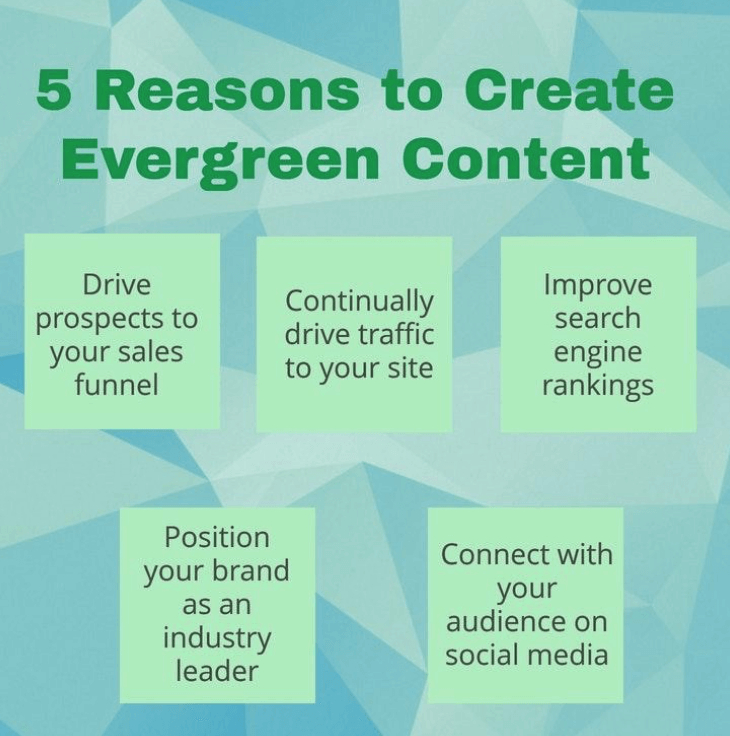
As you can see, there are many benefits to creating evergreen content. Those advantages include more traffic, better search engine optimization (SEO), increased brand awareness, and stronger credibility.
With that basic idea, let’s dig into how you can start writing evergreen content for your business.
How to Write Amazing Evergreen Content
If you’re just getting started with evergreen content, begin with the basics. That’s a simple process: understand which topics to write about, and put effort into the content to make it worth reading.
1. Understand the Needs of Your Audience
Before you start, you need to understand exactly what goals you have for your content, and how you can attract new prospects.
Different goals require different types of evergreen content. Introductory pieces can build brand awareness, while prospective buyers might be more interested in advanced research or data.
Once you have your goals in mind, you’ll want to determine the demographics you’re working with. Understand the types of people you’re writing for.
One way to do this is to look at your Google Analytics data, like in this screenshot from WordStream.

Do some research to understand what types of content these prospects are most interested in. What problems are they trying to solve? What issues are they facing? How can you help them?
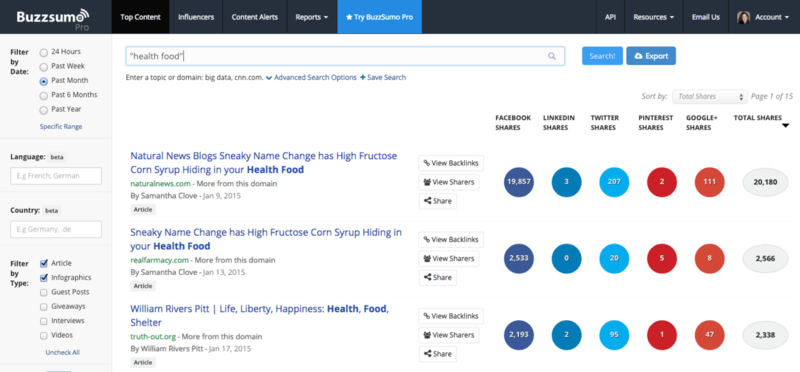
A great way to find great topics is to research what’s popular in BuzzSumo. This tool lets you see the total shares for different articles on a topic and gives you a feel for which content might be most popular.
You can test content ahead of time using Twitter or another social network. Write a simple post about a topic you’re interested in covering in more depth and see what type of response you get. You can also share a related article written by someone else and test the reaction before writing your own piece.
2. Say Something New About the Topic
Perhaps the most common mistake with evergreen content is repeating the same information. Sure, it’s easy to just research a subject and regurgitate data.
But the best evergreen content provides value with a new angle, fresh examples, or unique strategies and tips.
For example, HubSpot published an article in 2017 about a new SEO strategy it had seen work—topic clusters instead of standard blog posts. This new research, analysis, and recommendation generated significant buzz in the SEO community.

If you know of a new game-changing strategy in your field, sharing it can be an amazing piece of evergreen content.
But going the opposite way can work just as well. If you disagree with a common belief or premise, you can publish this as an equally successful piece of content.
Take Siegemedia in 2018, which analyzed new data about HubSpot’s topic cluster concept—and argued that it wouldn’t work for most businesses.

But what if you don’t have something novel to say? Don’t lose hope—there’s still room for great evergreen content.
3. Focus on Comprehensive, In-Depth Analysis
If you don’t have something unique to say, you can still generate traffic and attention with a guide that’s the best on the subject. The secret? Go for quality and depth.
Depth doesn’t necessarily mean a longer piece, but let’s face it—you can’t cover much in just a few paragraphs. For almost every B2B evergreen content piece, you’re going to want to write something over 1,500 words.
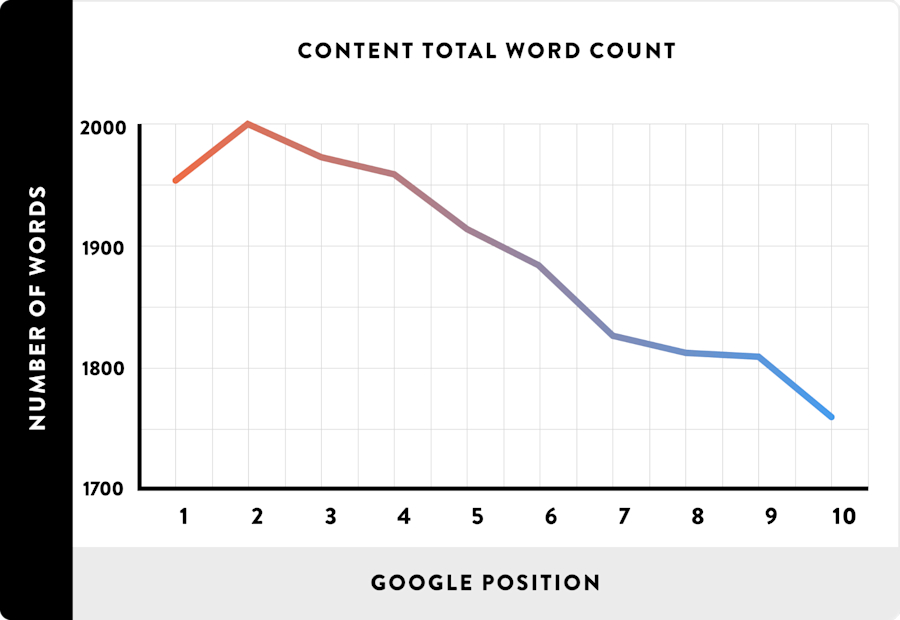
This will also help with your placement in Google’s results. Longer content does better, with the average #1 ranking result clocking in at 1,890 words.
A good example of a high-quality, detailed piece is this Sales Hacker glossary of sales terms.
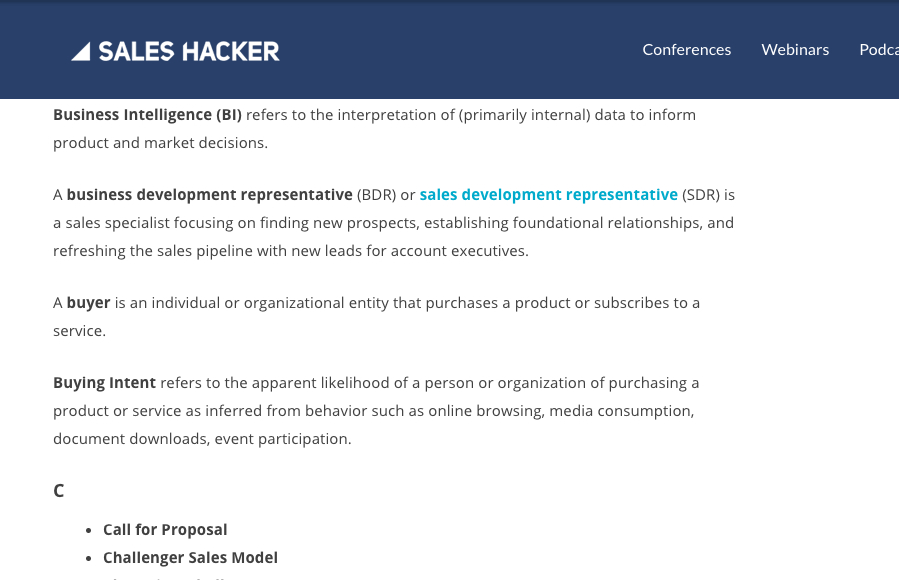
It hits over 8,500 words, but its value doesn’t necessarily come from its length. It’s a great piece of content because of its comprehensiveness, with definitions for hundreds of terms.
It’s an article you might bookmark and return to again and again. That’s a perfect example of true evergreen content.
4. Make It Easy (But Not Necessary) to Update Later
You’ll probably want to update your evergreen content from time to time. While it doesn’t need constant revisions like a news piece might, it keeps the content fresh and interesting.
In fact, updating an existing piece of content can bring a flood of new traffic and leads—in a fraction of the time it would take to write a new piece.
So keep updates in mind when writing evergreen content.
One of the biggest proponents of updating and relaunching content is SEO expert Brian Dean. It’s no wonder, then, that his guide to voice search is timeless yet easy to update.
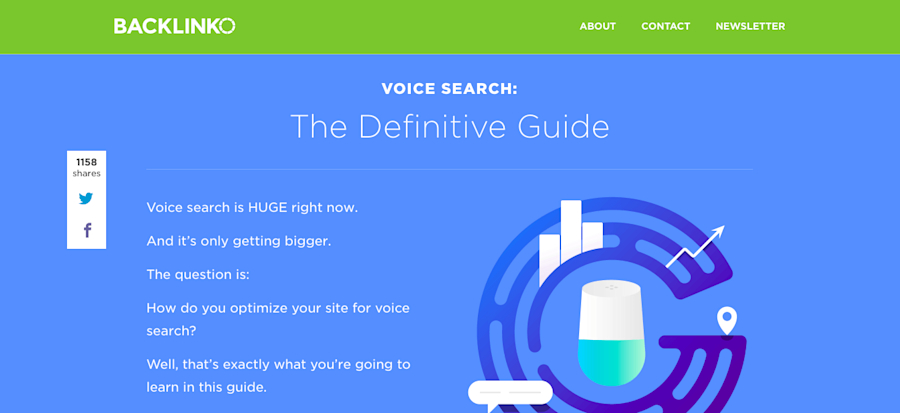
Instead of focusing the whole guide on current trends and technology he wrote about principles that apply to all types of searches.
By swapping out a few examples and screenshots, he can keep the page updated for years without any lengthy rewrites.
And he’s not alone.
When we re-launched our post on Facebook Lead Ads, we got 290.67% more organic traffic in 3 weeks:

How to Include Evergreen Content in Your Marketing Strategy
Great! So now you know how to write evergreen content. But in order to really succeed, you’ll need to build a routine of evergreen content into your marketing strategy.
Here’s how to incorporate it without much hassle.
1. Choose Topics Based on Audience Feedback and Surveys
To start, create a backlog of topics to write about based on information from your target audience. You can also do research on platforms like Quora and Reddit to see what people are searching for.
You’ll want to compile these into basic topics appropriate for evergreen content. Here are some sample topic frameworks you can use when crafting your topics, according to KOL Limited.
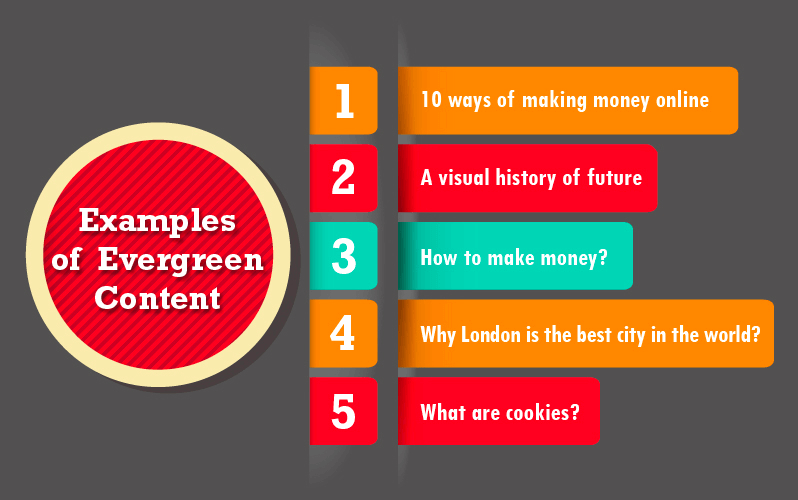
It’s a good idea to schedule this in advance and create a basic content calendar. This ensures you’re publishing regularly and don’t run out of topics.
2. Promote and Develop SEO
One of the primary goals of evergreen content is SEO since evergreen topics tend to outperform more time-sensitive pieces.
To do this, you’ll want to master the basics of on-page SEO, like mentioning a keyword a few times in an article, including at least one image, and linking to the piece on other pages on your site.
You’ll also want to work on off-page SEO, like getting backlinks from other high-quality sites.
It takes time, but SEO pays off. By following SEO best practices with their evergreen content, Wallaroo Media boosted traffic by more than 1,800 percent!

You’ll also want to promote your content on social media and share it with influencers.
Of course, Facebook and Twitter are the biggest platforms for this. But if you’re sharing B2B content, LinkedIn might actually be more beneficial for you.
You can (and should) encourage employees to share the content with their network, as well as promote the piece to industry leaders.
3. Make Regular Updates to Keep Content Fresh
As great as your evergreen content is, you can always make improvements and adjustments later. But it doesn’t just keep the content fresh and up to date. It also helps with SEO.
All things being equal, search engines like Google tend to favor recent results.
Notice how most of the top results for a search like “construction management software” are published within the last few months—even though there’s no date information in the search term.
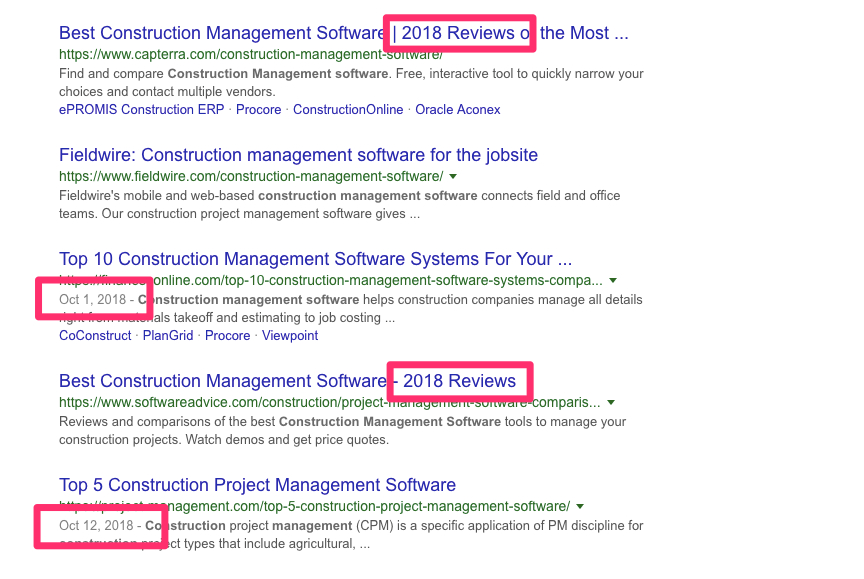
When you’re updating, you can add more recent data or statistics, updated product information, or newer images and screenshots.
How frequently you update is up to you. For some pieces, a freshening once a year is plenty. For others, you may want to adjust monthly or bi-monthly.
A good way to show that a piece is updated without republishing it is to include a “last updated” date. Here’s an example from ConversionXL that shows a publication date of 2015 and an updated date of 2018.
It’s a good way to keep content fresh without faking recent publication dates.
4. Track Results and Improve
Last, but certainly not least, you’ll need to keep tracking results and work to improve. Over time, you’ll start to notice patterns in what types of content do well, what types don’t do well, and where you can make changes.
For example, you can analyze old content and learn that some topics are generating more traffic or better leads.
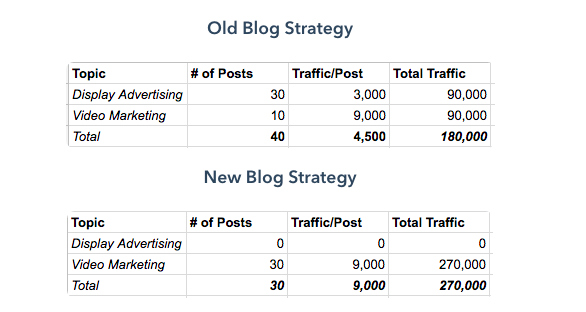
If that’s the case, you’ll want to shift your strategy to take advantage of that benefit.
And, of course, keep learning and researching ways to improve your content. Over time, you’ll develop a more refined content strategy and continue to improve.
Tying It All Together
If you’re new to evergreen content, you might have struggled to make progress with your marketing efforts.
By adding in evergreen content, however, you have a new tool in your arsenal for truly effective content marketing. By writing pieces that “age well” and stay relevant for years to come, you can increase traffic over time.
To start, create a high-quality piece of content on a topic your audience cares about. Make it comprehensive, and be sure to say something worth reading. Don’t just rehash what’s already been said.
To keep a strategy going, you’ll want to continually revise and adjust your content topics. Add more of what your audience likes and pare down the types of pieces that don’t do too well.
Over time, your evergreen content will generate traffic, leads, and buyers for years to come.