60-Second Summary
Pop-ups have evolved from disruptive overlays to targeted, user-friendly experiences, in part because Google penalizes intrusive interstitials. Exit-intent pop-ups—triggered when users move to leave—are a high-impact tactic for B2B marketers when paired with relevant, concise offers and behavior-based triggers.
Key takeaways: Exit-intent pop-ups convert better than generic pop-ups (~5% lift reported), work well in B2B for recapturing mid- to late-funnel visitors, and must be non-intrusive to avoid penalties and poor UX.
Standout strategies & tactics: Use behavior-based triggers (exit intent, page type), surface concise actionable offers (checklists, calculators, templates), show social proof and clear CTAs, and restrict prompts to high-intent pages; test mobile placements separately.
Real-world lessons & frameworks: Match the offer to visitor intent (pricing page → demo, content page → guide/checklist), favor short actionable content over long-form in pop-ups, and use tools/templates to solve immediate pain points.
Measurement & follow-up: Expect single-digit conversion rates, track by page and offer, iterate by A/B testing, and use identification tools like Leadfeeder to find and pursue anonymous high-value visitors who still leave.
*This summary was created with AI assistance, using our original content.
That reputation is not without reason. Early pop-ups were disruptive, often covering entire pages and being difficult to close, which understandably frustrated users.
However, the approach has evolved significantly. Today, pop-ups are more controlled and user-friendly, especially since Google introduced guidelines that penalize intrusive interstitials. At the same time, marketers have shifted away from blanket pop-up campaigns toward behavior-based triggers that respond to user intent.
One of the most effective of these is exit intent. Below, we cover how to create exit-intent popup campaigns that convert leaving visitors into leads, based on what has worked for us at Leadfeeder.
Note: Leadfeeder identifies B2B site visitors even if they don't fill out a form. Sign up for a free trial and see who is creeping on your website.👀
What is an exit-intent popup?
Exit-intent pop-ups are triggered overlays that display when users move to leave a website. In most cases, they're triggered when the user moves their mouse to the URL bar or the browser's exit button, so exit-intent popup mobile placements need their own testing.
Their goal is to give users a reason to stay on your site or prompt them to share contact info so you can connect with them later.
And according to Wisepops, exit-intent pop-ups convert 5 percent better than traditional pop-ups, making them worth testing.
Do exit-intent pop-ups work for B2B marketing?
Absolutely. While there are tons of strategies for using them in B2C (such as abandoned cart recovery or sales promotion), they can be incredibly effective in B2B marketing as well.
Here's why — the B2B sales process keeps getting longer, making it challenging to stay connected to prospects and push them through the funnel. Plus, standard lead generation strategies aren't as effective as they used to be.
Using exit-intent pop-ups can improve lead qualification and help B2B businesses gather more leads.
Examples of B2B exit-intent pop-ups
Let's see what these look like in action, shall we?
This first one is from OptinMonster, a popular pop-up tool (go figure!):
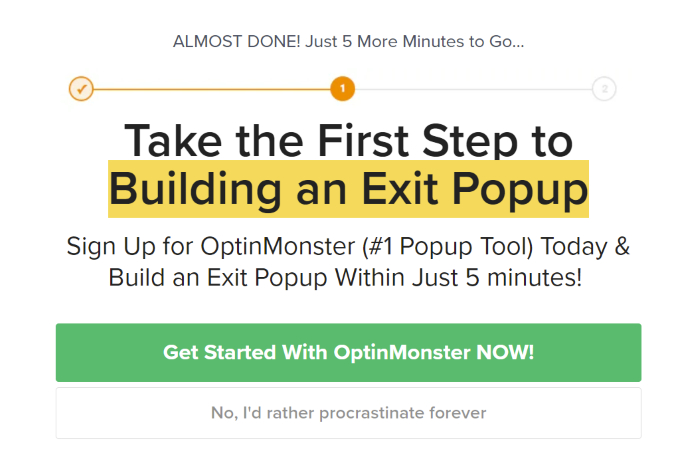
There are a few things that work with this pop-up.
For starters, it uses color and bold text to draw your eyes to the most important content. They also include a bit of social proof by mentioning they're the #1 pop-up tool.
It also focuses on how easy the tool is to set up — that's likely a pain point customers have mentioned.
Notice that bar at the top? It shows you're already halfway done. They also mention it's easy to set up.
The CTA is a little cheeky, which might annoy some users, but it's part of their branding, so it works well.
This exit pop-up from Zendesk aims to convert high-intent visitors by displaying when you exit their pricing page:
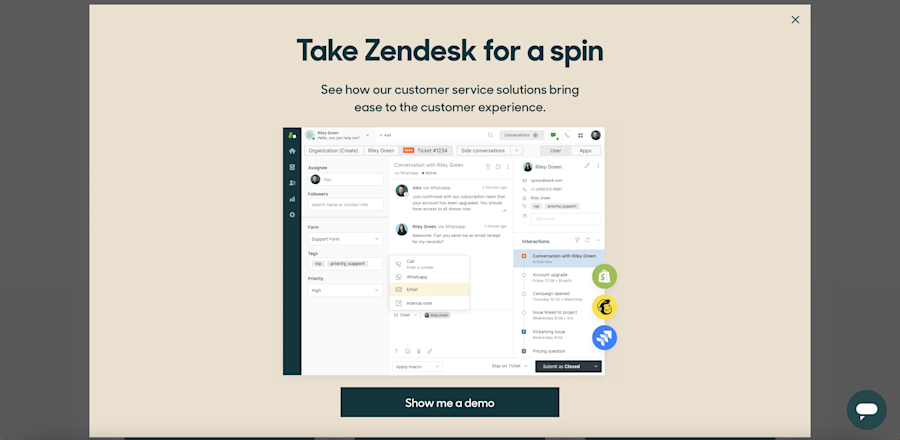
Rather than prompting users to download the tool or sign up for an email list, this pop-up pulls users through the funnel by encouraging them to watch a demo.
The visitor has already visited their pricing page, so they assume (rightfully) that the visitor is close to conversion.
The pop-up design is simple but shows the dashboard to entice users to try it.
Here's another exit-intent pop-up from a site called holdonstranger:
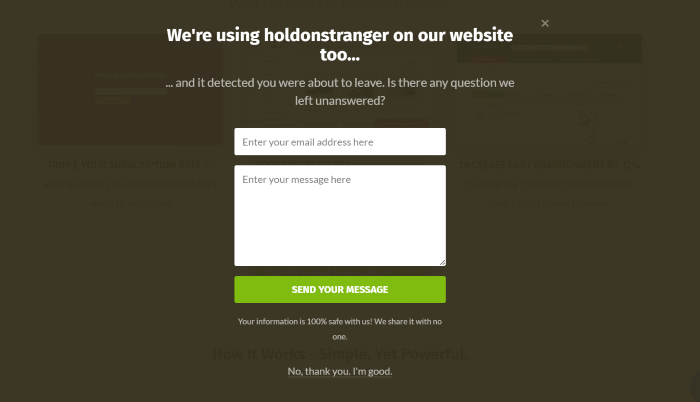
This one is a lot simpler. They do use color to draw your eye to the CTA button, but there's no social proof, and it doesn't try to convert users directly.
Rather, it asks if the visitor has a question and prompts them to send an email. They're gathering emails so they can nurture high-intent customers later.
Leadfeeder’s best exit-intent popup examples (and why they work!)
We've been testing exit-intent popup best practices here at Leadfeeder, and we want to share our results, including what works and what doesn't. Let's take a look at our top four exit pop-ups.
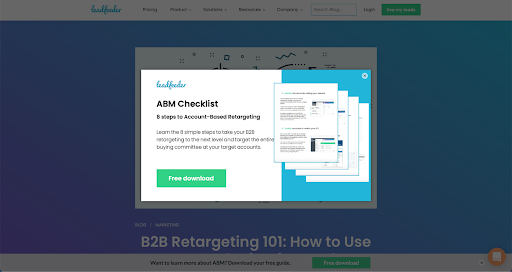
1. "ABM checklist" exit-intent pop-up
Account-based marketing drives a ton of traffic for us. We've created quite a bit of content around this term, including guides and videos.
This checklist is a distilled guide to successful ABM:
Why it’s performing well:
Short Content: Most companies focus on longer content, believing users find it more valuable. We found the opposite — short, concise content that breaks down a complex task performs really well.
Actionable: This isn't a long guide or an "everything you need to know." That's because we're targeting users a little further down in the funnel — they are already using ABM or already know they want to and need a little extra help. It's concise and actionable.
Relevant: The offer is related to the article topic but is a bit more specific, targeting both B2B and ABM.
2. "Cost-Per-Lead" exit-intent pop-up
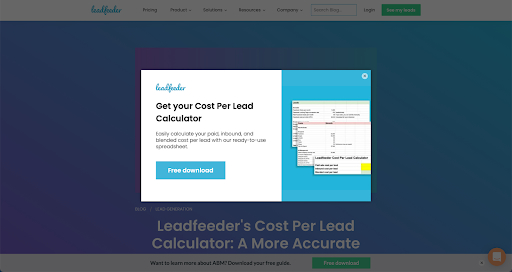
Our cost-per-lead calculator helps salespeople calculate their CPL. It's a major pain point for many salespeople, so this solution is pretty well received.
The pop-up appears on pages related to sales and has a pretty impressive 3 percent conversion rate.
See more: /blog/marketing-analytics/cost-per-lead-calculator-and-formula/
Why it’s performing well:
Useful: It’s a tool that solves a problem our audience has.
Nice search volume → good traffic: It's used on pages with high search volume, so it reaches a large number of our visitors.
Relevant: The tool name matches the article name.
We saw the same results with our sales plan template, which earns a 6 percent conversion rate. Overall, we've found templates and tools work really well!
3. "B2B lead generation guide" exit-intent pop-up
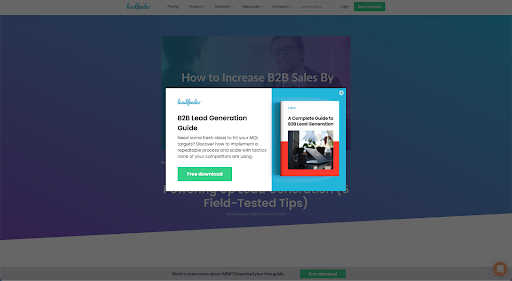
Our B2B lead generation guide is one of our most downloaded guides. So, we decided to turn it into a pop-up.
Here's what it looks like on our site:
See more: /blog/lead-generation/generate-more-sales-leads/
Why it’s performing well:
Evergreen topic: This topic consistently performs well, and people constantly seek this type of content.
Thorough: The guide covers a ton of lead generation topics. Not all strategies are relevant for every company, so offering more options makes it useful to a broader audience.
4. "Sign up for Leadfeeder" exit-intent pop-up
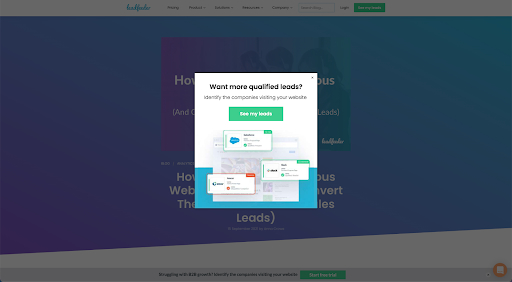
The last example we tested is a pop-up pushing blog visitors to sign up for Leadfeeder. This one does push for a direct conversion, but it's only used for content that shows some kind of intent.
See more: /blog/website-visitor-identification/how-to-identify-anonymous-website-visitors/
Why it's performing well:
Focuses on benefits: This pop-up emphasizes its value, using strong, direct language. Users know what to expect; all they have to do is click.
Only used on product or transactional pages: In addition to using exit-intent triggers, this pop-up only displays on high-intent pages. We aren't trying to convert users who read one article; instead, we want users further down the funnel.
When exit-intent pop-ups don't work, turn to Leadfeeder
Exit-intent pop-ups help recover site visitors before they leave your site. But, with an average conversion rate in the single digits, there are still plenty of people leaving your site despite your best efforts.
That's where Leadfeeder comes in! Using a data-driven demand-generation strategy based on IP and location data, we help identify which companies are visiting your website. We'll even show you what pages they visit and how often they return.
Note: Ready to see your leads? Sign up for a free, 14-day Leadfeeder trial.