60-Second Summary
After Google’s 2021 cookie changes, B2B teams needed a durable alternative for account-level targeting. IP targeting de-anonymizes web traffic by matching IPs to company names and domains, enabling firmographic targeting and personalized ABM at scale.
Key takeaways: IP targeting matches IP addresses to company and domain data (static, dynamic, geo-IP), offering more durable, company-level reach than cookies and enabling account-based advertising and measurement.
Standout strategies & tactics: Target company networks for display ads, include dynamic-IP targeting for remote workers, enrich IPs with firmographics (industry, size, location), and create hyper-personalized creatives referencing company attributes.
Real-world lessons & frameworks: Use IP Enrichment to build ICP segments, run ABM display campaigns to reach buying groups (not just individuals), and track company-level impressions and interactions to guide outreach and pipeline scoring.
Implementation & measurement: Focus on display networks for IP-targeted ads, enrich and sync data with CRM/ABM tools (e.g., Leadfeeder IP Enrich API), and expect higher CTRs, lower eCPC, and clearer company-level attribution versus cookie-based campaigns.
*This summary was created with AI assistance, using our original content.
When Google announced the change in 2021, marketers and sales teams were left scrambling to understand what the shift meant for their pipelines and advertising campaigns.
Luckily, the solution has been there all along. With just an IP address, you can de-anonymize B2B web traffic by matching an IP address to a company name and domain. But IP targeting lets you do a whole lot more.
In addition to telling you, for example, that someone from Microsoft visited your company website (nice), IP data can also help you target the right leads.
It's the future of B2B advertising, but how does it actually work?
What is IP targeting in B2B advertising?
IP targeting marketing is the practice of using an IP address to deliver personalized content to a website visitor's mobile or desktop device based on their physical location or other data determined using their IP address.
Don't worry; this isn't creepy "Facebook is listening to my conversations"-level targeting. That's because you can't target specific individuals. Rather, B2B IP targeting allows you to target specific companies and the people who work there.
This means you can target people who work at Target headquarters in Minneapolis, but not Dave in HR.
How does IP targeting work?
B2B IP targeting lets you display your digital ads only to people accessing the web from the IP addresses of the companies you want to target.
For example, you can show Apple employees ads for your product when they visit news sites or their favorite industry blogs.
IP targeting vs cookie targeting comes down to durability, because unlike cookies, IP addresses cannot be deleted or blocked. You can stay connected to every target every time they go online and visit websites that display ads. IP targeting advertising lets you deliver highly relevant online ads directly to your target audience. #winning
Not all IP targeting is created equal, however. Different types of B2B IP targeting work slightly differently. Let's cover a few ways to use IP targeting.
1. IP targeting by network
One way IP targeting works is by using API data with company-specific information, including the internet service provider, the type of company, and the domain name. IP targeting by network is ideal for both local and global IP. The first step is reverse IP resolution -- the same technology that lets you find a company by IP address on your website.
There are several types of IP targeting by network, including static IPs and dynamic IPs.

2. IP targeting by network: Static IPs
Most company IP addresses are listed in public directories and don't change. This makes it very easy to track when someone from that company visits your website, allowing you to set up an IP address targeting campaign aimed at that company's network.
3. IP targeting by network: Dynamic IPs
Dynamic IPs are typically given to remote workers, home users, or small businesses. These dynamic IPs usually remain assigned to a single device for several weeks or months and change when the user resets or unplugs their router. When people work from home, they switch from a static IP address to a dynamic one. By targeting dynamic IPs, you can reach remote employees as well.
4. Geo IP targeting based on location
IP geo targeting marketing uses a user's IP address, whether via WiFi or GPS, to pinpoint their location. IP targeting based on geolocation can also be determined right down to state, city, and even specific companies. This allows B2B companies to better target businesses in particular locations, such as in areas you service or countries you want to expand into.
Why IP targeting is the future of B2B advertising
Most advertising platforms are built for B2C customers. On platforms like Facebook, you can target people based on age, gender, location, even income or education level. Which is great when you want to sell summer dresses; not so much when you're selling CRM software.
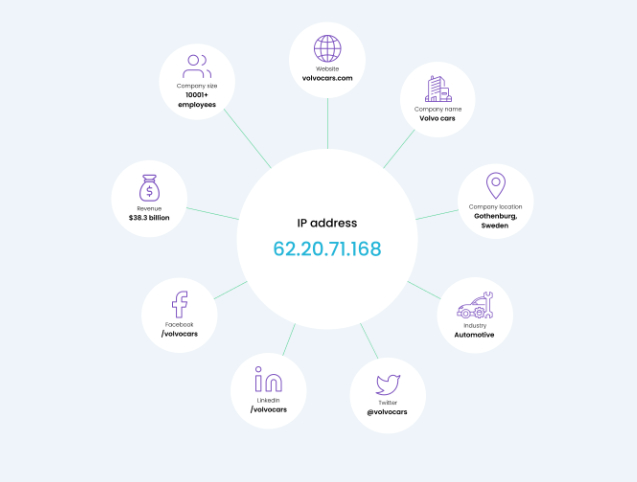
B2B targeting has always been limited. Which means we end up wasting a lot more ad spend. IP targeting is a game-changer for B2B advertising as it allows you to target specific companies/industries or ICPs by matching IP addresses to company information. Using IP enrichment, you can get relevant data about those companies, including industry, location, company size, and more.
IP enrichment gives you the firmographic layer needed to build precise targeting segments by industry, size, or location.
Here are a few more reasons why IP advertising is the future for B2B:
1. Directly target your account list / ICP
By matching IP addresses to company data, you can target the exact companies you want to reach with display ads — and that matters even more now that buying groups have ballooned.
As Sam O'Brien, VP of Marketing at Leadfeeder, says, "Buying groups have gone from maybe it was like three people a few years back to now it's like 10, 15 plus people. So we need to build our brand within that entire group."
That’s the real advantage of IP-level targeting: your ads reach everyone coming from a company’s network, not just one decision-maker, so you build visibility across the full committee that actually signs off on the deal.
2. Target remote-first companies
The way we work has changed. IP intelligence can accurately identify the company behind remote or home-office locations. By targeting dynamic IPs, Leadfeeder identifies them even if their employees work remotely. See how S360 scaled B2B reach across 3 markets using this approach.
3. Create hyper-personalized ads
Using personalization can reduce CAC by 50% and increase revenue by up to 15%. IP-based ads allow you to create more personalized messages—because when you know what companies you're targeting, you can create ads that mention their pain points, location, industry, and even company name.
IP advertising lets you target specific companies with images and text based on their IP addresses. For example, you can customize your ads by:
Company location
Company industry
Company size
This way, you can show leads the ads they want to see—and increase the chances they will interact with your ads.
4. Set up more cost-efficient campaigns
If you want to waste your advertising budget on campaigns that don't deliver, no one is going to stop you. Or, you could use IP targeting. Conversion rates with IP-targeted ads are much higher, so you'll spend less on irrelevant leads and more on reaching folks who are more likely to convert. For example, S360 achieved a 119% higher CTR and 56% lower eCPC by activating Leadfeeder audiences through Adform. Less ad spend and higher profits? Yes, please.
5. Understand ad impressions at a company level
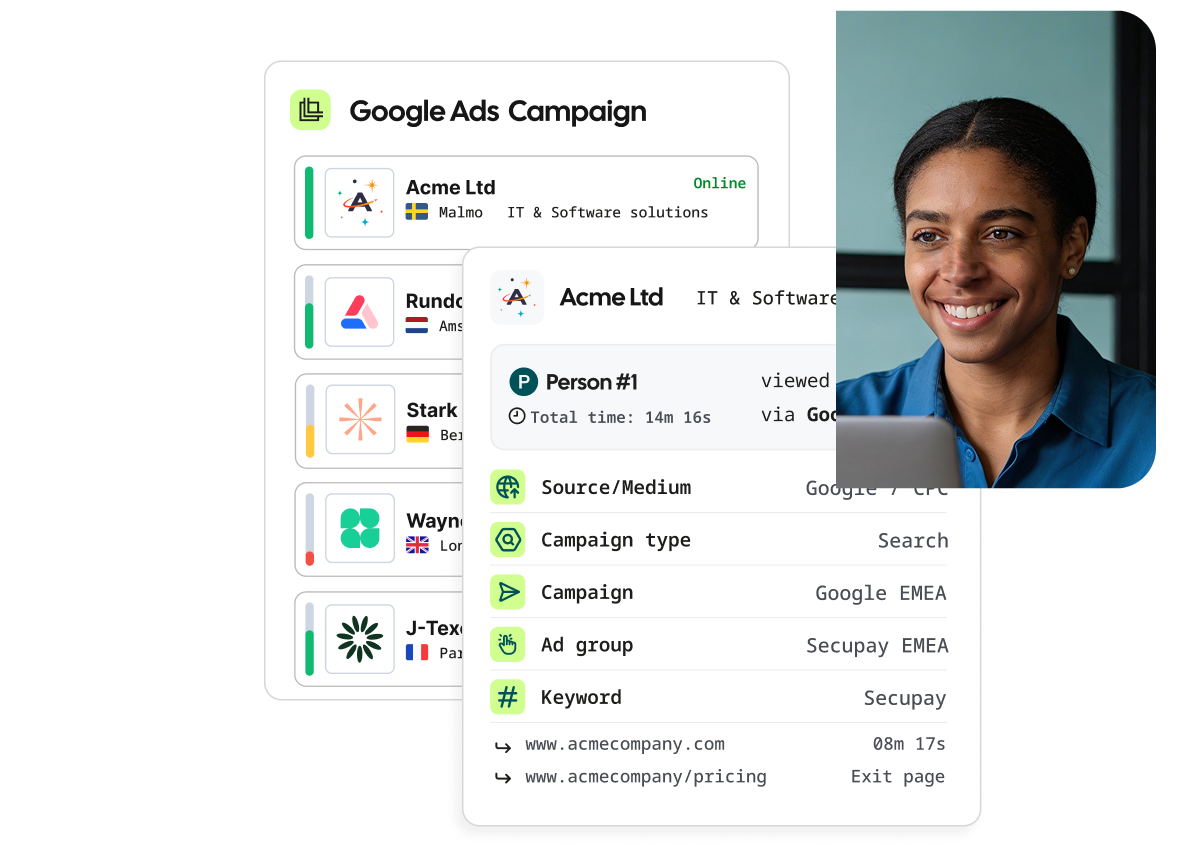
With IP targeting, you can actually see which companies view your ads and interact with them. By matching IP addresses to name and company data, you can see that company A clicked on your ad X times. That's useful information for seeing how companies move through your funnel.
Deliver IP-targeted ABM campaigns with Leadfeeder
Third-party cookies are on their way out, leaving many companies scrambling for another solution to directly target their ICP. And IP targeting is exactly the solution you've been looking for.
With Leadfeeder’s IP Enrich API, you can power your advertising platform with comprehensive account-level data, deliver IP-targeted ABM campaigns, and show customers the companies interacting with their campaigns.
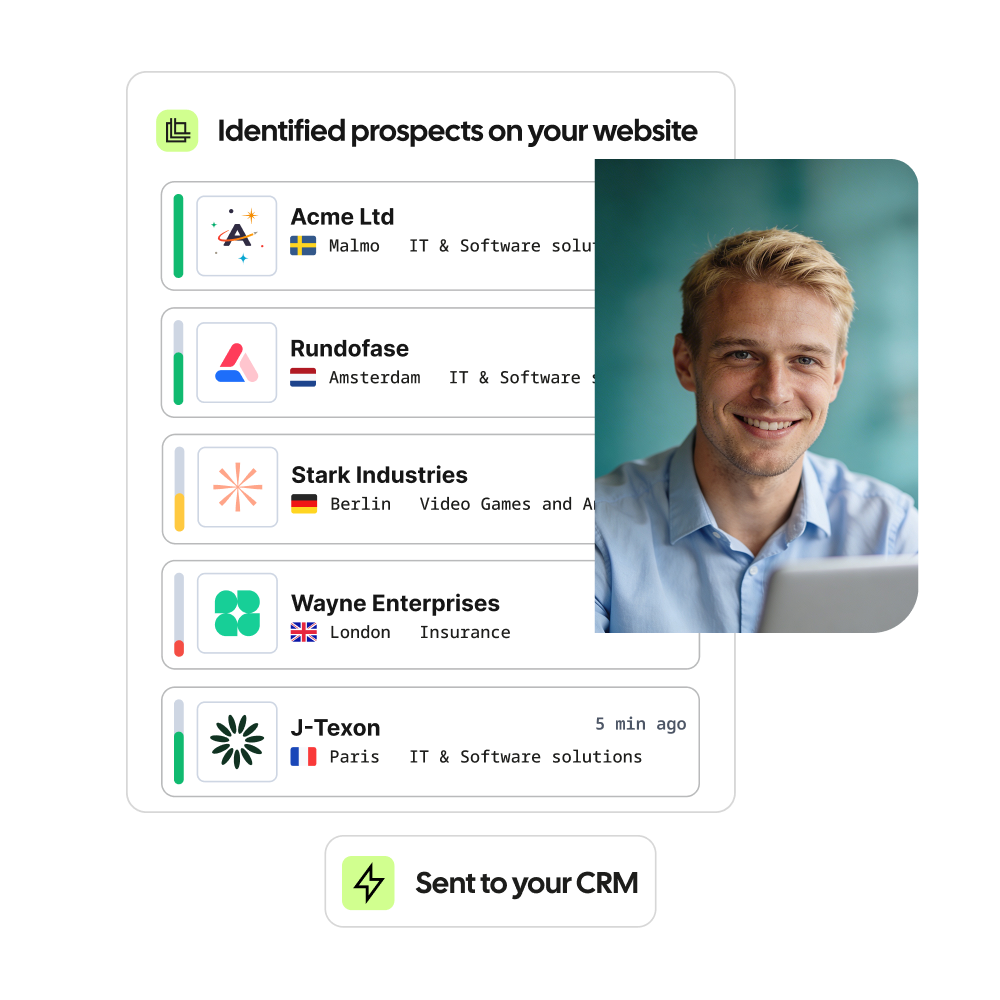
We provide the IP data you need to enrich your advertising platform with firmographic data. Enabling you to deliver IP-targeted ABM campaigns to your customers.
Note: Leadfeeder's IP Enrich API platform turns IP addresses into rich data you can use to drive decisions across your organization. IP targeting works best on display networks. For social channels, you can retarget companies on LinkedIn using matched audience lists.