

60-Second Summary
Germany's UWG imposes strict rules on unsolicited outreach that are often overlooked in favor of GDPR—especially for phone-based sales. For B2B cold calling, 'presumed consent' can apply if you can document concrete interest, and Leadfeeder helps create that evidentiary trail.
Key takeaway: B2C cold calls require explicit consent in Germany, while B2B outreach can rely on presumed consent (§7 II Nr. 1 UWG) if you can demonstrate concrete signs of interest—documented behavioral signals are critical.
Standout strategies & tactics: Use Leadfeeder to track company visits, page and content engagement, and repeat sessions; pair with Promote or B2B display campaigns to tie ad exposure to site visits and strengthen the intent signal before calling.
Real-world lessons & frameworks: Treat outbound prospecting as multi-channel and multi-touch—capture intent early, personalize outreach, and act quickly while interest is fresh to boost conversions and legal defensibility.
Compliance framework: Log and retain behavioral evidence (visits, ad impressions, engaged pages) so sales teams reach out from documented intent rather than cold lists—minimizes fines and helps meet the burden of proof in disputes.
*This summary was created with AI assistance, using our original content.
At Leedfeader, we understand the challenges our users face when trying to connect with potential customers. The German Act against Unfair Competition (UWG) has strict regulations that make it tricky to promote products or services without (explicit) consent.
If you haven’t heard of the UWG by now, don’t worry. Germany cold calling law news rarely travels far, and the UWG is often overshadowed by the far more famous GDPR (short for General Data Protection Regulation). However, the UWG actually contains specific rules for outreach activities via email or phone.
Outbound Prospecting: What you need to know
As many B2B sales professionals know, outbound prospecting involves targeting and engaging prospective customers. If done well (and legally!), it can be an effective way to create more sales pipeline and win business. It often involves ensuring that you target the right types of potential business and engage via multiple communication channels, including phone calls, emails, and LinkedIn messages.
A key tactic for outbound prospecting is cold calling. Cold calling refers to making unsolicited phone calls to individuals or businesses to sell or market something. It involves reaching out to potential customers who have not previously explicitly expressed interest or consent.
Today's sales require a multi-channel, multi-touch, and multi-threading approach. Success hinges on delivering value at every prospecting stage and efficiently personalizing outreach to capture customer attention.
Michael Larche, Vice President New Business Sales @ Leadfeeder
Is cold calling illegal in Germany, or is it allowed?
First and foremost, we need to differentiate between cold calling in the context of reaching out to individual customers (B2C; business-to-consumer) and cold calling in the business-to-business (B2B) environment.
By law (specifically the UWG in Germany), making cold calls to individual consumers over the phone is initially prohibited unless the person has explicitly given their consent beforehand. In the event of a legal dispute and to avoid a fine, you would be responsible for demonstrating that the potential customer you contacted consented to receiving such a sales call ("burden of proof"). In the B2B context, cold calling in Germany is subject to slightly different rules. Although it also generally requires consent, it is sufficient to have presumed consent (§ 7 II Nr. 1 UWG).
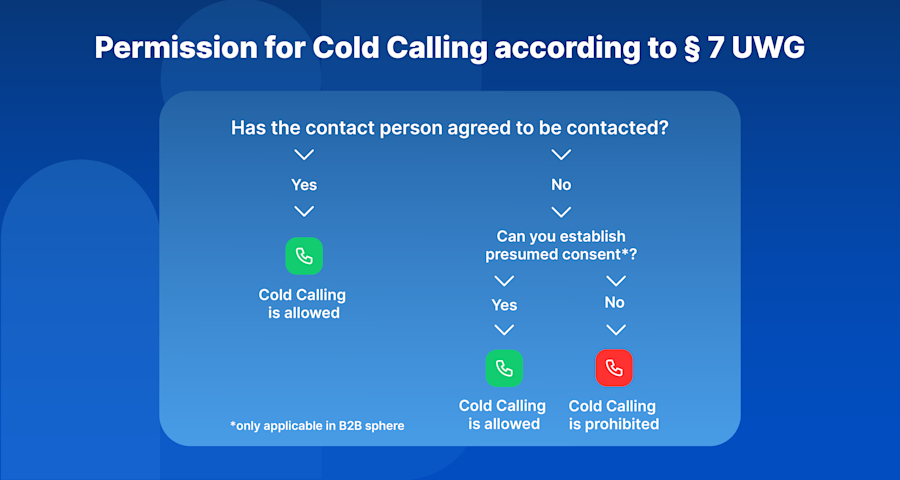
Cold Calling Germany: Permission According to §7 UWG
This means that the targeted customer doesn’t need to explicitly agree before being called for sales purposes. Instead, it is sufficient to have concrete indications that the product or service you promote is of interest to your contact and that the person being called can be presumed to currently agree to be contacted via phone.
Establishing presumed consent requires you to show that the prospect is already interested in your company and products/services in a way that indicates they would be willing to receive further information via phone.
Essential Guide to Cold Calling & Emailing Laws in Europe
Stay compliant with European cold calling and emailing laws. Learn the rules for each country and best practices for B2B outreach.
Download nowHow does Leadfeeder support compliant outreach?
So how can you establish and – if necessary – prove that you can rightfully presume the consent of your prospect? Here is where our Leadfeeder tools can help you remain compliant!
Using Leadfeeder, you can build a documented record of genuine interest before reaching out – which matters under German UWG requirements for B2B cold contact. Leadfeeder tracks which companies visit your product pages, how many times they return, and which content they engage with. That behavioral data supports the "presumed interest" standard that makes outreach legally defensible. For teams also running display campaigns: pairing Leadfeeder with a B2B display tool lets you identify companies that have seen your ads and visited your site, strengthening the interest signal further before a sales call is made.
Leadfeeder enables you to track and document which customers visited your webpage and subpages that relate to your products or services. But that’s not all.
With Promote, you can show that these customers didn't stumble upon your site by chance but were specifically interested in what you offer, enticed by your promotional banners. This is an even stronger indication that they'd welcome further information through an outreach call.
The more visits you can prove, the stronger your case for presumed consent. Plus, documenting these indicators is easy with our user-friendly platform.
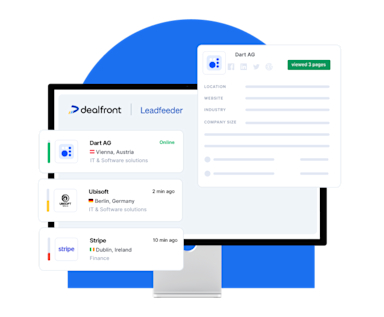
Your website visitors are already showing intent.
Leadfeeder identifies which companies they work for, what they looked at, and when to reach out -- then gives your team the contacts to follow up with. Trusted by 15,000+ B2B teams. Try it free.
Start Discovering NowAt Leadfeeder, we want to ensure our tools are the key to unlocking potential customers and safeguarding your business from costly fines and disputes. Using Leadfeeder and Promote, you could provide concrete evidence of a customer's interest in your offerings, thereby supporting your compliance with German UWG requirements when making cold calls.
Reach German prospects the right way. Leadfeeder identifies the companies visiting your website, documents their interest signals, and gives your sales team verified contacts – so every outreach starts from a position of genuine, documented intent rather than a cold list. Try Leadfeeder free. GDPR-compliant by design.