60-Second Summary
Choosing the right account-based marketing (ABM) platform means weighing usability, data quality, integrations and cost against your specific ICP and workflows. This guide reviews 13 vendors and highlights how tools like Leadfeeder can augment ABM by identifying high-intent website visitors.
Key takeaways: There’s no one-size-fits-all—choose platforms based on ICP alignment, integration needs, data/intent quality, UI and budget; expect tradeoffs between customization, ease of use, and analytics depth.
Standout strategies & tactics: Leverage intent data and AI for account discovery (6sense, Triblio), centralize CRM and workflow integrations (HubSpot, LeanData), and run cross-channel retargeting and personalization (RollWorks, MadisonLogic) while piloting campaigns.
Real-world lessons & frameworks: Prioritize onboarding and UI to shorten time-to-value, validate data accuracy and segmentation before scaling, and measure impact on deal size, conversion rates and opportunity cost.
Platform selection checklist: Match vendor to company size and goals (SMB vs enterprise), confirm integrations and reporting, test via trial or pilot (e.g., Vainu free plan, Leadfeeder trial), and evaluate vendor support and pricing transparency.
*This summary was created with AI assistance, using our original content.
However, choosing the right ABM platform is not always straightforward. With so many options available, it can be difficult to determine which solution actually fits your needs and goals. Evaluating different tools can quickly become overwhelming without a clear starting point.
To make this easier, this guide highlights some of the most notable ABM platforms available today. While each tool has its strengths, the right choice depends on how well it aligns with your strategy and workflow.
1. HubSpot ABM software
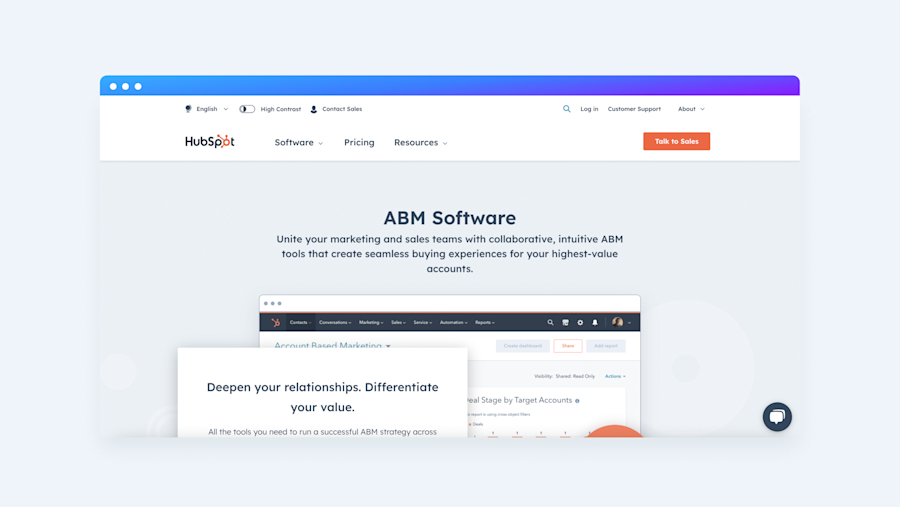
HubSpot has built a glistening reputation for itself in the world of SEO. Its ABM software system does not disappoint. With this system, you'll gain access to a comprehensive range of features. Its intuitive and mobile-friendly interface makes it a good choice if you're always on the go.
HubSpot provides customized workflow templates to help you identify your ideal customer profile (ICP). You can also take advantage of AI-powered account recommendations to help you build out your prospect list. Collaborative tools let your marketing and sales teams communicate.
You'll get access to detailed metrics and third-party integrations. One common complaint about HubSpot ABM is the lack of customization features in its workflow templates.
2. RollWorks
RollWorks earns points for providing a simple, intuitive ABM software solution. With RollWorks, you'll gain access to AI-powered tools to support key functions, such as lead generation. Its collaborative interface makes interactions between sales and marketing a cinch. You can leverage tools such as retargeting campaigns, digital ad features, email automation, and KPI reporting.
Users praised the platform for its customer segmentation tools and third-party integrations. Other customers had positive things to say about its data integrity. RollWorks doesn't allow you to target individuals. Instead, you'll have to go after entire companies.
3. Triblio
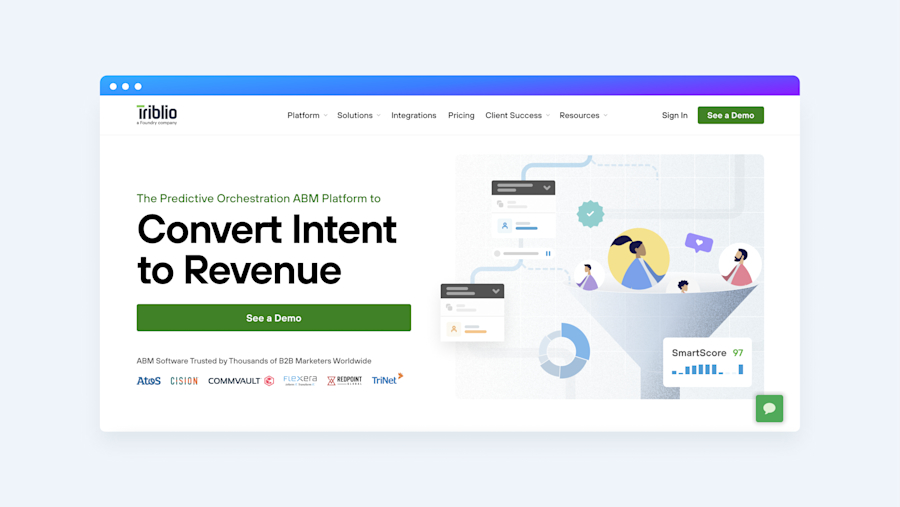
The Triblio website claims that it's the only ABM platform to use proprietary, human-verified data alongside AI scoring to prospect new accounts. It also supports cross-channel campaigns and social media integrations, enabling you to centralize your marketing data. You can use its automated buyer's journey function to drive conversions.
Triblio users had positive things to say about its HubSpot integration capabilities. It also enables granular customer targeting and personalized pop-up ads.
Triblio doesn't offer the most intuitive ABM platform on the market. Some of the most common complaints about the platform concerned its difficult-to-navigate user interface (UI) and steep learning curve. Still, if you're willing to put in the time necessary to learn how to operate its extensive array of features, you may find it worthwhile.
4. 6Sense
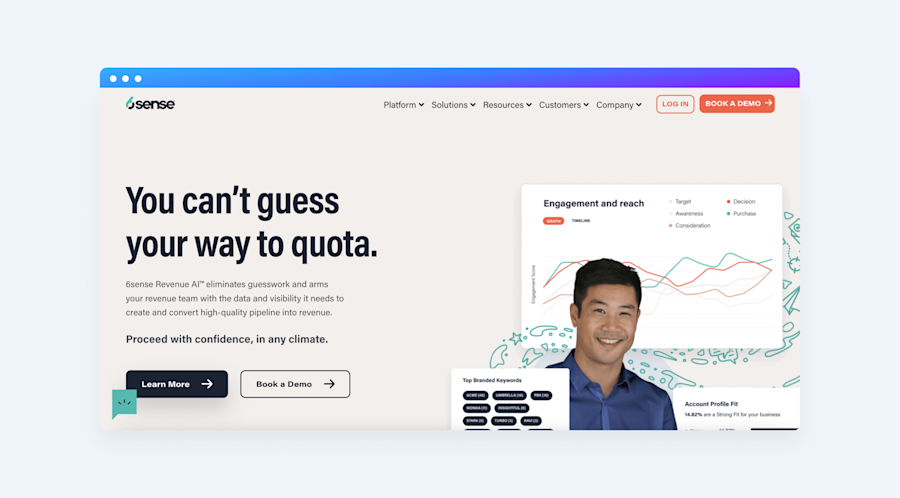
6Sense powers its ABM platform with a proprietary AI technology system that interacts with every stage of the buyer's journey. This has led to impressive performance metrics, such as a doubling of deal sizes and a 40 percent decrease in opportunity-related costs. You can integrate 6Sense with a variety of third-party platforms, including industry giants like Salesforce.
One of the highlights of the system is its intent data reports for prospective accounts. You'll also gain access to targeted outreach tools. Other tools make it easy for sales and marketing to collaborate on outreach. 6Sense provides detailed analytics and a fantastic customer support staff.
Most of the negative comments relate to its at-times clunky UI. Users report having to sift through irrelevant data and poor navigability. 6Sense could benefit from a more streamlined and personalized system.
5. Demandbase
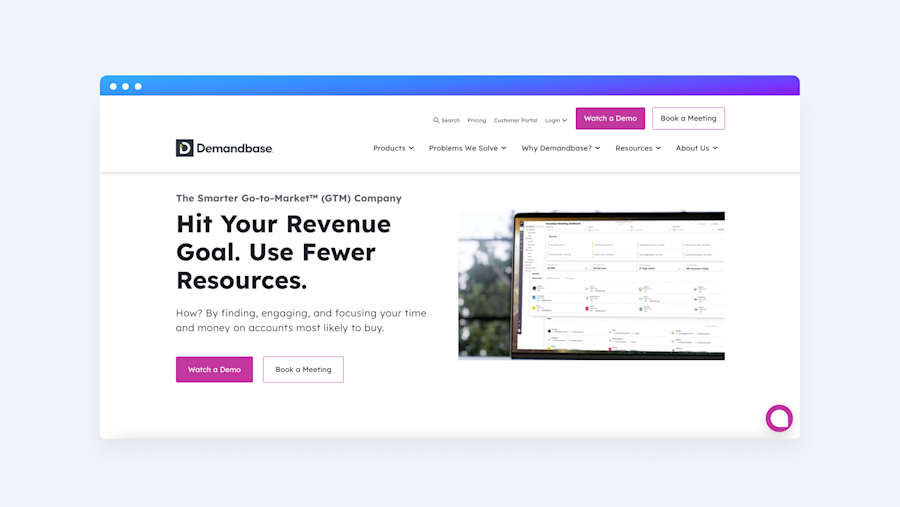
Demandbase offers enterprise-level ABM solutions. It comes equipped with a range of standard features. These include AI-powered lead-generation tools and specialized B2B ad-tech features. You'll gain access to advanced segmentation features and reliable account identification tools. The latter can help you suss out otherwise anonymous site users.
Customer reviews suggest that Demandbase has a solid UI. Positive reviews also noted a strong set of third-party integrations. You can also segment accounts according to the various stages of the customer journey. Demandbase offers key insights into your prospects, which can be especially helpful if you're running paid ads.
Many of the complaints centered around the data reporting features. Some users had difficulty accessing and analyzing their data. They also mentioned difficulties with data manipulation and setting custom metrics.
6. LeanData
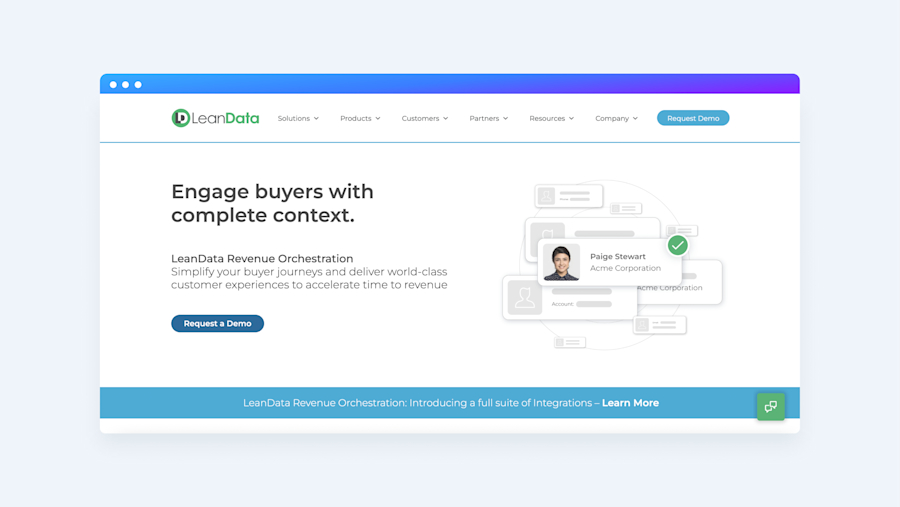
LeanData has built a solid reputation, achieving a 30 percent boost in conversion rate. The service offers no-code, drag-and-drop integration capabilities. Its smart algorithms have a track record of achieving 95% lead-to-account matching accuracy. You can leverage a variety of marketing strategies, and LeanData offers a range of collaborative capabilities.
Users enjoy the platform's seamless integrations and helpful customer support. Other positives include the ability to quickly and accurately audit errors. Other users noted that the analytics features provided a range of useful advice. LeanData also makes it easy to set up and maintain lead workflows.
One of its newer features, Bookit, still has some kinks to be straightened out. These include an inability to change the scheduling page and a lack of dedicated permissions, which makes some aspects of managing the software unwieldy. Other users have noted that the service's complexity can lead to unnecessary time-wasting.
7. Bound
Bound excels in its range of customizable features. Their easy-to-manage onboarding process enables basic personalization. At the same time, you'll gain access to a team of experts who will walk you through a full range of managed services. You'll receive training and strategy guidance that will help you make the most of the platform.
You can integrate with a range of third-party vendors and apps. Because it's open-source software, you have quite a bit of flexibility in managing your experience. Users of the service note the large Bound customer community as a selling point. If you come across a problem, finding an answer shouldn't take long.
Some of the negatives reported by Bound users included a lack of useful metrics. Some users claimed the site did little to uncover "hot" leads. Also, the platform doesn't offer intra-departmental segmentation. That means you won't be able to target individuals with particular roles or titles. The service also doesn't provide comprehensive insights into its data.
8. Zymplify
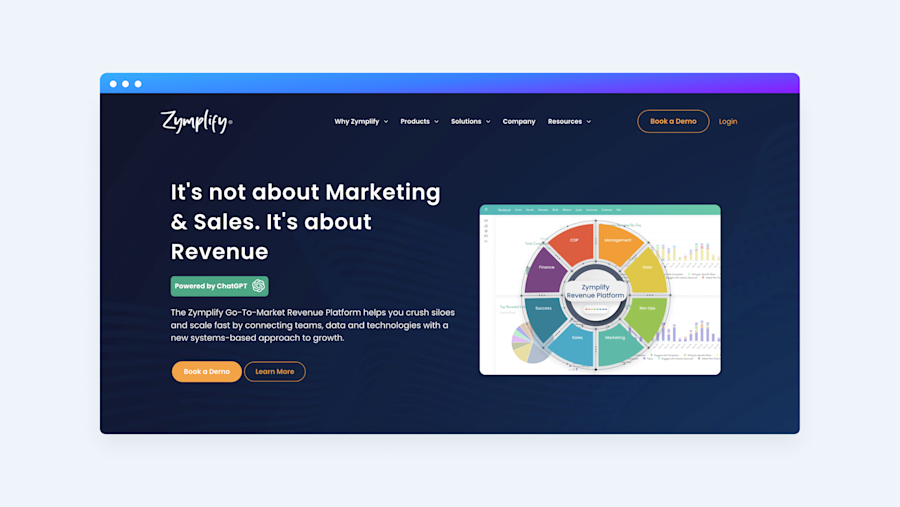
Zymplify promotes itself as a revenue operations platform. What does this mean? Zymplify goes beyond building cross-departmental collaboration between marketing and sales teams. It's focused on key functions like revenue alignment, operations, and intelligence solutions. This manifests in a metrics-heavy system.
You'll have access to many standard ABM features, such as multi-channel marketing, lead conversion, and intent data. Customer reviews praised Zymplify's support staff for their helpfulness and knowledge. Other reviews noted the platform's versatility and strong UI navigability.
More negative comments centered on lead generation. Rather than focusing on companies, Zymplify is geared toward contacts. That locks it into a niche market with limited applicability for many potential clients.
9. MadisonLogic
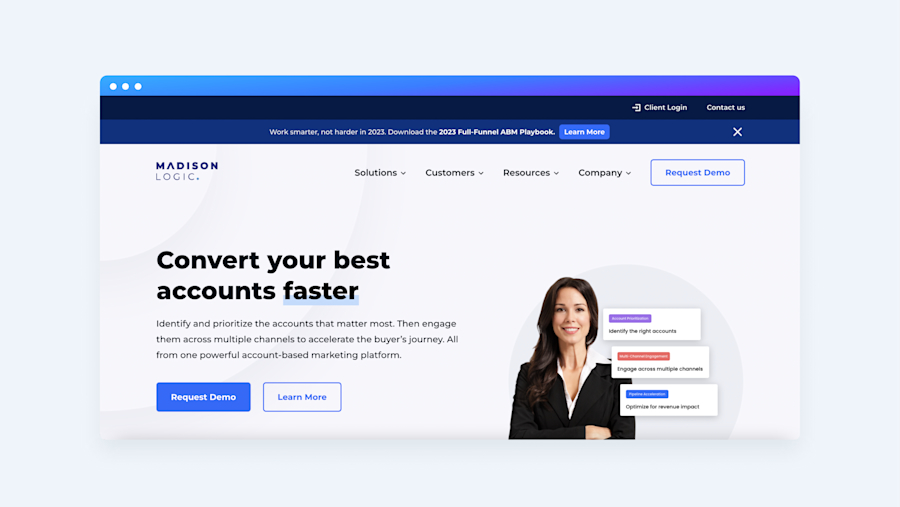
The MadisonLogic website boasts a range of industry awards. It claims to deliver twice the sales conversion rate and three times the conversion to marketing-qualified accounts compared to traditional marketing methods. Its centerpiece is the Journey Acceleration strategy. This comprehensive ABM strategy promises to speed up the sales cycle by optimizing core processes.
Customer reviews for this service are generally positive. Users praised the platform for its robust set of integrations and easily accessible metrics. Complaints centered on the platform's UI and lack of social media integrations. While it boasts a unique LinkedIn integration, MadisonLogic does not currently support Facebook and Instagram.
10. ActiveDemand
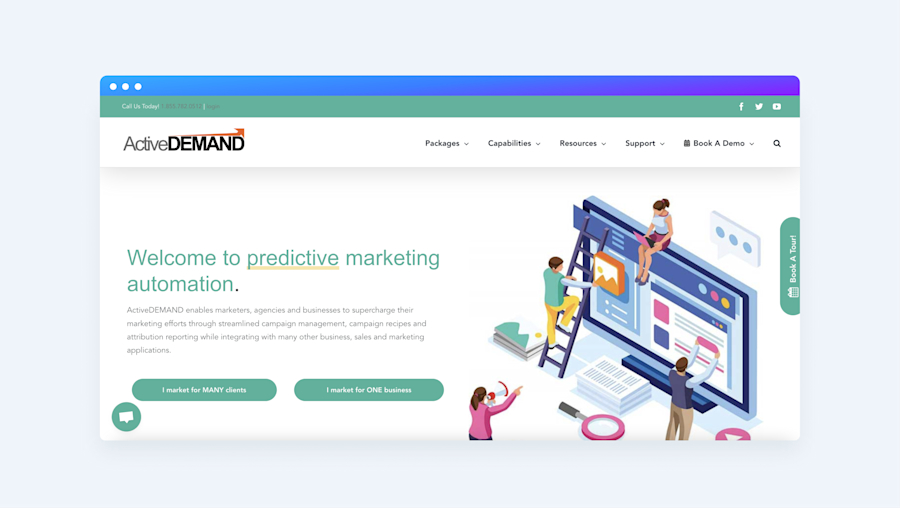
ActiveDemand offers a range of marketing features. You can take advantage of cross-team collaborations, customizable email marketing campaigns, simple social media scheduling, and more. ActiveDemand makes it easy to automate your key marketing sequences. You'll also gain access to granular performance metrics and a host of popular third-party integrations.
Users enjoyed the automated email and text messaging setup. Many users praised the platform's data collection and storage features. However, some found the automation builder clunky compared to its competitors. Other complaints centered on poor customer service and the product's steep learning curve.
11. Vainu
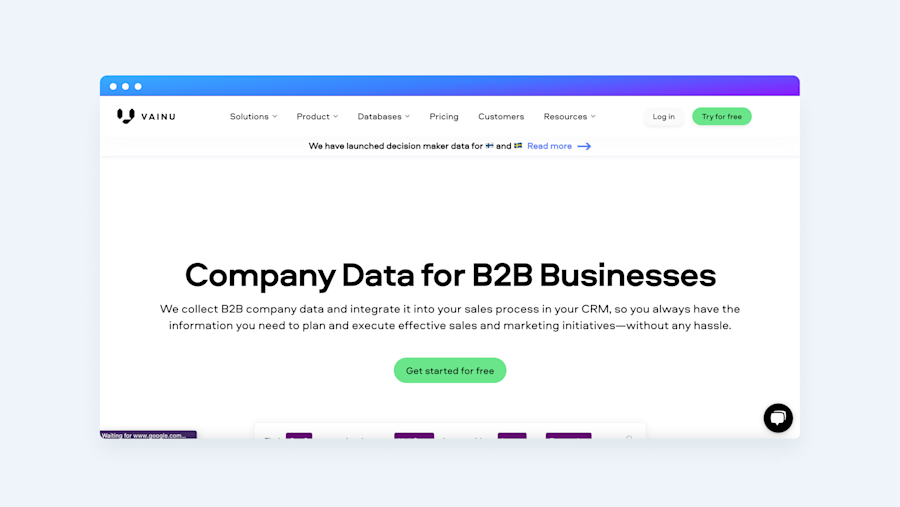
Vainu provides its customers access to more than 75 million company profiles, over 300 company attributes, more than 900 industry categories, and 14,000-plus web-based technology integrations. If you'd like to try it before you buy, Vainu offers a free plan. Its ABM software helps you identify and target the most valuable prospects for your business.
Customers praise the platform for its dynamic data collection capabilities. Other positive reviews called out its segmentation and automation tools. More negative user reviews centered on an overabundance of useless data.
12. DemandScience
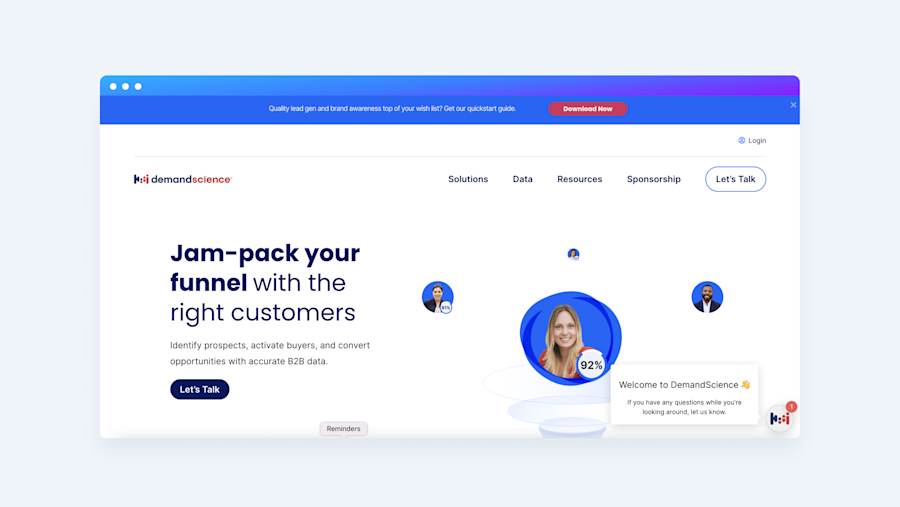
DemandScience helps connect businesses worldwide. This is a breath of fresh air in a field that's saturated with Anglophone-centric prospect targeting. You can schedule a free consultation to learn how DemandScience can help your marketing team. However, its ABM offerings are fairly standard.
Customers had largely positive things to say about DemandScience's account management staff. They also praised the company for its results-oriented outlook. However, some users found its offerings less expensive than those of the competition.
13. AdDaptive Intelligence
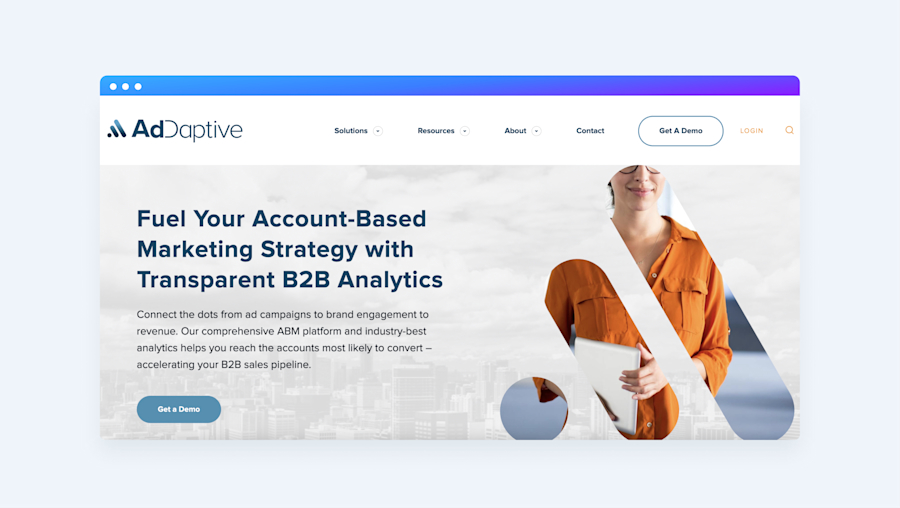
AdDaptive Intelligence offers a clean UI and a range of custom integrations. Its proprietary technology enables digital marketers to access offline data that wouldn't be readily available through conventional research channels. You can access detailed analytics, data reports, retargeting campaigns, and more.
At present, AdDaptive Intelligence does not have enough online customer reviews to draw any meaningful conclusions.
ABM Tools Comparison Table
After reviewing each ABM platform in detail, it can still be difficult to compare them quickly, especially since each tool offers different strengths across data, automation, personalization, and analytics.
To simplify your decision-making, the table below provides a side-by-side comparison of key features and pricing for each platform, helping you identify which solution best fits your goals, budget, and overall go-to-market strategy.
How can Leadfeeder assist in your ABM efforts?
Leadfeeder isn’t just for sales teams. We don’t necessarily advertise our platform as an ABM platform, but we can offer up a hell of an assist. Think Kobe Bryant and Michael Jordan. The Leadfeeder platform has features and customer data that make working with an ABM platform a breeze.
With Leadfeeder, you can:
Create target account lists
See what they're interested in
Push customer info to your CRM or marketing automation tool to target them via email
Target with ads
What works for us?
Leadfeeder makes ABM easy. Our intuitive system generates account leads from the traffic you're already receiving. We monitor your target accounts in real time. When our data suggests they're most likely to convert, we strike.
Our high-intent account lists are segmented by key factors such as geography, industry, custom properties, and more. We create custom retargeting campaigns to connect with the accounts you've already interacted with over LinkedIn.
Use ABM software systems to drive growth
It’s important to have a solid account-based marketing platform as the base of your ABM strategy. Keeping track of target accounts, decision-makers, ideal customer profiles, messaging, marketing campaigns, and (finally) ABM campaigns is possible with the tools mentioned above.
Ready to get started? Sign up for a 14-day free trial, and discover which companies are visiting your website.