60-Second Summary
Account-based marketing (ABM) prioritizes targeted relationships over volume, focusing on the right companies and long-term value. Templafy applies ABM by using intent data and module-specific messaging to reach high-value accounts and align marketing with sales.
Key takeaway: ABM flips the funnel—focus on a small number of high-value accounts, build relationships, and create tailored engagement for long-term growth rather than broad lead volume.
Standout strategies & tactics: Identify interest patterns from site behavior, build hyper-targeted LinkedIn campaigns per company/role, and tailor messaging to specific product modules to increase relevance.
Tools & integrations: Combine Leadfeeder for intent and firmographic data, Zapier to automate routing into sheets/CRMs, and Hotjar to capture session-level behavior for richer sales intelligence.
Real-world lessons & frameworks: Align marketing insights with sales outreach, act quickly on intent signals, exclude irrelevant accounts (customers/competitors), and accept higher per-account cost for improved conversion and pipeline quality.
*This summary was created with AI assistance, using our original content.
That constant shift makes it easy to dismiss new approaches as just another short-lived trend. Account-based marketing often gets lumped into that category, with many wondering whether it is truly effective or simply the latest buzzword.
What makes ABM different is that it is built on a principle that has always driven sales success: strong relationships. Instead of chasing volume, account-based marketing focuses on connecting with the right companies, understanding their needs, and creating meaningful engagement that leads to long-term value.
In this article, we will look at why ABM has become a key growth strategy for Templafy, how they use it to reach high-value accounts, and what businesses can learn from their approach to build smarter, more targeted marketing campaigns.
Note: Want to target the best leads for your ABM efforts? Sign up for Leadfeeder's 14-day trial to learn how to optimize your ABM strategy with the right data.
What is Templafy?
Templafy solves what they call document anarchy. Inside all your office platforms, Word, PowerPoint, Excel, and even your Outlook email signature, there are a lot of images.
People often struggle to control brand logos, fonts, and their distribution. Templafy helps keep all these things on-brand and compliant at all times.
But they also offer a ton of different tools, which they call modules. Casper shared,
"We have six different modules -a library, dynamics, builder, brand checker, email signature manager, and administration. Essentially, these are all different modules that the companies can be interested in, which means that we can be extremely focused on what we talk about with the specific customers."
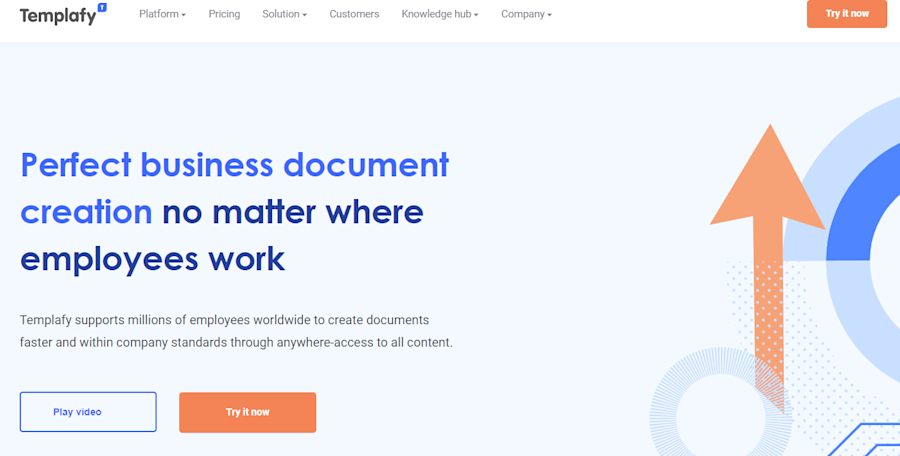
The TL;DR version is that Templafy offers solutions that appeal to different types of companies, and account-based marketing lets them target particular companies with the solutions that would most interest them.
In today's webinar, Casper shared tips and strategies they use at Templafy to grow their business. But, before we dive into the actual process, let's talk about what account-based marketing is.
What is account-based marketing?
Account-based marketing is a strategy that flips the traditional inbound marketing funnel on its head. The traditional sales funnel is wide at the top — you want to capture as many leads as possible, right?
You whittle that list down in the middle of the funnel — this is where you look for people who are almost ready to buy or are really in your core target audience.
You might use retargeting, have salespeople educate them, or send them content that helps move them towards actually purchasing.
Finally, you've got the bottom of the funnel — this is where you close the deal. You've gotten rid of the riff-raff. These are only high-quality leads that you are pushing to convert.
In ABM, the funnel is flipped —rather than casting a wide net, you are laser-focused on precisely who you want to target.
You aren't just saying "Oh, we want to target enterprise companies, you can say "Well, Pepsi just released a new website, and they could really benefit from our product, let's go after Pepsi."
You might create content that shows Pepsi why you are so awesome.

ABM can be more expensive, but it's also more effective. Imagine you are looking to catch a rare type of lobster— does it make more sense to use a huge net and catch everything in the ocean and toss out what you don't need, or a small crab trap with specific bait that the rare lobsters like?
How to create a stellar ABM strategy
Ready to start leveraging ABM? Here are the tips Casper shared about how Templafy uses ABM.
1. Identify interest patterns
Interest patterns are compelling because it shows not just who people are, but what they are interested in. Casper shared an example of a company that visited their site — he could see they came through Google, but more importantly, they searched for "template software," which is relevant to their company.
They spent 9 minutes on the site and viewed 12 pages, so they spent a long time there. But they spent the most time on template and document content management.
Using Leadfeeder, Templafy can get a ton of information about that lead, including where they work and possibly even their email address.
You know what they are interested in, and you can give that information to your sales team to use — or you can use that information to set up specific campaigns.
2. Set specific campaigns based on interest patterns
Once you know what a specific prospect is interested in, it's time to start building campaigns specifically for them. Say you have a company visiting your site from New York and you think,
"Ok, if you're based in New York, and you're looking specifically at these things on our site, I have a strong feeling of what you are interested in." You might know they are in marketing, media communication, or project management.
Then you can target their specific function. And because you know so much information about them, you can be really, really specific in your targeting. At Templafy, they often use LinkedIn for hyper-targeted ads that reach people who work at specific companies.
Casper shared,
"We use LinkedIn a lot for this 'cause it can be very specific, is that you need to have at least 300 people in your audience to actually target them, so it needs to be some, like the companies you're targeting with this, I would recommend at least that you need to have some sort of value."
3. Use Zapier to set up integrations
Zapier is essentially an automation tool that helps connect data between platforms. If you have a platform or tool like Leadfeeder and want to connect that data to another tool, then Zapier is your guy. Even if there isn't a natural integration, Zapier can usually make it work.
Zapier can integrate with more than 2,000 tools. It's pretty impressive — and it can make it so much easier to get the most out of your data.
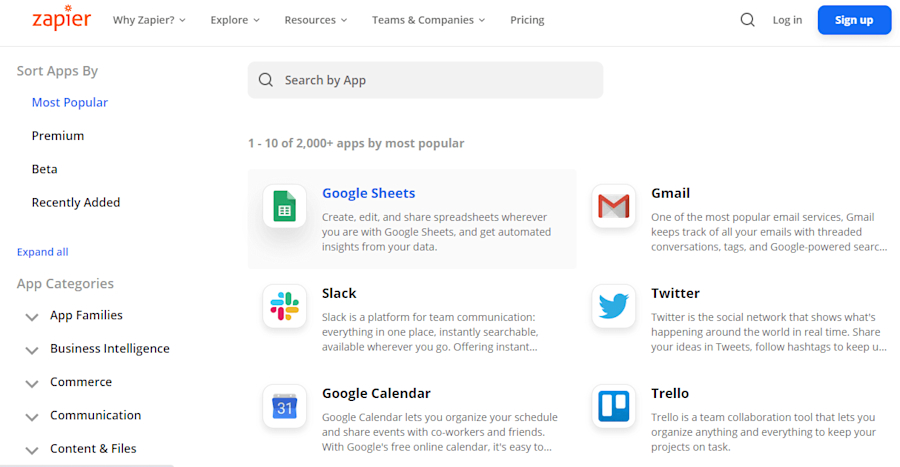
So what you can do is set up a Zapier integration that says whenever a new lead comes in on this specific feed, and with 500-plus employees, and they're not connected to our Salesforce, then they're sent over to a Google Sheet.
With Leaderfeeder, you get company names, cities, countries, industries, website URLs, where they've been, page views, and more.
All this information is updated daily. Whenever new companies come in that are not in Salesforce, they end up here. If you've ever worked with retargeting before, this is pretty similar.
You can even exclude current customers, competitors, or whoever you don't want to end up in that sheet. And then you can use that information to create targeted ads or have a salesperson reach out, or whatever your sales process is.
4. Track interaction with Hotjar
Another way to get a ton of information is to combine the data you are getting with Hotjar. This is pretty aggressive, but it can give you a ton of valuable data.
Hotjar is a tool that doesn't just give you numbers about how users interact with your site — it shows you exactly what they do with heatmaps, recordings, even surveys and polls.
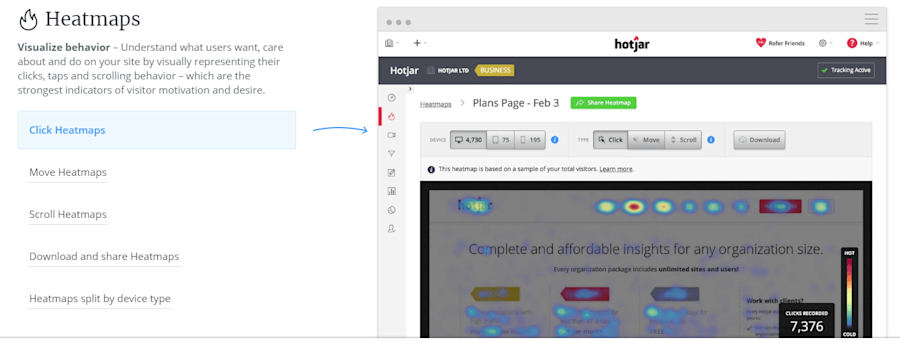
You can track actual session recordings by matching IP addresses to Hotjar IPs, then see what they viewed and what actions they took.
Did they look at a specific page, hover over a button? Were they thinking about signing up for your email list but didn't? Hotjar can be really time-consuming, but it's also valuable information, especially if you are targeting big accounts.
Using a strategy like this gives salespeople so much more insight and confidence when approaching prospects because they know exactly what they are interested in and — even more importantly — how responsive they are. It's a great feeling to walk into a meeting with all that information already in your head.
Final thoughts
Many companies stay focused on "the way things have always been done." Using ABM and tools like Leadfeeder, Hotjar, and Zapier can help automate the process of understanding prospect behavior. It also helps bring marketing team insights to the sales team, enabling them to close more deals.
Note: Want to target the best leads for your ABM efforts? Sign up for Leadfeeder's 14-day trial to learn how to optimize your ABM strategy with the right data.